Loading...
Charles de Gaulle vs Winston Churchill
Winston Churchill leads by 3.6 pts · 2 figures compared
…
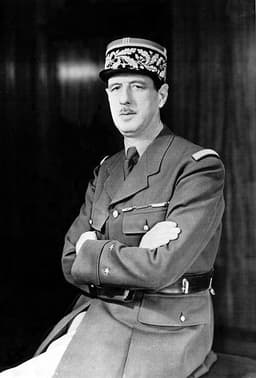
Charles de Gaulle
Politician · Modern
68.2Total
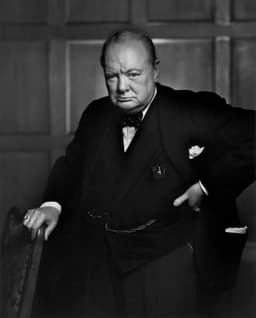
Winston Churchill
Politician · Modern
71.8Total
Basic Information
Born
1890
1874
Died
1970
1965
Era
Modern
Modern
Nationality
France
United Kingdom
Occupation
Politician
Politician
Civilization
Western
Western
Score Comparison
Military (10%)
55.0
55.0
Political (20%)
75.0
78.0
Influence (20%)
65.0
75.0
Legacy (20%)
68.0
68.0
Leadership (15%)
78.0
82.0
Strategy (15%)
65.0
65.0
TOTAL
68.2
71.8
Charles de Gaulle — Complete Timeline
1940 AD
Appeal of 18 June 1940Political Action
From London, de Gaulle broadcast a radio appeal urging French resistance against Nazi occupation. He called on French soldiers and citizens to continue the fight, founding the Free French Forces and becoming the symbol of French defiance.
World War IIResistanceLeadership
Impact: nationalconstructive
1958 AD
Founding of the Fifth RepublicPolitical Action
De Gaulle returned to power during the Algerian crisis and oversaw the drafting of a new constitution. The Fifth Republic established a strong executive presidency, replacing the unstable parliamentary system of the Fourth Republic.
ConstitutionGovernment ReformPolitical System
Impact: nationalconstructive
1962 AD
End of the Algerian WarPolitical Action◆ Major
De Gaulle negotiated the
DecolonizationPeace TreatyAlgeria
Impact: regionalconstructive
1968 AD
May 1968 CrisisPolitical Action◆ Major
Mass student protests and general strikes paralyzed France, challenging de Gaulle's government. De Gaulle briefly fled to Germany, then returned to dissolve the National Assembly and call elections, which his party won, but his authority was weakened.
ProtestPolitical CrisisSocial Unrest
Impact: nationaldestructive
1969 AD
Resignation as PresidentPolitical Action
De Gaulle resigned after losing a referendum on regional reform and Senate restructuring. The defeat marked the end of his political career, as he withdrew from public life and died the following year.
ResignationPolitical DefeatReferendum
Impact: nationaltragic
Winston Churchill — Complete Timeline
1940 AD
Appointed Prime Minister of the United KingdomPolitical Action◆ Major
On May 10, 1940, Winston Churchill became Prime Minister of the United Kingdom, replacing Neville Chamberlain. His appointment came as Nazi Germany invaded France and the Low Countries, and Churchill formed a coalition government to lead Britain through World War II.
World War IILeadershipCoalition Government
Impact: globalconstructive
Delivered the 'We Shall Fight on the Beaches' SpeechOther◆ Major
On June 4, 1940, Churchill delivered a speech to the House of Commons following the evacuation of British forces from Dunkirk. He declared that Britain would fight on the beaches, landing grounds, fields, streets, and hills, and never surrender, rallying British morale during the darkest days of World War II.
World War IIOratoryMorale
Impact: nationalconstructive
1941 AD
Signed the Atlantic CharterOther◆ Major
On August 14, 1941, Churchill and U.S. President Franklin D. Roosevelt signed the Atlantic Charter aboard HMS Prince of Wales. This joint declaration outlined post-war goals including self-determination, disarmament, and free trade, and became a foundational document for the Allied war aims and the United Nations.
World War IIAllied CooperationPost-war Planning
Impact: globalconstructive
1945 AD
Attended the Yalta ConferenceOther◆ Major
In February 1945, Churchill attended the Yalta Conference with Roosevelt and Stalin to discuss the post-war reorganization of Europe. The conference agreed on the division of Germany, the establishment of the United Nations, and the fate of Eastern Europe, though Churchill later expressed regret over concessions to Stalin.
World War IIPost-war SettlementBig Three
Impact: global
1946 AD
Delivered the 'Iron Curtain' SpeechOther◆ Major
On March 5, 1946, Churchill delivered a speech at Westminster College in Fulton, Missouri, where he stated that an 'iron curtain' had descended across Europe from Stettin to Trieste. This speech is widely regarded as marking the beginning of the Cold War, as it highlighted the division between Soviet-controlled Eastern Europe and the West.
Cold WarSoviet UnionDivision of Europe
Impact: globaldestructive
1953 AD
Awarded the Nobel Prize in LiteratureOther◆ Major
In 1953, Churchill was awarded the Nobel Prize in Literature for his historical writings, particularly 'The Second World War' and 'A History of the English-Speaking Peoples'. The Nobel committee cited his mastery of historical and biographical description as well as his brilliant oratory in defending human values.
LiteratureNobel PrizeHistorical Writing
Impact: nationalconstructive
Expert Analysis
Charles de Gaulle vs Winston Churchill
# The Lion and the Cross of Lorraine
In the darkest hour of 1940, two voices spoke to a continent in ruins. From a BBC studio in London, Winston Churchill growled defiance: “We shall fight on the beaches, we shall fight on the landing grounds, we shall fight in the fields and in the streets.” Across the Channel, from the same beleaguered city, a tall, aloof French general broadcast a trembling but resolute call: “France has lost a battle, but France has not lost the war.” Both men were speaking to nations on the brink of annihilation. Both would become symbols of national resistance. Yet their paths—and their legacies—diverged in ways that reveal the deepest currents of modern history.
Origins
Winston Churchill was born in 1874 into the heart of the British aristocracy, the son of Lord Randolph Churchill and the American heiress Jennie Jerome. His world was one of empire, tradition, and unshakable confidence. He failed at school, barely scraped into Sandhurst, and spent his youth chasing glory on the frontiers of India, Sudan, and South Africa. His era was the high noon of British imperialism, and he absorbed its certainties like mother’s milk.
Charles de Gaulle was born in 1890 in Lille, into a devoutly Catholic, patriotic family. His father taught philosophy and history, instilling in him a sense of France’s eternal grandeur. De Gaulle was bookish, intense, and convinced from adolescence that France was destined for greatness—and that he was destined to serve it. While Churchill learned leadership in cavalry charges and colonial skirmishes, de Gaulle learned it from the writings of Clausewitz and the tragedies of French defeat in 1870.
The difference in their origins was not merely social. Churchill’s Britain was an empire at its zenith, confident and secure. De Gaulle’s France was a nation nursing the wounds of humiliation, haunted by the memory of lost provinces and the specter of decline. One man grew up believing the world was his to shape; the other grew up believing his nation needed to be saved.
Rise to Power
Churchill’s rise was erratic, brilliant, and self-destructive. He entered Parliament in 1900, switched parties twice, held cabinet posts as Home Secretary and Chancellor of the Exchequer, and then blundered into the catastrophe of the Dardanelles in 1915. For two decades, he was a man out of time—feared, distrusted, and marginalized. His warnings about Nazi Germany were ignored. Only when the storm broke in May 1940 did the old lion finally find his den.
De Gaulle’s rise was more linear, but no less dramatic. A colonel of tanks in 1940, he fought one of the few successful counterattacks against the German blitzkrieg. When France fell, he refused to accept defeat. Fleeing to London, he was a man without an army, without a country, without legitimacy. But on June 18, 1940, he claimed to speak for France. Churchill recognized him—grudgingly, pragmatically—as the leader of the Free French. It was an act of political creation, a government-in-exile conjured from sheer will.
The paths diverged in their relationship with power. Churchill was called to lead in a moment of national unanimity. De Gaulle had to invent his authority from scratch, battling not only the Nazis but also Roosevelt, Churchill, and the Vichy regime. One inherited a nation’s trust; the other had to forge it.
Leadership & Governance
As war leaders, both were titanic, but in different keys. Churchill’s genius was oratory and morale. He gave the British people a language of defiance—blood, toil, tears, and sweat—that turned despair into endurance. He was a master of the grand coalition, wooing Roosevelt and Stalin, managing the egos of his generals, and keeping a fractured cabinet together. His military strategy was often reckless—he loved peripheral campaigns, from Gallipoli to Greece to the Dardanelles—but his political judgment in holding the alliance together was near-flawless.
De Gaulle was a different creature. He was cold, proud, and impossible to work with. He treated allies as obstacles and enemies as opportunities. His military score of 65 reflects a competent but not brilliant commander; his true genius was political. He understood that France’s survival depended not on territory but on sovereignty. He refused to let France become a British satellite or an American protectorate. In 1944, he insisted on liberating Paris himself, walking down the Champs-Élysées as if the war had already been won.
After the war, their fates reversed. Churchill was voted out in 1945, his wartime leadership rewarded with ingratitude. De Gaulle, after a brief and frustrated presidency in 1946, withdrew to his estate at Colombey-les-Deux-Églises, writing memoirs and waiting.
When they returned, the contrast sharpened. Churchill’s second premiership (1951–1955) was an anticlimax—old, tired, presiding over a fading empire. De Gaulle’s return in 1958 was a revolution. He founded the Fifth Republic, ending the chaos of the Fourth Republic and the agony of the Algerian War. He negotiated the Évian Accords in 1962, granting Algeria independence despite the fury of the French army and the pieds-noirs. It was an act of supreme political courage, a leader cutting his nation free from a colonial nightmare.
Triumph & Tragedy
Churchill’s greatest moment was 1940—standing alone against the Nazi tide, his voice the only light in a darkened Europe. His tragedy was that he could not save the empire he loved. He watched India go, Egypt go, the Suez Canal go. His final years were a long twilight, haunted by the decline of the Britain he had saved.
De Gaulle’s triumph was the restoration of French grandeur. He gave France a constitution that worked, a nuclear deterrent, and a voice in the Cold War. He pulled France out of NATO’s integrated command, vetoed British entry into the European Economic Community, and traveled to Moscow and Quebec as a free agent. His tragedy was the May 1968 crisis, when students and workers paralyzed France, and he briefly fled to Baden-Baden, consulting with the French army. He survived the crisis but never recovered. In 1969, he lost a referendum on regional reform and resigned, dying a year later.
Character & Destiny
Churchill was a man of appetites—brandy, cigars, painting, history. He was generous, impulsive, sometimes cruel, always alive. His flaws were visible: his imperial racism, his stubbornness, his love of war. But they were the flaws of a man who lived fully.
De Gaulle was a man of distances. He kept everyone at arm’s length, even his family. He was cold, calculating, and profoundly alone. He saw himself as the incarnation of France, not its servant. “I am France,” he once said, and he meant it. This arrogance made him impossible as an ally but indispensable as a leader.
Their characters shaped their outcomes. Churchill’s warmth made him a beloved war leader but a poor peacetime politician. De Gaulle’s aloofness made him a difficult companion but a brilliant founder of institutions. One was a hero of the moment; the other was a builder of the future.
Legacy
Churchill remains the icon of British defiance—the bulldog, the cigar, the V-sign. His legacy is cultural and emotional. He gave the English-speaking world a vocabulary of courage. But his political legacy is thin: the empire he defended is gone, the welfare state he accepted was built by others.
De Gaulle’s legacy is institutional and enduring. The Fifth Republic he founded still governs France. His vision of an independent, sovereign France—aloof from both Washington and Moscow—shaped French foreign policy for decades. His handling of Algeria, however painful, saved France from a civil war. He is remembered not as a warm figure but as a necessary one.
Both men scored identically in political acumen (82) and legacy (75). But de Gaulle’s military score is higher (65 to 55), reflecting his role as a fighting general, while Churchill’s leadership score (85 to 78) reflects his unmatched ability to inspire a nation in its darkest hour.
Conclusion
Standing on the Champs-Élysées in 1944, de Gaulle walked alone, refusing to duck as snipers fired from rooftops. In the House of Commons in 1941, Churchill growled through his cigar, “Give us the tools, and we will finish the job.” Two men, two nations, two visions of what it means to lead. One saved his country by embracing its people; the other saved his country by embodying its idea. Neither was perfect. Both were necessary. And in the end, perhaps that is the only judgment history allows: they were the men their times demanded, and they answered the call.
Rankings
🥇
Winston ChurchillLeader
Mil: 55.0Pol: 78.0Inf: 75.0
71.8
🥈
Charles de Gaulle
Mil: 55.0Pol: 75.0Inf: 65.0
68.2
+3.6 behind
How This Comparison Works
Algorithm
Each figure is scored on 6 dimensions (0—100 scale) based on structured historical data: Military (10%), Political (20%), Influence (20%), Legacy (20%), Leadership (15%), Strategy (15%). The weighted total produces the final ranking.
Data Sources
Scores are computed from structured sub-indicators in the database. Scale factors adjust for era (Ancient ×0.85, Modern ×1.0) and civilization size (Eastern ×1.05, Other ×0.80) to account for differences in population and military scale.
Maximum 3 Figures
Comparisons are limited to 2—3 figures to ensure readability and statistical meaningfulness.
Error Margins
±5 points per dimension — Sub-scores are derived from historical records with inherent uncertainty. Two figures within 5 points on a dimension should be considered roughly equivalent in that area.
Total Score Accuracy
±3 points overall — The weighted combination of 6 dimensions produces a total score with approximately ±3 points of uncertainty. Differences of less than 3 points are not statistically significant— the figures are effectively tied.
Known Limitations
- Historical records are incomplete and uneven across civilizations
- Figures from oral-tradition societies may be underrepresented
- Occupation labels can misclassify multi-role figures
- Scores measure capability and impact, not moral character
- Quantitative scoring is a comparison tool, not absolute truth
Capability Radar
Military (10%) — Battles & Warfare
Battles
60
55
Win Rate
55
60
Expansion
20
40
Political (20%) — Governance & Reform
Reform
95
70
Diplomacy
90
85
Economy
70
60
Influence (20%) — Cultural & Global Reach
Cultural
70
85
Global
80
85
Legacy (20%) — Historical Impact
Historical
85
90
Longevity
75
80
Leadership (15%) — Power & Stability
Tenure
85
75
Stability
75
70
Strategy (15%) — Tactics & Innovation
Strategy
85
85
Tactics
70
65
Reform
80
70
Similar Comparisons
Comments & Discussion
THE IRON LANCE6/16/2026
Churchill was a romantic imperialist who fought to preserve a dying empire; de Gaulle was a realist who understood that France needed to reclaim its soul, not just its territory. Churchill’s “blood, toil, tears, and sweat” rallied a nation through raw emotion, but de Gaulle’s “certain idea of France” was a strategic vision for a post-colonial future. The difference? Churchill saved Britain, but de Gaulle saved France’s dignity—and that’s why Churchill fades while de Gaulle’s legacy grows.|zh|丘吉尔
LEGACY_SNIPER6/16/2026
Let’s cut the sentiment: Churchill was a brilliant orator but a disaster as a peacetime leader—he lost the 1945 election and his postwar economic policies were a mess. De Gaulle, meanwhile, built the Fifth Republic, decolonized Algeria with surgical precision, and gave France nuclear power. Compare their military records: Churchill’s Gallipoli disaster killed tens of thousands, yet he’s hailed as a war hero; de Gaulle’s tank tactics in 1940 were ahead of their time. Narrative bias, pure and simp
NUMBERS_GUY6/16/2026
Stop romanticizing. Churchill’s record on India alone—the 1943 Bengal famine killed 3 million, and he diverted food supplies—is a stain that Churchill cultists conveniently ignore. Meanwhile de Gaulle’s economic stewardship of France from 1958–1969 produced the “Trente Glorieuses,” with GDP growth averaging 5% annually. He stabilized the franc, launched the Concorde, and created the modern French economy. Churchill gave us, what—the NHS? No, that was Attlee. Give me the architect over the actor
CLASSICS_SCHOLAR6/16/2026
Churchill and de Gaulle are both heirs to classical ideals—Churchill channeling Demosthenes with his defiant speeches, de Gaulle evoking Cincinnatus leaving his farm to save Rome. But the key difference lies in their relationship with time. Churchill lived for the moment of war, his greatness tied to crisis; de Gaulle thought in centuries, crafting institutions like the Fifth Republic to last beyond his own mortality. Churchill was a brilliant comet, de Gaulle a fixed star. One dazzles,