Loading...
Charles de Gaulle vs William Pitt the Elder
William Pitt the Elder leads by 2.0 pts · 2 figures compared
…
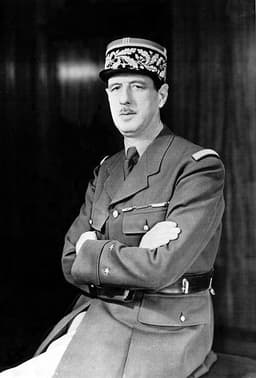
Charles de Gaulle
Politician · Modern
68.2Total
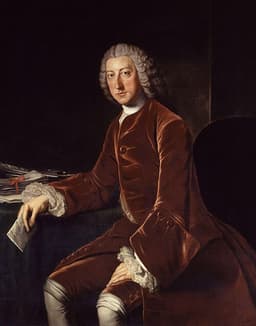
William Pitt the Elder
Politician · Modern
70.2Total
Basic Information
Born
1890
1708
Died
1970
1778
Era
Modern
Modern
Nationality
France
United Kingdom
Occupation
Politician
Politician
Civilization
Western
Western
Score Comparison
Military (10%)
55.0
67.3
Political (20%)
75.0
72.0
Influence (20%)
65.0
68.0
Legacy (20%)
68.0
68.0
Leadership (15%)
78.0
80.0
Strategy (15%)
65.0
67.2
TOTAL
68.2
70.2
Charles de Gaulle — Complete Timeline
1940 AD
Appeal of 18 June 1940Political Action
From London, de Gaulle broadcast a radio appeal urging French resistance against Nazi occupation. He called on French soldiers and citizens to continue the fight, founding the Free French Forces and becoming the symbol of French defiance.
World War IIResistanceLeadership
Impact: nationalconstructive
1958 AD
Founding of the Fifth RepublicPolitical Action
De Gaulle returned to power during the Algerian crisis and oversaw the drafting of a new constitution. The Fifth Republic established a strong executive presidency, replacing the unstable parliamentary system of the Fourth Republic.
ConstitutionGovernment ReformPolitical System
Impact: nationalconstructive
1962 AD
End of the Algerian WarPolitical Action◆ Major
De Gaulle negotiated the
DecolonizationPeace TreatyAlgeria
Impact: regionalconstructive
1968 AD
May 1968 CrisisPolitical Action◆ Major
Mass student protests and general strikes paralyzed France, challenging de Gaulle's government. De Gaulle briefly fled to Germany, then returned to dissolve the National Assembly and call elections, which his party won, but his authority was weakened.
ProtestPolitical CrisisSocial Unrest
Impact: nationaldestructive
1969 AD
Resignation as PresidentPolitical Action
De Gaulle resigned after losing a referendum on regional reform and Senate restructuring. The defeat marked the end of his political career, as he withdrew from public life and died the following year.
ResignationPolitical DefeatReferendum
Impact: nationaltragic
William Pitt the Elder — Complete Timeline
1756 AD
Led Britain in Seven Years' WarWar
William Pitt the Elder served as Secretary of State from 1756 to 1761, directing British strategy in the Seven Years' War. His policies focused on naval supremacy and colonial campaigns, leading to victories in Canada, India, and the Caribbean.
Seven Years' WarColonial EmpireMilitary Strategy
Impact: global
1759 AD
Conquest of QuebecWar◆ Major
Under Pitt's direction, British forces under General James Wolfe captured Quebec City on September 13, 1759, after the Battle of the Plains of Abraham. This victory secured British control over Canada and marked a turning point in the Seven Years' War.
Seven Years' WarCanadaMilitary Victory
Impact: global
1766 AD
Became Prime MinisterPolitical Action
Pitt was appointed Prime Minister on July 30, 1766, forming a government. However, his health declined and he was elevated to the House of Lords as Earl of Chatham, which weakened his political base. His second ministry was less effective than his wartime leadership.
Prime MinisterGovernment18th Century
Impact: national
Opposed American TaxationPolitical Action◆ Major
Pitt argued for the repeal of the Stamp Act in 1766, asserting that Parliament had no right to tax the American colonies without representation. His speech in the Commons helped secure repeal, though he maintained Parliament's authority to legislate for the colonies.
American ColoniesTaxationParliamentary Debate
Impact: global
Expert Analysis
Charles de Gaulle vs William Pitt the Elder
# The Lonely Heights: Charles de Gaulle and William Pitt the Elder
In the summer of 1940, a tall, awkward French general stood before a BBC microphone in London and spoke to a nation that had just fallen. His voice, nasal and strange, carried across the Channel to millions who had never heard of him. A century and a half earlier, in the gilded chambers of Westminster, another man—volcanic, theatrical, and equally convinced of his own destiny—had risen to save an empire. Both were outsiders who remade their nations in war. Both ended their careers in bitterness. But the paths they walked, and the ruins they left behind, could not have been more different.
Origins
Charles de Gaulle was born into a devoutly Catholic, patriotic family in Lille, in the shadow of France’s 1870 defeat by Prussia. His father taught him that France was destined for greatness, and that humiliation was unacceptable. De Gaulle grew up reading philosophy and military history, developing an almost mystical sense of national destiny. He was not a natural politician—he was stiff, aloof, and convinced that leadership meant standing above the crowd.
William Pitt the Elder was born into a political dynasty, but one tainted by scandal. His grandfather had amassed a fortune in India, and his father was a controversial governor. Pitt suffered from gout and bouts of manic energy that sent him pacing through the night. He entered Parliament as a rebellious young man, attacking the establishment with such ferocity that he was expelled from the army for his speeches. Where de Gaulle was cold and calculating, Pitt was a storm.
Rise to Power
De Gaulle’s rise came through catastrophe. In 1940, when France collapsed before the German blitzkrieg, he was a junior general with no political base. His Appeal of 18 June 1940 was an act of pure defiance—a voice crying in the wilderness. He had no army, no treasury, no legitimacy. He simply insisted that he *was* France. This was not politics as usual; it was an act of will.
Pitt’s rise was different. He entered the cabinet in 1756, at the height of the Seven Years’ War, when Britain was losing everywhere. He did not seize power through a broadcast; he seized it through relentless parliamentary maneuvering, forming coalitions, and terrifying his opponents. He became Secretary of State, effectively running the war effort, and transformed British strategy from defensive to global.
Leadership & Governance
De Gaulle governed as a monarch in a republic. He believed that France needed a strong executive to rise above the squabbling of parties. When he returned to power in 1958, during the Algerian crisis, he wrote a new constitution for the Fifth Republic that concentrated power in the presidency. He ended the Algerian War in 1962 through the Évian Accords, a decision that horrified his own supporters but saved France from endless colonial bloodshed. He was a strategist of the long view, willing to betray his own side for what he saw as the national interest.
Pitt governed as a whirlwind. He did not micromanage; he inspired. He gave generals like Wolfe and Amherst the resources and freedom to win, and he understood that the Seven Years’ War would be decided not in Europe but in North America, India, and on the seas. His conquest of Quebec in 1759 was the high point of British military ambition. But Pitt was also impulsive. He could not manage allies, and his arrogance alienated even his friends. When he became Prime Minister in 1766, his health collapsed, and his government floundered.
Triumph & Tragedy
De Gaulle’s triumph was the liberation of France, but his tragedy was that he could never escape the loneliness of his own vision. In May 1968, student protests and general strikes paralyzed France. De Gaulle fled briefly to Baden-Baden to consult with French generals—a moment of panic that revealed his isolation. He returned, crushed the movement with a snap election, but the magic was gone. In 1969, he lost a referendum on minor reforms and resigned. He died a year later, a figure of immense grandeur but profound solitude.
Pitt’s triumph was the Year of Miracles—1759, when British arms conquered Quebec, won at Minden, and swept the French from India. But his tragedy was that he lived long enough to see his work undone. He opposed taxing the American colonies, arguing in 1766 that Parliament had no right to do so. He was right, but his voice was ignored. He died in 1778, watching the American Revolution tear apart the empire he had built.
Character & Destiny
De Gaulle’s character was his destiny. His aloofness made him a symbol of resistance but also a prisoner of his own myth. He once wrote, “The man of character finds his own strength in solitude.” He could not share power, could not charm, could not bend. France needed him in 1940 and 1958, but by 1969, the nation had outgrown his paternalism.
Pitt’s character was his glory and his ruin. His volcanic energy drove Britain to victory, but his inability to compromise or manage a cabinet doomed his peacetime government. He was the Great Commoner, beloved by the people, but he could not govern through love alone. His health, broken by gout and stress, mirrored the fractures in his political system.
Legacy
De Gaulle left France a stable republic, a nuclear power, and a foreign policy independent of the United States. His shadow still falls over French politics—every president since has governed in the Fifth Republic he designed. But he also left a cautionary tale: that greatness, when it becomes a performance, can exhaust a nation.
Pitt left Britain an empire that spanned the globe, but also a contradiction at its heart. He believed in liberty for Englishmen, but not for Americans. His opposition to taxation without representation was principled, but he never solved the problem of empire. His name lives on in cities and counties across the English-speaking world, but his lesson is that even the greatest leaders cannot escape the limits of their own imagination.
Conclusion
Both men stood at the lonely heights of power, convinced that they alone could save their nations. De Gaulle saved France from itself, then watched it forget him. Pitt saved Britain from France, then watched the empire he built collapse. Their stories remind us that leadership is not about being loved—it is about being necessary. And necessity, as both learned, is a harsh and fleeting master.
Rankings
🥇
William Pitt the ElderLeader
Mil: 67.3Pol: 72.0Inf: 68.0
70.2
🥈
Charles de Gaulle
Mil: 55.0Pol: 75.0Inf: 65.0
68.2
+2.0 behind
How This Comparison Works
Algorithm
Each figure is scored on 6 dimensions (0—100 scale) based on structured historical data: Military (10%), Political (20%), Influence (20%), Legacy (20%), Leadership (15%), Strategy (15%). The weighted total produces the final ranking.
Data Sources
Scores are computed from structured sub-indicators in the database. Scale factors adjust for era (Ancient ×0.85, Modern ×1.0) and civilization size (Eastern ×1.05, Other ×0.80) to account for differences in population and military scale.
Maximum 3 Figures
Comparisons are limited to 2—3 figures to ensure readability and statistical meaningfulness.
Error Margins
±5 points per dimension — Sub-scores are derived from historical records with inherent uncertainty. Two figures within 5 points on a dimension should be considered roughly equivalent in that area.
Total Score Accuracy
±3 points overall — The weighted combination of 6 dimensions produces a total score with approximately ±3 points of uncertainty. Differences of less than 3 points are not statistically significant— the figures are effectively tied.
Known Limitations
- Historical records are incomplete and uneven across civilizations
- Figures from oral-tradition societies may be underrepresented
- Occupation labels can misclassify multi-role figures
- Scores measure capability and impact, not moral character
- Quantitative scoring is a comparison tool, not absolute truth
Capability Radar
Military (10%) — Battles & Warfare
Battles
60
60
Win Rate
55
75
Expansion
20
80
Political (20%) — Governance & Reform
Reform
95
75
Diplomacy
90
80
Economy
70
70
Influence (20%) — Cultural & Global Reach
Cultural
70
60
Global
80
75
Legacy (20%) — Historical Impact
Historical
85
80
Longevity
75
70
Leadership (15%) — Power & Stability
Tenure
85
70
Stability
75
65
Strategy (15%) — Tactics & Innovation
Strategy
85
85
Tactics
70
65
Reform
80
70
Similar Comparisons
Comments & Discussion
No comments yet. Be the first to share your thoughts!