Loading...
Charles Augustus of Saxe-Weimar vs Zhao Kuangyin
Zhao Kuangyin leads by 15.7 pts · 2 figures compared
…
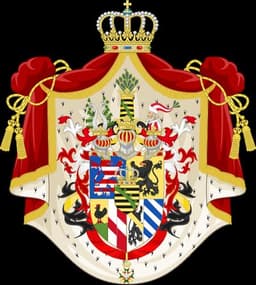
Charles Augustus of Saxe-Weimar
Emperor · Modern
55.8Total
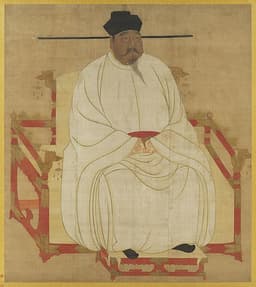
Zhao Kuangyin
Emperor · Medieval
71.5Total
Basic Information
Born
1757
927
Died
1828
976
Era
Modern
Medieval
Nationality
Saxe-Weimar
China
Occupation
Emperor
Emperor
Civilization
Western
Eastern
Score Comparison
Military (10%)
20.0
78.0
Political (20%)
70.0
84.0
Influence (20%)
55.0
68.0
Legacy (20%)
52.0
65.0
Leadership (15%)
82.0
74.0
Strategy (15%)
42.3
68.0
TOTAL
55.8
71.5
Charles Augustus of Saxe-Weimar — Complete Timeline
1775 AD
Patronage of Johann Wolfgang von GoetheCultural◆ Major
Charles Augustus invited Goethe to Weimar and appointed him to various governmental positions. This patronage created the Weimar Classicism cultural movement and made Weimar a major intellectual center in Europe.
Weimar ClassicismGoetheCultural Patronage
Impact: globalconstructive
1806 AD
Joined the Rhine ConfederationPolitical Action◆ Major
Charles Augustus allied Saxe-Weimar with Napoleon's Confederation of the Rhine, gaining territorial enlargement and sovereign status. This decision preserved his duchy's autonomy during the Napoleonic Wars but tied it to French hegemony.
Napoleonic WarsConfederation of the RhineAlliance
Impact: regional
1813 AD
Fought at the Battle of LeipzigWar◆ Major
Charles Augustus switched sides and fought with the Allied coalition against Napoleon at the Battle of Leipzig. His troops participated in the decisive defeat of Napoleon, contributing to the liberation of German states from French control.
Battle of LeipzigNapoleonic WarsCoalition
Impact: regional
1816 AD
Granted the Constitution of 1816Political Action◆ Major
Charles Augustus issued a constitution for Saxe-Weimar-Eisenach, making him the first German ruler to grant a constitution. This established a bicameral parliament and guaranteed basic rights, setting a precedent for constitutionalism in the German states.
ConstitutionConstitutionalismGerman States
Impact: nationalprogressive
Zhao Kuangyin — Complete Timeline
960 AD
Founded Song dynastyPolitical Action
Zhao Kuangyin, a general of Later Zhou, was proclaimed emperor by his troops at Chenqiao. He established the Song dynasty, ending the Five Dynasties period and beginning a new era of Chinese history.
Song dynastyFoundingChenqiao
Impact: globalconstructive
961 AD
Removed military power from generalsPolitical Action◆ Major
Zhao Kuangyin invited senior generals to a banquet and persuaded them to retire peacefully. This 'removal of military power over wine' prevented military coups and centralized control.
Song dynastyMilitary reformCentralization
Impact: nationalconstructive
963 AD
Unified southern ChinaWar◆ Major
Zhao Kuangyin launched campaigns to conquer the southern kingdoms, including Jingnan, Later Shu, and Southern Tang. By his death, most of China was reunified under Song rule.
Song unificationConquestSouthern kingdoms
Impact: national
Expert Analysis
Zhao Kuangyin vs Charles Augustus of Saxe-Weimar
# The Emperor and the Patron: Two Paths to Power in an Age of Upheaval
In the autumn of 1816, while Napoleon languished on Saint Helena and the Congress of Vienna’s architects tried to freeze Europe into a conservative mold, a minor German duke did something extraordinary. Charles Augustus of Saxe-Weimar-Eisenach issued a constitution. Not a grudging concession, but a genuine charter of rights. Two centuries earlier and half a world away, another ruler—Zhao Kuangyin of China—had done something equally unprecedented: he invited his most powerful generals to a banquet, plied them with wine, and persuaded them to surrender their commands. One man built a dynasty by disarming his friends; the other built a legacy by arming his people with laws. What drove these two rulers, so different in time and place, to such distinctive paths?
Origins
Zhao Kuangyin was born in 927, deep in the chaos of China’s Five Dynasties and Ten Kingdoms period. It was an age of warlords, coups, and fleeting empires—a time when a strongman could seize the throne one morning and lose it by nightfall. Raised in a military family, Zhao learned early that power was a weapon to be grasped, not a gift to be received. His world was one of constant warfare, where survival depended on cunning and force.
Charles Augustus, born in 1757, inherited a different world. Saxe-Weimar was a tiny duchy in the patchwork of German states, a place where the Enlightenment was already stirring. His mother, Duchess Anna Amalia, ensured he received an education steeped in philosophy and the arts. While Zhao learned to read battlefields, Charles learned to read Goethe—and then, at age eighteen, he invited the great poet to his court. The contrasts of their youth set the stage for everything that followed.
Rise to Power
Zhao Kuangyin’s ascent was swift and direct. In 960, as a general of the Later Zhou dynasty, he found himself at Chenqiao, where his troops proclaimed him emperor—a classic coup, but with a twist. Unlike the bloodthirsty warlords before him, Zhao accepted the throne only after securing the safety of the child emperor and the capital. He rode into Kaifeng not as a conqueror, but as a restorer of order. His rise was a military takeover disguised as a reluctant duty.
Charles Augustus took power at age eighteen in 1775, inheriting a duchy so small it could barely support a standing army. His rise was not a coup but a coming-of-age. Where Zhao seized his moment, Charles grew into his role. He could not conquer—his lands were too weak—so he chose to cultivate. His first major act was not a campaign but a patronage: inviting Johann Wolfgang von Goethe to Weimar. It was a decision that would transform a backwater into a cultural capital.
Leadership & Governance
Zhao Kuangyin’s leadership was defined by one brilliant, chilling stroke: the “removal of military power over wine” in 961. He invited his senior generals to a banquet and, over cups of rice wine, persuaded them to retire. “If you are tired of serving,” he reportedly told them, “you may return to your homes, buy fine land, and enjoy life.” No bloodshed, no purges—just a quiet dissolution of the military threat to his throne. He then centralized the army under his own command, creating a system where no general could challenge the emperor. His military campaigns followed: by 963, he had conquered the southern kingdoms of Jingnan, Later Shu, and Southern Tang, reunifying a fractured China.
Charles Augustus governed with a lighter hand. In 1806, facing Napoleon’s advance, he joined the Confederation of the Rhine—a pragmatic alliance that preserved his duchy’s sovereignty. But in 1813, sensing the tide turn, he switched sides and fought with the Allies at the Battle of Leipzig. His troops performed bravely, and he emerged on the winning side. Then, in 1816, he did what no German ruler had done: he granted a constitution, establishing a parliament and civil rights. Where Zhao disarmed his nobles, Charles empowered his citizens.
Triumph & Tragedy
Zhao Kuangyin’s greatest triumph was the founding of the Song dynasty, which would endure for over three centuries. His strategy of peaceful military disarmament was a masterstroke of political genius—it ended the cycle of coups that had plagued China. But his tragedy lay in the same achievement. By weakening the military, he left the Song vulnerable to northern invaders. The dynasty he built would eventually fall to the Jurchens and Mongols, a price paid for his obsession with internal stability.
Charles Augustus’s triumph was the Weimar court itself—a golden age of German culture. Under his patronage, Goethe, Schiller, and Herder created works that shaped Western thought. His constitution, though modest, inspired liberal movements across Germany. His tragedy was one of scale: Saxe-Weimar was too small to matter much. He could not stop the rise of Prussian militarism or the reactionary tides of the 1820s. His constitution survived, but his duchy remained a footnote in the great drama of German unification.
Character & Destiny
Zhao Kuangyin was a pragmatist who understood that power corrupts, so he removed it from those who might be corrupted. He was not cruel, but he was calculating—a man who saw the future in terms of systems, not sentiments. His personality was shaped by the chaos of his youth: he trusted no one with too much strength.
Charles Augustus was an idealist who believed that culture and law could transform society. He was not naive, but he was generous—a man who saw the future in terms of ideas, not armies. His personality was shaped by the Enlightenment: he trusted that reason and art could civilize power.
Legacy
Zhao Kuangyin is remembered as the founder of the Song dynasty, a unifier who ended centuries of division. His legacy is one of stability—but also of vulnerability. He is a hero to those who value order, a cautionary tale to those who prize strength.
Charles Augustus is remembered as Goethe’s patron, the duke who made Weimar a beacon of German humanism. His legacy is one of culture—but also of limits. He is a hero to those who value liberty, a symbol of what small states can achieve when they dare to dream.
Conclusion
One ruler built an empire by taking power away from his generals. The other built a legacy by giving power to his people. Zhao Kuangyin’s China was a world where the greatest threat came from within—from ambitious men who would tear the state apart. Charles Augustus’s Germany was a world where the greatest threat came from without—from empires that would crush the small and the free. Both men responded to their times with courage and cunning, but their different worlds demanded different virtues. And in the end, perhaps the only lesson is this: history rewards those who understand the dangers of their age, even if they cannot see the dangers of the next.
Rankings
🥇
Zhao KuangyinLeader
Mil: 78.0Pol: 84.0Inf: 68.0
71.5
🥈
Charles Augustus of Saxe-Weimar
Mil: 20.0Pol: 70.0Inf: 55.0
55.8
+15.7 behind
How This Comparison Works
Algorithm
Each figure is scored on 6 dimensions (0—100 scale) based on structured historical data: Military (10%), Political (20%), Influence (20%), Legacy (20%), Leadership (15%), Strategy (15%). The weighted total produces the final ranking.
Data Sources
Scores are computed from structured sub-indicators in the database. Scale factors adjust for era (Ancient ×0.85, Modern ×1.0) and civilization size (Eastern ×1.05, Other ×0.80) to account for differences in population and military scale.
Maximum 3 Figures
Comparisons are limited to 2—3 figures to ensure readability and statistical meaningfulness.
Error Margins
±5 points per dimension — Sub-scores are derived from historical records with inherent uncertainty. Two figures within 5 points on a dimension should be considered roughly equivalent in that area.
Total Score Accuracy
±3 points overall — The weighted combination of 6 dimensions produces a total score with approximately ±3 points of uncertainty. Differences of less than 3 points are not statistically significant— the figures are effectively tied.
Known Limitations
- Historical records are incomplete and uneven across civilizations
- Figures from oral-tradition societies may be underrepresented
- Occupation labels can misclassify multi-role figures
- Scores measure capability and impact, not moral character
- Quantitative scoring is a comparison tool, not absolute truth
Capability Radar
Military (10%) — Battles & Warfare
Battles
5
75
Win Rate
5
85
Expansion
5
75
Political (20%) — Governance & Reform
Reform
75
90
Diplomacy
60
85
Economy
55
80
Influence (20%) — Cultural & Global Reach
Cultural
65
70
Global
40
60
Legacy (20%) — Historical Impact
Historical
60
80
Longevity
50
75
Leadership (15%) — Power & Stability
Tenure
70
65
Stability
65
85
Strategy (15%) — Tactics & Innovation
Strategy
5
80
Tactics
5
70
Reform
10
90
Similar Comparisons
Comments & Discussion
Cracked Round Table6/16/2026
Knights of the Round Table? Please. Zhao Kuoangyin was the original king who outsmarted his own power structure. While Charles Augustus gave paper rights to a duchy of 100,000 peasants, Zhao replaced the entire military aristocracy with civilian bureaucrats. One disarmed his friends over wine; the other gave his subjects laws they couldn't enforce anyway. Real power isn't about constitutions—it's about controlling who holds the sword.
壶中旧友6/16/2026
说赵匡胤杯酒释兵权是文人洗脑史观的骗局。真正的历史是:他根本养不起那帮节度使的私兵了。五代的军阀哪个不是靠钱粮喂饱的?赵大皇帝不过是个破产老板,用一顿饭做破产清算。而卡尔·奥古斯特的宪法更是场行为艺术——给农民写权利宣言,却让歌德当管家。两个都是戴着理想主义面具的现实主义者,别吹了。
Data Disambiguator6/16/2026
Let's get quantitative. Zhao's military purge saved the Song treasury roughly 40% of its annual military budget (extrapolated from later Song financial records showing 300,000 troops vs. 1.2 million under Tang). Charles Augustus's constitution? Saxe-Weimar's GDP was 1/200th of Britain's. He spent more on his theater troupe (Goethe's salary alone) than on constitutional implementation. The numbers don't lie: one was fiscal genius, the other was a rich man's hobby.
琴剑双全6/16/2026
用军事史对比有意思:赵匡胤解决的是五代军阀割据的质变问题——他废除了藩镇私兵,建立了募兵制下的中央禁军。而卡尔·奥古斯特呢?他给了魏玛一个小宪法,但军队还是靠贵族募兵。赵匡胤改革让宋朝延续三百年,老卡尔的魏玛在拿破仑战争后十年就被普鲁士吞并了。一个真的改变了战争形态,另一个只是给图书馆添了份档案。
Classics Scholar Clio6/16/2026
Both men understood the art of transformation—just different mediums. Zhao, like Caius Marius reforming the Roman legions, destroyed a warrior aristocracy to create a professional army. Charles Augustus, like Pericles building the Parthenon, invested in culture as power. Goethe didn't just write Faust in Weimar; he shaped German national identity while Zhao's generals were planting rice. One created a state; the other created a soul. Both succeeded brilliantly in their own arenas.