Loading...
Charles Augustus of Saxe-Weimar vs Pedro I of Brazil
Charles Augustus of Saxe-Weimar leads by 1.2 pts · 2 figures compared
…
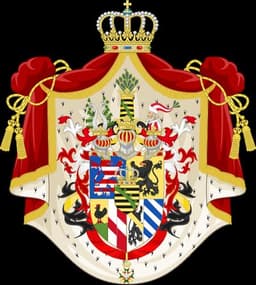
Charles Augustus of Saxe-Weimar
Emperor · Modern
55.8Total
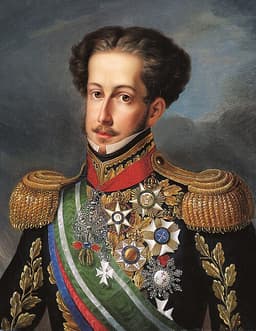
Pedro I of Brazil
Emperor · Modern
54.6Total
Basic Information
Born
1757
1798
Died
1828
1834
Era
Modern
Modern
Nationality
Saxe-Weimar
Brazil
Occupation
Emperor
Emperor
Civilization
Western
Western
Score Comparison
Military (10%)
20.0
55.0
Political (20%)
70.0
62.7
Influence (20%)
55.0
59.0
Legacy (20%)
52.0
50.0
Leadership (15%)
82.0
53.2
Strategy (15%)
42.3
45.0
TOTAL
55.8
54.6
Charles Augustus of Saxe-Weimar — Complete Timeline
1775 AD
Patronage of Johann Wolfgang von GoetheCultural◆ Major
Charles Augustus invited Goethe to Weimar and appointed him to various governmental positions. This patronage created the Weimar Classicism cultural movement and made Weimar a major intellectual center in Europe.
Weimar ClassicismGoetheCultural Patronage
Impact: globalconstructive
1806 AD
Joined the Rhine ConfederationPolitical Action◆ Major
Charles Augustus allied Saxe-Weimar with Napoleon's Confederation of the Rhine, gaining territorial enlargement and sovereign status. This decision preserved his duchy's autonomy during the Napoleonic Wars but tied it to French hegemony.
Napoleonic WarsConfederation of the RhineAlliance
Impact: regional
1813 AD
Fought at the Battle of LeipzigWar◆ Major
Charles Augustus switched sides and fought with the Allied coalition against Napoleon at the Battle of Leipzig. His troops participated in the decisive defeat of Napoleon, contributing to the liberation of German states from French control.
Battle of LeipzigNapoleonic WarsCoalition
Impact: regional
1816 AD
Granted the Constitution of 1816Political Action◆ Major
Charles Augustus issued a constitution for Saxe-Weimar-Eisenach, making him the first German ruler to grant a constitution. This established a bicameral parliament and guaranteed basic rights, setting a precedent for constitutionalism in the German states.
ConstitutionConstitutionalismGerman States
Impact: nationalprogressive
Pedro I of Brazil — Complete Timeline
1822 AD
Declaration of Independence of BrazilPolitical Action
Pedro I declared Brazil's independence from Portugal on September 7, 1822, at the Ipiranga River in S
Impact: globalprogressive
Coronation as Emperor of BrazilPolitical Action◆ Major
Pedro I was crowned Emperor of Brazil on December 1, 1822, in Rio de Janeiro. The coronation formalized the new imperial government, with Pedro I as constitutional monarch, though he retained significant executive powers.
Impact: nationalconstructive
1823 AD
War of Independence of BrazilWar◆ Major
Pedro I led Brazilian forces against Portuguese loyalists in the War of Independence. Key battles occurred in Bahia, Maranh
Impact: national
Dissolution of the Constituent AssemblyPolitical Action◆ Major
Pedro I dissolved the Constituent Assembly after conflicts over the constitution's limits on imperial power. He then imposed the 1824 Constitution, which granted the emperor extensive powers, including the Moderating Power, centralizing authority.
Impact: nationaldestructive
1831 AD
Abdication of the Brazilian ThronePolitical Action
Pedro I abdicated the Brazilian throne in favor of his five-year-old son Pedro II on April 7, 1831. He returned to Portugal to claim the Portuguese throne, leaving Brazil under a regency until his son came of age.
Impact: national
Expert Analysis
Pedro I of Brazil vs Charles Augustus of Saxe-Weimar
# The Emperor and the Enlightened Duke
On a sweltering September afternoon in 1822, a twenty-three-year-old prince stood at the banks of the Ipiranga River in São Paulo, tore the Portuguese insignia from his uniform, and shouted “Independência ou Morte!” Six years earlier, on the other side of the Atlantic, a fifty-nine-year-old duke in the tiny German duchy of Saxe-Weimar-Eisenach signed a document that would make him the first German ruler to grant a constitution to his people. Pedro I of Brazil and Charles Augustus of Saxe-Weimar never met, yet their lives offer a profound study in how personality, circumstance, and historical moment shape the trajectories of rulers. Both were heirs to the Enlightenment, both faced the revolutionary currents of their age—but one built an empire and lost it, while the other cultivated a cultural garden that would bloom for centuries.
Origins
Pedro I was born into the chaos of a fleeing monarchy. In 1807, when Napoleon’s armies marched toward Lisbon, the Portuguese royal family escaped to Brazil, making Rio de Janeiro the capital of the Portuguese Empire. Young Pedro grew up not in European palaces but in the tropical splendor of the New World, a prince without a proper court, educated by tutors who instilled in him a sense of destiny but little discipline. His father, King João VI, was indecisive and cautious; his mother, Carlota Joaquina of Spain, was ambitious and scheming. Pedro emerged from this crucible impulsive, charismatic, and impatient—a man of action rather than reflection.
Charles Augustus, by contrast, was born in 1757 into the stable, if modest, duchy of Saxe-Weimar. He inherited the throne at age eighteen, and his first great act was to invite the young poet Johann Wolfgang von Goethe to Weimar in 1775. This patronage, which Charles Augustus would maintain for over five decades, transformed a sleepy provincial town into the intellectual heart of German Classicism. Where Pedro learned statecraft on the run, Charles Augustus learned it in the company of poets, philosophers, and scientists. His education was one of cultivated taste, not military drill.
Rise to Power
Pedro’s ascent was a drama of rupture. When King João VI returned to Portugal in 1821, pressured by liberal revolutionaries, he left Pedro as regent of Brazil. The Portuguese Cortes then attempted to reduce Brazil to colonial status, demanding Pedro return to Europe. The prince refused, and on September 7, 1822, he declared independence. Two months later, he was crowned Emperor of Brazil. His rise was a gamble—a young man betting that a vast, sparsely populated colony could become a sovereign empire. The War of Independence that followed, particularly the fierce battles in Bahia throughout 1823, tested his resolve and his limited military abilities.
Charles Augustus’s rise was more gradual, more negotiated. During the Napoleonic Wars, he made a pragmatic calculation: in 1806, he joined the Confederation of the Rhine, Napoleon’s client state system. This preserved his sovereignty and even expanded his territory. But when the tide turned, he fought alongside the Allies at the Battle of Leipzig in 1813, contributing troops and personal courage. His political genius lay in knowing when to bend and when to stand—a skill Pedro never fully mastered.
Leadership & Governance
Pedro I ruled as a classic enlightened despot—in theory. He wanted a modern, independent Brazil, but he wanted it under his absolute control. When the Constituent Assembly attempted to limit his powers in 1823, he dissolved it by force and imposed his own constitution, the Constitution of 1824, which established four branches of government including a “Moderating Power” reserved for the emperor. This was politically shrewd—the constitution gave him enormous authority while appearing liberal—but it alienated the very elites he needed to govern. His military leadership during the War of Independence was adequate but unexceptional; his strategy score of 50.0 reflects a commander who relied more on momentum than planning.
Charles Augustus governed on a different principle entirely. His Constitution of 1816, granted voluntarily, established a representative assembly and guaranteed civil liberties. He did not impose it; he offered it. This was not weakness but wisdom. By sharing power, he secured loyalty. His leadership score of 82.0 reflects a ruler who understood that the strength of a small state lies in the quality of its institutions, not the size of its army. While Pedro struggled to hold Brazil together through force, Charles Augustus held Saxe-Weimar together through consent.
Triumph & Tragedy
Pedro’s greatest triumph was undeniable: he created Brazil. The cry at Ipiranga is still taught to every Brazilian schoolchild. But his tragedy was equally profound. He could not sustain what he had built. His authoritarian tendencies, his unpopular Portuguese advisors, and his disastrous military campaign in the Cisplatine War eroded his support. On April 7, 1831, after just nine years on the throne, he abdicated in favor of his five-year-old son, Pedro II, and sailed back to Portugal. He abandoned his creation.
Charles Augustus’s triumph was quieter but more enduring. The Weimar court became a magnet for genius: Goethe, Schiller, Herder, Wieland, and later Liszt and Wagner. He did not conquer territory; he cultivated minds. His tragedy was that his duchy remained small, a footnote in the great power struggles of Europe. Yet when the German Empire was unified in 1871, it was built on the cultural foundation that Charles Augustus had helped lay.
Character & Destiny
Pedro was a man of fire, Charles Augustus a man of water. Pedro’s impulsiveness—his rash decisions, his public tantrums, his infidelities—reflected a personality unsuited for the long, patient work of state-building. He wanted glory, not governance. Charles Augustus, by contrast, possessed the patience of a patron. He waited years for Goethe to complete *Faust*, decades for his constitution to bear fruit. His political score of 80.0 versus Pedro’s 60.2 tells this story: one ruler knew how to govern men, the other only how to command them.
Legacy
Pedro I is remembered as the Liberator of Brazil, but his legacy is complicated. He founded a nation that endured, but his abdication left a child on the throne and a regency plagued by civil war. His son, Pedro II, would rule for nearly fifty years, bringing stability and progress—but the father’s failures haunted the empire. Today, Pedro I’s mummified heart is preserved in a church in Porto, Portugal, a symbol of a man torn between two worlds.
Charles Augustus’s legacy is Weimar itself. The city became a UNESCO World Heritage site, a shrine to German humanism. His constitution, though superseded, established a tradition of liberal governance in Thuringia. His influence score of 78.0 reflects not territorial power but cultural reach—the ideas nurtured in his court shaped European thought for generations.
Conclusion
What drove these two rulers to such different outcomes? Pedro I lived in an age of revolution and believed he could control it through will alone. Charles Augustus lived in an age of transformation and understood that a ruler must sometimes surrender to the currents of history. Pedro built a nation with his sword; Charles Augustus built a civilization with his patronage. One gave his people independence; the other gave them a constitution. One died in exile, the other in his bed. The difference was not in their ambitions but in their understanding of power: Pedro saw it as something to be seized, Charles Augustus as something to be shared. In the end, the emperor who shouted “Independência ou Morte” left behind a country that still struggles to define its independence, while the duke who quietly signed a constitution left behind a city that still teaches the world what it means to be civilized.
Rankings
🥇
Charles Augustus of Saxe-WeimarLeader
Mil: 20.0Pol: 70.0Inf: 55.0
55.8
🥈
Pedro I of Brazil
Mil: 55.0Pol: 62.7Inf: 59.0
54.6
+1.2 behind
How This Comparison Works
Algorithm
Each figure is scored on 6 dimensions (0—100 scale) based on structured historical data: Military (10%), Political (20%), Influence (20%), Legacy (20%), Leadership (15%), Strategy (15%). The weighted total produces the final ranking.
Data Sources
Scores are computed from structured sub-indicators in the database. Scale factors adjust for era (Ancient ×0.85, Modern ×1.0) and civilization size (Eastern ×1.05, Other ×0.80) to account for differences in population and military scale.
Maximum 3 Figures
Comparisons are limited to 2—3 figures to ensure readability and statistical meaningfulness.
Error Margins
±5 points per dimension — Sub-scores are derived from historical records with inherent uncertainty. Two figures within 5 points on a dimension should be considered roughly equivalent in that area.
Total Score Accuracy
±3 points overall — The weighted combination of 6 dimensions produces a total score with approximately ±3 points of uncertainty. Differences of less than 3 points are not statistically significant— the figures are effectively tied.
Known Limitations
- Historical records are incomplete and uneven across civilizations
- Figures from oral-tradition societies may be underrepresented
- Occupation labels can misclassify multi-role figures
- Scores measure capability and impact, not moral character
- Quantitative scoring is a comparison tool, not absolute truth
Capability Radar
Military (10%) — Battles & Warfare
Battles
5
35
Win Rate
5
40
Expansion
5
30
Political (20%) — Governance & Reform
Reform
75
45
Diplomacy
60
50
Economy
55
30
Influence (20%) — Cultural & Global Reach
Cultural
65
40
Global
40
45
Legacy (20%) — Historical Impact
Historical
60
55
Longevity
50
50
Leadership (15%) — Power & Stability
Tenure
70
55
Stability
65
25
Strategy (15%) — Tactics & Innovation
Strategy
5
35
Tactics
5
30
Reform
10
20
Similar Comparisons
Comments & Discussion
No comments yet. Be the first to share your thoughts!