Loading...
Charlemagne vs Zhao Kuangyin
Zhao Kuangyin leads by 0.5 pts · 2 figures compared
…
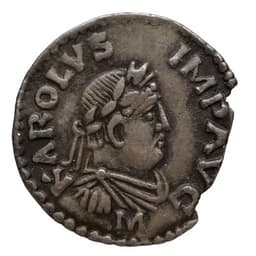
Charlemagne
Emperor · Medieval
71.0Total
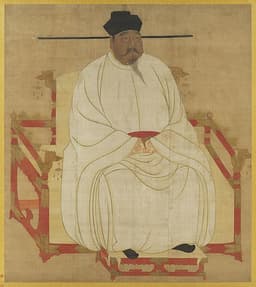
Zhao Kuangyin
Emperor · Medieval
71.5Total
Basic Information
Born
748
927
Died
814
976
Era
Medieval
Medieval
Nationality
Frankish Empire
China
Occupation
Emperor
Emperor
Civilization
Western
Eastern
Score Comparison
Military (10%)
80.0
78.0
Political (20%)
78.0
84.0
Influence (20%)
65.0
68.0
Legacy (20%)
65.0
65.0
Leadership (15%)
80.0
74.0
Strategy (15%)
68.0
68.0
TOTAL
71.0
71.5
Charlemagne — Complete Timeline
772 AD
Saxon WarsWar◆ Major
Charlemagne launched a series of campaigns against the Saxons lasting over three decades. He forcibly converted them to Christianity, incorporated their territory into the Frankish Empire, and ordered the execution of thousands at the Massacre of Verden in 782.
ConquestChristianizationWar
Impact: regionaldestructive
774 AD
Conquest of the Lombard KingdomWar◆ Major
Charlemagne answered Pope Adrian I's call for aid against the Lombards. He besieged and captured Pavia, deposed King Desiderius, and annexed the Lombard Kingdom into his domain, assuming the title 'King of the Lombards' and solidifying Frankish control over Italy.
ConquestItalyPapal Alliance
Impact: regional
779 AD
Capitulary of HerstalReform
Charlemagne issued a series of legal and administrative reforms at the assembly in Herstal. He standardized weights and measures, reformed the coinage system, and strengthened the authority of royal officials (missi dominici) to oversee local governance and justice.
Legal ReformAdministrationStandardization
Impact: nationalconstructive
780 AD
Carolingian Renaissance ReformsCultural◆ Major
Charlemagne initiated a program of educational and cultural revival, inviting scholars like Alcuin of York to his court. He standardized Latin script (Carolingian minuscule), established palace schools, and promoted the copying of classical texts, preserving ancient knowledge.
EducationCultural RevivalScript
Impact: globalprogressive
800 AD
Coronation as Holy Roman EmperorPolitical Action
Pope Leo III crowned Charlemagne as Emperor of the Romans in St. Peter's Basilica on Christmas Day. This act revived the Western Roman Empire, established a precedent for papal authority over imperial titles, and created a political entity that shaped medieval European politics.
CoronationHoly Roman EmpirePapacy
Impact: globalconstructive
Zhao Kuangyin — Complete Timeline
960 AD
Founded Song dynastyPolitical Action
Zhao Kuangyin, a general of Later Zhou, was proclaimed emperor by his troops at Chenqiao. He established the Song dynasty, ending the Five Dynasties period and beginning a new era of Chinese history.
Song dynastyFoundingChenqiao
Impact: globalconstructive
961 AD
Removed military power from generalsPolitical Action◆ Major
Zhao Kuangyin invited senior generals to a banquet and persuaded them to retire peacefully. This 'removal of military power over wine' prevented military coups and centralized control.
Song dynastyMilitary reformCentralization
Impact: nationalconstructive
963 AD
Unified southern ChinaWar◆ Major
Zhao Kuangyin launched campaigns to conquer the southern kingdoms, including Jingnan, Later Shu, and Southern Tang. By his death, most of China was reunified under Song rule.
Song unificationConquestSouthern kingdoms
Impact: national
Expert Analysis
Zhao Kuangyin vs Charlemagne
### The Emperor and the Unifier
On Christmas Day in the year 800, a massive Frankish king knelt before the altar of St. Peter’s Basilica in Rome. As Pope Leo III placed a golden crown upon his head, the congregation erupted in acclamation: “To Charles Augustus, crowned by God, great and peace-giving Emperor of the Romans!” It was a moment of supreme theatre, a fusion of church and state that would echo through a thousand years of European history.
A century and a half later and half a world away, a Chinese general named Zhao Kuangyin found himself in a very different kind of drama. His troops, camped at Chenqiao, draped a yellow imperial robe over his shoulders and declared him emperor. Unlike Charlemagne’s coronation, there was no pope, no ancient capital, no claim to Roman legitimacy. There was only the naked reality of military power—and the question of what to do with it.
Both men forged new dynasties. Both unified fractured lands. Yet one created an empire that dissolved within a generation, while the other built a dynasty that lasted three centuries. The difference lies not in their ambitions, but in the worlds that shaped them.
### Origins
Charlemagne was born into a world of blood and iron. His father, Pepin the Short, had seized the Frankish throne from the last Merovingian king, a figurehead who was paraded around in an oxcart. The young Charles grew up in a warrior culture where loyalty was measured in swords and plunder. He learned to ride before he could read, and his Latin was rudimentary at best. The Europe of his youth was a patchwork of warring tribes, crumbling Roman roads, and a Church desperate for protection.
Zhao Kuangyin emerged from a very different chaos. China in the tenth century was in the throes of the Five Dynasties and Ten Kingdoms period—a brutal cycle of coups and counter-coups where generals routinely murdered their emperors. Zhao himself served the Later Zhou dynasty, rising through the ranks by his competence and reputation for honesty. Unlike Charlemagne, he was literate and steeped in Chinese classical tradition. He knew the histories of the Han and Tang dynasties. He understood that the problem with China was not barbarians at the gate, but generals in the barracks.
### Rise to Power
Charlemagne’s path to power was straightforward: he inherited it. When Pepin died in 768, the Frankish kingdom was divided between Charles and his brother Carloman. When Carloman conveniently died three years later, Charles seized the entire realm. His rise was a matter of survival—he spent the next three decades fighting the Saxons, the Lombards, the Bavarians, and the Avars, hacking a kingdom out of the flesh of Europe.
Zhao Kuangyin’s rise was more delicate. He was a general serving a child emperor when his troops mutinied and proclaimed him emperor. The Chenqiao Mutiny of 960 was a familiar scene in Chinese history—the difference was what Zhao did next. He rode back to the capital, not at the head of a pillaging army, but as a man who had accepted a burden. He did not slaughter the previous imperial family; he treated them with courtesy. He did not purge the bureaucracy; he kept the civil service intact. From the very beginning, Zhao understood that the problem was not how to seize power, but how to keep it without being seized in turn.
### Leadership & Governance
Charlemagne governed like a war chieftain. He spent most of his reign on horseback, moving constantly between his palaces, holding assemblies where free men would shout their approval of his laws. His Capitulary of Herstal in 779 standardized weights, measures, and judicial procedures—but enforcement depended entirely on the loyalty of his counts, who were often little better than warlords. His Carolingian Renaissance brought scholars like Alcuin of York to his court, but it was a thin veneer of learning over a fundamentally violent society. Charlemagne himself never learned to write properly, though he kept a writing tablet under his pillow.
Zhao Kuangyin governed like a chess master. His most famous act was the "Removal of Military Power over a Cup of Wine" in 961. He invited his senior generals to a banquet, got them drunk, and then explained that he was worried their own troops might force them to rebel. He offered them land, wealth, and honorable retirement. They accepted. In one night, without bloodshed, Zhao dismantled the very system that had brought him to power. He then built a civil administration staffed by scholar-officials chosen through examinations. The military was subordinated to the civilian bureaucracy. The result was a stable, prosperous state—but one that would eventually grow too weak to defend its borders.
### Triumph & Tragedy
Charlemagne’s greatest triumph was his coronation in 800. It was a masterstroke of political theatre, declaring him the heir of the Roman emperors and the defender of Christendom. His greatest tragedy was the Saxon Wars, which lasted over thirty years and involved mass executions, forced conversions, and the destruction of an entire culture. At Verden in 782, he ordered the beheading of 4,500 Saxon prisoners. The blood of that massacre stained his legacy forever.
Zhao Kuangyin’s triumph was the peaceful unification of southern China. He conquered the kingdoms of Jingnan, Later Shu, and Southern Tang through a combination of military pressure and diplomatic persuasion. His tragedy was more subtle: by weakening the military to prevent coups, he created a system that could not resist the barbarian invasions that would eventually destroy the Song dynasty. The very stability he achieved contained the seeds of future defeat.
### Character & Destiny
Charlemagne was a man of immense physical presence—tall, barrel-chested, with a booming voice that terrified his courtiers. He was devout but ruthless, learned but illiterate, a unifier who ruled through fear. His personality was suited to a world where power was personal and violence was the final argument.
Zhao Kuangyin was a man of restraint and calculation. He was known for his frugality, his respect for scholars, and his reluctance to shed blood. When he died suddenly in 976, there were rumors that his brother had poisoned him—but even the rumors were quiet. His personality was suited to a world where power was institutional and legitimacy was the final argument.
### Legacy
Charlemagne is remembered as the Father of Europe. His empire shattered within a generation, but the idea of a unified Christian Europe survived. He gave the continent a myth of unity that would inspire Charlemagne, Napoleon, and the European Union.
Zhao Kuangyin is remembered as the founder of a golden age. The Song dynasty he created produced the world’s first paper money, movable type printing, and a flourishing of art and literature. But his greatest achievement was invisible: he taught China that a ruler could be strong without being a warrior.
### The Two Paths
In the end, both men faced the same question: how do you build something that lasts? Charlemagne answered with force, faith, and the charisma of a conqueror. Zhao Kuangyin answered with institutions, bureaucracy, and the humility of a man who knew that power corrupts even the powerful. One built a cathedral; the other built a machine. The cathedral still stands in the imagination of Europe. The machine ran for three hundred years. Which was the greater achievement? Perhaps the question itself reveals more about us than about them.
Rankings
🥇
Zhao KuangyinLeader
Mil: 78.0Pol: 84.0Inf: 68.0
71.5
🥈
Charlemagne
Mil: 80.0Pol: 78.0Inf: 65.0
71.0
+0.5 behind
How This Comparison Works
Algorithm
Each figure is scored on 6 dimensions (0—100 scale) based on structured historical data: Military (10%), Political (20%), Influence (20%), Legacy (20%), Leadership (15%), Strategy (15%). The weighted total produces the final ranking.
Data Sources
Scores are computed from structured sub-indicators in the database. Scale factors adjust for era (Ancient ×0.85, Modern ×1.0) and civilization size (Eastern ×1.05, Other ×0.80) to account for differences in population and military scale.
Maximum 3 Figures
Comparisons are limited to 2—3 figures to ensure readability and statistical meaningfulness.
Error Margins
±5 points per dimension — Sub-scores are derived from historical records with inherent uncertainty. Two figures within 5 points on a dimension should be considered roughly equivalent in that area.
Total Score Accuracy
±3 points overall — The weighted combination of 6 dimensions produces a total score with approximately ±3 points of uncertainty. Differences of less than 3 points are not statistically significant— the figures are effectively tied.
Known Limitations
- Historical records are incomplete and uneven across civilizations
- Figures from oral-tradition societies may be underrepresented
- Occupation labels can misclassify multi-role figures
- Scores measure capability and impact, not moral character
- Quantitative scoring is a comparison tool, not absolute truth
Capability Radar
Military (10%) — Battles & Warfare
Battles
85
75
Win Rate
90
85
Expansion
88
75
Political (20%) — Governance & Reform
Reform
90
90
Diplomacy
80
85
Economy
75
80
Influence (20%) — Cultural & Global Reach
Cultural
85
70
Global
80
60
Legacy (20%) — Historical Impact
Historical
90
80
Longevity
85
75
Leadership (15%) — Power & Stability
Tenure
85
65
Stability
70
85
Strategy (15%) — Tactics & Innovation
Strategy
85
80
Tactics
75
70
Reform
80
90
Similar Comparisons
Comments & Discussion
No comments yet. Be the first to share your thoughts!