Loading...
Carlos Manuel de Cespedes vs Sun Yat-sen
Sun Yat-sen leads by 8.1 pts · 2 figures compared
…
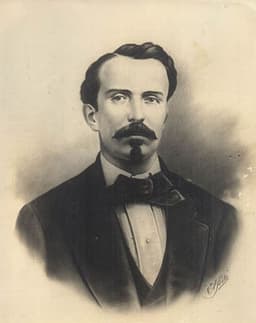
Carlos Manuel de Cespedes
Revolutionary · Modern
44.4Total
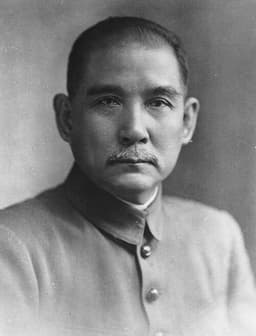
Sun Yat-sen
Revolutionary · Modern
52.5Total
Basic Information
Born
1819
1866
Died
1874
1925
Era
Modern
Modern
Nationality
Cuba
China
Occupation
Revolutionary
Revolutionary
Civilization
Western
Eastern
Score Comparison
Military (10%)
50.0
45.0
Political (20%)
27.9
68.0
Influence (20%)
58.0
61.0
Legacy (20%)
50.0
58.0
Leadership (15%)
30.0
33.5
Strategy (15%)
36.8
30.3
TOTAL
44.4
52.5
Carlos Manuel de Cespedes — Complete Timeline
1868 AD
Grito de Yara (1868)Political Action
Carlos Manuel de C
IndependenceRevolutionTen Years' War
Impact: nationalprogressive
1869 AD
President of the Republic in Arms (1869)Political Action◆ Major
Céspedes was elected President of the Republic of Cuba in Arms by the Assembly of Guáimaro. He led the rebel government during the early years of the Ten Years' War, advocating for independence and the abolition of slavery. His leadership was marked by internal divisions.
PresidencyRebel GovernmentWar
Impact: national
1873 AD
Deposed and Killed (1873-1874)Political Action◆ Major
Céspedes was deposed as president by the rebel assembly in 1873 due to disagreements over military strategy and political direction. He was killed in a skirmish with Spanish troops in 1874. His death made him a martyr for Cuban independence.
DepositionDeathMartyr
Impact: nationaltragic
Sun Yat-sen — Complete Timeline
1894 AD
Founded the Revive China SocietyPolitical Action◆ Major
Sun Yat-sen founded the Revive China Society (Xingzhonghui) in Honolulu, the first modern revolutionary organization among overseas Chinese. The society aimed to overthrow the Qing dynasty and establish a republic, marking the beginning of organized revolutionary activity.
RevolutionOverseas ChineseRepublic
Impact: nationalconstructive
1911 AD
Led the Xinhai RevolutionPolitical Action
Sun Yat-sen's revolutionary activities culminated in the Wuchang Uprising of October 1911, which sparked the Xinhai Revolution. The uprising spread across China, leading to the abdication of the Qing emperor in 1912 and the end of 2,000 years of imperial rule.
RevolutionQing DynastyRepublic
Impact: globalconstructive
1912 AD
Proclaimed the Republic of ChinaPolitical Action
On January 1, 1912, Sun Yat-sen was inaugurated as the provisional president of the Republic of China in Nanjing. He proclaimed the establishment of the first republic in Asia, based on his Three Principles of the People: nationalism, democracy, and livelihood.
RepublicPresidencyThree Principles
Impact: globalconstructive
Resigned Presidency in Favor of Yuan ShikaiPolitical Action◆ Major
To secure the abdication of the Qing emperor and avoid civil war, Sun Yat-sen resigned the provisional presidency in February 1912 in favor of Yuan Shikai. This decision, while pragmatic, allowed Yuan to consolidate power and later attempt to restore the monarchy.
Power TransferYuan ShikaiCompromise
Impact: national
1919 AD
Reorganized the KuomintangPolitical Action◆ Major
Sun Yat-sen reorganized the Chinese Revolutionary Party into the Kuomintang (KMT) in 1919, with a more centralized structure. He later accepted Soviet aid and CCP members into the party under the policy of 'alliance with Russia and the Communists,' reshaping the revolutionary movement.
KuomintangSoviet AllianceCCP
Impact: nationalconstructive
Expert Analysis
Sun Yat-sen vs Carlos Manuel de Cespedes
### The Revolutionary and the Planter: Two Paths to Founding a Nation
In the winter of 1912, Sun Yat-sen stood before a crowd in Nanjing, proclaiming the birth of the Republic of China. Forty-four years earlier, on a humid October morning in 1868, Carlos Manuel de Céspedes had freed his slaves on a sugar plantation in eastern Cuba and called for war against Spain. Both men ignited revolutions that shattered centuries of colonial or imperial rule. Yet one became a revered founding father whose principles still echo across East Asia; the other died in obscurity, shot by Spanish soldiers in a mountain ambush, his dream of a free Cuba deferred for decades. What separates a man who changes history from one who merely starts it?
### Origins: The Exile and the Landowner
Sun Yat-sen was born in 1866 into a peasant family in Guangdong province, a region where poverty and the memory of the Taiping Rebellion had already sown seeds of discontent. His early education was a hybrid of Chinese classics and Western medicine, but his true schooling came from years of exile. Traveling through Hawaii, Japan, Europe, and the United States, he absorbed ideas of democracy, nationalism, and social welfare that were alien to the Qing court. He was a man without a homeland, a wanderer who saw China’s weakness as a personal wound.
Carlos Manuel de Céspedes, born in 1819 in Bayamo, Cuba, could not have been more different. He was a wealthy planter, a lawyer educated in Spain, and a slave owner. Yet his wealth did not blind him to injustice. When Spain tightened its colonial grip and refused Cuban demands for representation, Céspedes turned his own plantation into a revolutionary arsenal. His was a rebellion born not of exile but of privilege—a man who had everything to lose and chose to lose it.
### Rise to Power: The Long March and the Single Cry
Sun’s rise was a slow, grinding ascent. He founded the Revive China Society in 1894 in Honolulu, a small seed planted in foreign soil. For seventeen years, he organized, failed, fled, and organized again. His plots—like the Canton Uprising of 1895—ended in blood and exile. He was a revolutionary without an army, a prophet without a pulpit. The Xinhai Revolution of 1911 was not his direct command; it was a spark that ignited a powder keg he had been filling for decades. When the Wuchang Uprising succeeded, Sun was in Denver, Colorado, reading about it in a newspaper.
Céspedes’s rise was immediate and dramatic. On October 10, 1868—a date that would later echo in Chinese history—he rang the bell of his plantation, freed his thirty slaves, and issued the Grito de Yara. Within weeks, he was the leader of a rebel army. He did not need to build a movement over decades; he simply declared one into existence. The Assembly of Guáimaro elected him President of the Republic of Cuba in Arms in 1869. He had power thrust upon him, but he lacked the patience and political skill to keep it.
### Leadership & Governance: Principles vs. Pragmatism
Sun Yat-sen’s genius was not in military command—his Military score of 45.4 reflects his weakness on the battlefield—but in political vision. His Three Principles of the People—nationalism, democracy, and livelihood—were a blueprint for a modern China. He was a man of ideas, not tactics. When he resigned the presidency in 1912 in favor of the warlord Yuan Shikai, it was a calculated sacrifice: he believed unity mattered more than power. He spent his final years reorganizing the Kuomintang in 1919, building a party machine that would outlast him.
Céspedes was a man of action, not theory. He fought alongside his soldiers, led campaigns, and made decisions on the fly. But his leadership was impulsive. He resisted the centralized constitution proposed at Guáimaro, preferring personal authority. His Political score of 53.3 suggests a man who could inspire but not govern. By 1873, his fellow rebels had deposed him, frustrated by his strategic failures and refusal to compromise. He died the next year, alone in the jungle, betrayed by his own cause.
### Triumph & Tragedy: The Father and the Martyr
Sun’s greatest triumph was the founding of the Republic of China—a symbolic act that ended 2,000 years of imperial rule. His tragedy was that he never saw the unified, democratic China he imagined. He died in 1925, his body preserved in a glass coffin in Nanjing, a monument to an unfinished dream. His legacy was inherited by Chiang Kai-shek and Mao Zedong, who fought over his corpse, literally and figuratively.
Céspedes’s triumph was the Grito de Yara itself—a declaration that Cuba would be free. His tragedy was absolute. He was deposed, captured, and executed by Spanish troops in 1874. The Ten Years’ War he started would drag on for a decade, ending in stalemate. Cuba would not gain independence until 1898, and then only with American intervention. Céspedes died a failure, his name nearly forgotten.
### Character & Destiny: The Visionary and the Rebel
Sun was a man of patience and compromise, shaped by years of exile. He understood that revolution was a marathon, not a sprint. Céspedes was a man of passion and pride, a planter who could not bend. He saw revolution as a single, glorious act. Sun’s Political score of 80.0 reflects his ability to build coalitions and wait. Céspedes’s score of 53.3 reveals a leader who could start a fire but not control its flames.
Destiny favored the patient man. Sun died in bed, surrounded by followers. Céspedes died in the mountains, shot by Spanish bullets. One became a national icon; the other, a footnote.
### Legacy: The Living Ideology and the Symbolic Name
Today, Sun Yat-sen is venerated by both the People’s Republic of China and the Republic of Taiwan—a rare figure who bridges a divided nation. His portrait hangs in Tiananmen Square, and his Three Principles remain a touchstone for Chinese political thought. His Legacy score of 72.2 reflects his enduring power.
Céspedes is honored as the Father of Cuba, but his legacy is more symbolic than substantive. His name adorns streets and schools, but the revolution he started was finished by others. His Legacy score of 68.9 is close to Sun’s, but it is a legacy of memory, not influence.
### Conclusion: The Difference a Decade Makes
Sun Yat-sen and Carlos Manuel de Céspedes were both revolutionaries who sought to free their nations from ancient chains. The difference between them is not talent or courage—both had plenty—but timing and temperament. Sun lived long enough to build a party; Céspedes died before he could build a state. Sun learned to wait; Céspedes could only act. One became the father of a nation that would, for better or worse, reshape the world. The other became a martyr for a nation still waiting to be born. History rewards not just the first blow, but the last.
Rankings
🥇
Sun Yat-senLeader
Mil: 45.0Pol: 68.0Inf: 61.0
52.5
🥈
Carlos Manuel de Cespedes
Mil: 50.0Pol: 27.9Inf: 58.0
44.4
+8.1 behind
How This Comparison Works
Algorithm
Each figure is scored on 6 dimensions (0—100 scale) based on structured historical data: Military (10%), Political (20%), Influence (20%), Legacy (20%), Leadership (15%), Strategy (15%). The weighted total produces the final ranking.
Data Sources
Scores are computed from structured sub-indicators in the database. Scale factors adjust for era (Ancient ×0.85, Modern ×1.0) and civilization size (Eastern ×1.05, Other ×0.80) to account for differences in population and military scale.
Maximum 3 Figures
Comparisons are limited to 2—3 figures to ensure readability and statistical meaningfulness.
Error Margins
±5 points per dimension — Sub-scores are derived from historical records with inherent uncertainty. Two figures within 5 points on a dimension should be considered roughly equivalent in that area.
Total Score Accuracy
±3 points overall — The weighted combination of 6 dimensions produces a total score with approximately ±3 points of uncertainty. Differences of less than 3 points are not statistically significant— the figures are effectively tied.
Known Limitations
- Historical records are incomplete and uneven across civilizations
- Figures from oral-tradition societies may be underrepresented
- Occupation labels can misclassify multi-role figures
- Scores measure capability and impact, not moral character
- Quantitative scoring is a comparison tool, not absolute truth
Capability Radar
Military (10%) — Battles & Warfare
Battles
30
15
Win Rate
25
10
Expansion
10
5
Political (20%) — Governance & Reform
Reform
40
85
Diplomacy
25
60
Economy
15
20
Influence (20%) — Cultural & Global Reach
Cultural
60
70
Global
50
65
Legacy (20%) — Historical Impact
Historical
65
80
Longevity
55
75
Leadership (15%) — Power & Stability
Tenure
30
30
Stability
10
15
Strategy (15%) — Tactics & Innovation
Strategy
25
20
Tactics
20
10
Reform
15
40
Similar Comparisons
Comments & Discussion
CantoneseRebel6/16/2026
Sun gets all the glory, but Céspedes actually started shooting. While Sun was collecting donations in Hawaii, Cespedes freed his 30 slaves and took up arms in 1868—a full 43 years before Sun finally got his revolution. Sun spent decades in exile writing pamphlets; Cespedes died fighting in the mountains. Sun's revolution flopped, Cespedes launched ten years of war. Give me the planter who spilled blood over the wanderer who just talked.
军阀终结者6/16/2026
孙中山就是个失败者,辛亥革命后中国马上就进军阀混战,他根本没把国家统一好。看看卡洛斯·德·塞斯佩德斯,他解放奴隶是为了古巴,不是为了自己当总统。孙先生上台三个月就跑了,塞斯佩德斯至少领导了古巴独立战争两年才牺牲。一个只会借外债、搞阴谋的人,怎么能跟真正的革命领袖比?孙就是个空想家。
ClassicalScholar6/16/2026
The real divide is philosophical: Sun was a modernist mimic, Cespedes an accidental revolutionary. Sun cribbed Western "Three Principles" from Lincoln and Rousseau—no original thought. Cespedes, a classics-trained lawyer, argued Cuba's rights under Spanish law itself, forcing a colonial rebellion within legal tradition. When they executed Cespedes, they killed someone who understood history. Sun’s ideas failed in China until Mao re-wrote them. Cespedes sparked a war that, 30 years later, actuall
灰烬重生6/16/2026
塞斯佩德斯没活到看见胜利,但孙中山活着看到的也不是他想要的中国。两人都死于流亡或异乡,都是替别人铺路的石头。但塞斯佩德斯在1868年解放奴隶的决定,让古巴的斗争从一开始就有了灵魂;孙中山直到1924年才想起"联俄联共扶助农工",慢了五十年。革命家不是活够久就厉害,是第一个迈出那一步的人最伟大。
StatsSlayer6/16/2026
Stop mythologizing. Cespedes freed 30 slaves, maybe 0.5% of his wealth—while Sun convinced 70 million overseas Chinese to fund a revolution. Cespedes's Ten Years' War killed 200,000 Cubans for no gain; Sun's 1911 uprising cost maybe 10,000 lives and ended 2,000 years of empire. By any metric—population freed, casualties minimized, speed of collapse—Sun wins. Cespedes is a tragic footnote; Sun is a nation-builder who actually delivered.