Loading...
Carlos Manuel de Cespedes vs Shamil Basayev
Carlos Manuel de Cespedes leads by 1.3 pts · 2 figures compared
…
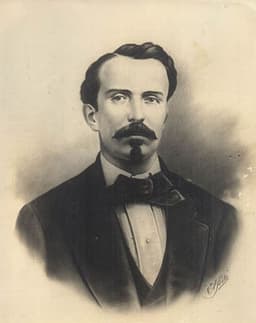
Carlos Manuel de Cespedes
Revolutionary · Modern
44.4Total
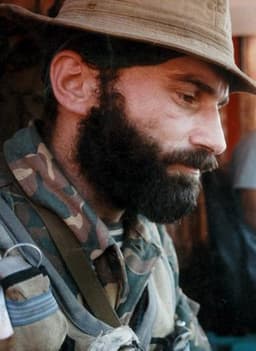
Shamil Basayev
Revolutionary · Modern
43.1Total
Basic Information
Born
1819
1965
Died
1874
—
Era
Modern
Modern
Nationality
Cuba
Chechnya
Occupation
Revolutionary
Revolutionary
Civilization
Western
Western
Score Comparison
Military (10%)
50.0
40.0
Political (20%)
27.9
35.0
Influence (20%)
58.0
45.5
Legacy (20%)
50.0
35.0
Leadership (15%)
30.0
57.1
Strategy (15%)
36.8
51.7
TOTAL
44.4
43.1
Carlos Manuel de Cespedes — Complete Timeline
1868 AD
Grito de Yara (1868)Political Action
Carlos Manuel de C
IndependenceRevolutionTen Years' War
Impact: nationalprogressive
1869 AD
President of the Republic in Arms (1869)Political Action◆ Major
Céspedes was elected President of the Republic of Cuba in Arms by the Assembly of Guáimaro. He led the rebel government during the early years of the Ten Years' War, advocating for independence and the abolition of slavery. His leadership was marked by internal divisions.
PresidencyRebel GovernmentWar
Impact: national
1873 AD
Deposed and Killed (1873-1874)Political Action◆ Major
Céspedes was deposed as president by the rebel assembly in 1873 due to disagreements over military strategy and political direction. He was killed in a skirmish with Spanish troops in 1874. His death made him a martyr for Cuban independence.
DepositionDeathMartyr
Impact: nationaltragic
Shamil Basayev — Complete Timeline
1995 AD
Budyonnovsk Hospital Hostage CrisisWar◆ Major
Basayev led a raid on the Russian town of Budyonnovsk, taking over 1,000 hostages in a hospital. The crisis ended with a negotiated settlement that allowed him to return to Chechnya. This attack demonstrated Chechen reach into Russia.
Hostage CrisisTerrorismChechnya
Impact: nationaldestructive
1999 AD
Invasion of DagestanWar
Basayev led Chechen and Islamist fighters into Dagestan to support local rebels. This invasion triggered the Second Chechen War as Russia responded with a full-scale military campaign. The invasion failed to gain local support.
DagestanChechnyaInvasion
Impact: regionaldestructive
2002 AD
Moscow Theater Hostage CrisisWar◆ Major
Basayev orchestrated the Moscow theater hostage crisis, where Chechen militants took 850 people hostage. Russian forces ended the siege with gas, killing 130 hostages. The attack increased international condemnation of Chechen rebels.
Hostage CrisisTerrorismMoscow
Impact: nationaldestructive
2004 AD
Beslan School SiegeWar◆ Major
Basayev planned the Beslan school siege, where militants took over 1,100 people hostage. The siege ended in a bloody assault, resulting in 334 deaths, mostly children. This attack was widely condemned globally.
Hostage CrisisTerrorismBeslan
Impact: globaltragic
2006 AD
Killed by Russian ExplosivesWar◆ Major
Basayev was killed in Ingushetia when a truck loaded with explosives detonated. Russian intelligence claimed responsibility. His death removed the most prominent Chechen rebel commander.
AssassinationChechnyaRussia
Impact: regional
Expert Analysis
Shamil Basayev vs Carlos Manuel de Cespedes
### The Revolutionary’s Mirror: Shamil Basayev and Carlos Manuel de Céspedes
On a sweltering June morning in 1995, a man with a Kalashnikov slung across his back strode into a hospital in southern Russia, his face hidden behind a mask of determination. Two thousand miles away and over a century earlier, a sugar planter in eastern Cuba stood before his slaves and freed them, then raised a flag of rebellion against the Spanish Empire. Both men sought to tear down an old order and build a new nation. One became the father of his country; the other, a ghost haunting its ruins. What separates the liberator from the terrorist? The answer lies not in their dreams, but in the soil where those dreams took root.
**Origins**
Carlos Manuel de Céspedes was born in 1819 into the Cuban planter aristocracy. He studied law in Spain, traveled through Europe, and returned to a Cuba simmering under Spanish colonial rule. He was a man of the Enlightenment—a freemason, a poet, a lawyer who believed in reason, liberty, and the right of men to govern themselves. When he freed his slaves in 1868, it was not a desperate act but a calculated one: he understood that a revolution needed a moral foundation.
Shamil Basayev came from a different world. Born in 1965 in the Chechen village of Vedeno, he grew up in the shadow of Soviet power and the trauma of Stalin’s 1944 deportation of the Chechen people. His father was a farmer, his mother a teacher. The mountains of the Caucasus taught him endurance; the wars of the 1990s taught him violence. Where Céspedes had books and parliaments, Basayev had a rocket-propelled grenade and a memory of genocide. His revolution was not born from philosophy but from survival.
**Rise to Power**
Céspedes entered history with a single gesture. On October 10, 1868, he rang the bell of his plantation, La Demajagua, and declared Cuba independent. This *Grito de Yara* was a turning point—a call that spread across the island like wildfire. He was neither a soldier nor a strategist by training, but he became the moral center of a rebellion that would last a decade. His power came from his legitimacy: he was a respected landowner who chose to sacrifice everything for freedom.
Basayev’s rise was forged in fire. In 1991, as the Soviet Union collapsed, he hijacked a plane to Turkey to protest Chechnya’s treatment. By 1994, when the First Chechen War erupted, he was already a commander. But his true ascent came in 1995, when he led the Budyonnovsk hospital siege. Holding over a thousand hostages, he forced the Russian government to negotiate—a stunning humiliation for Moscow. That crisis made him a hero to Chechens and a monster to Russians. He had no parliament to elect him; his authority came from the barrel of a gun.
**Leadership & Governance**
Céspedes was a political leader first. As President of the Republic in Arms from 1869, he tried to build a state within a war zone—creating laws, appointing ministers, and struggling to unite a fractious rebel coalition. His greatest challenge was not the Spanish but his own commanders, who disagreed over strategy and leadership. He was deposed in 1873 by his own assembly, a victim of his belief in democratic process even amid chaos.
Basayev governed through terror. After the Second Chechen War began in 1999, he transformed from a nationalist fighter into an Islamist militant, marrying Chechen independence to global jihad. His military score of 55.8 reflects tactical skill—the Moscow theater siege in 2002 and the Beslan school siege in 2004 were meticulously planned. But his political score of 38.8 reveals a fatal flaw: he could destroy but could not build. His leadership was charismatic but nihilistic, inspiring loyalty only through shared hatred.
**Triumph & Tragedy**
Céspedes’ triumph was the Ten Years’ War itself—a rebellion that lasted from 1868 to 1878, proving that Cuba could fight for its soul. His tragedy was his deposition and death in 1874, killed by Spanish soldiers while hiding in the mountains. He died alone, abandoned by the movement he had started. Yet his dream survived: Cuba’s independence came in 1898, and he is remembered as its father.
Basayev’s greatest moment was also his darkest. The Beslan school siege in September 2004, which left 334 dead—including 186 children—marked the peak of his notoriety. It was a triumph of fear, but a tragedy for his cause. After Beslan, even many Chechens turned away. He was killed in 2006 by Russian explosives, his body obliterated. His legacy score of 47.7 reflects a man who achieved infamy but not nationhood.
**Character & Destiny**
Céspedes was a man of principle. He freed his slaves because he believed in equality, even when it cost him his wealth and his life. His character was shaped by the Enlightenment faith in progress—a conviction that history moves toward justice. Basayev was a man of grievance. His character was forged by war, displacement, and the conviction that only violence could answer violence. Where Céspedes saw a future of laws, Basayev saw a future of revenge.
**Legacy**
Céspedes is a statue in Havana, a name on coins, a date in textbooks. His *Grito de Yara* is taught as the birth of the Cuban nation. His flaws—his authoritarian tendencies, his failure to unite the rebels—are remembered but forgiven. Basayev is a specter. In Chechnya, he is a martyr to some, a curse to others. In Russia, he is a symbol of terror. No statue stands for him; his name is a warning.
**Conclusion**
The difference between these two revolutionaries is not one of morality alone—it is one of context. Céspedes rose in a world where the idea of nationhood was gaining power, where a planter could become a president. Basayev rose in a world where empires had collapsed and left only ruins, where a fighter could only become a killer. One built a foundation; the other lit a fire. In the end, history remembers those who build, not those who burn. But it also remembers the fire, and that is the tragedy of Shamil Basayev.
Rankings
🥇
Carlos Manuel de CespedesLeader
Mil: 50.0Pol: 27.9Inf: 58.0
44.4
🥈
Shamil Basayev
Mil: 40.0Pol: 35.0Inf: 45.5
43.1
+1.3 behind
How This Comparison Works
Algorithm
Each figure is scored on 6 dimensions (0—100 scale) based on structured historical data: Military (10%), Political (20%), Influence (20%), Legacy (20%), Leadership (15%), Strategy (15%). The weighted total produces the final ranking.
Data Sources
Scores are computed from structured sub-indicators in the database. Scale factors adjust for era (Ancient ×0.85, Modern ×1.0) and civilization size (Eastern ×1.05, Other ×0.80) to account for differences in population and military scale.
Maximum 3 Figures
Comparisons are limited to 2—3 figures to ensure readability and statistical meaningfulness.
Error Margins
±5 points per dimension — Sub-scores are derived from historical records with inherent uncertainty. Two figures within 5 points on a dimension should be considered roughly equivalent in that area.
Total Score Accuracy
±3 points overall — The weighted combination of 6 dimensions produces a total score with approximately ±3 points of uncertainty. Differences of less than 3 points are not statistically significant— the figures are effectively tied.
Known Limitations
- Historical records are incomplete and uneven across civilizations
- Figures from oral-tradition societies may be underrepresented
- Occupation labels can misclassify multi-role figures
- Scores measure capability and impact, not moral character
- Quantitative scoring is a comparison tool, not absolute truth
Capability Radar
Military (10%) — Battles & Warfare
Battles
30
45
Win Rate
25
40
Expansion
10
15
Political (20%) — Governance & Reform
Reform
40
5
Diplomacy
25
10
Economy
15
5
Influence (20%) — Cultural & Global Reach
Cultural
60
20
Global
50
20
Legacy (20%) — Historical Impact
Historical
65
25
Longevity
55
15
Leadership (15%) — Power & Stability
Tenure
30
10
Stability
10
5
Strategy (15%) — Tactics & Innovation
Strategy
25
35
Tactics
20
55
Reform
15
20
Similar Comparisons
Comments & Discussion
No comments yet. Be the first to share your thoughts!