Loading...
Carlos Manuel de Cespedes vs Qin Shi Huang
Qin Shi Huang leads by 40.8 pts · 2 figures compared
…
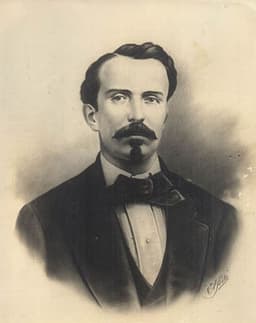
Carlos Manuel de Cespedes
Revolutionary · Modern
44.4Total
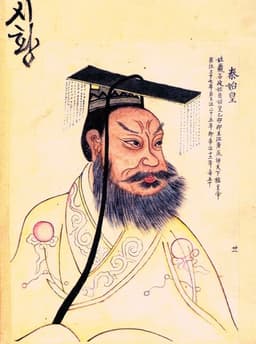
Qin Shi Huang
Emperor · Ancient
85.2Total
Basic Information
Born
1819
-259
Died
1874
-210
Era
Modern
Ancient
Nationality
Cuba
China
Occupation
Revolutionary
Emperor
Civilization
Western
Eastern
Score Comparison
Military (10%)
50.0
80.0
Political (20%)
27.9
90.0
Influence (20%)
58.0
85.0
Legacy (20%)
50.0
90.0
Leadership (15%)
30.0
78.0
Strategy (15%)
36.8
82.0
TOTAL
44.4
85.2
Carlos Manuel de Cespedes — Complete Timeline
1868 AD
Grito de Yara (1868)Political Action
Carlos Manuel de C
IndependenceRevolutionTen Years' War
Impact: nationalprogressive
1869 AD
President of the Republic in Arms (1869)Political Action◆ Major
Céspedes was elected President of the Republic of Cuba in Arms by the Assembly of Guáimaro. He led the rebel government during the early years of the Ten Years' War, advocating for independence and the abolition of slavery. His leadership was marked by internal divisions.
PresidencyRebel GovernmentWar
Impact: national
1873 AD
Deposed and Killed (1873-1874)Political Action◆ Major
Céspedes was deposed as president by the rebel assembly in 1873 due to disagreements over military strategy and political direction. He was killed in a skirmish with Spanish troops in 1874. His death made him a martyr for Cuban independence.
DepositionDeathMartyr
Impact: nationaltragic
Qin Shi Huang — Complete Timeline
246 BC
Construction of the Mausoleum and Terracotta ArmyOther◆ Major
Qin Shi Huang commissioned a vast mausoleum complex near Xi'an, guarded by thousands of life-sized terracotta soldiers, horses, and chariots. The project employed hundreds of thousands of workers and reflected his obsession with immortality and imperial power.
Impact: global
230 BC
Conquest of the Six Warring StatesWar
From 230 to 221 BCE, Ying Zheng led the Qin state in a series of campaigns that conquered the Han, Zhao, Wei, Chu, Yan, and Qi states. This unified China under a single ruler for the first time, ending the Warring States period.
Impact: global
221 BC
Standardization of Writing, Currency, and MeasurementsReform◆ Major
Qin Shi Huang ordered the standardization of Chinese script, currency, and weights and measures across the unified empire. This facilitated administration, trade, and cultural integration, laying a foundation for future dynasties.
Impact: globalconstructive
Proclamation of the Qin DynastyPolitical Action
After conquering the last independent state, Ying Zheng declared himself Shi Huangdi (First Emperor), founding the Qin Dynasty. He adopted a new title to signify his supreme authority and initiated centralized imperial rule.
Impact: global
214 BC
Initiation of the Great Wall ConstructionOther◆ Major
Qin Shi Huang ordered the connection and extension of existing northern fortifications to create a unified defensive wall against nomadic Xiongnu raids. This project involved massive conscripted labor and became the precursor to the later Great Wall.
Impact: regional
213 BC
Burning of Books and Burying of ScholarsPolitical Action◆ Major
On the advice of Li Si, Qin Shi Huang ordered the burning of historical records and philosophical texts not aligned with Legalist doctrine. He also had 460 Confucian scholars buried alive to suppress dissent and consolidate ideological control.
Impact: nationaldestructive
Expert Analysis
carlos-manuel-de-cespedes-vs-qin-shi-huang
# The Emperor and the Planter: Two Paths to Founding a Nation
On a spring morning in 221 BC, a young king in his late thirties stood before the conquered capitals of six rival states and declared himself *Shi Huangdi*—the First Emperor. Two thousand years later, on October 10, 1868, a Cuban sugar planter in his late forties stood before his slaves and workers on a plantation called La Demajagua, freed them, and shouted *¡Viva Cuba Libre!* Both men sought to forge a new nation. One succeeded in a matter of years; the other died in exile, his dream deferred for three decades. What made the difference—and what do their stories reveal about the nature of founding moments?
Origins
Ying Zheng was born in 259 BC into the royal house of Qin, a semi-barbarian state on the western frontier of Zhou China. His father was a prince who had been a hostage in the rival state of Zhao; his mother, a concubine of uncertain origins. The boy king ascended the throne at thirteen, surrounded by scheming regents and a mother whose lover plotted against him. He learned early that trust was a weapon, not a gift.
Carlos Manuel de Céspedes was born in 1819 in Bayamo, Cuba, into a wealthy Creole family that owned sugar plantations and slaves. He studied law at the University of Havana, then traveled through Spain and Europe, absorbing the liberal ideas of the age. When he returned to Cuba, he was a man of the Enlightenment living in a colony built on slavery—a contradiction that would define his life.
The difference in their eras was as vast as the distance between their worlds. Qin Shi Huang came of age in the Warring States period, a brutal 250-year contest where seven kingdoms fought for survival. War was his inheritance; conquest his education. Céspedes, by contrast, lived in the twilight of the Spanish Empire, when revolutionary fervor had already toppled kings in France and broken colonies in the Americas. His models were Bolívar and Washington, not Sun Tzu and Shang Yang.
Rise to Power
Qin Shi Huang’s rise was a military campaign. At twenty-two, he crushed a rebellion by his mother’s lover, executed the man, and exiled his mother—a cold act that signaled his readiness to rule alone. He then turned to his chancellor, Li Si, and a brilliant strategist named Wei Liao. Together, they devised a plan: bribe the ministers of rival states, sow discord, then strike. From 230 to 221 BC, Qin armies rolled over one kingdom after another—Han, Zhao, Wei, Chu, Yan, Qi. Each conquest was methodical, ruthless, and final. By 221 BC, Ying Zheng had no rivals left.
Céspedes’s rise was a declaration. For years, Cuban Creoles had petitioned Spain for reforms—representation in the Cortes, freedom to trade, an end to discriminatory taxes. Spain ignored them. On the morning of October 10, 1868, Céspedes rang the bell of his plantation, gathered his slaves, and told them they were free. Then he read the *Grito de Yara*, a manifesto declaring Cuban independence. Within weeks, hundreds of men joined him—farmers, professionals, freed slaves, and former soldiers. He had no army, no treasury, no foreign ally. He had only his conviction and a sugar mill that he converted into a fortress.
Leadership & Governance
Qin Shi Huang governed as he conquered: with iron uniformity. He abolished the feudal system and divided his empire into thirty-six commanderies, each governed by appointed officials. He standardized writing, currency, weights, and measures—creating a common language of commerce and administration across a territory larger than any European kingdom. He ordered the burning of books that challenged his Legalist philosophy and buried scholars alive who resisted. In 214 BC, he began linking the northern walls into what would become the Great Wall, a project that cost thousands of lives but secured his borders.
Céspedes governed as he lived: with principle, but without the machinery of state. As President of the Republic in Arms, elected in 1869, he faced an impossible task. His army was a collection of guerrilla bands, his treasury empty, his government a traveling assembly that met in jungle clearings. He insisted on civilian control over the military—a noble ideal that alienated his generals. He refused to abolish slavery outright, fearing it would split his movement—a pragmatic compromise that angered abolitionists. He was a lawyer trying to build a state while fighting a war, and the contradictions tore him apart.
Triumph & Tragedy
Qin Shi Huang’s triumph was total: he united China for the first time in history. His tragedy was the price of that unity. The Great Wall consumed lives; the book burnings consumed knowledge; the search for an elixir of immortality consumed his final years. He died in 210 BC at age forty-nine, possibly from mercury poisoning from the very pills meant to preserve him. His dynasty collapsed within four years of his death.
Céspedes’s triumph was symbolic: he lit a fire that would not be extinguished. His tragedy was personal and political. In 1873, the rebel assembly deposed him, accusing him of authoritarian tendencies and poor military judgment. He retreated to a remote mountain cabin. On February 27, 1874, Spanish troops surrounded him. He drew his pistol and fought until he was shot down. His body was never recovered.
Character & Destiny
Qin Shi Huang was a man who believed in order above all else. He saw chaos as the enemy and unity as the only salvation. His paranoia—he slept in a different palace each night to avoid assassination—mirrored his ambition. He trusted no one, not even his own sons. That suspicion built an empire but could not sustain it.
Céspedes was a man who believed in liberty above all else. He saw oppression as the enemy and independence as the only justice. His idealism—he freed his slaves before the war, then compromised on abolition during it—mirrored his tragedy. He wanted to be both a liberator and a statesman, but the war demanded he choose. He chose principle, and lost.
Legacy
Qin Shi Huang’s legacy is the Chinese state itself. The administrative system he created—centralized, bureaucratic, meritocratic—endured for two millennia. The Terracotta Army, discovered in 1974, stands as a silent monument to his power and his vision. He is remembered as both a unifier and a tyrant, the man who made China possible and the man who nearly destroyed it.
Céspedes’s legacy is the Cuban nation. The Ten Years’ War he started ended in 1878 without victory, but it shattered the myth of Spanish invincibility. When José Martí launched the final war for independence in 1895, he invoked Céspedes’s name. Today, every Cuban schoolchild knows the *Grito de Yara*. He is remembered as the *Padre de la Patria*—the Father of the Nation—even though he never saw it born.
Conclusion
One emperor built an empire in a decade; one planter began a revolution that took thirty years to complete. The difference was not in their courage but in their circumstances. Qin Shi Huang inherited a war machine and a philosophy of total control; Céspedes inherited a plantation and a dream of freedom. The First Emperor could command armies and bureaucracies; the Father of the Nation could only inspire men. And yet, both succeeded in the way that matters most: they changed the course of history. The Chinese state still bears the marks of its first emperor; the Cuban nation still honors its first martyr. In the end, founding a nation is not about the length of a reign but the depth of a vision—and both men saw farther than their contemporaries, even if one saw through a lens of iron and the other through a lens of light.
Rankings
🥇
Qin Shi HuangLeader
Mil: 80.0Pol: 90.0Inf: 85.0
85.2
🥈
Carlos Manuel de Cespedes
Mil: 50.0Pol: 27.9Inf: 58.0
44.4
+40.8 behind
How This Comparison Works
Algorithm
Each figure is scored on 6 dimensions (0—100 scale) based on structured historical data: Military (10%), Political (20%), Influence (20%), Legacy (20%), Leadership (15%), Strategy (15%). The weighted total produces the final ranking.
Data Sources
Scores are computed from structured sub-indicators in the database. Scale factors adjust for era (Ancient ×0.85, Modern ×1.0) and civilization size (Eastern ×1.05, Other ×0.80) to account for differences in population and military scale.
Maximum 3 Figures
Comparisons are limited to 2—3 figures to ensure readability and statistical meaningfulness.
Error Margins
±5 points per dimension — Sub-scores are derived from historical records with inherent uncertainty. Two figures within 5 points on a dimension should be considered roughly equivalent in that area.
Total Score Accuracy
±3 points overall — The weighted combination of 6 dimensions produces a total score with approximately ±3 points of uncertainty. Differences of less than 3 points are not statistically significant— the figures are effectively tied.
Known Limitations
- Historical records are incomplete and uneven across civilizations
- Figures from oral-tradition societies may be underrepresented
- Occupation labels can misclassify multi-role figures
- Scores measure capability and impact, not moral character
- Quantitative scoring is a comparison tool, not absolute truth
Capability Radar
Military (10%) — Battles & Warfare
Battles
30
85
Win Rate
25
90
Expansion
10
90
Political (20%) — Governance & Reform
Reform
40
95
Diplomacy
25
75
Economy
15
90
Influence (20%) — Cultural & Global Reach
Cultural
60
95
Global
50
85
Legacy (20%) — Historical Impact
Historical
65
95
Longevity
55
95
Leadership (15%) — Power & Stability
Tenure
30
70
Stability
10
65
Strategy (15%) — Tactics & Innovation
Strategy
25
85
Tactics
20
80
Reform
15
95
Similar Comparisons
Comments & Discussion
QIN'S IRON FIST6/17/2026
Huge difference: Qin Shi Huang unified China in a decade through total military conquest and centralized force, while Céspedes spent ten years leading a failed rebellion. The First Emperor never hesitated—he burned books, buried scholars, built the Great Wall. Céspedes freed his slaves but couldn't build a unified army. Founding a nation requires ruthless consolidation, not liberal idealism. One man was a builder; the other, a dreamer.
历史碎碎念6/17/2026
秦始皇嬴政用十年灭六国,中央集权,统一文字度量衡,开创帝制到1911年;塞斯佩德斯1868年发动十年战争,自己1873年战死,古巴独立直到1898年才靠美国打赢西班牙。差在哪里?秦始皇有铁血官僚机器,塞斯佩德斯只有甘蔗园和理想。建国不是请客吃饭,没有秦制的冷酷,就别想大秦帝国。
RICE & REBELLION6/17/2026
Both men freed slaves—but one then abolished slavery empire-wide, the other made it complex. Qin Shi Huang simply eliminated all competing power structures: feudal lords, Confucian scholars, regional scripts. Céspedes freed his own 42 slaves yet needed slaveholders' support for independence. That contradiction haunted the Cuban war. Historical lesson: half-measures in revolutions produce decades of delay. Go all-in like the First Emperor, or die waiting.
纸上谈兵6/17/2026
数据告诉你:秦始皇39岁成了天下唯一的主宰,统治约3000万人口;塞斯佩德斯49岁才起义,当时古巴人口不到100万,他还得跟西班牙帝国打。关键是,秦有商鞅变法积累百年,军事官僚体系成型;古巴连独立政府都没站稳。时间点不同命运不同——塞斯佩德斯生错了时代,而秦始皇活在了最适合霸道君主的历史窗口。
CLASSICS VS COLONIES6/17/2026
These aren't parallel founders. Qin Shi Huang invented the imperial state ex nihilo—standardized writing, weights, laws across a continent. Céspedes inherited a colonial plantation system and tried to graft Enlightenment ideals onto feudalism. One was the first emperor of a continuous civilization; the other, a failed planter-rebel. Apples and oranges, but the apple became China, the orange rotted in Spanish soil. Period.