Loading...
Carlos Manuel de Cespedes vs Vladimir Lenin
Vladimir Lenin leads by 26.8 pts · 2 figures compared
…
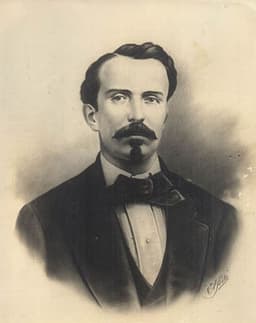
Carlos Manuel de Cespedes
Revolutionary · Modern
44.4Total
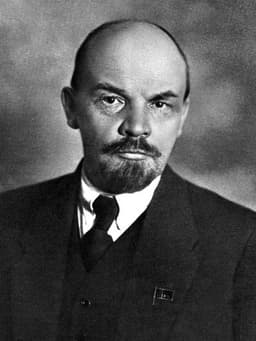
Vladimir Lenin
Revolutionary · Modern
71.2Total
Basic Information
Born
1819
1870
Died
1874
1924
Era
Modern
Modern
Nationality
Cuba
Russia
Occupation
Revolutionary
Revolutionary
Civilization
Western
Western
Score Comparison
Military (10%)
50.0
30.0
Political (20%)
27.9
78.0
Influence (20%)
58.0
82.0
Legacy (20%)
50.0
72.0
Leadership (15%)
30.0
80.0
Strategy (15%)
36.8
60.0
TOTAL
44.4
71.2
Carlos Manuel de Cespedes — Complete Timeline
1868 AD
Grito de Yara (1868)Political Action
Carlos Manuel de C
IndependenceRevolutionTen Years' War
Impact: nationalprogressive
1869 AD
President of the Republic in Arms (1869)Political Action◆ Major
Céspedes was elected President of the Republic of Cuba in Arms by the Assembly of Guáimaro. He led the rebel government during the early years of the Ten Years' War, advocating for independence and the abolition of slavery. His leadership was marked by internal divisions.
PresidencyRebel GovernmentWar
Impact: national
1873 AD
Deposed and Killed (1873-1874)Political Action◆ Major
Céspedes was deposed as president by the rebel assembly in 1873 due to disagreements over military strategy and political direction. He was killed in a skirmish with Spanish troops in 1874. His death made him a martyr for Cuban independence.
DepositionDeathMartyr
Impact: nationaltragic
Vladimir Lenin — Complete Timeline
1903 AD
Founding of the Bolshevik PartyPolitical Action
At the Second Congress of the Russian Social Democratic Labour Party in London, Lenin led a split that created the Bolshevik faction. The Bolsheviks advocated for a disciplined vanguard party of professional revolutionaries, a key element of Lenin's political strategy.
Political PartyRevolutionIdeology
Impact: global
1917 AD
April ThesesPolitical Action◆ Major
Lenin returned to Russia from exile and published the April Theses, calling for the overthrow of the Provisional Government, transfer of power to the soviets, and an end to World War I. This document set the Bolshevik agenda for the coming revolution.
RevolutionIdeologyPolitical Strategy
Impact: national
October RevolutionPolitical Action
Lenin led the Bolshevik seizure of power in Petrograd, capturing key government buildings and the Winter Palace. The revolution overthrew the Provisional Government and established the world's first socialist state, the Russian Soviet Federative Socialist Republic.
RevolutionCoupCommunism
Impact: global
1918 AD
Treaty of Brest-LitovskPolitical Action◆ Major
Lenin signed a separate peace treaty with the Central Powers, ceding vast territories including Ukraine, Belarus, and the Baltic states. The treaty ended Russia's involvement in World War I but caused significant territorial losses and internal opposition.
TreatyWorld War ITerritorial Loss
Impact: globaldestructive
1921 AD
New Economic Policy (NEP)Reform◆ Major
Lenin introduced the NEP, allowing limited private enterprise and market mechanisms to revive the war-torn Soviet economy. The policy replaced War Communism, permitting small-scale capitalism while the state retained control of major industries.
Economic ReformPolicyRecovery
Impact: nationalconstructive
1922 AD
Establishment of the Soviet UnionPolitical Action
Lenin oversaw the creation of the Union of Soviet Socialist Republics (USSR), a federation of Soviet republics. The new state consolidated Bolshevik control over much of the former Russian Empire and became a model for communist states worldwide.
State FormationCommunismFederation
Impact: global
Expert Analysis
Vladimir Lenin vs Carlos Manuel de Cespedes
### The Revolutionary’s Dilemma: Lenin and Céspedes
In the autumn of 1917, a balding, intense man slipped through the streets of Petrograd, his mind fixed on the seizure of power. Half a century earlier and an ocean away, another man—a wealthy planter with a sonorous voice—stood on his sugar plantation in eastern Cuba, raised a flag, and declared his nation free. Both were revolutionaries. Both sought to tear down an old world and build a new one. Yet one would succeed beyond his wildest dreams, creating a state that redrew the map of the twentieth century. The other would die in exile, his revolution unfinished, his name a footnote in the long struggle for Cuban independence. What separated them was not merely luck, but the very nature of their revolutions.
### Origins
Vladimir Lenin was born in 1870 into the Russian intelligentsia. His father, a school inspector, died when Lenin was sixteen, and the execution of his older brother, Alexander, for plotting to assassinate the tsar, seared into him a cold, unyielding resolve. He devoured Marx, studied law, and honed his ideas in the crucible of Siberian exile. His world was one of theory, of underground pamphlets, of conspiratorial meetings in smoky émigré cafés in Geneva and London. Lenin’s revolution was a creature of the city—of factory workers, of disciplined cells, of a vanguard party that would lead the proletariat.
Carlos Manuel de Céspedes was born in 1819 into a very different world. A wealthy sugar planter and lawyer, he owned slaves and lived the life of a colonial aristocrat. But the injustices of Spanish rule—heavy taxes, political exclusion, the brutal suppression of any hint of reform—turned him into a rebel. His revolution was not a product of Marxist theory but of Creole nationalism, a reaction against three centuries of imperial control. Where Lenin saw class struggle, Céspedes saw a fight for liberty, and he was willing to sacrifice his fortune and his life to achieve it.
### Rise to Power
Lenin’s path to power was long and circuitous. In 1903, at the Second Congress of the Russian Social Democratic Labour Party in London, he engineered a split, creating the Bolsheviks—the “majority” faction that was, in truth, a minority. For fourteen years he waited, writing, plotting, watching. The First World War provided the crisis he had predicted. In 1917, the tsar fell, and Lenin was smuggled back to Russia in a sealed train. He issued his April Theses, demanding not cooperation with the Provisional Government but its overthrow. By October, he had convinced his reluctant comrades to act. The revolution was swift: the capture of key buildings, the storming of the Winter Palace, the establishment of Soviet power.
Céspedes’s rise was more dramatic and more personal. On October 10, 1868, he freed his slaves, gathered his workers, and issued the Grito de Yara—the Cry of Yara—declaring Cuba independent from Spain. He was not a party leader but a planter turned guerrilla chief. His army was small, poorly armed, and deeply divided. Yet within months, he was elected President of the Republic in Arms by the Assembly of Guáimaro in 1869. For a brief moment, the revolution seemed to have a leader and a government.
### Leadership & Governance
Lenin’s leadership was that of a master tactician and a ruthless visionary. He believed in the dictatorship of the proletariat, but in practice, it became the dictatorship of his party. He signed the Treaty of Brest-Litovsk in 1918, ceding vast territories to Germany to save his revolution—a decision that horrified many but bought precious time. He then crushed his opponents in a brutal civil war, using terror as a tool of state. Yet he was also pragmatic. In 1921, with the economy in ruins, he introduced the New Economic Policy, allowing limited private enterprise. It was a retreat, but a strategic one. His political genius lay in his ability to adapt Marxist theory to Russian reality.
Céspedes, by contrast, was a leader of principle but not of strategy. He fought a war of independence that was both a military campaign and a political struggle. He abolished slavery, but he could not unite the fractious rebel forces. He faced not only the Spanish army but also internal dissent. His leadership was undermined by his own assembly, which deposed him in 1873 over disagreements about military strategy and political authority. Where Lenin centralized power, Céspedes saw it fragment around him.
### Triumph & Tragedy
Lenin’s greatest triumph was the establishment of the Soviet Union in 1922. He had created the world’s first communist state, a new kind of civilization that would inspire and terrify for decades. His greatest tragedy was that he did not live to see it. A series of strokes left him paralyzed and speechless in his final years, unable to stop the rise of Joseph Stalin, the man who would distort his legacy and turn his revolution into a bloodbath.
Céspedes’s greatest moment was the Grito de Yara itself—a single act of defiance that ignited a ten-year war. His tragedy was his death. After his deposition, he was hunted by Spanish forces and killed in a skirmish in 1874. He died alone, in the mountains, his dream of a free Cuba unfulfilled. It would take another twenty-four years and the intervention of the United States for Cuba to finally break free.
### Character & Destiny
Lenin was a man of iron will and cold intellect. He believed that history was on his side, and he acted with the certainty of a prophet. His personality—dogmatic, impatient, ruthless—shaped his decisions. He could compromise on tactics but never on the goal. His destiny was to be the father of a superpower.
Céspedes was a man of passion and honor. He was a romantic revolutionary, willing to sacrifice everything for liberty. But he lacked Lenin’s strategic ruthlessness. He could not impose discipline on his followers, nor could he see the long game. His destiny was to be a martyr, a symbol of a struggle that others would finish.
### Legacy
Lenin’s legacy is vast and contested. He created a system that ruled over a sixth of the earth’s surface and inspired revolutions across Asia, Africa, and Latin America. His ideas—Marxism-Leninism—became the official doctrine of communist states, but also the justification for tyranny. Today, his statues are toppled, but his shadow remains.
Céspedes’s legacy is more modest but no less profound. He is remembered as the Father of the Cuban Nation, the man who lit the flame of independence. His portrait hangs in Cuban schools, and his name is spoken with reverence. But his revolution was incomplete, and his nation would spend another century struggling for true sovereignty.
### Conclusion
The difference between Lenin and Céspedes is the difference between theory and passion, between the city and the countryside, between the vanguard and the mob. One created a state that changed the world; the other started a war that changed his island. Both were revolutionaries, but only one understood that to build a new world, you must be willing to break the old one completely. In the end, Céspedes gave his life for a dream. Lenin gave his life to a machine. And the world has been living with the consequences ever since.
Rankings
🥇
Vladimir LeninLeader
Mil: 30.0Pol: 78.0Inf: 82.0
71.2
🥈
Carlos Manuel de Cespedes
Mil: 50.0Pol: 27.9Inf: 58.0
44.4
+26.8 behind
How This Comparison Works
Algorithm
Each figure is scored on 6 dimensions (0—100 scale) based on structured historical data: Military (10%), Political (20%), Influence (20%), Legacy (20%), Leadership (15%), Strategy (15%). The weighted total produces the final ranking.
Data Sources
Scores are computed from structured sub-indicators in the database. Scale factors adjust for era (Ancient ×0.85, Modern ×1.0) and civilization size (Eastern ×1.05, Other ×0.80) to account for differences in population and military scale.
Maximum 3 Figures
Comparisons are limited to 2—3 figures to ensure readability and statistical meaningfulness.
Error Margins
±5 points per dimension — Sub-scores are derived from historical records with inherent uncertainty. Two figures within 5 points on a dimension should be considered roughly equivalent in that area.
Total Score Accuracy
±3 points overall — The weighted combination of 6 dimensions produces a total score with approximately ±3 points of uncertainty. Differences of less than 3 points are not statistically significant— the figures are effectively tied.
Known Limitations
- Historical records are incomplete and uneven across civilizations
- Figures from oral-tradition societies may be underrepresented
- Occupation labels can misclassify multi-role figures
- Scores measure capability and impact, not moral character
- Quantitative scoring is a comparison tool, not absolute truth
Capability Radar
Military (10%) — Battles & Warfare
Battles
30
20
Win Rate
25
35
Expansion
10
70
Political (20%) — Governance & Reform
Reform
40
95
Diplomacy
25
75
Economy
15
60
Influence (20%) — Cultural & Global Reach
Cultural
60
80
Global
50
90
Legacy (20%) — Historical Impact
Historical
65
95
Longevity
55
85
Leadership (15%) — Power & Stability
Tenure
30
55
Stability
10
40
Strategy (15%) — Tactics & Innovation
Strategy
25
55
Tactics
20
30
Reform
15
85
Similar Comparisons
Comments & Discussion
Siberian Strategist6/16/2026
Lenin wins hands down. Céspedes was a planter who declared independence but spent more time negotiating with his own rebel factions than fighting the Spanish. Lenin understood power is not declared but seized—he took over banks, telegraphs, and railways within days of the October coup. Céspedes freed his slaves but couldn’t arm them properly; Lenin armed the workers, controlled the means of production, and crushed opposition before it breathed. One built a state, the other a monument to noble fa
糖渣革命家6/16/2026
塞斯佩德斯就是个失败者。他解放了自己的奴隶?好啊,结果这些人没有武器,没有训练,还是给西班牙当炮灰。更可笑的是,他1868年宣布独立,十年后自己就被西班牙人赶下台,死在流放地。真正革命的人,比如列宁,1870年才出生!这位古巴“国父”连个像样的军队都组织不起来,最后只能被历史碾压成灰尘。
Data Skeptic6/16/2026
The comparison is false equivalence. Lenin's "success" came from the collapse of a modernizing Russian Empire at the end of a world war—a unique historical window. Céspedes faced a Spanish colonial system that had crushed rebellions for centuries and had no foreign ally willing to intervene until the US in 1898. The real metric should be: who faced worse odds relative to their era? Céspedes started a war with 147 men and a sugar mill; Lenin had the entire German Empire funding his train ride hom
历史考据党6/16/2026
两人最大的区别在于时间差和资源。列宁1917年行动时,俄国已有工业化铁路网和上百万产业工人,而塞斯佩德斯1868年打的是农业革命,连电报都不普及。更关键的是,列宁有德国人给的火车票和几百万马克支持,塞斯佩德斯只能靠卖糖和地契筹钱。这不是谁更牛的问题,而是谁手里牌更好的问题。
Classics Scholar6/16/2026
Both are tragic figures, but Céspedes’ tragedy is more ancient, more Homeric. He freed his slaves, alienated his planter class, and then was betrayed by his own generals. Compare to Coriolanus—a man torn between his nobility and the people. Lenin was a Machiavellian prince who understood that “the ends justify any means.” Céspedes was a Quixote, tilting at Spanish windmills with a constitution in one hand and a machete in the other. One died in a Swiss sanatorium, the other in a remote mountain
古巴的堂吉诃德6/16/2026
读他们的结局就知道谁是真的革命者了。列宁在莫斯科红场被防腐保存,供人瞻仰一百年。塞斯佩德斯呢?1874