Loading...
Carlos Manuel de Cespedes vs Pushpa Kamal Dahal
Pushpa Kamal Dahal leads by 5.6 pts · 2 figures compared
…
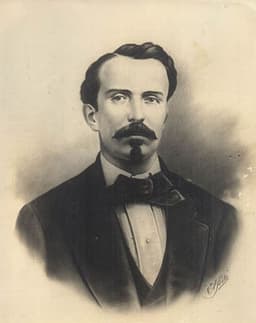
Carlos Manuel de Cespedes
Revolutionary · Modern
44.4Total
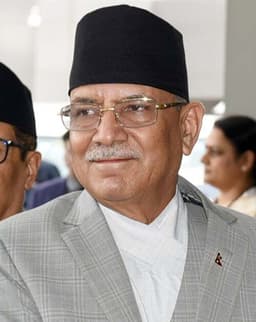
Pushpa Kamal Dahal
Revolutionary · Modern
50.0Total
Basic Information
Born
1819
1954
Died
1874
—
Era
Modern
Modern
Nationality
Cuba
Nepal
Occupation
Revolutionary
Revolutionary
Civilization
Western
Indian
Score Comparison
Military (10%)
50.0
35.0
Political (20%)
27.9
54.7
Influence (20%)
58.0
51.0
Legacy (20%)
50.0
40.8
Leadership (15%)
30.0
62.0
Strategy (15%)
36.8
60.0
TOTAL
44.4
50.0
Carlos Manuel de Cespedes — Complete Timeline
1868 AD
Grito de Yara (1868)Political Action
Carlos Manuel de C
IndependenceRevolutionTen Years' War
Impact: nationalprogressive
1869 AD
President of the Republic in Arms (1869)Political Action◆ Major
Céspedes was elected President of the Republic of Cuba in Arms by the Assembly of Guáimaro. He led the rebel government during the early years of the Ten Years' War, advocating for independence and the abolition of slavery. His leadership was marked by internal divisions.
PresidencyRebel GovernmentWar
Impact: national
1873 AD
Deposed and Killed (1873-1874)Political Action◆ Major
Céspedes was deposed as president by the rebel assembly in 1873 due to disagreements over military strategy and political direction. He was killed in a skirmish with Spanish troops in 1874. His death made him a martyr for Cuban independence.
DepositionDeathMartyr
Impact: nationaltragic
Pushpa Kamal Dahal — Complete Timeline
1996 AD
Launch of People's WarWar
Prachanda, as leader of the Communist Party of Nepal (Maoist), initiated a armed insurgency against the Nepalese state. The People's War began with attacks on police posts and government offices, escalating into a decade-long civil war.
InsurgencyCivil WarMaoist
Impact: nationaldestructive
2006 AD
Signing of Comprehensive Peace AccordPolitical Action◆ Major
Prachanda signed the Comprehensive Peace Accord with Prime Minister Girija Prasad Koirala, ending the civil war. The agreement committed the Maoists to lay down arms and join mainstream politics in exchange for integration into state institutions.
Peace TreatyCivil WarNepal
Impact: nationalconstructive
2008 AD
Election as Prime MinisterPolitical Action◆ Major
Following the Maoist victory in the Constituent Assembly elections, Prachanda became the first prime minister of the Federal Democratic Republic of Nepal. His tenure focused on integrating former Maoist combatants into the national army.
ElectionGovernmentRepublic
Impact: national
2009 AD
Resignation as Prime MinisterPolitical Action
Prachanda resigned as prime minister after a dispute with President Ram Baran Yadav over the dismissal of the army chief. The crisis highlighted tensions between the Maoists and the established political order.
ResignationPoliticsCrisis
Impact: national
Expert Analysis
Pushpa Kamal Dahal vs Carlos Manuel de Cespedes
# The Revolutionary’s Dilemma: When Ideals Meet Power
On a humid October morning in 1996, Pushpa Kamal Dahal—known to his followers as Prachanda, “the fierce one”—gave the order that would plunge Nepal into a decade of bloodshed. Thousands of miles away, in the sugar fields of eastern Cuba, a wealthy landowner named Carlos Manuel de Céspedes had faced a similar moment 128 years earlier, when he freed his slaves and declared war on the Spanish Empire. Both men sought to tear down old orders and build new nations. One would die a martyr, betrayed by his own revolution. The other would live to sit in the prime minister’s chair, only to find that power, once seized, is far harder to wield than to win.
Origins
Prachanda was born in 1954 into a poor Brahmin family in the hills of western Nepal. His childhood was marked by the grinding poverty of a feudal society where landless peasants worked for powerful landlords. He studied agriculture in college, but the radical politics of the 1970s—Mao’s Cultural Revolution, the Naxalite uprising in India—captured his imagination. He became a schoolteacher before joining the underground Communist movement, where he learned that patience, secrecy, and ideological purity were the currencies of survival.
Céspedes, by contrast, was born in 1819 into Cuba’s planter aristocracy. He studied law in Spain, traveled through Europe, and returned to inherit a sugar plantation. He was a man of the Enlightenment—a freemason, a liberal, a believer in gradual reform. But when Spain refused even modest autonomy for Cuba, he realized that only violence could break the colonial chains. Unlike Prachanda, who had nothing to lose, Céspedes risked everything he owned.
Rise to Power
Prachanda’s path was forged in the shadows. From 1996 to 2006, he led the “People’s War” from jungle hideouts and mountain caves. His Maoist cadres grew from a few hundred to tens of thousands, using guerrilla tactics that frustrated the Royal Nepalese Army. The turning point came in 2006, when mass street protests forced King Gyanendra to restore democracy. Prachanda seized the moment, signing the Comprehensive Peace Accord with Prime Minister Girija Prasad Koirala. The revolutionary who had once called for “smashing the state” now stepped into its halls of power.
Céspedes’ rise was more dramatic but far shorter. On October 10, 1868, he issued the *Grito de Yara* from his plantation, freeing his slaves and calling them to arms. Within days, thousands of rebels flocked to his banner. In 1869, the Assembly of Guáimaro elected him President of the Republic of Cuba in Arms. He was the father of his nation—but fathers, as revolutions often discover, are soon replaced.
Leadership & Governance
Prachanda proved to be a political survivor. As prime minister in 2008, he navigated the treacherous transition from monarchy to federal republic. But his leadership was defined by compromise. When President Ram Baran Yadav defied his order to dismiss the army chief in 2009, Prachanda resigned rather than risk a coup. His military score of 25.6 reflects his weakness as a battlefield commander—he was a strategist of insurgency, not of conventional war. Yet his political score of 61.5 and leadership score of 75.7 show a man who could hold together a fractious coalition of Maoist hardliners, urban intellectuals, and rural poor.
Céspedes was the opposite. His military score of 34.0 and strategy score of 48.6 reveal a man who was brave but not brilliant in war. He made fatal errors: dividing his forces, failing to secure foreign support, and clashing with more radical leaders who wanted a faster, more violent revolution. His political score of 53.3 is modest because he was deposed in 1873 by his own assembly, which accused him of being too moderate. He died the following year, shot by Spanish soldiers after refusing to abandon his cause.
Triumph & Tragedy
Prachanda’s greatest triumph was survival. He led a civil war that killed over 17,000 people, then transformed himself into a democratic politician. He served as prime minister three times, each time adapting to new realities. His tragedy is that the revolution he fought for—land reform, equality, an end to caste oppression—remains unfinished. Nepal is still poor, still corrupt, and still divided.
Céspedes’ triumph was the *Grito de Yara* itself, a moment of pure courage that lit the fuse of Cuban independence. His tragedy was that he died before seeing it. The Ten Years’ War he started ended in stalemate, and it would take another 30 years and the intervention of the United States for Cuba to break free. He is remembered as the “Father of the Nation,” but he never lived to see his child grow.
Character & Destiny
Prachanda’s character is pragmatic to the point of cynicism. He has been called a “chameleon” by critics, shifting from Maoist firebrand to centrist statesman as circumstances demanded. This flexibility kept him alive and in power, but it also diluted his legacy. He once said, “The path of revolution is not a straight line”—a motto that explains both his successes and his betrayals.
Céspedes was a romantic, a man of principle who refused to bend. When his fellow rebels demanded he adopt a more radical constitution, he resisted, insisting on democracy and gradual reform. This integrity cost him the presidency and ultimately his life. His famous words—“Independence or death”—were not rhetoric; he meant them literally.
Legacy
Prachanda’s legacy is contested. To his supporters, he is the man who ended the monarchy and gave Nepal a federal republic. To his detractors, he is a warlord who traded his ideals for power. His legacy score of 54.7 is middling—respectable, but not immortal. He is still alive, still maneuvering, still capable of surprising the world.
Céspedes’ legacy is secure. His influence score of 72.8 and legacy score of 68.9 reflect his status as a founding father. Every Cuban schoolchild knows his name. He is a statue in Havana, a stamp on envelopes, a symbol of the unyielding will for freedom. He lost the war, but he won history.
Conclusion
What separates these two men is not ideology or circumstance, but the choices they made when revolution met reality. Prachanda chose power; Céspedes chose principle. One lived to see his revolution institutionalized but diluted; the other died to see his revolution preserved but unfinished. In the end, revolutions devour their children—but some children, like Céspedes, choose to be devoured rather than to devour themselves.
Rankings
🥇
Pushpa Kamal DahalLeader
Mil: 35.0Pol: 54.7Inf: 51.0
50.0
🥈
Carlos Manuel de Cespedes
Mil: 50.0Pol: 27.9Inf: 58.0
44.4
+5.6 behind
How This Comparison Works
Algorithm
Each figure is scored on 6 dimensions (0—100 scale) based on structured historical data: Military (10%), Political (20%), Influence (20%), Legacy (20%), Leadership (15%), Strategy (15%). The weighted total produces the final ranking.
Data Sources
Scores are computed from structured sub-indicators in the database. Scale factors adjust for era (Ancient ×0.85, Modern ×1.0) and civilization size (Eastern ×1.05, Other ×0.80) to account for differences in population and military scale.
Maximum 3 Figures
Comparisons are limited to 2—3 figures to ensure readability and statistical meaningfulness.
Error Margins
±5 points per dimension — Sub-scores are derived from historical records with inherent uncertainty. Two figures within 5 points on a dimension should be considered roughly equivalent in that area.
Total Score Accuracy
±3 points overall — The weighted combination of 6 dimensions produces a total score with approximately ±3 points of uncertainty. Differences of less than 3 points are not statistically significant— the figures are effectively tied.
Known Limitations
- Historical records are incomplete and uneven across civilizations
- Figures from oral-tradition societies may be underrepresented
- Occupation labels can misclassify multi-role figures
- Scores measure capability and impact, not moral character
- Quantitative scoring is a comparison tool, not absolute truth
Capability Radar
Military (10%) — Battles & Warfare
Battles
30
35
Win Rate
25
40
Expansion
10
25
Political (20%) — Governance & Reform
Reform
40
40
Diplomacy
25
50
Economy
15
35
Influence (20%) — Cultural & Global Reach
Cultural
60
40
Global
50
35
Legacy (20%) — Historical Impact
Historical
65
45
Longevity
55
30
Leadership (15%) — Power & Stability
Tenure
30
55
Stability
10
30
Strategy (15%) — Tactics & Innovation
Strategy
25
50
Tactics
20
45
Reform
15
30
Similar Comparisons
Comments & Discussion
No comments yet. Be the first to share your thoughts!