Loading...
Carlos Manuel de Cespedes vs Mangal Pandey
Mangal Pandey leads by 4.2 pts · 2 figures compared
…
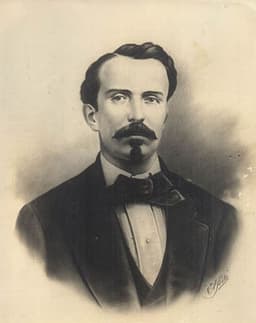
Carlos Manuel de Cespedes
Revolutionary · Modern
44.4Total
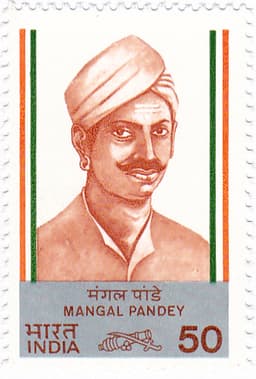
Mangal Pandey
Revolutionary · Modern
48.6Total
Basic Information
Born
1819
1827
Died
1874
1857
Era
Modern
Modern
Nationality
Cuba
India
Occupation
Revolutionary
Revolutionary
Civilization
Western
Indian
Score Comparison
Military (10%)
50.0
39.9
Political (20%)
27.9
35.0
Influence (20%)
58.0
51.8
Legacy (20%)
50.0
46.7
Leadership (15%)
30.0
62.6
Strategy (15%)
36.8
53.8
TOTAL
44.4
48.6
Carlos Manuel de Cespedes — Complete Timeline
1868 AD
Grito de Yara (1868)Political Action
Carlos Manuel de C
IndependenceRevolutionTen Years' War
Impact: nationalprogressive
1869 AD
President of the Republic in Arms (1869)Political Action◆ Major
Céspedes was elected President of the Republic of Cuba in Arms by the Assembly of Guáimaro. He led the rebel government during the early years of the Ten Years' War, advocating for independence and the abolition of slavery. His leadership was marked by internal divisions.
PresidencyRebel GovernmentWar
Impact: national
1873 AD
Deposed and Killed (1873-1874)Political Action◆ Major
Céspedes was deposed as president by the rebel assembly in 1873 due to disagreements over military strategy and political direction. He was killed in a skirmish with Spanish troops in 1874. His death made him a martyr for Cuban independence.
DepositionDeathMartyr
Impact: nationaltragic
Mangal Pandey — Complete Timeline
1857 AD
Attack on British officers at BarrackporePolitical Action◆ Major
Mangal Pandey attacked two British officers at the Barrackpore military cantonment. He was arrested after the attack, and his actions sparked widespread unrest among Indian sepoys, leading to the 1857 rebellion.
Indian Rebellion of 1857Trigger Event
Impact: regional
Execution by hangingPolitical Action◆ Major
Mangal Pandey was tried by a British military court and executed by hanging at Barrackpore. His execution made him a martyr and a symbol of resistance against British rule in India.
Indian Rebellion of 1857ExecutionMartyr
Impact: regionaltragic
Expert Analysis
Carlos Manuel de Cespedes vs Mangal Pandey
### The Spark and the Torch
In the annals of revolution, there are those who light the fuse and those who carry the flame. On a sweltering morning in March 1857, a sepoy named Mangal Pandey stood on the parade ground at Barrackpore, India, his musket loaded not with the new greased cartridges that had enraged his regiment, but with a desperate, singular purpose. He fired upon his British officers, a lone act of defiance that would shatter the peace of an empire. Eleven years later, on the other side of the world, a wealthy Cuban planter named Carlos Manuel de Céspedes gathered his slaves and his sons on his sugar plantation, La Demajagua. He freed his slaves, rang the plantation bell, and proclaimed Cuba’s independence from Spain with a cry that would echo for decades. One man’s rebellion ended in a hangman’s noose within days; the other’s launched a decade-long war. Both are remembered as fathers of their nations, yet their paths, their tools, and their fates could not be more different. Why did one become a martyr and the other a founding president? The answer lies not in the heat of the moment, but in the soil where they were planted.
### Origins
Mangal Pandey was born in 1827 into a high-caste Brahmin family in the village of Nagwa, in what is today Uttar Pradesh. His world was one of ritual, hierarchy, and a deep, inherited distrust of foreign rule. The British East India Company had been reshaping India for a century, but in the 1850s, their arrogance reached a breaking point. The introduction of the new Enfield rifle, whose cartridges were rumored to be greased with cow and pig fat—anathema to both Hindus and Muslims—was the spark. Pandey was a sepoy, a soldier in the Company’s army, a man trained to obey but also to protect his dharma. His rebellion was not a calculated political act; it was a visceral, religiously charged outburst. He was a man of his time, a product of a society where the sacred and the profane were inseparable from daily life.
Carlos Manuel de Céspedes, born in 1819 in the eastern Cuban city of Bayamo, came from a different world entirely. He was a Creole aristocrat, educated in law at the University of Havana and later in Spain, where he absorbed the liberal ideals of the European Enlightenment. He returned to Cuba a wealthy sugar planter, a man who owned land, slaves, and a vision. Cuba in the 1860s was a colony chafing under Spanish economic control, its Creole elite growing restless. Céspedes was not a soldier by training but a thinker, a writer, and a politician. His rebellion was born not from a single grievance but from a decade of political frustration, economic stagnation, and a dream of a sovereign republic. He was the product of the Atlantic revolutions—American, French, Haitian—and he carried their ideas in his blood.
### Rise to Power
Mangal Pandey’s rise was instantaneous and tragic. On March 29, 1857, at Barrackpore, he attacked two British officers, Lieutenant Baugh and Sergeant-Major Hewson. He was quickly overpowered, tried by a military court, and hanged on April 8. His entire political career lasted less than two weeks. He had no army, no manifesto, no plan. His power was the power of the symbol: a single man who refused to bend. His execution made him a martyr, and within months, the rebellion he helped ignite spread across northern India, from Delhi to Kanpur, a firestorm of mutiny and popular uprising. But Pandey himself never led it. He was the spark, not the flame.
Céspedes’s ascent was more deliberate and more political. On October 10, 1868, he issued the Grito de Yara from his plantation, a formal declaration of independence. He freed his slaves, a radical act that immediately transformed the social order of the rebellion. Within days, he had gathered a small, ragtag army of planters, peasants, and former slaves. By 1869, he was elected President of the Republic of Cuba in Arms by the Assembly of Guáimaro, a body that drafted a constitution and created a government-in-exile. Céspedes was not a spontaneous rebel; he was a revolutionary leader who built institutions, wrote laws, and commanded a war. His rise was slow, contested, and political, shaped by debates over slavery, military strategy, and the very nature of the new Cuban nation.
### Leadership & Governance
Their styles of leadership were a study in contrasts. Mangal Pandey led by example, by a single, explosive act of courage. He had no time to govern, no chance to legislate. His leadership was the leadership of the martyr—pure, absolute, and untested. He left no decrees, no reforms, no political legacy beyond the memory of his defiance. The rebellion he sparked was chaotic, decentralized, and ultimately crushed by the British, but it forced the British Crown to abolish the East India Company and assume direct rule over India. Pandey’s leadership was a catalyst, not a blueprint.
Céspedes, by contrast, had to govern a war. As president, he faced the impossible task of uniting a diverse coalition of wealthy Creoles, freed slaves, and indigenous peasants. He pushed for the abolition of slavery, a deeply controversial move among the planter class who financed the rebellion. He also insisted on civilian control over the military, a decision that alienated powerful generals like Antonio Maceo. His political wisdom was real but flawed; he was a better revolutionary than a tactician. The Ten Years’ War (1868–1878) dragged on, exhausting both sides, and Céspedes’s leadership was increasingly criticized for its indecisiveness and failure to achieve a decisive victory. His greatest reform—the abolition of slavery in the rebel-held territories—was visionary, but it cost him the support of his own class.
### Triumph & Tragedy
Mangal Pandey’s triumph was his death. In the days after his execution, his name became a rallying cry. The British feared his memory so much that they tried to suppress all records of him, but the legend only grew. His tragedy was that he never saw the rebellion he inspired, and that rebellion, for all its fury, was eventually crushed. The British Raj was born from its ashes, a more oppressive and systematic form of colonial rule. Pandey’s sacrifice changed India, but not in the way he might have hoped.
Céspedes’s greatest moment was the Grito de Yara, the defiant bell that still rings in Cuban history. His tragedy came later. In 1873, the rebel assembly, frustrated by military setbacks and his authoritarian style, deposed him as president. He retreated to a remote mountain farm, a broken man. In February 1874, Spanish troops caught up with him. He died in a skirmish, shot down, his body left unburied for days. The father of the nation died not on a battlefield, but in exile from his own revolution.
### Character & Destiny
Mangal Pandey was a man of faith and fury. His personality was shaped by a rigid moral code, a Brahmin’s sense of purity and honor. He could not tolerate the pollution of his religion, and that intolerance drove him to an act of sublime, suicidal courage. His destiny was to be a matchstick, burning bright and brief, setting fire to a continent.
Céspedes was a man of the Enlightenment, a rationalist who believed in constitutions, laws, and progress. He was proud, stubborn, and idealistic, a man who thought he could build a nation from a sugar mill. His character made him a visionary, but it also made him inflexible. He could not compromise with the military commanders he needed, and he could not stomach the slow, grinding reality of guerrilla war. His destiny was to be the founder, not the finisher.
### Legacy
Mangal Pandey is remembered as the first martyr of the Indian independence movement. His image appears on stamps, his story is taught in schools, and his name is synonymous with the 1857 Rebellion. He is a symbol of resistance, a reminder that one man’s courage can shake an empire. His legacy is emotional, visceral, and eternal.
Carlos Manuel de Céspedes is called the *Padre de la Patria*, the Father of the Nation. His Grito de Yara is a national holiday. His plantation is a museum. But his legacy is more complex. He started a war he could not finish, and Cuba would not achieve independence until 1898, after another, more brutal conflict. He is remembered as a founder, but also as a cautionary tale—a leader who saw the dream but could not navigate the reality.
### Conclusion
Two men, two revolutions, two fates. Mangal Pandey was the spark that lit a wildfire; Carlos Manuel de Céspedes was the torch that tried to guide a nation through the dark. One died in days, the other in years. One is a martyr, the other a founding father. Their differences are not just personal; they are the differences between two worlds—the world of religious revolt and the world of political revolution, the world of the sepoy and the world of the planter. Yet both, in their own way, lit a flame that would not be extinguished. In the end, history does not ask whether a man succeeded or failed. It asks whether he dared. Both dared. And their nations have never forgotten.
Rankings
🥇
Mangal PandeyLeader
Mil: 39.9Pol: 35.0Inf: 51.8
48.6
🥈
Carlos Manuel de Cespedes
Mil: 50.0Pol: 27.9Inf: 58.0
44.4
+4.2 behind
How This Comparison Works
Algorithm
Each figure is scored on 6 dimensions (0—100 scale) based on structured historical data: Military (10%), Political (20%), Influence (20%), Legacy (20%), Leadership (15%), Strategy (15%). The weighted total produces the final ranking.
Data Sources
Scores are computed from structured sub-indicators in the database. Scale factors adjust for era (Ancient ×0.85, Modern ×1.0) and civilization size (Eastern ×1.05, Other ×0.80) to account for differences in population and military scale.
Maximum 3 Figures
Comparisons are limited to 2—3 figures to ensure readability and statistical meaningfulness.
Error Margins
±5 points per dimension — Sub-scores are derived from historical records with inherent uncertainty. Two figures within 5 points on a dimension should be considered roughly equivalent in that area.
Total Score Accuracy
±3 points overall — The weighted combination of 6 dimensions produces a total score with approximately ±3 points of uncertainty. Differences of less than 3 points are not statistically significant— the figures are effectively tied.
Known Limitations
- Historical records are incomplete and uneven across civilizations
- Figures from oral-tradition societies may be underrepresented
- Occupation labels can misclassify multi-role figures
- Scores measure capability and impact, not moral character
- Quantitative scoring is a comparison tool, not absolute truth
Capability Radar
Military (10%) — Battles & Warfare
Battles
30
5
Win Rate
25
5
Expansion
10
5
Political (20%) — Governance & Reform
Reform
40
5
Diplomacy
25
5
Economy
15
5
Influence (20%) — Cultural & Global Reach
Cultural
60
40
Global
50
40
Legacy (20%) — Historical Impact
Historical
65
60
Longevity
55
50
Leadership (15%) — Power & Stability
Tenure
30
5
Stability
10
5
Strategy (15%) — Tactics & Innovation
Strategy
25
5
Tactics
20
10
Reform
15
5
Similar Comparisons
Comments & Discussion
No comments yet. Be the first to share your thoughts!