Loading...
Mangal Pandey vs Vladimir Lenin
Vladimir Lenin leads by 22.6 pts · 2 figures compared
…
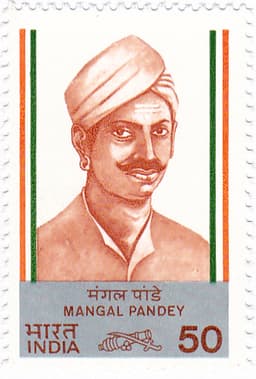
Mangal Pandey
Revolutionary · Modern
48.6Total
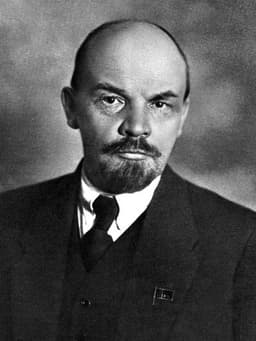
Vladimir Lenin
Revolutionary · Modern
71.2Total
Basic Information
Born
1827
1870
Died
1857
1924
Era
Modern
Modern
Nationality
India
Russia
Occupation
Revolutionary
Revolutionary
Civilization
Indian
Western
Score Comparison
Military (10%)
39.9
30.0
Political (20%)
35.0
78.0
Influence (20%)
51.8
82.0
Legacy (20%)
46.7
72.0
Leadership (15%)
62.6
80.0
Strategy (15%)
53.8
60.0
TOTAL
48.6
71.2
Mangal Pandey — Complete Timeline
1857 AD
Attack on British officers at BarrackporePolitical Action◆ Major
Mangal Pandey attacked two British officers at the Barrackpore military cantonment. He was arrested after the attack, and his actions sparked widespread unrest among Indian sepoys, leading to the 1857 rebellion.
Indian Rebellion of 1857Trigger Event
Impact: regional
Execution by hangingPolitical Action◆ Major
Mangal Pandey was tried by a British military court and executed by hanging at Barrackpore. His execution made him a martyr and a symbol of resistance against British rule in India.
Indian Rebellion of 1857ExecutionMartyr
Impact: regionaltragic
Vladimir Lenin — Complete Timeline
1903 AD
Founding of the Bolshevik PartyPolitical Action
At the Second Congress of the Russian Social Democratic Labour Party in London, Lenin led a split that created the Bolshevik faction. The Bolsheviks advocated for a disciplined vanguard party of professional revolutionaries, a key element of Lenin's political strategy.
Political PartyRevolutionIdeology
Impact: global
1917 AD
April ThesesPolitical Action◆ Major
Lenin returned to Russia from exile and published the April Theses, calling for the overthrow of the Provisional Government, transfer of power to the soviets, and an end to World War I. This document set the Bolshevik agenda for the coming revolution.
RevolutionIdeologyPolitical Strategy
Impact: national
October RevolutionPolitical Action
Lenin led the Bolshevik seizure of power in Petrograd, capturing key government buildings and the Winter Palace. The revolution overthrew the Provisional Government and established the world's first socialist state, the Russian Soviet Federative Socialist Republic.
RevolutionCoupCommunism
Impact: global
1918 AD
Treaty of Brest-LitovskPolitical Action◆ Major
Lenin signed a separate peace treaty with the Central Powers, ceding vast territories including Ukraine, Belarus, and the Baltic states. The treaty ended Russia's involvement in World War I but caused significant territorial losses and internal opposition.
TreatyWorld War ITerritorial Loss
Impact: globaldestructive
1921 AD
New Economic Policy (NEP)Reform◆ Major
Lenin introduced the NEP, allowing limited private enterprise and market mechanisms to revive the war-torn Soviet economy. The policy replaced War Communism, permitting small-scale capitalism while the state retained control of major industries.
Economic ReformPolicyRecovery
Impact: nationalconstructive
1922 AD
Establishment of the Soviet UnionPolitical Action
Lenin oversaw the creation of the Union of Soviet Socialist Republics (USSR), a federation of Soviet republics. The new state consolidated Bolshevik control over much of the former Russian Empire and became a model for communist states worldwide.
State FormationCommunismFederation
Impact: global
Expert Analysis
Vladimir Lenin vs Mangal Pandey
# The Revolutionary's Mirror: Lenin and Mangal Pandey
On an April evening in 1917, a train pulled into Petrograd's Finland Station carrying a man who had spent years in exile. Vladimir Lenin stepped onto the platform to the roar of thousands, his face set with the certainty of a prophet who had seen the future. Seventy years earlier and five thousand miles away, a sepoy named Mangal Pandey stood on a parade ground at Barrackpore, his musket raised against two British officers, knowing full well that his next breath might be his last. One man would topple an empire and build a new world; the other would spark a fire that consumed him before it could light the sky. What separates the revolutionary who succeeds from the one who becomes a martyr? The answer lies not in courage, but in timing, organization, and the strange alchemy of history.
Origins
Mangal Pandey was born in 1827 into a high-caste Brahmin family in the village of Nagwa, in what is now Uttar Pradesh. The British East India Company had already ruled much of India for decades, its power built on the backs of Indian soldiers like Pandey, who enlisted as a sepoy in the 34th Bengal Native Infantry. He was a man of his time—devout, proud, and trapped in a system that demanded he serve the very power that had humbled his people. His world was one of ancient hierarchies and colonial subjugation, where rebellion meant certain death and glory was measured in sacrifice.
Lenin, born in 1870 in Simbirsk, Russia, came from a different universe. His father was a school inspector, his family educated and moderately prosperous. When his older brother Alexander was executed in 1887 for plotting to assassinate Tsar Alexander III, the teenage Vladimir Ulyanov did not retreat into grief; he channeled it into study. He devoured Marx, immersed himself in radical circles, and by his early twenties had become a professional revolutionary. His Russia was a sprawling, autocratic empire cracking under the weight of industrialization, a place where the old order was already dying and the question was only what would replace it.
Rise to Power
Mangal Pandey’s path to history was a matter of weeks. In March 1857, the British introduced new rifle cartridges greased with animal fat—cow and pig—which had to be bitten before loading. For a high-caste Hindu and a Muslim alike, this was a profound violation. On March 29, at Barrackpore, Pandey attacked two British officers, Sergeant-Major Hewson and Lieutenant Baugh, wounding them before being overpowered. He was tried, and on April 8, he was hanged. His rebellion was personal, immediate, and doomed. The spark he lit, however, ignited the Indian Rebellion of 1857, a massive uprising that shook British rule to its foundations, though it ultimately failed.
Lenin’s rise was a marathon of decades. In 1903, at the Second Congress of the Russian Social Democratic Labour Party in London, he engineered a split that created the Bolshevik faction—a disciplined, centralized party of professional revolutionaries. He spent years in exile, writing, plotting, and waiting. In April 1917, after the Tsar had been overthrown, he returned to Russia and published the April Theses, demanding not cooperation with the Provisional Government but its destruction. Seven months later, on the night of October 25-26, he led the Bolshevik seizure of power in Petrograd, capturing the Winter Palace with astonishing efficiency. Where Pandey had a musket, Lenin had a party.
Leadership & Governance
Mangal Pandey was never a leader in the organizational sense. He was a symbol, a man whose act of defiance inspired others to rise, but who had no plan, no strategy, no structure for victory. The rebellion he helped spark spread across northern and central India, but it was fragmented, leaderless, and ultimately crushed by British firepower. Pandey’s military score of 28.2 and leadership score of 28.5 reflect not his courage but his lack of command. He was a martyr, not a general.
Lenin governed. As head of the world’s first communist state, he faced a country shattered by war, famine, and civil conflict. In 1918, he signed the Treaty of Brest-Litovsk, ceding vast territories to Germany to buy peace—a brutal but strategic calculation. In 1921, he introduced the New Economic Policy, allowing limited private enterprise to revive the economy. He was ruthless, pragmatic, and visionary. His political score of 80.0 and leadership score of 72.0 reflect a man who could both dream and build, who understood that revolution required not just courage but institutions. He created the Soviet Union in 1922, a state that would shape the entire twentieth century.
Triumph & Tragedy
Mangal Pandey’s triumph was his death. He became a martyr, a name that would echo through Indian nationalism for generations. His tragedy was that he died before he could see the rebellion he sparked, and that rebellion itself failed. India would remain under British rule for another ninety years.
Lenin’s triumph was the October Revolution—a coup that overthrew an empire and established a new order. His tragedy was the civil war that followed, the famine, the Red Terror, and the seeds of authoritarianism that would bloom under Stalin. He died in 1924, his body preserved in a mausoleum, a god in the atheist state he had built.
Character & Destiny
Mangal Pandey was a man of faith and fury, driven by honor and outrage. He acted alone, because he had no network, no party, no theory. His destiny was to be a spark—brief, brilliant, and consumed.
Lenin was a man of iron will and cold calculation. He believed in the science of history, in the necessity of a vanguard party, in the use of terror as a tool. He once wrote, "We must be ready to employ trickery, deceit, law-breaking, withholding and concealing truth." His destiny was to build a system that would outlast him, for better and worse.
Legacy
Mangal Pandey is remembered in India as a hero of the first war of independence, a man whose name adorns stamps, streets, and statues. His legacy is symbolic, a touchstone for national pride.
Lenin’s legacy is global. His ideas shaped half the world for much of the twentieth century, from China to Cuba, from Vietnam to East Germany. His mausoleum still stands in Red Square, a monument to a revolution that promised liberation and delivered tyranny in equal measure. His influence score of 80.0 and legacy score of 70.0 capture a man who changed history, whether for good or ill, beyond measure.
Conclusion
What separates Mangal Pandey from Vladimir Lenin is not courage or conviction, but context and organization. Pandey lived in a world where rebellion meant death and the machinery of revolution did not yet exist. Lenin built that machinery. One man threw a stone into a pond; the other dug a canal. Both altered the course of history, but only one lived to see the river flow. Their stories remind us that revolution is not just an act of will—it is an act of architecture. And the architects, for better or worse, are the ones who shape the world.
Rankings
🥇
Vladimir LeninLeader
Mil: 30.0Pol: 78.0Inf: 82.0
71.2
🥈
Mangal Pandey
Mil: 39.9Pol: 35.0Inf: 51.8
48.6
+22.6 behind
How This Comparison Works
Algorithm
Each figure is scored on 6 dimensions (0—100 scale) based on structured historical data: Military (10%), Political (20%), Influence (20%), Legacy (20%), Leadership (15%), Strategy (15%). The weighted total produces the final ranking.
Data Sources
Scores are computed from structured sub-indicators in the database. Scale factors adjust for era (Ancient ×0.85, Modern ×1.0) and civilization size (Eastern ×1.05, Other ×0.80) to account for differences in population and military scale.
Maximum 3 Figures
Comparisons are limited to 2—3 figures to ensure readability and statistical meaningfulness.
Error Margins
±5 points per dimension — Sub-scores are derived from historical records with inherent uncertainty. Two figures within 5 points on a dimension should be considered roughly equivalent in that area.
Total Score Accuracy
±3 points overall — The weighted combination of 6 dimensions produces a total score with approximately ±3 points of uncertainty. Differences of less than 3 points are not statistically significant— the figures are effectively tied.
Known Limitations
- Historical records are incomplete and uneven across civilizations
- Figures from oral-tradition societies may be underrepresented
- Occupation labels can misclassify multi-role figures
- Scores measure capability and impact, not moral character
- Quantitative scoring is a comparison tool, not absolute truth
Capability Radar
Military (10%) — Battles & Warfare
Battles
5
20
Win Rate
5
35
Expansion
5
70
Political (20%) — Governance & Reform
Reform
5
95
Diplomacy
5
75
Economy
5
60
Influence (20%) — Cultural & Global Reach
Cultural
40
80
Global
40
90
Legacy (20%) — Historical Impact
Historical
60
95
Longevity
50
85
Leadership (15%) — Power & Stability
Tenure
5
55
Stability
5
40
Strategy (15%) — Tactics & Innovation
Strategy
5
55
Tactics
10
30
Reform
5
85
Similar Comparisons
Comments & Discussion
RedInkRevolutionary6/16/2026
Let's get real: Lenin was a political strategist, Mangal was a symbolic spark. You can't compare a man who wrote "What Is to Be Done?" and led a disciplined vanguard party to a sepoy who had a breakdown on a parade ground. Pandey's revolt was personal, religious, and doomed from the start—he fired a single shot at his own officers. Lenin seized an empire with a telegram. Courage doesn't equal strategy.
火药碾盘6/16/2026
别拿烈士和政客比战略。曼加尔·潘迪是1867年那招亡命徒式的反抗:他朝英国军官开枪,随即便被绞死,连一个营都没能发动起来。列宁却能在瑞士写文章,精准把准时机捏准权力空档。潘迪的弹痕成了绝望的徽章;列宁的铁路票则是国家机器的钥匙。一个在历史书里做了注脚,另一个改写了整部教科书。
BrahmaputraHistoryBuff6/16/2026
You're ignoring the context entirely. Mangal Pandey wasn't just "some sepoy"—his mutiny against the Enfield rifle's grease cartridges became the fuse for the 1857 Revolt. That rebellion shook British rule to its core. Meanwhile, Lenin was a product of a decaying imperial structure, with a revolutionary tradition behind him. Pandey had no Cheka, no Central Committee, no newspaper. He had a musket and a holy thread. That's a different kind of revolution entirely.
拆台学家6/16/2026
分析太美化了吧?说我客观一点:列宁坐在苏黎世图书馆筹划革命时,曼加尔·潘迪已经被挂在绞刑架上腐烂了。一个是谋士型的泰斗,一个是冲动型的牺牲品。潘迪的悲剧在于他没有组织、没有纲领,连支持者都凑不齐。结果呢?英国人把整个营裁了,杀鸡儆猴,他可真算是个失败案例。别把殉道理想化成革命家。