Loading...
Carlos Manuel de Cespedes vs Li Zicheng
Carlos Manuel de Cespedes leads by 0.9 pts · 2 figures compared
…
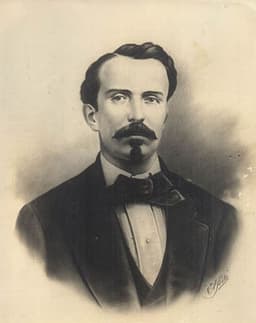
Carlos Manuel de Cespedes
Revolutionary · Modern
44.4Total
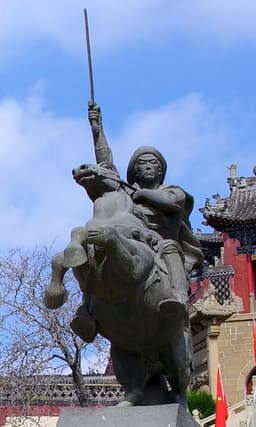
Li Zicheng
Revolutionary · Modern
43.5Total
Basic Information
Born
1819
1606
Died
1874
1645
Era
Modern
Modern
Nationality
Cuba
China
Occupation
Revolutionary
Revolutionary
Civilization
Western
Eastern
Score Comparison
Military (10%)
50.0
50.0
Political (20%)
27.9
27.9
Influence (20%)
58.0
52.5
Legacy (20%)
50.0
44.2
Leadership (15%)
30.0
39.0
Strategy (15%)
36.8
43.3
TOTAL
44.4
43.5
Carlos Manuel de Cespedes — Complete Timeline
1868 AD
Grito de Yara (1868)Political Action
Carlos Manuel de C
IndependenceRevolutionTen Years' War
Impact: nationalprogressive
1869 AD
President of the Republic in Arms (1869)Political Action◆ Major
Céspedes was elected President of the Republic of Cuba in Arms by the Assembly of Guáimaro. He led the rebel government during the early years of the Ten Years' War, advocating for independence and the abolition of slavery. His leadership was marked by internal divisions.
PresidencyRebel GovernmentWar
Impact: national
1873 AD
Deposed and Killed (1873-1874)Political Action◆ Major
Céspedes was deposed as president by the rebel assembly in 1873 due to disagreements over military strategy and political direction. He was killed in a skirmish with Spanish troops in 1874. His death made him a martyr for Cuban independence.
DepositionDeathMartyr
Impact: nationaltragic
Li Zicheng — Complete Timeline
1644 AD
Captured Beijing and Ended the Ming DynastyWar
Li Zicheng led his rebel army to capture Beijing. The Chongzhen Emperor committed suicide, ending the Ming dynasty. Li Zicheng proclaimed the Shun dynasty and briefly ruled from the Forbidden City before being defeated by Qing forces.
Ming-Qing TransitionRebellionBeijing
Impact: globaldestructive
Defeated at the Battle of Shanhai PassWar◆ Major
Li Zicheng's army was defeated by the combined forces of Wu Sangui and the Manchus at the Battle of Shanhai Pass. The defeat forced him to abandon Beijing and retreat westward, effectively ending his control over northern China.
Ming-Qing TransitionBattleDefeat
Impact: globaltragic
Proclaimed the Shun DynastyPolitical Action◆ Major
After capturing Beijing, Li Zicheng formally proclaimed the establishment of the Shun dynasty in Xi'an. He adopted the title of emperor and began implementing his own administrative policies, though his rule was short-lived.
Shun DynastyProclamationRebellion
Impact: nationalconstructive
1645 AD
Killed in Jiugong MountainWar◆ Major
Li Zicheng was killed by a local militia while fleeing through Jiugong Mountain in Hubei province. His death marked the end of the Shun dynasty and the collapse of his rebellion, though some accounts claim he survived and became a monk.
Shun DynastyDeathRebellion
Impact: nationaltragic
Expert Analysis
Carlos Manuel de Cespedes vs Li Zicheng
# The Rebel’s Mirror: Li Zicheng and Carlos Manuel de Céspedes
On an April morning in 1644, Li Zicheng rode through the gates of Beijing’s Forbidden City, a peasant king ascending a throne that had belonged to the Ming emperors for nearly three centuries. The Chongzhen Emperor had hanged himself on a hill behind the palace, his last decree a plea that rebels not harm his people. Less than two hundred years later, on an October dawn in 1868, Carlos Manuel de Céspedes stood before his sugar mill in eastern Cuba, ringing a bell that would summon slaves and freemen alike to a different kind of rebellion. Both men sought to tear down an old order. One would become a footnote in China’s long imperial saga; the other, the father of a nation. What separates a conqueror from a founder?
Origins
Li Zicheng was born in 1606 into a world of grinding poverty in Shaanxi province, a region that would become the cradle of his revolution. His family scratched a living from the soil, and young Li worked as a shepherd and later a postal courier—a job that vanished when the Ming government, bankrupt from wars and corruption, dismantled the imperial postal system. The Little Ice Age had descended on China, bringing drought, locusts, and famine. Peasants ate bark and clay. When Li killed a man in a dispute, he fled to join the roving bands of starving farmers that were already coalescing into rebel armies.
Céspedes was born in 1819 into a very different world: the landed gentry of colonial Cuba. His father owned a sugar plantation, and young Carlos studied law at the University of Havana, then traveled to Spain for further education. He traveled through Europe, absorbing liberal ideas from the revolutions of 1848, and returned to Cuba a lawyer, poet, and slave owner who had come to hate slavery itself. Where Li’s rebellion was born of hunger, Céspedes’s was born of ideas—Enlightenment notions of liberty and nationhood that the Spanish crown had no intention of granting.
Rise to Power
Li Zicheng rose through the ranks of peasant armies with brute competence. By 1636, he had become a chieftain among the rebels, known for his simple lifestyle and willingness to share hardships with his men. He adopted the slogan “Open the granaries and feed the people,” a promise that drew tens of thousands to his banner. In 1643, he proclaimed himself the “King of the Great Shun” in Xi’an, a title that declared his intention to found a new dynasty. His army swept across northern China, and by April 1644, Beijing lay at his feet.
Céspedes’s rise was more deliberate. For years, he plotted with fellow planters, lawyers, and intellectuals in secret lodges. On October 10, 1868, he issued the *Grito de Yara*—the Cry of Yara—declaring Cuba independent from Spain. He freed his own slaves and called them to arms. Within weeks, his ragtag army had taken several towns in eastern Cuba. In 1869, the rebel assembly elected him President of the Republic of Cuba in Arms, a government that existed mostly in the forests and sugar mills of the Oriente region.
Leadership & Governance
Li Zicheng was a military commander of considerable ability—his strategy score of 59.6 reflects a talent for mobility and mass mobilization. But his political score of 40.3 reveals a catastrophic weakness: he had no plan for governing. Once in Beijing, his army began looting and torturing Ming officials for their hidden wealth. Li issued decrees promising justice, but he could not control his followers. He tried to negotiate with the Ming general Wu Sangui, who guarded the Great Wall’s Shanhai Pass, but botched the diplomacy by seizing Wu’s family and concubine. Wu defected to the Manchu Qing dynasty, and the two armies marched together against the Shun.
Céspedes, with a political score of 53.3, was more adept at governance but still struggled. The Republic in Arms was a government of exiles, divided between moderates who wanted a gradual war and radicals who demanded immediate abolition of slavery. Céspedes had freed his own slaves, but other rebel leaders owned slaves and resisted emancipation. The Assembly of Guáimaro, which wrote Cuba’s first constitution in 1869, forced Céspedes to accept a more radical abolitionist stance than he had originally wanted. His military score of 34.0 reflects a man who was never comfortable commanding armies—he was a lawyer and planter, not a general.
Triumph & Tragedy
Li Zicheng’s triumph was brief and absolute. For six weeks in the spring of 1644, he was master of China’s capital, the first peasant rebel in centuries to sit in the Dragon Throne. But on May 27, at the Battle of Shanhai Pass, his army of 60,000 was crushed by the joint forces of Wu Sangui and the Manchu prince Dorgon. The Shun army disintegrated. Li fled back to Xi’an, then south, pursued relentlessly by the Qing. In 1645, he was cornered in the mountains of Hubei and killed by a local militia—not by Manchu soldiers, but by farmers defending their villages from his starving, looting remnants.
Céspedes’s tragedy was slower. The Ten Years’ War (1868–1878) dragged on without decisive victory. Spanish forces, better equipped and supplied, pushed the rebels into the eastern mountains. In 1873, the rebel assembly deposed Céspedes, accusing him of inept military leadership and excessive authoritarianism. He retired to a mountain retreat, and in 1874, Spanish soldiers captured and executed him. He died not on a battlefield but against a wall, shot by the empire he had defied.
Character & Destiny
Li Zicheng was a man of his time: ruthless, pragmatic, and ultimately unable to transcend the chaos that had made him. He could destroy a dynasty but could not build one. His leadership score of 33.8 is the lowest among these figures, and it shows—he could inspire men to follow him into battle but not to obey him in peace. His legacy score of 62.0, however, endures as a symbol of peasant revolution in Chinese memory, a warning and an inspiration.
Céspedes was a man of ideas in a world that needed action. His influence score of 72.8 and legacy score of 68.9 mark him as a founder, not a conqueror. He failed to win Cuba’s independence—that would come in 1898, after the Spanish-American War—but he started the war that made independence thinkable. Cubans call him *Padre de la Patria*, Father of the Nation, a title that Li Zicheng never earned.
Legacy
Li Zicheng is remembered in China as a tragic figure—a man who overthrew a corrupt dynasty only to be overthrown by a more disciplined one. The Qing dynasty would rule for 268 years, and its historians painted Li as a bandit and destroyer. But in the 20th century, Chinese revolutionaries like Mao Zedong saw in Li a precursor: a peasant leader who failed because he lost touch with the masses. Mao warned his own cadres against “Li Zicheng’s arrogance” after they took Beijing in 1949.
Céspedes is enshrined in Cuban history as a martyr and founder. His portrait hangs in schools; his name adorns streets and squares. The *Grito de Yara* is celebrated as the birth of the Cuban nation. His deposition and death are taught as lessons in the dangers of division among revolutionaries. He failed militarily but succeeded symbolically—a different kind of victory from Li’s brief, bloody conquest.
Conclusion
Two rebels, two failures, two legacies. Li Zicheng seized an empire and lost it in six weeks; Céspedes started a war he could not finish but that outlasted him. One was a man of action undone by his own success; the other, a man of vision undone by the limits of his time. Their stories remind us that history judges not by the height of the throne but by the depth of the foundation. Li built a throne of sand; Céspedes laid a cornerstone. In the end, it is not the capture of a capital that makes a founder—it is the idea that survives the fall.
Rankings
🥇
Carlos Manuel de CespedesLeader
Mil: 50.0Pol: 27.9Inf: 58.0
44.4
🥈
Li Zicheng
Mil: 50.0Pol: 27.9Inf: 52.5
43.5
+0.9 behind
How This Comparison Works
Algorithm
Each figure is scored on 6 dimensions (0—100 scale) based on structured historical data: Military (10%), Political (20%), Influence (20%), Legacy (20%), Leadership (15%), Strategy (15%). The weighted total produces the final ranking.
Data Sources
Scores are computed from structured sub-indicators in the database. Scale factors adjust for era (Ancient ×0.85, Modern ×1.0) and civilization size (Eastern ×1.05, Other ×0.80) to account for differences in population and military scale.
Maximum 3 Figures
Comparisons are limited to 2—3 figures to ensure readability and statistical meaningfulness.
Error Margins
±5 points per dimension — Sub-scores are derived from historical records with inherent uncertainty. Two figures within 5 points on a dimension should be considered roughly equivalent in that area.
Total Score Accuracy
±3 points overall — The weighted combination of 6 dimensions produces a total score with approximately ±3 points of uncertainty. Differences of less than 3 points are not statistically significant— the figures are effectively tied.
Known Limitations
- Historical records are incomplete and uneven across civilizations
- Figures from oral-tradition societies may be underrepresented
- Occupation labels can misclassify multi-role figures
- Scores measure capability and impact, not moral character
- Quantitative scoring is a comparison tool, not absolute truth
Capability Radar
Military (10%) — Battles & Warfare
Battles
30
55
Win Rate
25
60
Expansion
10
65
Political (20%) — Governance & Reform
Reform
40
15
Diplomacy
25
20
Economy
15
10
Influence (20%) — Cultural & Global Reach
Cultural
60
40
Global
50
35
Legacy (20%) — Historical Impact
Historical
65
55
Longevity
55
30
Leadership (15%) — Power & Stability
Tenure
30
20
Stability
10
5
Strategy (15%) — Tactics & Innovation
Strategy
25
55
Tactics
20
50
Reform
15
30
Similar Comparisons
Comments & Discussion
铁血考据党6/16/2026
所有把李自成和塞斯佩德斯放在一起比较的人,都忽略了一个致命硬伤:李自成从来没控制过一个稳定的税收系统。他进北京后还是靠"追赃助饷"这种土匪式勒索,而塞斯佩德斯1868年就颁布了土地改革法令。一个连账本都管不好的农民领袖,拿什么跟一个起草了共和国宪法的地主革命家比?数据会说话:李自成的大顺朝满打满算存在了不到两个月。
Caesar's Ghost6/16/2026
Céspedes wasn't some idealistic liberator—he was a slave-owning planter who freed his slaves only when military necessity demanded it. His 1868 uprising failed because he refused to arm freedmen properly, fearing a Haiti-style revolution. Li Zicheng, for all his flaws, actually redistributed land to peasants in Shaanxi. Let's stop romanticizing the "Father of Cuba" and acknowledge both these rebels were products of their desperate times, not saints.
历史回声6/16/2026
从军事战略看,两人最大的分野在于对旧官僚体系的态度。李自成进京后对明朝降官照单全收,结果被吴三桂和满清的联合绞杀。塞斯佩德斯更聪明,他直接宣布废除奴隶制,把古巴殖民地的经济基础连根拔起。前者想当新皇帝,后者想建新国家。一个被旧制度反噬,一个创造了新可能性。这就是为什么一个成了史书上的"流寇",另一个成了国父。
Peasant General6/16/2026
Let's talk logistics: Li Zicheng marched 1,000 miles from Shaanxi to Beijing with an army that ate grass when grain ran out. Céspedes never moved his rebellion beyond eastern Cuba's sugar plantations. The Ming fell because of systemic collapse—Li just delivered the final blow. Céspedes couldn't even take Bayamo. One toppled a 276-year dynasty; the other fought a 10-year stalemate. History's verdict is too harsh on the man who actually won.
Chronicler30686/16/2026
Li Zicheng is the ultimate cautionary tale of a conqueror who couldn't become a founder. He breached Beijing, but his army's looting and rape alienated every potential ally. By contrast, Céspedes freed his slaves on day one and built a constitution in 1869. Li had the mandate of heaven in his grasp and pissed it away in 42 days. A real founder knows power isn't just about taking—it's about keeping.