Loading...
Carlos Manuel de Cespedes vs Jose Maria Sison
Jose Maria Sison leads by 3.9 pts · 2 figures compared
…
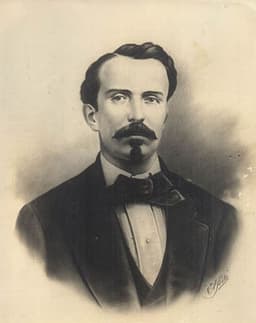
Carlos Manuel de Cespedes
Revolutionary · Modern
44.4Total
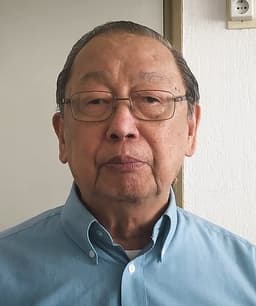
Jose Maria Sison
Revolutionary · Modern
48.3Total
Basic Information
Born
1819
1939
Died
1874
—
Era
Modern
Modern
Nationality
Cuba
Philippines
Occupation
Revolutionary
Revolutionary
Civilization
Western
Eastern
Score Comparison
Military (10%)
50.0
41.6
Political (20%)
27.9
35.1
Influence (20%)
58.0
53.3
Legacy (20%)
50.0
45.0
Leadership (15%)
30.0
58.8
Strategy (15%)
36.8
54.6
TOTAL
44.4
48.3
Carlos Manuel de Cespedes — Complete Timeline
1868 AD
Grito de Yara (1868)Political Action
Carlos Manuel de C
IndependenceRevolutionTen Years' War
Impact: nationalprogressive
1869 AD
President of the Republic in Arms (1869)Political Action◆ Major
Céspedes was elected President of the Republic of Cuba in Arms by the Assembly of Guáimaro. He led the rebel government during the early years of the Ten Years' War, advocating for independence and the abolition of slavery. His leadership was marked by internal divisions.
PresidencyRebel GovernmentWar
Impact: national
1873 AD
Deposed and Killed (1873-1874)Political Action◆ Major
Céspedes was deposed as president by the rebel assembly in 1873 due to disagreements over military strategy and political direction. He was killed in a skirmish with Spanish troops in 1874. His death made him a martyr for Cuban independence.
DepositionDeathMartyr
Impact: nationaltragic
Jose Maria Sison — Complete Timeline
1968 AD
Founded the Communist Party of the PhilippinesPolitical Action◆ Major
Sison re-established the Communist Party of the Philippines (CPP) along Maoist lines, breaking from the old Partido Komunista ng Pilipinas. The CPP launched a protracted people's war against the Philippine state, becoming one of Asia's longest-running insurgencies.
CommunismMaoismInsurgency
Impact: nationaldestructive
1969 AD
Founded the New People's ArmyPolitical Action◆ Major
Sison established the New People's Army (NPA) as the armed wing of the CPP. The NPA began guerrilla operations in rural areas, targeting government forces and infrastructure. The group has been designated a terrorist organization by the Philippines and the US.
GuerrillaInsurgencyArmed Struggle
Impact: nationaldestructive
1977 AD
Arrested and imprisoned under MarcosPolitical Action◆ Major
Sison was arrested by the Marcos regime and imprisoned for seven years. During his detention, he continued to direct the CPP/NPA through written orders smuggled out of prison. He was released in 1986 after the People Power Revolution.
ImprisonmentMartial LawMarcos
Impact: nationaltragic
1987 AD
Exiled to the NetherlandsPolitical Action◆ Major
After the 1986 revolution, Sison went into self-exile in the Netherlands. From there, he continued to lead the CPP/NPA, issuing directives and negotiating peace talks with the Philippine government. He remains in exile as of 2024.
ExilePeace TalksLeadership
Impact: national
Expert Analysis
Carlos Manuel de Cespedes vs Jose Maria Sison
# The Revolutionary's Dilemma: Carlos Manuel de Céspedes and José María Sison
In the autumn of 1868, a wealthy sugar planter named Carlos Manuel de Céspedes stood before his slaves on his plantation in eastern Cuba and declared them free men. He then raised a flag and proclaimed independence from Spain. A century later, in 1968, a young intellectual named José María Sison gathered a handful of followers in the Philippine countryside and re-founded a Communist Party, vowing to overthrow the government through armed struggle. Both men lit fires that would burn for generations. Yet one became the father of a nation, while the other remains a ghost haunting his country's unfinished revolution. What made the difference?
Origins
Céspedes was born in 1819 into Cuba's landed gentry, a man of privilege who studied law in Spain and traveled across Europe. He returned to Cuba a liberal reformer, disillusioned by Spanish colonial oppression and the cruelty of slavery. His world was one of plantations, sugar mills, and a rigid caste system that denied Creoles like him any real political power. The era of Latin American independence movements was still fresh, and the example of Haiti's slave rebellion loomed large in the Caribbean imagination. Céspedes was a product of his class, but also of his time—a time when revolution seemed possible, even necessary.
Sison, born in 1939, came of age in a different world. The Philippines had been an American colony until 1946, and its post-independence politics were dominated by a landed oligarchy and the corrupt rule of Ferdinand Marcos. Sison was a brilliant student, studying at the University of the Philippines and later teaching literature. But he was radicalized by the poverty he saw in the countryside and the failure of the old Communist Party, which had been crushed in the 1950s. He turned to Maoism, with its emphasis on peasant revolution and protracted guerrilla warfare. His era was the Cold War, and his model was China's Cultural Revolution.
Rise to Power
Céspedes's path to power was dramatic and immediate. On October 10, 1868, he issued the Grito de Yara from his sugar plantation, La Demajagua. It was a declaration of war, a call to arms, and a personal sacrifice: he freed his own slaves to join the fight. Within days, he had an army of a few hundred men. Within months, the rebellion had spread across eastern Cuba. He was not a career revolutionary; he was a planter who had been pushed too far. His authority came from his wealth, his social standing, and his willingness to burn his own bridges.
Sison's rise was more deliberate and ideological. In 1968, he founded the Communist Party of the Philippines (CPP) along Maoist lines, breaking from the old, discredited Partido Komunista ng Pilipinas. The next year, he established the New People's Army (NPA) as its armed wing. He was not a planter leading a spontaneous uprising; he was an intellectual building a revolutionary organization. His power came from his ideas, his discipline, and his ability to recruit among the rural poor. Where Céspedes had a plantation, Sison had a manifesto.
Leadership & Governance
Céspedes was elected President of the Republic of Cuba in Arms in 1869 by the Assembly of Guáimaro. His leadership was charismatic but chaotic. He struggled to balance military strategy with political governance, and his authority was constantly challenged by regional commanders and civilian politicians. He believed in a unified Cuban nation, but he could not control the factions that emerged. His military score of 34.0 reflects his weakness as a battlefield commander; his political score of 53.3 shows he was a better symbol than administrator.
Sison, by contrast, was a master of organization. From his prison cell after his 1977 arrest under Marcos, he continued to direct the CPP/NPA. His leadership score of 73.0 reflects his ability to maintain ideological discipline and strategic control even from a distance. But his strategy score of 30.0 reveals a critical flaw: he could build a movement, but he could not win a war. The NPA fought for decades without ever capturing state power, and Sison's insistence on Maoist orthodoxy may have limited his tactical flexibility.
Triumph & Tragedy
Céspedes's greatest moment was the Grito de Yara itself—a bold act that ignited a war. His greatest tragedy came in 1873, when the rebel assembly deposed him as president due to disagreements over military strategy and political direction. The following year, Spanish forces caught and killed him. He died a failure, his revolution in disarray. Yet his sacrifice laid the groundwork for Cuba's eventual independence in 1898.
Sison's triumph was building a revolutionary movement that survived for over five decades, outlasting Marcos's dictatorship and continuing to challenge subsequent governments. His tragedy is that he never saw victory. From his exile in the Netherlands since 1987, he has watched his movement fragment, with some factions pursuing peace talks and others descending into criminality. He remains alive, but his revolution is stalled.
Character & Destiny
Céspedes was a man of action, impulsive and generous. He freed his slaves, spent his fortune on the war, and refused to compromise. His personality drove him to take risks that ultimately cost him his life, but also made him a martyr. Sison is a man of ideas, patient and dogmatic. He has survived by staying in the shadows, writing and directing from afar. His caution has kept him alive, but it has also kept his revolution from achieving its goals.
Legacy
Céspedes is remembered as the "Father of the Cuban Nation." His image appears on currency, his name adorns streets and schools, and his Grito de Yara is celebrated as the birth of Cuban independence. His legacy score of 68.9 reflects his enduring place in national memory. Sison's legacy is more contested. His influence score of 74.8 shows his impact on Philippine politics, but his legacy score of 63.2 is lower because he remains a divisive figure—revered by the left, reviled by the right, and increasingly irrelevant to a new generation.
Conclusion
The difference between these two revolutionaries lies not in their ideals but in their outcomes. Céspedes died fighting for a nation that would eventually be born; Sison lives on, watching his revolution fade. One became a symbol of unity, the other a symbol of division. Perhaps the lesson is that revolutions require not just leaders, but moments—and that the moment for Sison's brand of revolution has passed. Or perhaps it is that the most successful revolutionaries are those who die before their cause is won, leaving others to finish the work. In the end, both men remind us that the path of the revolutionary is paved with sacrifice, but only history decides who becomes a father and who becomes a ghost.
Rankings
🥇
Jose Maria SisonLeader
Mil: 41.6Pol: 35.1Inf: 53.3
48.3
🥈
Carlos Manuel de Cespedes
Mil: 50.0Pol: 27.9Inf: 58.0
44.4
+3.9 behind
How This Comparison Works
Algorithm
Each figure is scored on 6 dimensions (0—100 scale) based on structured historical data: Military (10%), Political (20%), Influence (20%), Legacy (20%), Leadership (15%), Strategy (15%). The weighted total produces the final ranking.
Data Sources
Scores are computed from structured sub-indicators in the database. Scale factors adjust for era (Ancient ×0.85, Modern ×1.0) and civilization size (Eastern ×1.05, Other ×0.80) to account for differences in population and military scale.
Maximum 3 Figures
Comparisons are limited to 2—3 figures to ensure readability and statistical meaningfulness.
Error Margins
±5 points per dimension — Sub-scores are derived from historical records with inherent uncertainty. Two figures within 5 points on a dimension should be considered roughly equivalent in that area.
Total Score Accuracy
±3 points overall — The weighted combination of 6 dimensions produces a total score with approximately ±3 points of uncertainty. Differences of less than 3 points are not statistically significant— the figures are effectively tied.
Known Limitations
- Historical records are incomplete and uneven across civilizations
- Figures from oral-tradition societies may be underrepresented
- Occupation labels can misclassify multi-role figures
- Scores measure capability and impact, not moral character
- Quantitative scoring is a comparison tool, not absolute truth
Capability Radar
Military (10%) — Battles & Warfare
Battles
30
5
Win Rate
25
5
Expansion
10
10
Political (20%) — Governance & Reform
Reform
40
40
Diplomacy
25
30
Economy
15
20
Influence (20%) — Cultural & Global Reach
Cultural
60
40
Global
50
40
Legacy (20%) — Historical Impact
Historical
65
50
Longevity
55
40
Leadership (15%) — Power & Stability
Tenure
30
60
Stability
10
15
Strategy (15%) — Tactics & Innovation
Strategy
25
10
Tactics
20
10
Reform
15
15
Similar Comparisons
Comments & Discussion
No comments yet. Be the first to share your thoughts!