Loading...
This comparison has not been analyzed yet.
One-time AI generation (~1 minute). Scores and timeline are already available below.
Carlos Manuel de Cespedes vs Holden Roberto
Carlos Manuel de Cespedes leads by 10.2 pts · 2 figures compared
…
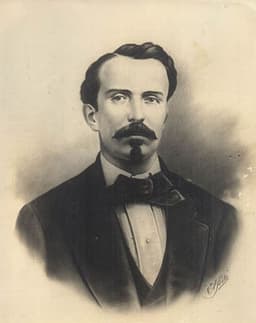
Carlos Manuel de Cespedes
Revolutionary · Modern
44.4Total

Holden Roberto
Revolutionary · Modern
34.2Total
Basic Information
Born
1819
1923
Died
1874
—
Era
Modern
Modern
Nationality
Cuba
Angola
Occupation
Revolutionary
Revolutionary
Civilization
Western
Other
Score Comparison
Military (10%)
50.0
10.2
Political (20%)
27.9
30.7
Influence (20%)
58.0
45.5
Legacy (20%)
50.0
35.0
Leadership (15%)
30.0
30.0
Strategy (15%)
36.8
39.6
TOTAL
44.4
34.2
Carlos Manuel de Cespedes — Complete Timeline
1868 AD
Grito de Yara (1868)Political Action
Carlos Manuel de C
IndependenceRevolutionTen Years' War
Impact: nationalprogressive
1869 AD
President of the Republic in Arms (1869)Political Action◆ Major
Céspedes was elected President of the Republic of Cuba in Arms by the Assembly of Guáimaro. He led the rebel government during the early years of the Ten Years' War, advocating for independence and the abolition of slavery. His leadership was marked by internal divisions.
PresidencyRebel GovernmentWar
Impact: national
1873 AD
Deposed and Killed (1873-1874)Political Action◆ Major
Céspedes was deposed as president by the rebel assembly in 1873 due to disagreements over military strategy and political direction. He was killed in a skirmish with Spanish troops in 1874. His death made him a martyr for Cuban independence.
DepositionDeathMartyr
Impact: nationaltragic
Holden Roberto — Complete Timeline
1962 AD
Founded the FNLA (National Front for the Liberation of Angola)Political Action◆ Major
Roberto founded the FNLA, a nationalist movement fighting for Angolan independence from Portugal. He established a government-in-exile in Zaire and received support from the US and China, becoming a key figure in the independence struggle.
FNLAIndependence Movement
Impact: national
1975 AD
Declared the independence of Angola as the 'Democratic Republic of Angola'Political Action◆ Major
Roberto unilaterally declared independence for Angola from his base in Zaire, establishing a rival government to the MPLA's declaration. This move was not internationally recognized and contributed to the outbreak of the Angolan Civil War.
IndependenceCivil War
Impact: national
1976 AD
Defeated by MPLA forces with Cuban supportWar◆ Major
Roberto's FNLA forces were decisively defeated by the MPLA, which was supported by Cuban troops. The FNLA was driven from its strongholds and effectively ceased to be a major military force in the civil war.
Angolan Civil WarCuban Intervention
Impact: nationaltragic
Exiled and marginalized in ZairePolitical Action
After his military defeat, Roberto fled to Zaire, where he lived in exile. His political influence waned as the MPLA consolidated power, and he was unable to mount a significant challenge to the Angolan government.
ExileFNLA
Impact: national
This comparison has not been analyzed yet.
One-time AI generation (~1 minute). Scores and timeline are already available below.
Rankings
🥇
Carlos Manuel de CespedesLeader
Mil: 50.0Pol: 27.9Inf: 58.0
44.4
🥈
Holden Roberto
Mil: 10.2Pol: 30.7Inf: 45.5
34.2
+10.2 behind
How This Comparison Works
Algorithm
Each figure is scored on 6 dimensions (0—100 scale) based on structured historical data: Military (10%), Political (20%), Influence (20%), Legacy (20%), Leadership (15%), Strategy (15%). The weighted total produces the final ranking.
Data Sources
Scores are computed from structured sub-indicators in the database. Scale factors adjust for era (Ancient ×0.85, Modern ×1.0) and civilization size (Eastern ×1.05, Other ×0.80) to account for differences in population and military scale.
Maximum 3 Figures
Comparisons are limited to 2—3 figures to ensure readability and statistical meaningfulness.
Error Margins
±5 points per dimension — Sub-scores are derived from historical records with inherent uncertainty. Two figures within 5 points on a dimension should be considered roughly equivalent in that area.
Total Score Accuracy
±3 points overall — The weighted combination of 6 dimensions produces a total score with approximately ±3 points of uncertainty. Differences of less than 3 points are not statistically significant— the figures are effectively tied.
Known Limitations
- Historical records are incomplete and uneven across civilizations
- Figures from oral-tradition societies may be underrepresented
- Occupation labels can misclassify multi-role figures
- Scores measure capability and impact, not moral character
- Quantitative scoring is a comparison tool, not absolute truth
Capability Radar
Military (10%) — Battles & Warfare
Battles
30
20
Win Rate
25
15
Expansion
10
10
Political (20%) — Governance & Reform
Reform
40
15
Diplomacy
25
25
Economy
15
10
Influence (20%) — Cultural & Global Reach
Cultural
60
20
Global
50
20
Legacy (20%) — Historical Impact
Historical
65
25
Longevity
55
15
Leadership (15%) — Power & Stability
Tenure
30
30
Stability
10
10
Strategy (15%) — Tactics & Innovation
Strategy
25
20
Tactics
20
25
Reform
15
10
Similar Comparisons
Comments & Discussion
No comments yet. Be the first to share your thoughts!