Loading...
Carlos Manuel de Cespedes vs Gaitana
Carlos Manuel de Cespedes leads by 0.7 pts · 2 figures compared
…
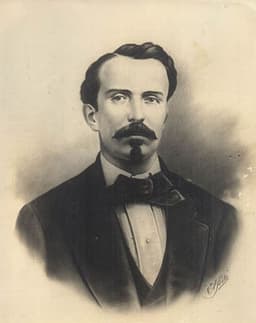
Carlos Manuel de Cespedes
Revolutionary · Modern
44.4Total
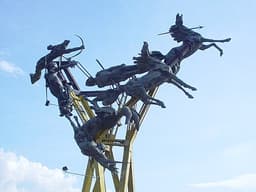
Gaitana
Revolutionary · Medieval
43.7Total
Basic Information
Born
1819
1500
Died
1874
1550
Era
Modern
Medieval
Nationality
Cuba
Yalcon
Occupation
Revolutionary
Revolutionary
Civilization
Western
Other
Score Comparison
Military (10%)
50.0
45.0
Political (20%)
27.9
35.0
Influence (20%)
58.0
44.0
Legacy (20%)
50.0
35.8
Leadership (15%)
30.0
57.1
Strategy (15%)
36.8
54.8
TOTAL
44.4
43.7
Carlos Manuel de Cespedes — Complete Timeline
1868 AD
Grito de Yara (1868)Political Action
Carlos Manuel de C
IndependenceRevolutionTen Years' War
Impact: nationalprogressive
1869 AD
President of the Republic in Arms (1869)Political Action◆ Major
Céspedes was elected President of the Republic of Cuba in Arms by the Assembly of Guáimaro. He led the rebel government during the early years of the Ten Years' War, advocating for independence and the abolition of slavery. His leadership was marked by internal divisions.
PresidencyRebel GovernmentWar
Impact: national
1873 AD
Deposed and Killed (1873-1874)Political Action◆ Major
Céspedes was deposed as president by the rebel assembly in 1873 due to disagreements over military strategy and political direction. He was killed in a skirmish with Spanish troops in 1874. His death made him a martyr for Cuban independence.
DepositionDeathMartyr
Impact: nationaltragic
Gaitana — Complete Timeline
1540 AD
Led the Yalcon Rebellion against Spanish colonizersWar◆ Major
Gaitana organized and led indigenous Yalcon forces in a rebellion against Spanish colonial rule in present-day Colombia. The rebellion targeted Spanish settlements and encomiendas, resisting forced labor and land seizure. The uprising was eventually suppressed by Spanish forces, but it became a symbol of indigenous resistance.
Indigenous RebellionColonial ResistanceYalcon
Impact: regional
Captured and executed Spanish encomendero Pedro de AñascoOther◆ Major
During the Yalcon rebellion, Gaitana's forces captured the Spanish encomendero Pedro de A
ExecutionColonial ConflictIndigenous Leadership
Impact: regional
1541 AD
Rebellion suppressed by Spanish forces under Sebastián de BelalcázarWar◆ Major
Spanish conquistador Sebasti
Military DefeatColonial SuppressionEnd of Rebellion
Impact: regionaldestructive
Expert Analysis
Carlos Manuel de Cespedes vs Gaitana
# The Rebel and the Flame
On October 10, 1868, a wealthy sugar planter named Carlos Manuel de Céspedes stood before his slaves on the La Demajagua plantation in eastern Cuba and set them free. Then he rang the plantation bell—a sound that would echo through the centuries—and declared Cuba’s independence from Spain. Across the Atlantic, three hundred years earlier, an indigenous woman in the mountains of what is now Colombia watched Spanish soldiers drag her son away. His crime: resisting the conquistadors. Her response: she raised an army. The woman was Gaitana, leader of the Yalcon people. The planter and the matriarch never met, never knew of each other’s existence. Yet both lit fires that would burn long after their own deaths. Why did one become the founding father of a nation, while the other became a legend whispered in the forests?
Origins
Céspedes was born in 1819 into Cuba’s planter aristocracy. Educated in Spain and France, he absorbed the liberal ideals of the Enlightenment—liberty, equality, self-determination. He returned to Cuba a gentleman farmer, but also a man who had read Rousseau and Voltaire in the original French. His world was one of sugar, slaves, and simmering resentment. Cuba in the 1860s was Spain’s “ever-faithful isle,” but its Creole elite chafed under colonial taxes, trade restrictions, and political exclusion. Céspedes was a product of that contradiction: a slave owner who came to believe in emancipation, a landowner who saw independence as the only path forward.
Gaitana emerged from a radically different world. The Yalcon were one of many indigenous groups in the northern Andes, living in fortified villages and practicing agriculture, weaving, and warfare. When the Spanish arrived in the 1530s, they brought steel, horses, and a brutal system of encomienda—forced labor and tribute. Gaitana was likely a cacica, a female chief, a role not uncommon among pre-Columbian societies. Her authority was rooted in kinship, tradition, and the land itself. She had no university education, no libraries of political theory. Her rebellion was not born from books but from the sight of her son’s severed head displayed on a pike.
Rise to Power
Céspedes’ path to revolution was deliberate, almost academic. For years, he conspired with fellow planters, lawyers, and military men in secret lodges and Masonic meetings. The moment came in 1868, when Spain’s Glorious Revolution destabilized the colonial government. Céspedes acted with theatrical precision: he freed his slaves, issued the Grito de Yara (Cry of Yara), and marched on the town of Yara with a ragtag force of 147 men. The Spanish garrison quickly scattered them, but the declaration had already spread like wildfire. Within weeks, thousands of volunteers joined the rebellion. Céspedes was not a born soldier—his military score of 34.0 reflects his limitations—but he understood the power of a symbol. The Grito de Yara was not a battle; it was a brand.
Gaitana’s rise was immediate and visceral. When Spanish authorities refused to return her son alive, she did not write manifestos. She traveled from village to village, speaking in the Yalcon language, invoking the spirits of ancestors, and calling for war. Her strategy score of 58.8 suggests a tactical mind, but her true genius lay in alliance-building. She united several tribes—Yalcon, Panche, and others—under a single command, a feat that Spanish chroniclers noted with grudging respect. Her army grew to thousands, armed with bows, clubs, and captured swords. She attacked Spanish settlements in the valleys, burned encomiendas, and ambushed supply convoys. Unlike Céspedes, she never held a formal title; her authority was charismatic and fleeting.
Leadership & Governance
Céspedes, once elected President of the Republic in Arms in 1869 by the Assembly of Guáimaro, tried to build a state. He issued decrees, organized a cabinet, and attempted to create a legal framework for the liberated territories. His political score of 53.3 reflects a man who understood that revolution required more than guns—it needed courts, taxes, and diplomacy. He courted foreign recognition, sent envoys to the United States and Latin America, and even tried to negotiate with Spain. But his leadership was undermined by internal divisions. The rebel assembly was a fractious body of regional caudillos, and Céspedes’ aristocratic style clashed with the populist fervor of the war.
Gaitana governed differently. She led by example, sharing the hardships of her warriors, sleeping on the ground, and fighting alongside them in battle. Her leadership score of 31.8 suggests a less institutional approach—but that was by necessity. The Yalcon had no bureaucracy, no written constitution. Her “government” was the war council of elders and warriors, where decisions were made by consensus. She was a war chief, not a president. Where Céspedes worried about international opinion, Gaitana worried about food supplies and arrowheads. Their worlds were incommensurable, and so were their definitions of success.
Triumph & Tragedy
Céspedes’ greatest moment was the Grito de Yara itself—a declaration that transformed a conspiracy into a national movement. His greatest failure came in 1873, when the rebel assembly deposed him as president. The reasons were complex: disagreements over military strategy, accusations of authoritarianism, and resentment of his refusal to accept a more radical constitution. He was replaced by a more conciliatory leader, and the war dragged on for five more years. In 1874, Spanish troops tracked him down in the mountains. He was killed in a skirmish, a lonely death for the man who had started it all. His total score of 56.2 places him as a mid-tier figure, but his influence score of 72.8 hints at something deeper: the idea of Cuba was born with him.
Gaitana’s triumph was the audacity of her rebellion. She led a sustained guerrilla war against a technologically superior enemy, forcing the Spanish to divert troops from other campaigns. Her tragedy was the inevitable outcome: the Spanish eventually crushed the uprising, using superior firepower and divide-and-conquer tactics. She was captured around 1550, but her fate is unclear. Some sources say she was executed; others claim she escaped into the jungle. Her legacy score of 44.9 reflects a story that was nearly erased by colonial history. For centuries, she was a footnote, a local legend.
Character & Destiny
Céspedes was a man of the Enlightenment: rational, ambitious, and convinced that history was on his side. He believed that Cuba could be a republic, a nation of free citizens, not just a Spanish sugar colony. That vision drove him, but it also isolated him. He could not compromise with the more radical elements of his own movement, and he could not tolerate the slow pace of political change. His deposition was a tragedy of his own making—a man too principled for the messy realities of war.
Gaitana was a woman of the earth: fierce, pragmatic, and bound by blood. Her rebellion was not ideological but personal—a mother’s fury channeled into strategy. She did not dream of constitutions or republics. She wanted revenge, and she wanted her people to survive. That simplicity gave her a clarity that Céspedes lacked. She did not waver, did not negotiate. She fought until the end.
Legacy
Today, Céspedes is revered as the “Father of the Cuban Nation.” His face appears on currency, his name adorns streets and schools. The Grito de Yara is celebrated as the beginning of Cuba’s long struggle for independence. His legacy is institutional, monumental, and official.
Gaitana’s legacy is different. In Colombia, she is remembered as a symbol of indigenous resistance, a figure reclaimed by modern movements for land rights and cultural recognition. Statues of her stand in some towns, and her story is taught in schools—but often as a footnote to the Spanish conquest. Her legacy is not a nation but a memory, a reminder that the conquered also fought back.
Conclusion
Two rebels, separated by three centuries and an ocean, yet bound by the same impossible dream: to stand against an empire. Céspedes had the tools of modernity—writing, politics, diplomacy—and used them to build a nation. Gaitana had only her voice, her courage, and her grief—and used them to inspire a people. One became a founding father; the other became a ghost. Both remind us that history is not a ladder of progress but a web of choices, where the same act of defiance can lead to a republic or a legend, depending on who is telling the story.
Rankings
🥇
Carlos Manuel de CespedesLeader
Mil: 50.0Pol: 27.9Inf: 58.0
44.4
🥈
Gaitana
Mil: 45.0Pol: 35.0Inf: 44.0
43.7
+0.7 behind
How This Comparison Works
Algorithm
Each figure is scored on 6 dimensions (0—100 scale) based on structured historical data: Military (10%), Political (20%), Influence (20%), Legacy (20%), Leadership (15%), Strategy (15%). The weighted total produces the final ranking.
Data Sources
Scores are computed from structured sub-indicators in the database. Scale factors adjust for era (Ancient ×0.85, Modern ×1.0) and civilization size (Eastern ×1.05, Other ×0.80) to account for differences in population and military scale.
Maximum 3 Figures
Comparisons are limited to 2—3 figures to ensure readability and statistical meaningfulness.
Error Margins
±5 points per dimension — Sub-scores are derived from historical records with inherent uncertainty. Two figures within 5 points on a dimension should be considered roughly equivalent in that area.
Total Score Accuracy
±3 points overall — The weighted combination of 6 dimensions produces a total score with approximately ±3 points of uncertainty. Differences of less than 3 points are not statistically significant— the figures are effectively tied.
Known Limitations
- Historical records are incomplete and uneven across civilizations
- Figures from oral-tradition societies may be underrepresented
- Occupation labels can misclassify multi-role figures
- Scores measure capability and impact, not moral character
- Quantitative scoring is a comparison tool, not absolute truth
Capability Radar
Military (10%) — Battles & Warfare
Battles
30
15
Win Rate
25
10
Expansion
10
5
Political (20%) — Governance & Reform
Reform
40
5
Diplomacy
25
10
Economy
15
5
Influence (20%) — Cultural & Global Reach
Cultural
60
20
Global
50
10
Legacy (20%) — Historical Impact
Historical
65
25
Longevity
55
20
Leadership (15%) — Power & Stability
Tenure
30
10
Stability
10
5
Strategy (15%) — Tactics & Innovation
Strategy
25
15
Tactics
20
20
Reform
15
5
Similar Comparisons
Comments & Discussion
愤怒的碑文6/16/2026
非要把一个用解放奴隶打响独立第一枪的启蒙者,跟一个为私仇揭竿的部落女酋长相提并论?Gaitana的事迹连同时代西班牙编年史都只留了几句含糊记录,八成是征服者拿来妖魔化印第安人的传说。Cespedes却在1868年实实在在地签署了《雅拉法令》,废除奴隶制,成立共和国。拿传说碰瓷史料,历史网红的小把戏罢了。你拿《百年孤独》当正史读,就别来碰瓷拉丁美洲独立史。
The StatCounter6/16/2026
Comparing them is like comparing apples to assassination attempts. The data tells the real story: Cespedes unequivocally led the first phase of the Cuban War of Independence (1868-1878), mobilizing thousands and drafting a constitution in 1869. Gaitana’s rebellion? Zero contemporaneous written records from her side, single Spanish account from 1581, and her forces were dispersed within weeks. Impact metrics: Cespedes starts a ten-year war; Gaitana, a local skirmish erased from military histories
时代交叉眼6/16/2026
一个在1868年,一个在1540年左右,隔着三个多世纪还真能放在同一个天平上称?Cespedes打响的是属于他那个时代的反殖民独立战,背靠的是美洲启蒙主义思潮和克里奥尔精英的网络。Gaitana的抵抗是典型的早期殖民角落反抗:没有火器,没有跨部落联盟,只有口耳相传的传说作为"史料"。前者能成为国父,是因为历史进程给了他在国家叙事中被书写的舞台——这不等于后者的抗挣就"低一等"。别把结果当意义。
Guns & Gowns6/16/2026
From a strategic resources perspective, Cespedes wins by sheer war economy. He controlled sugar mills, could arm militias, had access to international trade routes—by 1869 his ragtag army used Remington rifles smuggled from US gunrunners. Gaitana fought with wooden spears and stones against steel armor and mastiff dogs. Her “army” was a desperate gathering of perhaps 6,000 Yalcon families. Cespedes provided a tax system, a printing press for propaganda, and diplomatic envoys to Latin America. Ga
非虚构唯一论6/16/2026
所有关于Gaitana的叙述都来源于16世纪西班牙修士Fray Pedro Simón的《历史笔记》,而他写这本书时已经离事件过去近70年了。换句话说,这相当于我们现在根据1950年代的二手传闻去描述一个二战时期的故事。更糟糕的是,这是在一个"印第安人天生野蛮"的殖民叙事框架下写成的。Cespedes的一切行动都有同时代多国使馆