Loading...
Gaitana vs Vladimir Lenin
Vladimir Lenin leads by 27.5 pts · 2 figures compared
…
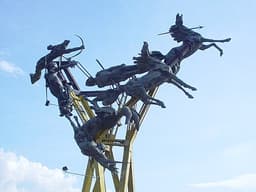
Gaitana
Revolutionary · Medieval
43.7Total
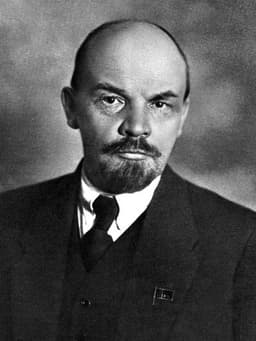
Vladimir Lenin
Revolutionary · Modern
71.2Total
Basic Information
Born
1500
1870
Died
1550
1924
Era
Medieval
Modern
Nationality
Yalcon
Russia
Occupation
Revolutionary
Revolutionary
Civilization
Other
Western
Score Comparison
Military (10%)
45.0
30.0
Political (20%)
35.0
78.0
Influence (20%)
44.0
82.0
Legacy (20%)
35.8
72.0
Leadership (15%)
57.1
80.0
Strategy (15%)
54.8
60.0
TOTAL
43.7
71.2
Gaitana — Complete Timeline
1540 AD
Led the Yalcon Rebellion against Spanish colonizersWar◆ Major
Gaitana organized and led indigenous Yalcon forces in a rebellion against Spanish colonial rule in present-day Colombia. The rebellion targeted Spanish settlements and encomiendas, resisting forced labor and land seizure. The uprising was eventually suppressed by Spanish forces, but it became a symbol of indigenous resistance.
Indigenous RebellionColonial ResistanceYalcon
Impact: regional
Captured and executed Spanish encomendero Pedro de AñascoOther◆ Major
During the Yalcon rebellion, Gaitana's forces captured the Spanish encomendero Pedro de A
ExecutionColonial ConflictIndigenous Leadership
Impact: regional
1541 AD
Rebellion suppressed by Spanish forces under Sebastián de BelalcázarWar◆ Major
Spanish conquistador Sebasti
Military DefeatColonial SuppressionEnd of Rebellion
Impact: regionaldestructive
Vladimir Lenin — Complete Timeline
1903 AD
Founding of the Bolshevik PartyPolitical Action
At the Second Congress of the Russian Social Democratic Labour Party in London, Lenin led a split that created the Bolshevik faction. The Bolsheviks advocated for a disciplined vanguard party of professional revolutionaries, a key element of Lenin's political strategy.
Political PartyRevolutionIdeology
Impact: global
1917 AD
April ThesesPolitical Action◆ Major
Lenin returned to Russia from exile and published the April Theses, calling for the overthrow of the Provisional Government, transfer of power to the soviets, and an end to World War I. This document set the Bolshevik agenda for the coming revolution.
RevolutionIdeologyPolitical Strategy
Impact: national
October RevolutionPolitical Action
Lenin led the Bolshevik seizure of power in Petrograd, capturing key government buildings and the Winter Palace. The revolution overthrew the Provisional Government and established the world's first socialist state, the Russian Soviet Federative Socialist Republic.
RevolutionCoupCommunism
Impact: global
1918 AD
Treaty of Brest-LitovskPolitical Action◆ Major
Lenin signed a separate peace treaty with the Central Powers, ceding vast territories including Ukraine, Belarus, and the Baltic states. The treaty ended Russia's involvement in World War I but caused significant territorial losses and internal opposition.
TreatyWorld War ITerritorial Loss
Impact: globaldestructive
1921 AD
New Economic Policy (NEP)Reform◆ Major
Lenin introduced the NEP, allowing limited private enterprise and market mechanisms to revive the war-torn Soviet economy. The policy replaced War Communism, permitting small-scale capitalism while the state retained control of major industries.
Economic ReformPolicyRecovery
Impact: nationalconstructive
1922 AD
Establishment of the Soviet UnionPolitical Action
Lenin oversaw the creation of the Union of Soviet Socialist Republics (USSR), a federation of Soviet republics. The new state consolidated Bolshevik control over much of the former Russian Empire and became a model for communist states worldwide.
State FormationCommunismFederation
Impact: global
Expert Analysis
Vladimir Lenin vs Gaitana
### The Revolutionary's Dilemma: Lenin and Gaitana
In the winter of 1917, a balding, intense man stepped off a sealed train at Petrograd's Finland Station, greeted by a crowd of workers and soldiers. He had been exiled for years, but now he was about to topple an empire. Just over four centuries earlier, in the lush mountains of what is now Colombia, a woman named Gaitana watched as Spanish conquistadors tortured and killed her son. She did not board a train to power; she picked up a weapon and rallied her people. One man changed the world from a capital city; one woman fought a doomed war from a jungle. What separates a revolutionary who builds a new world from one who only burns the old one down? The answer lies not just in their choices, but in the very structure of the eras they inhabited.
### Origins
Vladimir Ilyich Ulyanov was born in 1870 into the provincial gentry of Simbirsk, Russia. His father was a school inspector, his mother a cultured woman of German-Swedish descent. The family was comfortable, educated, and deeply affected by the 1887 execution of Lenin’s older brother for plotting to assassinate the Tsar. That trauma radicalized the young lawyer, driving him into the underground world of Marxist circles. Lenin was a man of books and conspiracies, shaped by the rigid autocracy of Tsarist Russia and the industrial unrest of a nation hurtling toward modernity.
Gaitana, born around 1500, came from a world without printing presses or political parties. She was a *cacica*—a female leader—of the Yalcon people, part of the larger indigenous societies of the Colombian interior. Her authority was rooted in lineage, tradition, and the land. There were no manifestos, no congresses. Power was personal: a leader’s worth was measured in warriors, harvests, and the respect of elders. When the Spanish arrived, they brought guns, disease, and a worldview that saw her people as obstacles to be removed or souls to be saved. Her rebellion was not ideological; it was existential.
### Rise to Power
Lenin’s path was slow, deliberate, and literary. In 1903, at the Second Congress of the Russian Social Democratic Labour Party in London, he engineered a split, creating the Bolshevik faction—the "majority." This was a turning point. Lenin built a party of professional revolutionaries, disciplined and secretive, waiting for the right moment. The moment came in 1917, when World War I had shattered Russia. Returning from exile in April, he published the *April Theses*, demanding immediate peace, land to peasants, and all power to the soviets. By October, he led the Bolshevik seizure of the Winter Palace. His rise was a matter of timing, organization, and a ruthless understanding of power.
Gaitana’s rise was instantaneous and tragic. There was no party, no plan—only the murder of her son by the Spanish conquistador Pedro de Heredia. She became the face of resistance. Oral tradition says she gathered thousands of warriors from neighboring tribes, united by grief and rage. Her authority came not from a theory of history, but from the raw legitimacy of a mother demanding justice. She led attacks on Spanish settlements, using the forest as her ally. But she had no state to seize, no bureaucracy to replace. Her revolution was a war of survival, not a bid for governance.
### Leadership & Governance
Lenin governed. After the October Revolution, he faced chaos: civil war, famine, foreign intervention. He signed the Treaty of Brest-Litovsk in 1918, ceding vast territories to Germany to buy time—a brutal calculation that saved his regime. He created the Cheka, the secret police, to crush dissent. But he also showed flexibility. In 1921, after the devastation of War Communism, he introduced the New Economic Policy (NEP), allowing limited private enterprise to revive the economy. He was a pragmatist in theory, a dictator in practice. His political score of 80 reflects his ability to build a state from scratch, but his military score of 30 shows he was no general—he relied on Trotsky for that.
Gaitana never governed. She led a rebellion, but she could not build a state. Her military score of 29.8 is nearly identical to Lenin’s, but her political score of 35.8 is far lower—not because she was less capable, but because she had no state to administer. The Spanish had already claimed the land, built forts, and established a colonial apparatus. Gaitana’s strategy score of 58.8 hints at tactical skill—ambushes, use of terrain—but she lacked the resources to turn victories into territory. Her leadership was inspirational, not institutional.
### Triumph & Tragedy
Lenin’s greatest triumph was the creation of the Soviet Union in 1922, a new kind of state that would shape the twentieth century. His tragedy was his own body: a series of strokes left him paralyzed and speechless in his final years, unable to stop the rise of Stalin. He died in 1924, at 53, leaving a system that would betray many of his ideals.
Gaitana’s triumph was the rebellion itself—a moment when an indigenous woman forced the mighty Spanish Empire to take notice. Her tragedy was that she could not win. The Spanish eventually crushed the revolt, and Gaitana was captured and executed, or died in battle—the records are murky. Her people were subjugated, their culture erased. She left no state, only a name.
### Character & Destiny
Lenin was a man of iron will and cold intellect. He believed in the inevitability of revolution, but he also believed in the necessity of a vanguard. His personality—disciplined, patient, ruthless—was perfectly suited to the age of mass politics and industrial warfare. He could wait for history, and then seize it. Gaitana was a woman of fire. Her rebellion was personal, immediate, and desperate. She could not wait; her son was dead. Her destiny was not to build a new world, but to resist the destruction of her old one.
### Legacy
Lenin’s legacy is monumental: the Soviet Union, Marxism-Leninism, the Cold War. His influence score of 80 and legacy score of 70 reflect a man who changed the course of history, for better or worse. Gaitana’s legacy is quieter but persistent. Her influence score of 55.4 and legacy score of 44.9 place her in the realm of regional memory—a symbol of indigenous resistance, a name in Colombian textbooks, a statue in a park.
### Conclusion
We tend to measure revolutionaries by what they built. Lenin built a superpower; Gaitana built a legend. But the comparison is unfair, not because one was greater, but because the stage was different. Lenin had a state to seize, a class to mobilize, a theory to implement. Gaitana had only a forest, a grief, and a people who were already losing. The difference between them is not talent or courage—it is the difference between an era that offered a blueprint for power and one that offered only a choice between submission and death. History remembers the builders, but it should also remember the ones who fought when there was nothing to build with.
Rankings
🥇
Vladimir LeninLeader
Mil: 30.0Pol: 78.0Inf: 82.0
71.2
🥈
Gaitana
Mil: 45.0Pol: 35.0Inf: 44.0
43.7
+27.5 behind
How This Comparison Works
Algorithm
Each figure is scored on 6 dimensions (0—100 scale) based on structured historical data: Military (10%), Political (20%), Influence (20%), Legacy (20%), Leadership (15%), Strategy (15%). The weighted total produces the final ranking.
Data Sources
Scores are computed from structured sub-indicators in the database. Scale factors adjust for era (Ancient ×0.85, Modern ×1.0) and civilization size (Eastern ×1.05, Other ×0.80) to account for differences in population and military scale.
Maximum 3 Figures
Comparisons are limited to 2—3 figures to ensure readability and statistical meaningfulness.
Error Margins
±5 points per dimension — Sub-scores are derived from historical records with inherent uncertainty. Two figures within 5 points on a dimension should be considered roughly equivalent in that area.
Total Score Accuracy
±3 points overall — The weighted combination of 6 dimensions produces a total score with approximately ±3 points of uncertainty. Differences of less than 3 points are not statistically significant— the figures are effectively tied.
Known Limitations
- Historical records are incomplete and uneven across civilizations
- Figures from oral-tradition societies may be underrepresented
- Occupation labels can misclassify multi-role figures
- Scores measure capability and impact, not moral character
- Quantitative scoring is a comparison tool, not absolute truth
Capability Radar
Military (10%) — Battles & Warfare
Battles
15
20
Win Rate
10
35
Expansion
5
70
Political (20%) — Governance & Reform
Reform
5
95
Diplomacy
10
75
Economy
5
60
Influence (20%) — Cultural & Global Reach
Cultural
20
80
Global
10
90
Legacy (20%) — Historical Impact
Historical
25
95
Longevity
20
85
Leadership (15%) — Power & Stability
Tenure
10
55
Stability
5
40
Strategy (15%) — Tactics & Innovation
Strategy
15
55
Tactics
20
30
Reform
5
85
Similar Comparisons
Comments & Discussion
PetrogradProphet6/16/2026
Lenin stepped off that train with German funding and a rigid ideology, while Gaitana picked up a weapon with nothing but rage and a mother's love. Which one truly earned their revolutionary mantle? Lenin's revolution was a calculated coup with foreign backing—hardly a grassroots uprising. Gaitana's doomed fight, though crushed by superior technology, proves that true defiance doesn't require a sealed train or a Marxist pamphlet. She bled for her people; he just outplayed the system.|
铁拳女将6/16/2026
刚泰娜用木棍对抗铁甲与火枪,列宁却用德意志黄金收买俄国暴民。四百年前的那场丛林之战,每滴血都染着真实的反抗;而1917年的彼得格勒,不过是一场按剧本演出的政变彩排。说列宁是革命家,不如说他是第一个用现代媒体操控民意的战略家。刚泰娜的失败比他的胜利更有尊严。|
DataDoubt6/16/2026
Let's crunch the numbers: Lenin's Bolsheviks had about 200,000 members in 1917, facing a populace of 150 million. Gaitana rallied a few thousand tribes against tens of thousands of conquistadors with horses and cannons. By any metric, her uprising was more improbable. Yet we romanticize Lenin's "genius" while dismissing hers as futile. The real story here isn't leadership—it's how history favors the winners with a pen and a printing press over the ones with only a spear and a cry.|
时空裂缝6/16/2026
把两个相差四百年的革命者同框比较,本身就是在耍流氓。列宁活在印刷术、铁路和电报时代,而刚泰娜被困在口传文化、丛林小道和石器时代。列宁能调度全球情报网,刚泰娜连邻近部落的语言都不一定懂。这种对决好比拿狙击枪比弓箭——不是赌谁更勇猛,而是赌哪个时代更早给你一张好牌。说穿了,比较的从来不是人,而是文明给的作弊码。|
RevisionistHowl6/16/2026
They're both martyrs to a myth. Lenin's supposedly anti-imperialist revolution birthed a new empire worse than the Tsars. Gaitana's anti-colonial struggle has been sanitized into a symbol of indigenous resistance while ignoring that she lost because her people were fractured, not just outgunned. The romanticization of both figures obscures a darker truth: revolutions that fail to build lasting institutions—whether a state or a coalition—are just glorified tantrums. Lenin built a monster; Gaitana
青山有骨6/16/2026
刚泰娜才是真正的人民革命家。她没有列宁那套知识分子精英主义,没有对外翻译的国际主义口号,没有设想过建立什么无产阶级专政。她就一个母亲看到儿子