Loading...
Gaitana vs Sun Yat-sen
Sun Yat-sen leads by 8.8 pts · 2 figures compared
…
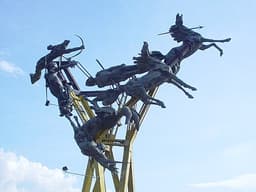
Gaitana
Revolutionary · Medieval
43.7Total
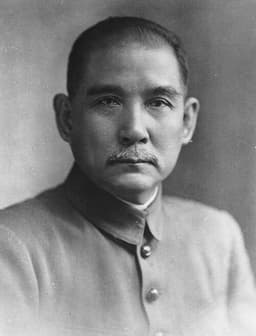
Sun Yat-sen
Revolutionary · Modern
52.5Total
Basic Information
Born
1500
1866
Died
1550
1925
Era
Medieval
Modern
Nationality
Yalcon
China
Occupation
Revolutionary
Revolutionary
Civilization
Other
Eastern
Score Comparison
Military (10%)
45.0
45.0
Political (20%)
35.0
68.0
Influence (20%)
44.0
61.0
Legacy (20%)
35.8
58.0
Leadership (15%)
57.1
33.5
Strategy (15%)
54.8
30.3
TOTAL
43.7
52.5
Gaitana — Complete Timeline
1540 AD
Led the Yalcon Rebellion against Spanish colonizersWar◆ Major
Gaitana organized and led indigenous Yalcon forces in a rebellion against Spanish colonial rule in present-day Colombia. The rebellion targeted Spanish settlements and encomiendas, resisting forced labor and land seizure. The uprising was eventually suppressed by Spanish forces, but it became a symbol of indigenous resistance.
Indigenous RebellionColonial ResistanceYalcon
Impact: regional
Captured and executed Spanish encomendero Pedro de AñascoOther◆ Major
During the Yalcon rebellion, Gaitana's forces captured the Spanish encomendero Pedro de A
ExecutionColonial ConflictIndigenous Leadership
Impact: regional
1541 AD
Rebellion suppressed by Spanish forces under Sebastián de BelalcázarWar◆ Major
Spanish conquistador Sebasti
Military DefeatColonial SuppressionEnd of Rebellion
Impact: regionaldestructive
Sun Yat-sen — Complete Timeline
1894 AD
Founded the Revive China SocietyPolitical Action◆ Major
Sun Yat-sen founded the Revive China Society (Xingzhonghui) in Honolulu, the first modern revolutionary organization among overseas Chinese. The society aimed to overthrow the Qing dynasty and establish a republic, marking the beginning of organized revolutionary activity.
RevolutionOverseas ChineseRepublic
Impact: nationalconstructive
1911 AD
Led the Xinhai RevolutionPolitical Action
Sun Yat-sen's revolutionary activities culminated in the Wuchang Uprising of October 1911, which sparked the Xinhai Revolution. The uprising spread across China, leading to the abdication of the Qing emperor in 1912 and the end of 2,000 years of imperial rule.
RevolutionQing DynastyRepublic
Impact: globalconstructive
1912 AD
Proclaimed the Republic of ChinaPolitical Action
On January 1, 1912, Sun Yat-sen was inaugurated as the provisional president of the Republic of China in Nanjing. He proclaimed the establishment of the first republic in Asia, based on his Three Principles of the People: nationalism, democracy, and livelihood.
RepublicPresidencyThree Principles
Impact: globalconstructive
Resigned Presidency in Favor of Yuan ShikaiPolitical Action◆ Major
To secure the abdication of the Qing emperor and avoid civil war, Sun Yat-sen resigned the provisional presidency in February 1912 in favor of Yuan Shikai. This decision, while pragmatic, allowed Yuan to consolidate power and later attempt to restore the monarchy.
Power TransferYuan ShikaiCompromise
Impact: national
1919 AD
Reorganized the KuomintangPolitical Action◆ Major
Sun Yat-sen reorganized the Chinese Revolutionary Party into the Kuomintang (KMT) in 1919, with a more centralized structure. He later accepted Soviet aid and CCP members into the party under the policy of 'alliance with Russia and the Communists,' reshaping the revolutionary movement.
KuomintangSoviet AllianceCCP
Impact: nationalconstructive
Expert Analysis
Sun Yat-sen vs Gaitana
# The Revolutionary’s Path: Sun Yat-sen and Gaitana
On a January morning in 1912, Sun Yat-sen stood before a crowd in Nanjing, proclaiming the birth of the Republic of China—a moment that ended two millennia of imperial rule. Four centuries earlier and half a world away, in the dense forests of present-day Colombia, a Yalcon woman named Gaitana watched her son burn alive at the hands of Spanish conquistadors, a tragedy that would ignite her own rebellion. Two revolutionaries, two worlds apart, yet both driven by the same primal force: the refusal to bow to an oppressive order. Why did one build a nation while the other became a symbol of resistance? The answer lies not in their goals, but in the soil from which they grew.
Origins
Sun Yat-sen was born in 1866 in a small village in Guangdong province, China, into a peasant family that had known little but hardship. His early years were shaped by the twilight of the Qing dynasty—a crumbling empire beset by foreign encroachment, internal decay, and the humiliation of the Opium Wars. Sun’s exposure to Western education in Hawaii and Hong Kong gave him a rare vantage point: he could see China’s weakness through the eyes of its aggressors. This dual perspective—rooted in Chinese tradition yet schooled in Western ideas—forged a revolutionary who thought in systems, not just symbols.
Gaitana’s origins are shrouded in the mists of oral tradition. Born around 1500, she was a *cacica*, a female chief of the Yalcon people, a role that demanded both political acumen and spiritual authority. Her world was the pre-Columbian Americas, a patchwork of societies that had never known gunpowder or steel. The Spanish arrival in the 1530s was not a clash of civilizations but an annihilation—disease, enslavement, and a worldview that saw indigenous lives as expendable. Where Sun’s China was a wounded giant, Gaitana’s Yalcon was a fragile community facing extinction.
Rise to Power
Sun Yat-sen’s path to power was one of patient organization. In 1894, at age 28, he founded the Revive China Society in Honolulu—the first modern revolutionary organization among Chinese overseas. This was not a spontaneous act but a calculated step in a long campaign. He spent years traveling, fundraising, and building networks among Chinese diaspora communities, all while plotting uprisings that repeatedly failed. The Wuchang Uprising of October 1911, which sparked the Xinhai Revolution, was not his direct handiwork but the culmination of decades of groundwork. Sun became the revolution’s face because he had built its skeleton.
Gaitana’s rise was born of a single, searing moment. When Spanish conquistadors, led by Pedro de Heredia, captured her son and burned him alive before her eyes—a punishment for resistance—she did not retreat into grief. Instead, she rallied the Yalcon and neighboring tribes, using her authority as *cacica* to forge a coalition. Her power came not from institutions but from the raw legitimacy of a mother’s rage. She had no printing press, no foreign backers, no exile network. Her army was her people, her weapon the forest itself.
Leadership & Governance
Sun Yat-sen’s leadership was that of a visionary architect. His Three Principles of the People—nationalism, democracy, and livelihood—were not mere slogans but a coherent ideology that aimed to transform China’s political, social, and economic fabric. As provisional president in 1912, he enacted reforms: abolishing the queue hairstyle, promoting women’s rights, and establishing a republican framework. Yet his governance was fragile. He resigned the presidency in February 1912 in favor of Yuan Shikai, a former Qing general, believing that unity was more important than his own power. It was a decision that revealed both his idealism and his naivety—Yuan would later betray the republic.
Gaitana’s leadership was tactical and immediate. She led guerrilla attacks on Spanish settlements, using the jungle’s cover to ambush columns and disrupt supply lines. Her strategy—hit-and-run, knowledge of terrain, and psychological warfare—was sophisticated within its context, earning her a military score of 29.8 compared to Sun’s 45.4. But she governed not through decrees but through presence: her camp was a gathering of survivors, her authority sustained by shared trauma. She had no time for constitutions; survival was her only policy.
Triumph & Tragedy
Sun Yat-sen’s greatest triumph was the Xinhai Revolution itself—the overthrow of the Qing dynasty and the end of 2,000 years of imperial rule. On January 1, 1912, he proclaimed the Republic of China, a moment that echoed across Asia. But his tragedy was the republic’s failure. He spent his final years in exile, watching warlords carve up China, and died in 1925 of liver cancer, never seeing his vision realized. His political score of 80.0 reflects the scale of his ambition, but his legacy score of 72.2 hints at the incompleteness.
Gaitana’s triumph was her defiance. She evaded capture, kept the rebellion alive for years, and became a legend that transcended her people’s annihilation. Her tragedy was the outcome: the Yalcon were eventually crushed, their lands seized, their culture erased. She vanished from history around 1550, likely killed or captured. Her influence score of 55.4 and legacy score of 44.9 are lower than Sun’s, but they measure a different kind of impact—not nation-building, but the preservation of memory in the face of genocide.
Character & Destiny
Sun Yat-sen was a man of grand ideas and persistent optimism. He believed in progress, in the power of education, in the possibility of a better China. This optimism drove him through decades of failure, but it also blinded him to the ruthlessness of politics. He trusted Yuan Shikai, he compromised with warlords, he died a dreamer. His character shaped his destiny: he was the founder of a nation that would not exist in his lifetime.
Gaitana was a woman of fury and pragmatism. She had no illusions about Spanish mercy; her son’s death had stripped her of hope. Her rebellion was not a bid for a new order but a refusal to accept extinction. Her character was forged in fire, and her destiny was to become a symbol—a mother who fought back, a name that still echoes in Colombia’s indigenous movements.
Legacy
Sun Yat-sen is remembered as the “Father of the Nation” in both the People’s Republic of China and Taiwan, a rare figure of consensus across a divided land. His Three Principles of the People influenced Mao Zedong and Chiang Kai-shek alike. His legacy is institutional, enshrined in textbooks, monuments, and the DNA of modern Chinese politics.
Gaitana’s legacy is quieter but enduring. She is a folk hero in Colombia, her story taught in schools, her name given to streets and parks. In 2010, a statue of her was erected in Bogotá, a belated recognition of indigenous resistance. Her legacy is not a constitution but a wound that has not healed—a reminder that history’s victors write the narrative, but the vanquished write the memory.
Conclusion
Sun Yat-sen and Gaitana are separated by centuries, continents, and civilizations, yet they share a common thread: both challenged an order that seemed unchangeable. Sun built a republic with ideas; Gaitana fought a war with grief. One shaped the future of a billion people; the other became a whisper in the wind. Their differences are not merely historical accidents but reflections of the worlds they inhabited—one a civilization in decline, the other a world being erased. In the end, what they leave us is not a lesson in success or failure, but a question: What would we sacrifice for a cause we know we may not win?
Rankings
🥇
Sun Yat-senLeader
Mil: 45.0Pol: 68.0Inf: 61.0
52.5
🥈
Gaitana
Mil: 45.0Pol: 35.0Inf: 44.0
43.7
+8.8 behind
How This Comparison Works
Algorithm
Each figure is scored on 6 dimensions (0—100 scale) based on structured historical data: Military (10%), Political (20%), Influence (20%), Legacy (20%), Leadership (15%), Strategy (15%). The weighted total produces the final ranking.
Data Sources
Scores are computed from structured sub-indicators in the database. Scale factors adjust for era (Ancient ×0.85, Modern ×1.0) and civilization size (Eastern ×1.05, Other ×0.80) to account for differences in population and military scale.
Maximum 3 Figures
Comparisons are limited to 2—3 figures to ensure readability and statistical meaningfulness.
Error Margins
±5 points per dimension — Sub-scores are derived from historical records with inherent uncertainty. Two figures within 5 points on a dimension should be considered roughly equivalent in that area.
Total Score Accuracy
±3 points overall — The weighted combination of 6 dimensions produces a total score with approximately ±3 points of uncertainty. Differences of less than 3 points are not statistically significant— the figures are effectively tied.
Known Limitations
- Historical records are incomplete and uneven across civilizations
- Figures from oral-tradition societies may be underrepresented
- Occupation labels can misclassify multi-role figures
- Scores measure capability and impact, not moral character
- Quantitative scoring is a comparison tool, not absolute truth
Capability Radar
Military (10%) — Battles & Warfare
Battles
15
15
Win Rate
10
10
Expansion
5
5
Political (20%) — Governance & Reform
Reform
5
85
Diplomacy
10
60
Economy
5
20
Influence (20%) — Cultural & Global Reach
Cultural
20
70
Global
10
65
Legacy (20%) — Historical Impact
Historical
25
80
Longevity
20
75
Leadership (15%) — Power & Stability
Tenure
10
30
Stability
5
15
Strategy (15%) — Tactics & Innovation
Strategy
15
20
Tactics
20
10
Reform
5
40
Similar Comparisons
Comments & Discussion
IronWill6/16/2026
The real lesson here isn't about nation-building versus resistance—it's about access to gunpowder. Sun Yat-sen had both Western weapons and Western-educated officers from his Honolulu days; Gaitana had poison arrows and burning courage. How many Gaitanas exist in history, their rebellions crushed simply because they faced steel plate armor with wooden spears? Give her a single cannon and a few hundred muskets, and we'd be calling her the George Washington of Colombia.
雪豹观察6/16/2026
把孙中山和盖塔娜放在一起比较,本身就是一种历史暴力。前者是改良派知识分子,追求宪政共和;后者是原住民首领,只想复仇和生存。动机完全不同,结果自然不同。盖塔娜的儿子被活活烧死,她的战争是母亲的战争,孙中山的战争是学者的战争。别被"革命者"这个标签骗了,他们的路从起点就分岔了。
GattlingGaitana6/16/2026
You revisionists always romanticize the "noble savage" rebellion, but Gaitana's coalition of Yalcon tribes fell apart within three years. No written language, no supply chains, no centralized command—it was a doomed spasm, not a revolution. Meanwhile, Sun lost just as many battles (remember the Huizhou Uprising of 1900? Total failure), but he kept building institutions: newspapers, schools, fundraising networks in exile. That's why he's in textbooks and Gaitana's a footnote.
铁血小诸葛6/16/2026
军事上的差距比你们想象的还大。16世纪的印第安战士作战靠的是战吼和毒箭,缺乏包围战或持久战的概念;而孙中山的同盟会在广东策划起义时,已能组织秘密运输线、制造土炸弹、甚至策反清军绿营兵。这不是勇气的问题,是组织革命的"技术含量"问题。盖塔娜若有几个留学日本的参谋,历史会不同。
VeritasVox6/16/2026
Classics scholar here: we're comparing a man who literally wrote a book called *The Three Principles of the People*—a coherent ideology that still shapes East Asian governance—with a woman whose entire rebellion is recorded by a single Spanish friar (Fray Pedro Simón, 1626). One is philosophy; the other is hearsay. Sun's revolution was a deliberate intellectual project spanning decades; Gaitana's was a raw, desperate cry. Both are valid, but they're not comparable as "revolutionaries." It's appl