Loading...
Cao Kun vs Suchinda Kraprayoon
Cao Kun leads by 6.1 pts · 2 figures compared
…
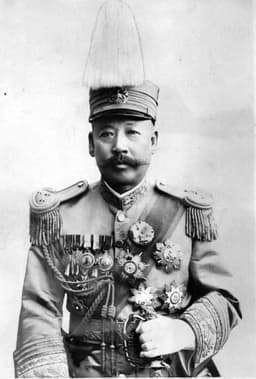
Cao Kun
General · Modern
43.2Total
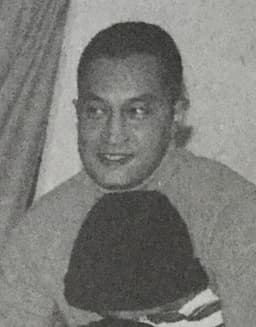
Suchinda Kraprayoon
General · Modern
37.1Total
Basic Information
Born
1862
1933
Died
1938
—
Era
Modern
Modern
Nationality
China
Thailand
Occupation
General
General
Civilization
Eastern
Eastern
Score Comparison
Military (10%)
38.3
10.2
Political (20%)
30.8
27.9
Influence (20%)
51.0
47.1
Legacy (20%)
40.8
37.5
Leadership (15%)
50.7
45.0
Strategy (15%)
41.7
39.6
TOTAL
43.2
37.1
Cao Kun — Complete Timeline
1920 AD
Zhili-Anhui WarWar◆ Major
Cao Kun led the Zhili clique to victory over the Anhui clique in the Zhili-Anhui War. This battle established the Zhili faction as the dominant force in northern China and expanded Cao Kun's political and military power.
Warlord EraWarZhili Clique
Impact: national
1922 AD
First Zhili-Fengtian WarWar◆ Major
Cao Kun's Zhili forces defeated the Fengtian clique under Zhang Zuolin in the First Zhili-Fengtian War. This victory solidified Zhili control over Beijing and the central government.
Warlord EraWarZhili Clique
Impact: national
1923 AD
Presidential Bribery ScandalPolitical Action
Cao Kun bribed members of the National Assembly to elect him President of the Republic of China, spending millions of yuan. This scandal discredited the Republican government and deepened public cynicism toward warlord politics.
Republic of ChinaCorruptionPresidency
Impact: nationaldestructive
1924 AD
Second Zhili-Fengtian WarWar◆ Major
Cao Kun's Zhili clique was defeated by the Fengtian clique in the Second Zhili-Fengtian War. The loss led to his overthrow and house arrest, ending his political career and the Zhili dominance.
Warlord EraWarDefeat
Impact: nationaltragic
Suchinda Kraprayoon — Complete Timeline
1991 AD
Leadership of the 1991 Thai Coup d'ÉtatPolitical Action◆ Major
General Suchinda Kraprayoon led the National Peace Keeping Council in a bloodless coup that overthrew Prime Minister Chatichai Choonhavan. The coup was justified by claims of corruption and political instability, establishing a military junta.
CoupMilitary JuntaPower Seizure
Impact: nationaldestructive
1992 AD
Appointment as Prime MinisterPolitical Action◆ Major
After a general election, Suchinda was appointed Prime Minister despite not being an elected MP. His appointment sparked widespread protests, as it was seen as a continuation of military rule and a violation of democratic principles.
Prime MinisterControversyMilitary Rule
Impact: nationaldestructive
Black May 1992 Uprising and ResignationPolitical Action
Massive pro-democracy protests in Bangkok, led by Chamlong Srimuang, demanded Suchinda's resignation. The military crackdown resulted in dozens of deaths. King Bhumibol intervened, leading to Suchinda's resignation and the restoration of civilian government.
UprisingBlack MayResignation
Impact: nationaltragic
Expert Analysis
Origins
Cao Kun (born 1862) was a Chinese military officer from Tianjin, rising through the Beiyang Army under Yuan Shikai. He lacked formal education but gained experience in the Huai Army. Suchinda Kraprayoon (born 1933) was born in Bangkok, Thailand, and graduated from the Chulachomklao Royal Military Academy. He served in the Royal Thai Army, specializing in artillery.
Rise to Power
Cao Kun's rise came through the Zhili clique after Yuan Shikai's death. In 1920, he led the Zhili-Anhui War, defeating the Anhui clique and becoming the dominant warlord in northern China. His victory in the First Zhili-Fengtian War (1922) solidified his control over Beijing. Suchinda's rise began with the 1991 Thai coup, where he led the National Peace Keeping Council to overthrow Prime Minister Chatichai Choonhavan. He then appointed himself Prime Minister after a disputed election in 1992.
Leadership & Governance
Cao Kun's governance was marked by corruption. In 1923, he bribed members of the National Assembly with millions of yuan to elect him President, a scandal that discredited the republic. His rule focused on military control rather than reform. Suchinda's leadership was authoritarian; he suppressed dissent and maintained power through the military. His appointment as unelected PM triggered mass protests, leading to the Black May crackdown in 1992, where troops killed dozens of demonstrators.
Triumph & Tragedy
Cao Kun's triumph was his military victories that made him president. However, his tragedy was the Second Zhili-Fengtian War (1924), where his clique was defeated, leading to his overthrow and house arrest. Suchinda's tragedy was the Black May uprising; his crackdown caused international condemnation and forced his resignation. His triumph was initially stabilizing Thailand after the coup, but the cost was high.
Character & Destiny
Cao Kun was pragmatic but corrupt, prioritizing personal gain over national unity. His bribery scandal eroded legitimacy, leading to his downfall. Suchinda was rigid and authoritarian, underestimating public desire for democracy. His character led to a violent confrontation that ended his rule. Historians note that both lacked the vision to transition to stable governance.
Legacy
Cao Kun's legacy is as a symbol of warlord-era corruption. His bribery set back Chinese democracy. He scored 40.8 in legacy, reflecting negative impact. Suchinda's legacy is tied to the 1992 protests, which strengthened Thai democracy. His score of 37.5 in legacy is slightly lower, but his failure spurred constitutional reforms.
Conclusion
Cao Kun had a slightly greater impact (total score 43.2 vs. 37.1) due to his role in the Warlord Era, but his impact was largely negative. Suchinda's brief rule accelerated democratic change in Thailand. However, Cao Kun's influence on Chinese politics was more significant, as his actions discredited the republic and paved the way for Chiang Kai-shek's rise. Thus, Cao Kun edges out Suchinda in overall historical weight.
Rankings
🥇
Cao KunLeader
Mil: 38.3Pol: 30.8Inf: 51.0
43.2
🥈
Suchinda Kraprayoon
Mil: 10.2Pol: 27.9Inf: 47.1
37.1
+6.1 behind
How This Comparison Works
Algorithm
Each figure is scored on 6 dimensions (0—100 scale) based on structured historical data: Military (10%), Political (20%), Influence (20%), Legacy (20%), Leadership (15%), Strategy (15%). The weighted total produces the final ranking.
Data Sources
Scores are computed from structured sub-indicators in the database. Scale factors adjust for era (Ancient ×0.85, Modern ×1.0) and civilization size (Eastern ×1.05, Other ×0.80) to account for differences in population and military scale.
Maximum 3 Figures
Comparisons are limited to 2—3 figures to ensure readability and statistical meaningfulness.
Error Margins
±5 points per dimension — Sub-scores are derived from historical records with inherent uncertainty. Two figures within 5 points on a dimension should be considered roughly equivalent in that area.
Total Score Accuracy
±3 points overall — The weighted combination of 6 dimensions produces a total score with approximately ±3 points of uncertainty. Differences of less than 3 points are not statistically significant— the figures are effectively tied.
Known Limitations
- Historical records are incomplete and uneven across civilizations
- Figures from oral-tradition societies may be underrepresented
- Occupation labels can misclassify multi-role figures
- Scores measure capability and impact, not moral character
- Quantitative scoring is a comparison tool, not absolute truth
Capability Radar
Military (10%) — Battles & Warfare
Battles
30
5
Win Rate
35
5
Expansion
25
5
Political (20%) — Governance & Reform
Reform
10
5
Diplomacy
20
10
Economy
15
5
Influence (20%) — Cultural & Global Reach
Cultural
15
5
Global
10
5
Legacy (20%) — Historical Impact
Historical
25
10
Longevity
10
5
Leadership (15%) — Power & Stability
Tenure
40
10
Stability
10
5
Strategy (15%) — Tactics & Innovation
Strategy
30
10
Tactics
25
10
Reform
20
5
Similar Comparisons
Comments & Discussion
No comments yet. Be the first to share your thoughts!