Loading...
Afonso de Albuquerque vs Suchinda Kraprayoon
Afonso de Albuquerque leads by 42.5 pts · 2 figures compared
…
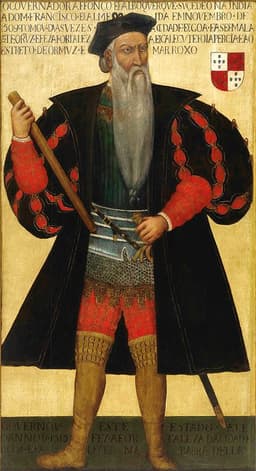
Afonso de Albuquerque
General · Medieval
79.6Total
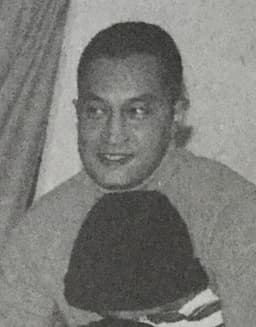
Suchinda Kraprayoon
General · Modern
37.1Total
Basic Information
Born
1453
1933
Died
1515
—
Era
Medieval
Modern
Nationality
Portugal
Thailand
Occupation
General
General
Civilization
Western
Eastern
Score Comparison
Military (10%)
77.5
10.2
Political (20%)
88.0
27.9
Influence (20%)
80.0
47.1
Legacy (20%)
75.0
37.5
Leadership (15%)
78.0
45.0
Strategy (15%)
82.0
39.6
TOTAL
79.6
37.1
Afonso de Albuquerque — Complete Timeline
1503 AD
First voyage to IndiaWar◆ Major
Afonso de Albuquerque led a fleet to India, establishing the first Portuguese fort at Cochin. This voyage laid the foundation for Portuguese control of the Indian Ocean trade.
ExplorationColonialismIndia
Impact: global
1510 AD
Conquest of GoaWar◆ Major
Albuquerque captured Goa from the Sultan of Bijapur. He made Goa the capital of Portuguese India, a position it held for over 400 years.
ConquestColonialismIndia
Impact: regional
1511 AD
Conquest of MalaccaWar◆ Major
Albuquerque led a Portuguese fleet to capture the strategic port of Malacca. This gave Portugal control of the spice trade route between the Indian Ocean and the Pacific.
ConquestSpice TradeSoutheast Asia
Impact: global
1513 AD
Siege of AdenWar
Albuquerque attempted to capture Aden in Yemen but failed. This failure prevented Portugal from controlling the entrance to the Red Sea and limited their influence in the region.
SiegeFailureRed Sea
Impact: regional
1515 AD
Death at seaOther◆ Major
Afonso de Albuquerque died at sea off the coast of Goa, possibly from illness or poison. His death left the Portuguese Empire in the Indian Ocean without its most capable leader.
DeathLeadershipEmpire
Impact: regionaltragic
Suchinda Kraprayoon — Complete Timeline
1991 AD
Leadership of the 1991 Thai Coup d'ÉtatPolitical Action◆ Major
General Suchinda Kraprayoon led the National Peace Keeping Council in a bloodless coup that overthrew Prime Minister Chatichai Choonhavan. The coup was justified by claims of corruption and political instability, establishing a military junta.
CoupMilitary JuntaPower Seizure
Impact: nationaldestructive
1992 AD
Appointment as Prime MinisterPolitical Action◆ Major
After a general election, Suchinda was appointed Prime Minister despite not being an elected MP. His appointment sparked widespread protests, as it was seen as a continuation of military rule and a violation of democratic principles.
Prime MinisterControversyMilitary Rule
Impact: nationaldestructive
Black May 1992 Uprising and ResignationPolitical Action
Massive pro-democracy protests in Bangkok, led by Chamlong Srimuang, demanded Suchinda's resignation. The military crackdown resulted in dozens of deaths. King Bhumibol intervened, leading to Suchinda's resignation and the restoration of civilian government.
UprisingBlack MayResignation
Impact: nationaltragic
Expert Analysis
Afonso de Albuquerque vs Suchinda Kraprayoon
The Admiral and the General: Two Paths of Power
On a December morning in 1515, a Portuguese fleet lay anchored off the coast of Goa. Aboard his flagship, Afonso de Albuquerque lay dying—some said from illness, others whispered of poison. He had spent three decades building an empire that would link Europe to the spices of the East, only to end his life in disgrace, recalled by a king who feared his power. Nearly five centuries later, in May 1992, General Suchinda Kraprayoon stood in Bangkok, watching the streets fill with hundreds of thousands of protesters. He had seized power in a bloodless coup, only to find that the generals who once cheered him now demanded his resignation. Two men, two eras, two vastly different outcomes—yet both reveal the same brutal truth about power: it is never held, only borrowed.
Origins
Albuquerque was born into the twilight of Portugal’s medieval age, a time when a small kingdom on the edge of Europe dreamed of surpassing its larger neighbors. His father was a nobleman, his mother a lady of the court. From childhood, he absorbed the crusading spirit of his era—a world where faith and empire were inseparable. He learned mathematics, navigation, and the art of war, but above all, he learned that the world was there to be conquered.
Suchinda came into a very different world. Born in 1933 in Bangkok, he grew up in a Siam that had never been colonized, yet lived in the shadow of Western powers. His father was a military officer, and the young Suchinda entered the Royal Thai Army Academy at a time when the military saw itself as the guardian of the nation. The Cold War was his formative conflict, and he learned that power in modern Asia meant balancing between superpowers while keeping order at home.
Rise to Power
Albuquerque’s path to greatness began at forty-nine, an age when many men think of retirement. In 1503, he commanded his first fleet to India, establishing a fort at Cochin that would become the cornerstone of Portuguese power. But his true genius emerged in 1510, when he captured Goa from the Sultan of Bijapur. Unlike other conquerors who merely plundered, he saw Goa as a capital—a permanent base from which to rule the Indian Ocean. He made it the seat of Portuguese India, a position it held for four centuries.
Suchinda’s rise was more methodical. He climbed through the ranks of the Thai military, serving in the Korean War and later commanding elite units. His moment came in 1991, when he led the National Peace Keeping Council in a bloodless coup that overthrew Prime Minister Chatichai Choonhavan. The coup was widely supported by Bangkok’s elite, who saw the civilian government as corrupt and incompetent. For a year, Suchinda ruled behind the scenes as the military's strongman.
Leadership & Governance
Albuquerque governed with a blend of iron discipline and strategic vision. He understood that an empire required more than forts and cannons—it needed people. He encouraged Portuguese soldiers to marry local women, creating a mixed-race population loyal to Lisbon. He reformed trade, established a postal system, and even attempted to introduce a new coinage. His greatest military achievement came in 1511, when he captured Malacca, the richest port in Southeast Asia. This single victory gave Portugal control of the spice trade, breaking the Venetian and Ottoman monopoly.
Suchinda’s governance was far less ambitious. When he appointed himself Prime Minister in April 1992, despite not being an elected MP, he promised stability and reform. Instead, he faced a nation that had grown tired of military rule. The middle class of Bangkok, educated and connected to the global economy, saw him as a relic of an authoritarian past. His strategy was simple: maintain order through force, keep the economy growing, and hope the protests would fade.
Triumph & Tragedy
Albuquerque’s greatest triumph was the conquest of Goa, a victory that established Portugal as a major Asian power. But his tragedy came in 1513, when he failed to capture Aden in Yemen. This failure meant the Red Sea remained open to Muslim shipping, and the spice trade could never be fully controlled. Worse, his enemies at the Portuguese court whispered against him, and King Manuel I, fearing his viceroy’s growing power, recalled him in disgrace. Albuquerque died at sea before he could learn of his replacement, a broken man.
Suchinda’s tragedy was far swifter. In May 1992, the protests in Bangkok exploded into violence. The military crackdown killed dozens, perhaps hundreds, of civilians. The world watched on television as soldiers fired into crowds. Within days, Suchinda’s allies abandoned him. He resigned on May 24, 1992, after only forty-seven days as Prime Minister. His fall was as sudden as his rise.
Character & Destiny
Albuquerque was a man of the Renaissance—ruthless, visionary, and deeply religious. He believed he was doing God’s work, but he also understood that empire required pragmatism. He once wrote, “If you want to conquer the world, you must first conquer yourself.” His arrogance and ambition made him great, but they also made him enemies. He died believing he had failed.
Suchinda was a product of the modern military mind—disciplined, cautious, and unimaginative. He believed that order was the highest good, but he failed to understand that legitimacy in the modern world comes from consent, not force. His tragedy was not that he was evil, but that he was out of step with his time.
Legacy
Albuquerque’s legacy is carved into the geography of Asia. Goa remained Portuguese until 1961. The trade routes he established shaped the global economy for centuries. Today, he is remembered as the founder of the Portuguese Empire in the East, a figure of both admiration and controversy.
Suchinda’s legacy is more ambiguous. The 1992 uprising he provoked led to political reforms that weakened military power in Thailand. But the same forces he unleashed—the divide between Bangkok’s elite and the rural poor—would later fuel new conflicts. He is remembered as a symbol of a failed authoritarianism, a warning that even the strongest general cannot rule against the will of the people.
Conclusion
In the end, both men faced the same fundamental question: what is the purpose of power? Albuquerque believed it was to build something permanent—an empire of trade, faith, and culture that would outlast him. Suchinda believed it was to maintain order, to keep the machine running. One built a cathedral in the wilderness; the other tried to hold back the tide. Their stories remind us that history judges leaders not by their intentions, but by what they leave behind. And what they leave behind is never what they planned.
Rankings
🥇
Afonso de AlbuquerqueLeader
Mil: 77.5Pol: 88.0Inf: 80.0
79.6
🥈
Suchinda Kraprayoon
Mil: 10.2Pol: 27.9Inf: 47.1
37.1
+42.5 behind
How This Comparison Works
Algorithm
Each figure is scored on 6 dimensions (0—100 scale) based on structured historical data: Military (10%), Political (20%), Influence (20%), Legacy (20%), Leadership (15%), Strategy (15%). The weighted total produces the final ranking.
Data Sources
Scores are computed from structured sub-indicators in the database. Scale factors adjust for era (Ancient ×0.85, Modern ×1.0) and civilization size (Eastern ×1.05, Other ×0.80) to account for differences in population and military scale.
Maximum 3 Figures
Comparisons are limited to 2—3 figures to ensure readability and statistical meaningfulness.
Error Margins
±5 points per dimension — Sub-scores are derived from historical records with inherent uncertainty. Two figures within 5 points on a dimension should be considered roughly equivalent in that area.
Total Score Accuracy
±3 points overall — The weighted combination of 6 dimensions produces a total score with approximately ±3 points of uncertainty. Differences of less than 3 points are not statistically significant— the figures are effectively tied.
Known Limitations
- Historical records are incomplete and uneven across civilizations
- Figures from oral-tradition societies may be underrepresented
- Occupation labels can misclassify multi-role figures
- Scores measure capability and impact, not moral character
- Quantitative scoring is a comparison tool, not absolute truth
Capability Radar
Military (10%) — Battles & Warfare
Battles
85
5
Win Rate
80
5
Expansion
95
5
Political (20%) — Governance & Reform
Reform
80
5
Diplomacy
85
10
Economy
80
5
Influence (20%) — Cultural & Global Reach
Cultural
70
5
Global
85
5
Legacy (20%) — Historical Impact
Historical
85
10
Longevity
80
5
Leadership (15%) — Power & Stability
Tenure
70
10
Stability
65
5
Strategy (15%) — Tactics & Innovation
Strategy
95
10
Tactics
90
10
Reform
75
5
Similar Comparisons
Comments & Discussion
No comments yet. Be the first to share your thoughts!