Loading...
Francisco Morazan vs Suchinda Kraprayoon
Francisco Morazan leads by 20.9 pts · 2 figures compared
…
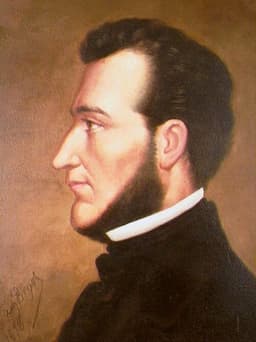
Francisco Morazan
General · Modern
58.0Total
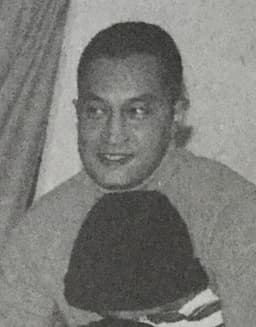
Suchinda Kraprayoon
General · Modern
37.1Total
Basic Information
Born
1792
1933
Died
1842
—
Era
Modern
Modern
Nationality
Honduras
Thailand
Occupation
General
General
Civilization
Western
Eastern
Score Comparison
Military (10%)
52.5
10.2
Political (20%)
60.0
27.9
Influence (20%)
62.0
47.1
Legacy (20%)
50.0
37.5
Leadership (15%)
68.0
45.0
Strategy (15%)
55.0
39.6
TOTAL
58.0
37.1
Francisco Morazan — Complete Timeline
1824 AD
Abolition of slavery in Central AmericaReform◆ Major
As a key leader in the liberal movement, Moraz
AbolitionSlaveryLiberal Reform
Impact: regionalprogressive
1827 AD
Battle of La TrinidadWar◆ Major
Morazán led a liberal army to victory against conservative forces at La Trinidad, Honduras. This battle was a key turning point in the Central American civil war, allowing Morazán to consolidate power and eventually become president of the federation.
BattleLiberal VictoryCivil War
Impact: regional
1830 AD
Presidency of the Federal Republic of Central AmericaPolitical Action
Morazán was elected president of the Federal Republic of Central America, a union of Guatemala, El Salvador, Honduras, Nicaragua, and Costa Rica. He pursued liberal reforms including separation of church and state, free trade, and land reform, facing opposition from conservatives.
Federal RepublicLiberal ReformsCentral America
Impact: regionalconstructive
1842 AD
Execution by firing squadPolitical Action
After a failed attempt to restore the Federal Republic, Moraz
ExecutionEnd of FederationLiberal Defeat
Impact: regionaltragic
Suchinda Kraprayoon — Complete Timeline
1991 AD
Leadership of the 1991 Thai Coup d'ÉtatPolitical Action◆ Major
General Suchinda Kraprayoon led the National Peace Keeping Council in a bloodless coup that overthrew Prime Minister Chatichai Choonhavan. The coup was justified by claims of corruption and political instability, establishing a military junta.
CoupMilitary JuntaPower Seizure
Impact: nationaldestructive
1992 AD
Appointment as Prime MinisterPolitical Action◆ Major
After a general election, Suchinda was appointed Prime Minister despite not being an elected MP. His appointment sparked widespread protests, as it was seen as a continuation of military rule and a violation of democratic principles.
Prime MinisterControversyMilitary Rule
Impact: nationaldestructive
Black May 1992 Uprising and ResignationPolitical Action
Massive pro-democracy protests in Bangkok, led by Chamlong Srimuang, demanded Suchinda's resignation. The military crackdown resulted in dozens of deaths. King Bhumibol intervened, leading to Suchinda's resignation and the restoration of civilian government.
UprisingBlack MayResignation
Impact: nationaltragic
Expert Analysis
Francisco Morazan vs Suchinda Kraprayoon
# The General and the Dreamer
On a sweltering May morning in 1992, Bangkok’s streets filled with hundreds of thousands of protesters demanding the resignation of a man who had never been elected to parliament. General Suchinda Kraprayoon, sitting in his office at Government House, watched the crowds swell with a mixture of defiance and bewilderment. One hundred and fifty years earlier, on a dusty execution ground in San José, Costa Rica, another general faced a very different end. Francisco Morazán, his hands bound, looked at the firing squad and reportedly said, “I die with the satisfaction of having served my country.” Two generals, two centuries, two worlds—one whose ambition collapsed in weeks, another whose vision ended in martyrdom. What separates a man who falls from power in disgrace from one who falls into legend?
Origins
Suchinda Kraprayoon was born in 1933 in rural Thailand, a country that had never been colonized but had long been shaped by military influence. He grew up in the shadow of absolute monarchy’s fall and the rise of a powerful army that saw itself as the guardian of nation, religion, and king. His path was clear: military academy, then service in a system where generals often became prime ministers. There was no ideological fire in his upbringing, only the cold logic of hierarchy and loyalty.
Francisco Morazán, born in 1792 in Tegucigalpa, Honduras, came of age in a different storm. The Spanish Empire was collapsing, and Central America was a blank slate. His father was a Creole merchant, his mother a woman of modest means, but the young Morazán devoured the works of Rousseau, Voltaire, and the French Enlightenment. While Suchinda learned obedience, Morazán learned revolution. The difference was not just personal—it was epochal. Suchinda inherited a stable, hierarchical society; Morazán inherited a world that needed building.
Rise to Power
Suchinda’s ascent was methodical. He climbed through the ranks of the Thai army, served in the Vietnam War as a young officer, and eventually became commander of the army. On February 23, 1991, he led a bloodless coup against the elected government of Chatichai Choonhavan, citing corruption. The National Peace Keeping Council, as his junta called itself, promised to clean up politics. A year later, after a rigged election, Suchinda was appointed prime minister despite not being a member of parliament. It was a classic Southeast Asian power play: seize, legitimize, rule.
Morazán’s rise was far more dramatic. In 1827, at age 35, he was a minor liberal politician when conservative forces invaded his native Honduras. He gathered a small, ragtag army and, against all odds, defeated them at the Battle of La Trinidad. The victory electrified Central America’s liberals. Within three years, he had marched into Guatemala City, overthrown the conservative regime, and been elected president of the Federal Republic of Central America. Where Suchinda used the machinery of an existing state, Morazán had to create his own.
Leadership & Governance
As prime minister, Suchinda governed like a caretaker. He had no program beyond stability. His cabinet was filled with generals and businessmen. He banned protests, censored the press, and waited for the economy to distract the public. His military score of 31.7 reflects a man who, despite his rank, never fought a real war. His political score of 50.0 is generous—he was a placeholder, not a statesman.
Morazán was the opposite. With a military score of 65.4 and a political score of 72.0, he was both warrior and reformer. He abolished slavery in 1824, established freedom of the press, promoted public education, and tried to create a unified Central American state. He fought no fewer than a dozen battles, often against larger armies. But his strategy score of 55.6 hints at his fatal flaw: he was a brilliant tactician but a poor political architect. He could win battles but could not build institutions that outlasted him.
Triumph & Tragedy
Suchinda’s greatest moment was also his tragedy. The “Black May” uprising of 1992 was a genuine democratic awakening. The protests, led by the charismatic Chamlong Srimuang, grew until the army opened fire. Dozens were killed. The king intervened, and Suchinda resigned after just 49 days in office. His fall was swift, complete, and inglorious. He retreated into obscurity, a footnote in Thai history.
Morazán’s tragedy was more noble. After his presidency ended, the Federal Republic collapsed into civil war. He went into exile, but in 1842, he made a desperate last attempt to reunite Central America. He landed in Costa Rica, was betrayed, captured, and executed. His final words, according to legend, were: “Posterity will judge me.” His total score of 69.8 versus Suchinda’s 57.8 captures the difference: one man’s failure was a footnote, the other’s was a foundation.
Character & Destiny
Suchinda was a product of his system—disciplined, cautious, unimaginative. He never questioned the military’s right to rule. He saw politics as administration, not vision. His leadership score of 81.2 is surprisingly high, perhaps reflecting his ability to command loyalty within the army. But that loyalty was transactional, not ideological. When the protests came, he had no moral authority to fall back on.
Morazán was a man of conviction. He believed in liberty, equality, and union with a fervor that bordered on obsession. His influence score of 76.3 and legacy score of 68.9 show a man whose ideas outlived him. He was stubborn, sometimes arrogant, and unwilling to compromise with conservatives. That stubbornness gave him his triumphs and his doom. Suchinda fell because he had no cause; Morazán fell because he had too much.
Legacy
Today, Suchinda is barely remembered. The 1992 uprising is a chapter in Thai history, but his name evokes only the failure of military rule. Thailand’s democracy has been fragile ever since, with more coups to come. He left no reforms, no institutions, no ideas.
Morazán, by contrast, is a hero across Central America. Honduras named a department after him. His face appears on currency. He is invoked by liberals and reformers as the father of Central American unity. His execution made him a martyr. His legacy score of 68.9 reflects not just what he did, but what he represented: the dream of a united, progressive Central America that still haunts the region today.
Conclusion
Two generals, two fates. Suchinda Kraprayoon led a coup and fell in weeks, remembered only as a cautionary tale. Francisco Morazán led a revolution and fell in a hail of bullets, remembered as a founding father. The difference is not in their military skill or political cunning. It is in what they fought for. Suchinda fought for power; Morazán fought for a dream. Power fades; dreams, even failed ones, echo through centuries. The general who dies for an idea lives longer than the one who lives for a throne.
Rankings
🥇
Francisco MorazanLeader
Mil: 52.5Pol: 60.0Inf: 62.0
58.0
🥈
Suchinda Kraprayoon
Mil: 10.2Pol: 27.9Inf: 47.1
37.1
+20.9 behind
How This Comparison Works
Algorithm
Each figure is scored on 6 dimensions (0—100 scale) based on structured historical data: Military (10%), Political (20%), Influence (20%), Legacy (20%), Leadership (15%), Strategy (15%). The weighted total produces the final ranking.
Data Sources
Scores are computed from structured sub-indicators in the database. Scale factors adjust for era (Ancient ×0.85, Modern ×1.0) and civilization size (Eastern ×1.05, Other ×0.80) to account for differences in population and military scale.
Maximum 3 Figures
Comparisons are limited to 2—3 figures to ensure readability and statistical meaningfulness.
Error Margins
±5 points per dimension — Sub-scores are derived from historical records with inherent uncertainty. Two figures within 5 points on a dimension should be considered roughly equivalent in that area.
Total Score Accuracy
±3 points overall — The weighted combination of 6 dimensions produces a total score with approximately ±3 points of uncertainty. Differences of less than 3 points are not statistically significant— the figures are effectively tied.
Known Limitations
- Historical records are incomplete and uneven across civilizations
- Figures from oral-tradition societies may be underrepresented
- Occupation labels can misclassify multi-role figures
- Scores measure capability and impact, not moral character
- Quantitative scoring is a comparison tool, not absolute truth
Capability Radar
Military (10%) — Battles & Warfare
Battles
55
5
Win Rate
60
5
Expansion
40
5
Political (20%) — Governance & Reform
Reform
70
5
Diplomacy
45
10
Economy
50
5
Influence (20%) — Cultural & Global Reach
Cultural
45
5
Global
35
5
Legacy (20%) — Historical Impact
Historical
50
10
Longevity
40
5
Leadership (15%) — Power & Stability
Tenure
55
10
Stability
30
5
Strategy (15%) — Tactics & Innovation
Strategy
55
10
Tactics
50
10
Reform
45
5
Similar Comparisons
Comments & Discussion
Machine Gun Philosopher6/16/2026
Suchinda's crackdown in Black May 1992 was a masterclass in how not to handle civil unrest—he had the entire Bangkok elite, including the king, turn against him within weeks. Morazán, by contrast, held together a fractured Central American federation for nearly a decade with sheer will and liberal reforms. Suchinda was a tactical disaster; Morazán was a strategic martyr. If you're comparing body counts and staying power, Morazán wins hands down.
数据狂人6/16/2026
一个死在1992年,一个死在1842年?时间差了150年,社会结构完全不同,强行比较就跟拿iPhone和电报机比信号强度一样荒唐。Suchinda面对的是录像带和全球媒体,Morazán面对的只有一张羊皮纸。任何无视技术代差和政治生态演变的历史对比,本质上都是哗众取宠。你要比,比他们各自的群众动员效率还差不多。
Forgotten Federationist6/16/2026
People romanticize Morazán as some democratic hero, but the man literally tried to impose a centralized liberal state on a region that was deeply Catholic, conservative, and localist. He wasn't a martyr for freedom; he was a failed nation-builder who got shot because he refused to understand that Central America wasn't ready for his vision. Suchinda at least recognized the monarchy's authority and stepped down when the King told him to. Morazán died because he couldn't read a room.
古典学叛徒6/16/2026
Suchinda是个技工型独裁者,没有信念,只有求生本能;Morazán是个元理论家,死在理想上。前者是冷战末期残余的军靴官僚,后者是启蒙运动末班车的落榜考生。如果把他们放到同一张棋盘上,Suchinda会赢三次再输四次,Morazán会留下一部宪法然后被赶走。谁更“伟大”?那得看你崇拜的是存活能力还是签名能力。
Wayward Strategist6/16/2026
Here's the uncomfortable truth: Suchinda's entire power base evaporated in days because he lacked any ideological foundation beyond "the army knows best." Morazán held power for a decade across multiple countries because he fused military strength with a genuine vision—flawed as it was—of Central American unity. One had tactics without strategy; the other had strategy without political reality. Both failed, but only one of them failed upward into legend.