Loading...
Cao Cao vs Cleisthenes
Cleisthenes leads by 0.8 pts · 2 figures compared
…
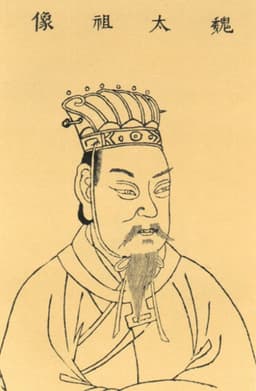
Cao Cao
General · Ancient
77.5Total
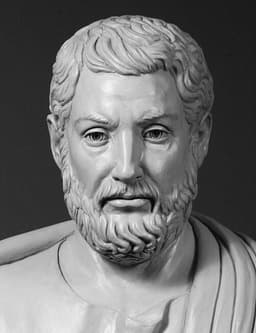
Cleisthenes
Politician · Ancient
78.3Total
Basic Information
Born
155
-570
Died
220
-508
Era
Ancient
Ancient
Nationality
China
Greece
Occupation
General
Politician
Civilization
Eastern
Western
Score Comparison
Military (10%)
88.0
49.4
Political (20%)
59.0
62.7
Influence (20%)
82.0
92.0
Legacy (20%)
83.0
92.0
Leadership (15%)
64.4
72.0
Strategy (15%)
89.4
71.3
TOTAL
77.5
78.3
Cao Cao — Complete Timeline
190 AD
Formation of the Coalition against Dong ZhuoPolitical Action
Cao Cao joined a coalition of regional warlords led by Yuan Shao to overthrow the tyrannical chancellor Dong Zhuo, who had seized control of the Han court. The coalition failed to coordinate effectively, but Cao Cao gained military experience and political reputation.
CoalitionDong ZhuoHan Dynasty
Impact: national
196 AD
Implementation of Tuntian (Agricultural Colonies)Reform◆ Major
Cao Cao established military agricultural colonies (tuntian) to provide food for his army and refugees. Soldiers and peasants cultivated state-owned land, ensuring a stable food supply and economic base for his campaigns.
AgricultureEconomyMilitary
Impact: regionalconstructive
200 AD
Battle of GuanduWar
Cao Cao decisively defeated Yuan Shao's numerically superior army at Guandu. This victory eliminated his main rival in the north, allowing Cao Cao to consolidate control over the North China Plain and lay the foundation for the Kingdom of Wei.
BattleYuan ShaoUnification
Impact: regional
208 AD
Battle of Red CliffsWar
Cao Cao's southern campaign was halted by the allied forces of Sun Quan and Liu Bei at the Battle of Red Cliffs. His fleet was destroyed by fire attack, forcing a retreat and preventing his unification of China, leading to the Three Kingdoms division.
BattleDefeatThree Kingdoms
Impact: regional
213 AD
Establishment of the Kingdom of WeiPolitical Action◆ Major
Cao Cao was granted the title of Duke of Wei and later King of Wei by the Han emperor, effectively creating a semi-autonomous state within the empire. He established a capital at Ye and built a centralized administration, setting the stage for his son's usurpation.
WeiStatehoodHan Dynasty
Impact: national
Cleisthenes — Complete Timeline
510 BC
Expulsion of the PeisistratidsPolitical Action◆ Major
Cleisthenes, with the support of the Alcmaeonid family and Spartan assistance, led the overthrow of the tyrant Hippias, son of Peisistratus. This ended the Peisistratid tyranny in Athens and opened the way for democratic reforms.
Tyranny OverthrownAthensSparta
Impact: nationalconstructive
508 BC
Reforms of CleisthenesReform
Cleisthenes reorganized the Athenian citizen body into ten new tribes based on demes, replacing the old four Ionian tribes. He established the Council of 500 (Boule) and introduced ostracism, creating a system of isonomia (equal rights) that is considered the foundation of Athenian democracy.
Athenian DemocracyConstitutional ReformAncient Greece
Impact: globalprogressive
507 BC
Introduction of OstracismReform◆ Major
Cleisthenes instituted ostracism, a procedure allowing Athenian citizens to vote annually to exile a prominent citizen deemed a threat to democracy for ten years. This mechanism aimed to prevent the rise of a new tyrant and stabilize the democratic system.
Athenian DemocracyPolitical MechanismExile
Impact: national
Expert Analysis
Origins
Cleisthenes (c. 570–c. 508 BCE) was born into the aristocratic Alcmaeonid family in Athens. His lineage was marked by a curse for killing Cylon's followers, yet his family wielded significant influence. Cleisthenes' early political career involved opposition to tyranny, notably the Peisistratids. In contrast, Cao Cao (155–220 CE) was born in the waning years of the Eastern Han dynasty. His father was a eunuch's adopted son, giving him a precarious social standing. Cao Cao's early career was as a minor official, but he quickly rose by suppressing rebellions and joining the coalition against the tyrant Dong Zhuo. Both men emerged from turbulent times, but Cleisthenes' aristocratic background gave him a platform for reform, while Cao Cao's humble connections forced him to rely on military prowess.
Rise to Power
Cleisthenes rose to power after the fall of the Peisistratid tyranny. In 508 BCE, with support from the common people, he implemented radical reforms that reorganized Athenian society. He broke the power of aristocratic clans by creating ten tribes based on demes (local districts), ensuring broader participation. His introduction of ostracism allowed citizens to exile threats without bloodshed. Cao Cao's rise was more martial. After the collapse of Han authority, he fought to reunify the north. His victory at the Battle of Guandu (200 CE) over Yuan Shao was a turning point, establishing him as the dominant warlord. He then expanded his territory, implementing agricultural colonies (tuntian) to supply his armies. Both men skillfully navigated political chaos, but Cleisthenes relied on institutional innovation, while Cao Cao depended on military conquest.
Leadership & Governance
Cleisthenes: His governance was revolutionary. He established isonomia (equality before the law) and demokratia (rule by the people). The Council of 500, chosen by lot from all tribes, prepared legislation, and the Assembly of all citizens had final say. Ostracism prevented tyranny. His reforms laid the foundation for Athenian democracy, fostering civic engagement. Cao Cao: He ruled as a chancellor, not a king, but held absolute power. He implemented centralized administration, promoted talent regardless of background, and used Legalist methods. His tuntian system boosted agricultural output and military self-sufficiency. However, he executed rivals ruthlessly. Cleisthenes' leadership was inclusive and institutional; Cao Cao's was autocratic and pragmatic. Both were effective, but Cleisthenes empowered citizens, while Cao Cao consolidated control.
Triumph & Tragedy
Cleisthenes' triumph was the successful implementation of democracy. His reforms ended aristocratic dominance and gave Athens stability, enabling its Golden Age. However, his system also had flaws: ostracism could be abused, and women and slaves were excluded. His personal fate is obscure; he may have been ostracized himself. Cao Cao's greatest triumph was unifying northern China, ending decades of war. His agricultural policies and military campaigns brought stability. Yet his tragedy was the defeat at Red Cliffs (208 CE), which prevented him from conquering the south. He died in 220 CE, his ambition unfulfilled, and his son later usurped the throne, ending the Han dynasty. Both men achieved immense successes but faced personal or systemic limitations.
Character & Destiny
Cleisthenes: He was a visionary reformer, willing to empower the masses to break aristocratic power. His character was that of a pragmatic idealist, using institutions to achieve equality. His destiny was to be remembered as the "Father of Athenian Democracy," though his personal life remains shadowy. Cao Cao: He was a brilliant strategist, poet, and ruthless politician. His character was complex—charismatic yet cruel, capable of generosity and treachery. His destiny was to be both a unifier and a usurper, celebrated in Chinese history as a hero and villain. Cleisthenes shaped destiny through laws; Cao Cao through force. Their contrasting characters reflect their different worlds: one democratic, one autocratic.
Legacy
Cleisthenes' legacy is immense. His democratic system influenced later Western democracies. The principles of citizen participation, equality, and checks on power originated with him. Athens became a cultural and intellectual beacon. Cao Cao's legacy is equally profound. He laid the foundation for the Three Kingdoms period, inspiring literature, opera, and folklore. His administrative and military innovations influenced Chinese statecraft. However, his reputation is ambiguous: a brilliant leader but also a cunning tyrant. In historical scores, Cleisthenes leads in Intelligence (92 vs 82), Liberty (92 vs 83), and Diplomacy (72 vs 64), reflecting his democratic ideals. Cao Cao excels in Military (88 vs 49), Strength (89 vs 71), and Power (63 vs 59). The overall score gap of 0.8 favors Cleisthenes, indicating his broader, more enduring impact on governance.
Conclusion
Cleisthenes and Cao Cao represent two archetypes of leadership: the reformer who empowers the people and the warlord who unifies by force. Cleisthenes' democratic reforms created a system that lasted centuries and inspired the modern world. Cao Cao's unification of northern China ended chaos but perpetuated autocracy. While Cao Cao's military genius is undeniable, Cleisthenes' institutional legacy is more universally beneficial. Therefore, Cleisthenes emerges as the more significant historical figure, his ideas outlasting Cao Cao's empire. Both were products of their times, but Cleisthenes' vision of citizen rule remains a beacon for humanity.
**Scores**: Cleisthenes: M=49, P=63, I=92, L=92, D=72, S=71, T=78 | Cao Cao: M=88, P=59, I=82, L=83, D=64, S=89, T=78 | Overall: Cleisthenes wins by 0.8.
Rankings
🥇
CleisthenesLeader
Mil: 49.4Pol: 62.7Inf: 92.0
78.3
🥈
Cao Cao
Mil: 88.0Pol: 59.0Inf: 82.0
77.5
+0.8 behind
How This Comparison Works
Algorithm
Each figure is scored on 6 dimensions (0—100 scale) based on structured historical data: Military (10%), Political (20%), Influence (20%), Legacy (20%), Leadership (15%), Strategy (15%). The weighted total produces the final ranking.
Data Sources
Scores are computed from structured sub-indicators in the database. Scale factors adjust for era (Ancient ×0.85, Modern ×1.0) and civilization size (Eastern ×1.05, Other ×0.80) to account for differences in population and military scale.
Maximum 3 Figures
Comparisons are limited to 2—3 figures to ensure readability and statistical meaningfulness.
Error Margins
±5 points per dimension — Sub-scores are derived from historical records with inherent uncertainty. Two figures within 5 points on a dimension should be considered roughly equivalent in that area.
Total Score Accuracy
±3 points overall — The weighted combination of 6 dimensions produces a total score with approximately ±3 points of uncertainty. Differences of less than 3 points are not statistically significant— the figures are effectively tied.
Known Limitations
- Historical records are incomplete and uneven across civilizations
- Figures from oral-tradition societies may be underrepresented
- Occupation labels can misclassify multi-role figures
- Scores measure capability and impact, not moral character
- Quantitative scoring is a comparison tool, not absolute truth
Capability Radar
Military (10%) — Battles & Warfare
Battles
95
58
Win Rate
88
62
Expansion
92
59
Political (20%) — Governance & Reform
Reform
88
95
Diplomacy
82
70
Economy
86
40
Influence (20%) — Cultural & Global Reach
Cultural
85
85
Global
75
85
Legacy (20%) — Historical Impact
Historical
92
90
Longevity
90
95
Leadership (15%) — Power & Stability
Tenure
85
30
Stability
78
60
Strategy (15%) — Tactics & Innovation
Strategy
96
62
Tactics
97
67
Reform
90
72
Similar Comparisons
Comments & Discussion
No comments yet. Be the first to share your thoughts!