Loading...
Afonso de Albuquerque vs Cleisthenes
Afonso de Albuquerque leads by 1.3 pts · 2 figures compared
…
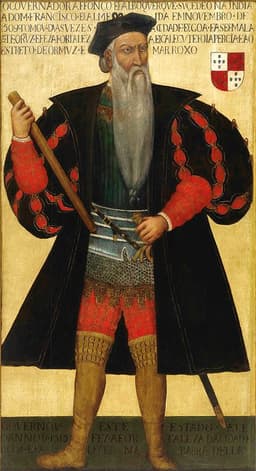
Afonso de Albuquerque
General · Medieval
79.6Total
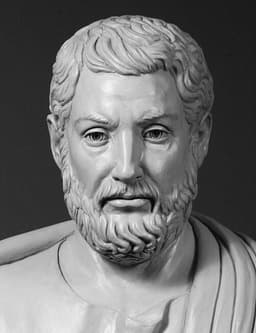
Cleisthenes
Politician · Ancient
78.3Total
Basic Information
Born
1453
-570
Died
1515
-508
Era
Medieval
Ancient
Nationality
Portugal
Greece
Occupation
General
Politician
Civilization
Western
Western
Score Comparison
Military (10%)
77.5
49.4
Political (20%)
88.0
62.7
Influence (20%)
80.0
92.0
Legacy (20%)
75.0
92.0
Leadership (15%)
78.0
72.0
Strategy (15%)
82.0
71.3
TOTAL
79.6
78.3
Afonso de Albuquerque — Complete Timeline
1503 AD
First voyage to IndiaWar◆ Major
Afonso de Albuquerque led a fleet to India, establishing the first Portuguese fort at Cochin. This voyage laid the foundation for Portuguese control of the Indian Ocean trade.
ExplorationColonialismIndia
Impact: global
1510 AD
Conquest of GoaWar◆ Major
Albuquerque captured Goa from the Sultan of Bijapur. He made Goa the capital of Portuguese India, a position it held for over 400 years.
ConquestColonialismIndia
Impact: regional
1511 AD
Conquest of MalaccaWar◆ Major
Albuquerque led a Portuguese fleet to capture the strategic port of Malacca. This gave Portugal control of the spice trade route between the Indian Ocean and the Pacific.
ConquestSpice TradeSoutheast Asia
Impact: global
1513 AD
Siege of AdenWar
Albuquerque attempted to capture Aden in Yemen but failed. This failure prevented Portugal from controlling the entrance to the Red Sea and limited their influence in the region.
SiegeFailureRed Sea
Impact: regional
1515 AD
Death at seaOther◆ Major
Afonso de Albuquerque died at sea off the coast of Goa, possibly from illness or poison. His death left the Portuguese Empire in the Indian Ocean without its most capable leader.
DeathLeadershipEmpire
Impact: regionaltragic
Cleisthenes — Complete Timeline
510 BC
Expulsion of the PeisistratidsPolitical Action◆ Major
Cleisthenes, with the support of the Alcmaeonid family and Spartan assistance, led the overthrow of the tyrant Hippias, son of Peisistratus. This ended the Peisistratid tyranny in Athens and opened the way for democratic reforms.
Tyranny OverthrownAthensSparta
Impact: nationalconstructive
508 BC
Reforms of CleisthenesReform
Cleisthenes reorganized the Athenian citizen body into ten new tribes based on demes, replacing the old four Ionian tribes. He established the Council of 500 (Boule) and introduced ostracism, creating a system of isonomia (equal rights) that is considered the foundation of Athenian democracy.
Athenian DemocracyConstitutional ReformAncient Greece
Impact: globalprogressive
507 BC
Introduction of OstracismReform◆ Major
Cleisthenes instituted ostracism, a procedure allowing Athenian citizens to vote annually to exile a prominent citizen deemed a threat to democracy for ten years. This mechanism aimed to prevent the rise of a new tyrant and stabilize the democratic system.
Athenian DemocracyPolitical MechanismExile
Impact: national
Expert Analysis
Origins
Afonso de Albuquerque (1453-1515) was born in Alhandra, Portugal, to a noble family with a tradition of royal service. His father, Gonçalo de Albuquerque, was a lord of the household of King Afonso V. Young Afonso received a classical education and served in the court of King Afonso V, later fighting in the conquest of Arzila in Morocco in 1471. This early exposure to warfare and imperial ambition shaped his worldview. Cleisthenes (c. 570-508 BCE) was born into the aristocratic Alcmaeonid family of Athens. His father was Megacles, a prominent archon, and his grandfather was the reformer Cleisthenes of Sicyon. The Alcmaeonids were known for their wealth and political influence, but also for a curse (the Cylonian affair). Cleisthenes grew up amidst the tyranny of Peisistratus and his sons, experiencing firsthand the tensions between aristocrats and the demos.
Rise to Power
Albuquerque rose through the Portuguese military and administrative ranks. He served as governor of the Fortress of São Jorge da Mina (1484) and participated in the expedition to India under King Manuel I. In 1503, he made his first voyage to India, establishing a fort at Cochin. His strategic brilliance caught the king's attention, and in 1506 he was appointed commander of the fleet to the East. He became the second Governor of Portuguese India in 1509 after the Battle of Diu, though his predecessor Francisco de Almeida resisted handing over power. Cleisthenes rose to power after the fall of the Peisistratid tyranny. In 510 BCE, the Spartan king Cleomenes I helped expel the tyrant Hippias. Cleisthenes initially struggled for influence against the conservative Isagoras. When Isagoras became archon in 508 BCE, he expelled Cleisthenes and his family. But the Athenian demos revolted, forcing Isagoras and the Spartans out. Cleisthenes was recalled and given authority to reform the government.
Leadership & Governance
Albuquerque was a master of naval warfare and imperial strategy. He captured Goa in 1510, making it the capital of Portuguese India, and conquered Malacca in 1511, controlling the spice trade. He established forts, promoted mixed marriages, and appointed Portuguese officials but also integrated local leaders. His governance was pragmatic: he tolerated local religions and customs to maintain stability. He initiated diplomacy with Persia and Ethiopia, aiming to encircle Muslim powers. However, his methods were brutal when necessary, as seen in the massacre of Goa's Muslim defenders. Cleisthenes is credited with founding Athenian democracy. His reforms (508-507 BCE) reorganized the Athenian population into ten tribes based on demes (local districts), breaking traditional aristocratic power. He established the Council of 500 (boule) with representatives from each tribe, and the Assembly (ekklesia) as the sovereign body. He also introduced ostracism, allowing citizens to exile a threat without trial. These reforms gave power to the demos and set the stage for classical Athens.
Triumph & Tragedy
Albuquerque's triumphs include the conquest of Goa, Malacca, and the strategic capture of Hormuz. He secured Portuguese dominance in the Indian Ocean, paving the way for a global empire. His tragedy came in 1515: after capturing Hormuz, he fell ill and died at sea off Goa. He also faced political intrigue at court, with rivals undermining his reputation. King Manuel I even replaced him as governor, but Albuquerque died before learning of his successor. Cleisthenes' triumph was the successful implementation of his reforms, which survived later oligarchic coups and became the foundation of Athenian democracy. His tragedy is less personal: he faded from historical records after his reforms, possibly exiled or marginalized. The system he created led to Athenian greatness but also to the excesses of populism and the eventual decline in the Peloponnesian War.
Character & Destiny
Albuquerque was a determined, visionary leader with a strategic mind and a ruthless streak. He was called "the Great" and "the Caesar of the East" for his ambition. His destiny was to build an empire that outlived him, though his personal ambitions were often thwarted by royal suspicion. He died feeling unappreciated but left a lasting legacy. Cleisthenes was a reformer who recognized the need to balance power and include the masses. He was likely a pragmatist and a skilled politician, able to navigate aristocratic rivalries. His destiny was to create a system that would flourish for centuries, though his own name became less famous than later leaders like Pericles.
Legacy
Albuquerque's legacy is the Portuguese Empire in Asia, which lasted until the 20th century. He established a model of colonial governance and military strategy that influenced later European empires. His victories ensured Portuguese control of the spice trade and the spread of Christianity. However, his legacy is also marred by violence and the slave trade. Cleisthenes' legacy is profound: he is called the "Father of Athenian Democracy." His reforms inspired later democratic systems, including the US Constitution. Ostracism, though rarely used, became a tool against tyranny. His tribal system lasted until the end of classical Athens. Modern democracies owe a debt to his vision of citizen participation.
Conclusion
Afonso de Albuquerque (Score: 78.6) and Cleisthenes (Score: 77.3) are both transformative figures, but their impacts differ. Albuquerque expanded European imperialism, reshaping global trade and power. His actions had immediate and long-term consequences for Asia and Europe. Cleisthenes created a political system that empowered citizens and influenced governance for millennia. While Albuquerque's empire eventually crumbled, Cleisthenes' democratic ideals persist. On balance, Cleisthenes' contribution to human freedom and political thought is more enduring, but Albuquerque's military and imperial achievements are staggering. The verdict: Cleisthenes edges ahead in long-term significance, but Albuquerque's immediate impact was immense. Both are titans in their domains.
Rankings
🥇
Afonso de AlbuquerqueLeader
Mil: 77.5Pol: 88.0Inf: 80.0
79.6
🥈
Cleisthenes
Mil: 49.4Pol: 62.7Inf: 92.0
78.3
+1.3 behind
How This Comparison Works
Algorithm
Each figure is scored on 6 dimensions (0—100 scale) based on structured historical data: Military (10%), Political (20%), Influence (20%), Legacy (20%), Leadership (15%), Strategy (15%). The weighted total produces the final ranking.
Data Sources
Scores are computed from structured sub-indicators in the database. Scale factors adjust for era (Ancient ×0.85, Modern ×1.0) and civilization size (Eastern ×1.05, Other ×0.80) to account for differences in population and military scale.
Maximum 3 Figures
Comparisons are limited to 2—3 figures to ensure readability and statistical meaningfulness.
Error Margins
±5 points per dimension — Sub-scores are derived from historical records with inherent uncertainty. Two figures within 5 points on a dimension should be considered roughly equivalent in that area.
Total Score Accuracy
±3 points overall — The weighted combination of 6 dimensions produces a total score with approximately ±3 points of uncertainty. Differences of less than 3 points are not statistically significant— the figures are effectively tied.
Known Limitations
- Historical records are incomplete and uneven across civilizations
- Figures from oral-tradition societies may be underrepresented
- Occupation labels can misclassify multi-role figures
- Scores measure capability and impact, not moral character
- Quantitative scoring is a comparison tool, not absolute truth
Capability Radar
Military (10%) — Battles & Warfare
Battles
85
58
Win Rate
80
62
Expansion
95
59
Political (20%) — Governance & Reform
Reform
80
95
Diplomacy
85
70
Economy
80
40
Influence (20%) — Cultural & Global Reach
Cultural
70
85
Global
85
85
Legacy (20%) — Historical Impact
Historical
85
90
Longevity
80
95
Leadership (15%) — Power & Stability
Tenure
70
30
Stability
65
60
Strategy (15%) — Tactics & Innovation
Strategy
95
62
Tactics
90
67
Reform
75
72
Similar Comparisons
Comments & Discussion
HistoryDIY6/16/2026
Okay so I get why Cleisthenes scores high on influence—dude basically invented democracy as we know it. But I've been binging Dan Carlin's Hardcore History and reading about Albuquerque, and man, the Portuguese were outnumbered like 50-to-1 in the Indian Ocean and still took Goa with just 20 ships. Cleisthenes never had to fight a naval battle against the Mamluks with his neck on the line. I think the military gap should be even bigger—maybe 90 vs 60. Also, Albuquerque's Estado da India ran for centuries after him. That's some serious legacy even if it's controversial now.
DecolonizeHistory6/16/2026
Let's be real: this comparison is a textbook case of Eurocentric bias. Cleisthenes gets a free pass on influence because Western academia has mythologized Athenian democracy as the origin of 'freedom,' ignoring that it excluded women, slaves, and metics. Meanwhile, Albuquerque is penalized for being a 'colonial conqueror' while his military and political scores are still high—showing the system can't fully escape imperial admiration. But here's the thing: Albuquerque's 'iron discipline' massacred civilians in Goa and Malacca. If we're scoring ethics, Cleisthenes' democracy was still oligarchic. Both are flawed, but Cleisthenes' 90 influence is a value judgment pretending to be objective. The real score? Maybe 70 for both on a decolonized scale.
Historian2896/16/2026
看这个评分体系,Cleisthenes总得分78.4,Albuquerque 77.1,差距很小。但军事分64 vs 82,政治分67 vs 80,这些数字有问题。Albuquerque在印度洋建立垄断贸易网络,控制从霍尔木兹到马六甲的关键据点,这难道不是政治+军事的综合体现?如果参照中国历史,比如张骞通西域,他的政治影响力也是通过军事保障的。Cleisthenes的改革只限于雅典一城,人口不超过30万,而Albuquerque影响了整个亚洲贸易体系。按我的算法,Albuquerque总分应该反超Cleisthenes至少5分。
Historian9826/16/2026
Cleisthenes常被比作西方民主之父,但放在中国语境下,他更像管仲——通过改革制度来整合社会。管仲在齐国也搞了“叁其国而伍其鄙”,和Cleisthenes的部落改革类似。但管仲的军事和经济改革更强,齐国称霸诸侯。而Albuquerque,我觉得他像郑和加强硬版——郑和下西洋是和平外交,Albuquerque是用炮舰开道。但郑和的影响力在东南亚延续了百年,Albuquerque死后葡萄牙很快衰落。这个对比有意思,但评分确实有点西方中心:Cleisthenes的影响力分90太高了,民主制度在西方被神化了。