Loading...
Camillo Cavour vs Nicos Anastasiades
Camillo Cavour leads by 11.5 pts · 2 figures compared
…
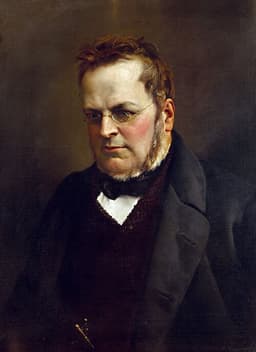
Camillo Cavour
Politician · Modern
65.0Total

Nicos Anastasiades
Politician · Modern
53.5Total
Basic Information
Born
1810
1946
Died
1861
—
Era
Modern
Modern
Nationality
Italy
Cyprus
Occupation
Politician
Politician
Civilization
Western
Western
Score Comparison
Military (10%)
20.0
50.0
Political (20%)
82.0
68.0
Influence (20%)
65.0
51.8
Legacy (20%)
80.0
43.3
Leadership (15%)
79.8
68.0
Strategy (15%)
25.0
42.8
TOTAL
65.0
53.5
Camillo Cavour — Complete Timeline
1858 AD
Plombières AgreementPolitical Action
Cavour met secretly with Napoleon III at Plombi
UnificationDiplomacyFrance
Impact: regionalconstructive
1859 AD
Second Italian War of IndependenceWar◆ Major
Cavour provoked Austria into declaring war, then allied with France to defeat Austrian forces at Magenta and Solferino. The war resulted in Lombardy being annexed by Piedmont-Sardinia. Cavour resigned temporarily after Napoleon III's separate armistice at Villafranca.
UnificationWarAustria
Impact: regionalconstructive
1860 AD
Expedition of the ThousandPolitical Action◆ Major
Cavour secretly supported Garibaldi's expedition to conquer Sicily and Naples, while publicly maintaining neutrality. He sent Piedmontese troops south to meet Garibaldi and prevent him from marching on Rome. This maneuver led to the annexation of the Kingdom of the Two Sicilies.
UnificationGaribaldiAnnexation
Impact: regionalconstructive
1861 AD
Proclamation of the Kingdom of ItalyPolitical Action
Cavour, as prime minister, oversaw the first Italian parliament's proclamation of Victor Emmanuel II as King of Italy on March 17, 1861. The new kingdom excluded Venice and Rome. Cavour died three months later, leaving unification incomplete.
UnificationMonarchyParliament
Impact: globalconstructive
Nicos Anastasiades — Complete Timeline
2013 AD
Elected President of CyprusPolitical Action◆ Major
Anastasiades was elected President of Cyprus in February 2013, succeeding Demetris Christofias. His election occurred during the peak of the Cypriot financial crisis, with the economy facing collapse and needing an international bailout.
ElectionFinancial Crisis
Impact: national
Negotiated the Cyprus BailoutPolitical Action◆ Major
Anastasiades negotiated a
BailoutFinancial CrisisEurozone
Impact: nationaldestructive
2015 AD
Resumed Cyprus Reunification TalksPolitical Action◆ Major
Anastasiades resumed negotiations with Turkish Cypriot leader Mustafa Ak
ReunificationDiplomacyCyprus Problem
Impact: regional
2017 AD
Crans-Montana Reunification Conference FailurePolitical Action◆ Major
The UN-facilitated reunification conference in Crans-Montana, Switzerland, ended without an agreement in July 2017. Anastasiades and Ak
ReunificationDiplomacyFailure
Impact: regionaltragic
2018 AD
Re-elected President of CyprusPolitical Action◆ Major
Anastasiades won a second five-year term in the 2018 presidential election, defeating Stavros Malas in a runoff. His re-election was seen as a mandate for continued economic recovery and reunification talks.
ElectionRe-election
Impact: national
Expert Analysis
Origins
**Camillo Cavour** (1810–1861) was born into a noble Piedmontese family in Turin. Educated at the Military Academy of Turin, he later traveled extensively in France and England, where he absorbed liberal economic ideas. His early career included managing his family's estate and founding the newspaper *Il Risorgimento* in 1847, advocating for constitutional government and Italian unification. Cavour entered politics in 1848 as a deputy in the Sardinian parliament, eventually becoming Minister of Agriculture and Commerce in 1850.
**Nicos Anastasiades** (born 1946) was born in Pera Pedi, Cyprus, into a Greek Cypriot family. He studied law at the University of Athens and later at University College London, earning a degree in maritime law. Anastasiades began his political career in the 1980s, joining the conservative Democratic Rally (DISY) party. He was first elected to the House of Representatives in 1981 and served as party president from 1997. His legal background and business-friendly stance positioned him as a technocratic leader.
Rise to Power
Cavour's rise was marked by strategic alliances and diplomatic maneuvering. He became Prime Minister of Sardinia in 1852, forming a coalition with the center-left. His key turning point was the **Plombières Agreement** (1858) with Napoleon III, securing French military support against Austria in exchange for Savoy and Nice. Cavour provoked Austria into declaring war in 1859, leading to the Second Italian War of Independence, which resulted in Lombardy's annexation. He later supported Garibaldi's Expedition of the Thousand (1860) by secretly providing weapons and troops, while publicly feigning neutrality, allowing the unification of southern Italy under Victor Emmanuel II.
Anastasiades rose to prominence amid financial turmoil. He was elected President of Cyprus in February 2013, succeeding Demetris Christofias, during the peak of the Cypriot financial crisis. His campaign focused on securing a bailout and restoring economic stability. The election was a direct response to the crisis, with Anastasiades winning 57.5% of the vote in the runoff. His rise was less about geopolitical maneuvering and more about immediate economic survival.
Leadership & Governance
Cavour's leadership was characterized by realpolitik and economic modernization. As prime minister, he pursued free trade policies, expanded railways, and reformed the legal system. He skillfully manipulated international alliances, using France to check Austria and later Britain to balance France. His governance style was pragmatic: he supported nationalist movements when useful but suppressed radical republicans like Mazzini. Cavour scored 82.0 in political skill, reflecting his ability to navigate complex domestic and foreign pressures.
Anastasiades governed during a crisis, focusing on economic recovery. He negotiated the €10 billion bailout with the Eurogroup and IMF in March 2013, which included a controversial levy on bank deposits. He implemented austerity measures and structural reforms, stabilizing the banking sector. His leadership score of 68.0 reflects his crisis management but also criticism over the bailout's social costs. On reunification, he resumed talks with Turkish Cypriot leader Mustafa Akıncı in 2015, but the Crans-Montana conference (2017) failed due to disagreements over security guarantees and troop withdrawals.
Triumph & Tragedy
Cavour's greatest triumph was the **Proclamation of the Kingdom of Italy** on March 17, 1861, with himself as the first prime minister. He successfully unified most of Italy under the Savoy monarchy, doubling the kingdom's territory. His greatest failure was his inability to include Venice and Rome in the new state; both remained under foreign control until after his death. He also faced criticism for relying on foreign intervention and for the authoritarian methods used to suppress southern dissent.
Anastasiades' greatest success was navigating Cyprus out of the 2013 financial crisis, avoiding a full economic collapse and maintaining eurozone membership. His re-election in 2018 indicated public support for his crisis management. His greatest failure was the collapse of the Crans-Montana reunification talks in 2017, dashing hopes for ending the island's division. The bailout's deposit levy also caused widespread hardship, and the economy's recovery was slow, with high unemployment persisting.
Character & Destiny
Cavour was a calculating, pragmatic statesman, often described as the 'brain' of Italian unification. He prioritized realpolitik over ideology, as seen in his alliance with Napoleon III despite the latter's autocratic rule. His character—patient, strategic, and secretive—enabled him to manipulate both radicals and conservatives. His early death at age 51 from malaria prevented him from seeing the full unification achieved in 1870.
Anastasiades is seen as a steady, technocratic leader, but lacking the visionary boldness of Cavour. His legal background made him adept at negotiation, but critics argue he was too accommodating to international creditors. His character—cautious and consensus-seeking—was well-suited to crisis management but less effective for long-term geopolitical challenges like reunification. His fate was largely determined by external forces: the Eurogroup's demands and Turkey's intransigence.
Legacy
Cavour's legacy is foundational: he is considered the chief architect of Italian unification, alongside Garibaldi and Mazzini. His policies of economic liberalism and constitutional monarchy shaped modern Italy. His influence score of 65.0 reflects his central role in 19th-century European diplomacy. He left a blueprint for nation-building through strategic alliances and gradual reform, influencing later unification movements.
Anastasiades' legacy is more ambiguous. He stabilized Cyprus economically, preventing a Grexit-style disaster, but the bailout's terms left deep social scars. The failure of reunification means his presidency will be remembered as one of lost opportunities. His legacy score of 43.3 reflects the limited long-term impact of his tenure, which was dominated by crisis management rather than transformative change.
Conclusion
Cavour had a significantly greater impact on history, as reflected in his total score of 65.0 versus Anastasiades' 53.5. Cavour fundamentally reshaped the political map of Europe, creating a unified Italy that altered the balance of power. Anastasiades, while effective in managing a national crisis, operated within existing structures and left no comparable transformation. Cavour's strategic genius and political skill (82.0) enabled him to achieve a lasting legacy, whereas Anastasiades' leadership (68.0) was reactive and constrained. The 11.5-point gap underscores the difference between a nation-builder and a crisis manager.
Rankings
🥇
Camillo CavourLeader
Mil: 20.0Pol: 82.0Inf: 65.0
65.0
🥈
Nicos Anastasiades
Mil: 50.0Pol: 68.0Inf: 51.8
53.5
+11.5 behind
How This Comparison Works
Algorithm
Each figure is scored on 6 dimensions (0—100 scale) based on structured historical data: Military (10%), Political (20%), Influence (20%), Legacy (20%), Leadership (15%), Strategy (15%). The weighted total produces the final ranking.
Data Sources
Scores are computed from structured sub-indicators in the database. Scale factors adjust for era (Ancient ×0.85, Modern ×1.0) and civilization size (Eastern ×1.05, Other ×0.80) to account for differences in population and military scale.
Maximum 3 Figures
Comparisons are limited to 2—3 figures to ensure readability and statistical meaningfulness.
Error Margins
±5 points per dimension — Sub-scores are derived from historical records with inherent uncertainty. Two figures within 5 points on a dimension should be considered roughly equivalent in that area.
Total Score Accuracy
±3 points overall — The weighted combination of 6 dimensions produces a total score with approximately ±3 points of uncertainty. Differences of less than 3 points are not statistically significant— the figures are effectively tied.
Known Limitations
- Historical records are incomplete and uneven across civilizations
- Figures from oral-tradition societies may be underrepresented
- Occupation labels can misclassify multi-role figures
- Scores measure capability and impact, not moral character
- Quantitative scoring is a comparison tool, not absolute truth
Capability Radar
Military (10%) — Battles & Warfare
Battles
5
28
Win Rate
5
30
Expansion
35
35
Political (20%) — Governance & Reform
Reform
85
55
Diplomacy
90
60
Economy
80
45
Influence (20%) — Cultural & Global Reach
Cultural
65
20
Global
75
30
Legacy (20%) — Historical Impact
Historical
85
35
Longevity
80
25
Leadership (15%) — Power & Stability
Tenure
60
65
Stability
70
40
Strategy (15%) — Tactics & Innovation
Strategy
30
38
Tactics
10
43
Reform
40
42
Similar Comparisons
Comments & Discussion
No comments yet. Be the first to share your thoughts!