Loading...
Camillo Cavour vs Napoleon Bonaparte
Napoleon Bonaparte leads by 5.9 pts · 2 figures compared
…
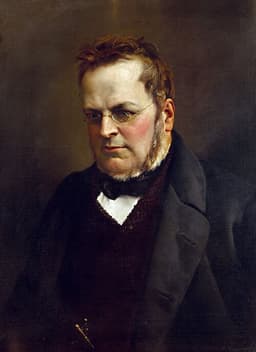
Camillo Cavour
Politician · Modern
65.0Total

Napoleon Bonaparte
General · Modern
70.9Total
Basic Information
Born
1810
1769
Died
1861
1821
Era
Modern
Modern
Nationality
Italy
France
Occupation
Politician
General
Civilization
Western
Western
Score Comparison
Military (10%)
20.0
94.0
Political (20%)
82.0
72.0
Influence (20%)
65.0
40.0
Legacy (20%)
80.0
80.0
Leadership (15%)
79.8
78.0
Strategy (15%)
25.0
90.0
TOTAL
65.0
70.9
Camillo Cavour — Complete Timeline
1858 AD
Plombières AgreementPolitical Action
Cavour met secretly with Napoleon III at Plombi
UnificationDiplomacyFrance
Impact: regionalconstructive
1859 AD
Second Italian War of IndependenceWar◆ Major
Cavour provoked Austria into declaring war, then allied with France to defeat Austrian forces at Magenta and Solferino. The war resulted in Lombardy being annexed by Piedmont-Sardinia. Cavour resigned temporarily after Napoleon III's separate armistice at Villafranca.
UnificationWarAustria
Impact: regionalconstructive
1860 AD
Expedition of the ThousandPolitical Action◆ Major
Cavour secretly supported Garibaldi's expedition to conquer Sicily and Naples, while publicly maintaining neutrality. He sent Piedmontese troops south to meet Garibaldi and prevent him from marching on Rome. This maneuver led to the annexation of the Kingdom of the Two Sicilies.
UnificationGaribaldiAnnexation
Impact: regionalconstructive
1861 AD
Proclamation of the Kingdom of ItalyPolitical Action
Cavour, as prime minister, oversaw the first Italian parliament's proclamation of Victor Emmanuel II as King of Italy on March 17, 1861. The new kingdom excluded Venice and Rome. Cavour died three months later, leaving unification incomplete.
UnificationMonarchyParliament
Impact: globalconstructive
Napoleon Bonaparte — Complete Timeline
1799 AD
Coup of 18 BrumaireOther◆ Major
Napoleon Bonaparte, with support from his brother Lucien and key political figures, overthrew the Directory in a bloodless coup. He established the Consulate with himself as First Consul, effectively becoming the ruler of France. This event ended the French Revolution's most unstable period.
French RevolutionCoupRise to Power
Impact: regional
1804 AD
Promulgation of the Napoleonic CodeOther◆ Major
Napoleon enacted the Civil Code of the French, known as the Napoleonic Code, a comprehensive set of laws that replaced the fragmented feudal legal systems. The code established legal equality, protected property rights, and secularized law. It became the basis for legal systems in many European and world countries.
Legal ReformNapoleonic CodeCivil Law
Impact: globalconstructive
1805 AD
Battle of AusterlitzWar◆ Major
Napoleon's Grande Arm
Napoleonic WarsBattleDecisive Victory
Impact: global
1812 AD
Invasion of RussiaWar◆ Major
Napoleon led the Grande Arm
Napoleonic WarsInvasionDisaster
Impact: globaldestructive
1815 AD
Battle of WaterlooWar◆ Major
Napoleon's French army was defeated by the combined forces of the Duke of Wellington's Anglo-Allied army and Gebhard Leberecht von Bl
Napoleonic WarsBattleFinal Defeat
Impact: globaldestructive
Expert Analysis
camillo-cavour-vs-napoleon-bonaparte
**The Architect and the Conqueror: Why Cavour Built What Napoleon Broke**
On a June morning in 1815, Napoleon Bonaparte stood on a muddy field near Waterloo, watching his Imperial Guard crumble under British volleys. Forty-six years later, in March 1861, Camillo Cavour sat in Turin’s parliament, calmly watching deputies proclaim Victor Emmanuel II King of Italy. One man died in exile on a remote Atlantic island, his empire shattered; the other died in his prime minister’s office, his nation unified. Both were titans of nineteenth-century Europe, yet their paths could not have diverged more sharply. What explains the difference between the conqueror who built an empire of ash and the politician who built a nation of stone?
**Origins**
Napoleon was born in 1769 on Corsica, an island only recently annexed by France. His family was minor nobility, struggling and resentful. He spoke Italian before French, and as a boy he idolized the ancient conquerors—Alexander, Caesar. The French Revolution, which erupted when he was twenty, shattered the old order and created a vacuum that a young artillery officer could fill with sheer ambition and talent. His world was one of chaos, opportunity, and violence.
Cavour, born in 1810 in Turin, came from the opposite pole of European society. His family was Piedmontese aristocracy, landed and secure. He was educated not on battlefields but in military academies that taught him engineering and economics. The Napoleonic Wars had ravaged his homeland, and he grew up hating not France but the chaos that conquest brought. Where Napoleon saw glory, Cavour saw instability. Where Napoleon dreamed of marching armies, Cavour dreamed of balancing budgets and railroads.
**Rise to Power**
Napoleon’s ascent was meteoric, violent, and personal. In 1793, at age twenty-four, he drove the British from Toulon with a brilliant artillery plan. By 1796 he commanded the Army of Italy, and within a year he had crushed Austria and carved out a new republic. His coup of 18 Brumaire in 1799 made him First Consul; by 1804 he crowned himself Emperor. Each step was a gamble, a battle won, a treaty dictated. He rose on the backs of his soldiers.
Cavour’s rise was slow, patient, and institutional. He entered politics in 1848, at age thirty-eight, as a deputy in the Sardinian parliament. He became prime minister in 1852, not through a coup but through a careful alliance with the center-left. His power came from parliamentary maneuvering, not from cannon fire. While Napoleon conquered Italy in a single campaign, Cavour spent a decade building diplomatic bridges, reforming the economy, and waiting for the right moment.
**Leadership & Governance**
Napoleon governed through genius and terror. His Napoleonic Code, introduced in 1804, standardized French law across Europe—a genuine achievement that abolished feudalism and established equality before the law. But he also imposed conscription, looted art, and installed his brothers on thrones. His military strategy was unparalleled: he won sixty battles, from Austerlitz in 1805 to Wagram in 1809, by outmarching and outthinking his enemies. Yet he could not stop. Victory demanded more victory, and each new conquest bred new coalitions.
Cavour governed through patience and calculation. He understood that Italy could not be unified by force alone—it needed European consent. In 1858, he met secretly with Napoleon III at Plombières, securing French military support against Austria by offering Nice and Savoy in return. In 1859, he provoked Austria into declaring war, then let French armies win the battles of Magenta and Solferino. He did not lead troops; he led parliaments. When Garibaldi launched his Expedition of the Thousand in 1860 to conquer Sicily, Cavour publicly stayed neutral while secretly supplying arms and money—then swiftly sent Piedmontese troops to block Garibaldi from marching on Rome. He absorbed the revolution, then tamed it.
**Triumph & Tragedy**
Napoleon’s greatest moment was Austerlitz, December 1805, where he crushed the combined armies of Russia and Austria in a single day of perfect maneuvering. His tragedy was the invasion of Russia in 1812, where 600,000 men marched east and fewer than 100,000 returned. He lost his army, his reputation, and eventually his throne. Exiled to Elba, he escaped in 1815, raised another army, and lost it all again at Waterloo. His final years on Saint Helena were a slow, bitter decline.
Cavour’s triumph came in March 1861, when the first Italian parliament proclaimed the Kingdom of Italy. He did not live to see its completion—Venice and Rome remained outside—but he had built the structure. His tragedy was dying that same year, at age fifty-one, worn out by work and illness. He never saw the nation he built fully unified. Yet his death was peaceful, in his own bed, surrounded by colleagues, not enemies.
**Character & Destiny**
Napoleon was a man of infinite ambition and finite patience. “I love power as a musician loves his violin,” he once said. He could not share command, could not delegate, could not stop. His personality drove him to conquer Europe, but it also drove him to destroy himself. He believed in destiny, but he shaped his own destruction.
Cavour was a man of limited ambition and infinite patience. “The art of politics is the art of the possible,” he said. He knew when to fight and when to wait, when to act and when to seem inactive. His personality was not heroic but effective. He did not want to rule Europe; he wanted to create Italy. And he succeeded—not by conquering, but by building coalitions, balancing interests, and never letting his ego outrun his strategy.
**Legacy**
Napoleon left a continent reshaped by war: the Napoleonic Code, the redrawn map of Europe, the myth of the self-made emperor. He is remembered as a genius and a tyrant, a liberator and a destroyer. His legacy is ambiguous, debated in every generation.
Cavour left a nation: Italy. He is remembered as its architect, not its conqueror. His legacy is concrete—a unified state, a parliamentary system, a place in the pantheon of nation-builders. He is less famous than Napoleon, but his work lasted longer.
**Conclusion**
Napoleon and Cavour represent two poles of leadership: the conqueror who builds through destruction, and the politician who builds through construction. Napoleon’s empire crumbled because it depended on one man; Cavour’s Italy endured because it depended on institutions. One sought glory and found exile; the other sought unity and found a nation. In the end, the lesson is simple: it is easier to break an empire than to build a country, and the builders, though quieter, often leave more behind.
Rankings
🥇
Napoleon BonaparteLeader
Mil: 94.0Pol: 72.0Inf: 40.0
70.9
🥈
Camillo Cavour
Mil: 20.0Pol: 82.0Inf: 65.0
65.0
+5.9 behind
How This Comparison Works
Algorithm
Each figure is scored on 6 dimensions (0—100 scale) based on structured historical data: Military (10%), Political (20%), Influence (20%), Legacy (20%), Leadership (15%), Strategy (15%). The weighted total produces the final ranking.
Data Sources
Scores are computed from structured sub-indicators in the database. Scale factors adjust for era (Ancient ×0.85, Modern ×1.0) and civilization size (Eastern ×1.05, Other ×0.80) to account for differences in population and military scale.
Maximum 3 Figures
Comparisons are limited to 2—3 figures to ensure readability and statistical meaningfulness.
Error Margins
±5 points per dimension — Sub-scores are derived from historical records with inherent uncertainty. Two figures within 5 points on a dimension should be considered roughly equivalent in that area.
Total Score Accuracy
±3 points overall — The weighted combination of 6 dimensions produces a total score with approximately ±3 points of uncertainty. Differences of less than 3 points are not statistically significant— the figures are effectively tied.
Known Limitations
- Historical records are incomplete and uneven across civilizations
- Figures from oral-tradition societies may be underrepresented
- Occupation labels can misclassify multi-role figures
- Scores measure capability and impact, not moral character
- Quantitative scoring is a comparison tool, not absolute truth
Capability Radar
Military (10%) — Battles & Warfare
Battles
5
95
Win Rate
5
90
Expansion
35
95
Political (20%) — Governance & Reform
Reform
85
95
Diplomacy
90
80
Economy
80
85
Influence (20%) — Cultural & Global Reach
Cultural
65
85
Global
75
90
Legacy (20%) — Historical Impact
Historical
85
95
Longevity
80
90
Leadership (15%) — Power & Stability
Tenure
60
85
Stability
70
70
Strategy (15%) — Tactics & Innovation
Strategy
30
95
Tactics
10
98
Reform
40
92
Similar Comparisons
Comments & Discussion
No comments yet. Be the first to share your thoughts!