Loading...
Nicos Anastasiades vs Queen Victoria
Queen Victoria leads by 11.1 pts · 2 figures compared
…

Nicos Anastasiades
Politician · Modern
53.5Total
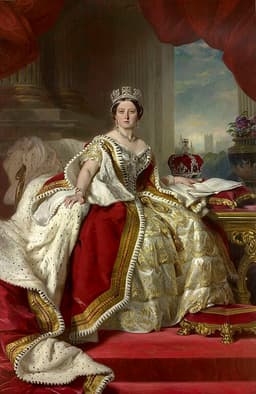
Queen Victoria
Politician · Modern
64.6Total
Basic Information
Born
1946
1819
Died
—
1901
Era
Modern
Modern
Nationality
Cyprus
United Kingdom
Occupation
Politician
Politician
Civilization
Western
Western
Score Comparison
Military (10%)
50.0
25.9
Political (20%)
68.0
70.0
Influence (20%)
51.8
75.0
Legacy (20%)
43.3
70.0
Leadership (15%)
68.0
72.0
Strategy (15%)
42.8
45.0
TOTAL
53.5
64.6
Nicos Anastasiades — Complete Timeline
2013 AD
Elected President of CyprusPolitical Action◆ Major
Anastasiades was elected President of Cyprus in February 2013, succeeding Demetris Christofias. His election occurred during the peak of the Cypriot financial crisis, with the economy facing collapse and needing an international bailout.
ElectionFinancial Crisis
Impact: national
Negotiated the Cyprus BailoutPolitical Action◆ Major
Anastasiades negotiated a
BailoutFinancial CrisisEurozone
Impact: nationaldestructive
2015 AD
Resumed Cyprus Reunification TalksPolitical Action◆ Major
Anastasiades resumed negotiations with Turkish Cypriot leader Mustafa Ak
ReunificationDiplomacyCyprus Problem
Impact: regional
2017 AD
Crans-Montana Reunification Conference FailurePolitical Action◆ Major
The UN-facilitated reunification conference in Crans-Montana, Switzerland, ended without an agreement in July 2017. Anastasiades and Ak
ReunificationDiplomacyFailure
Impact: regionaltragic
2018 AD
Re-elected President of CyprusPolitical Action◆ Major
Anastasiades won a second five-year term in the 2018 presidential election, defeating Stavros Malas in a runoff. His re-election was seen as a mandate for continued economic recovery and reunification talks.
ElectionRe-election
Impact: national
Queen Victoria — Complete Timeline
1851 AD
Great Exhibition of 1851Cultural◆ Major
Prince Albert, Victoria's consort, organized the Great Exhibition in London's Crystal Palace. The exhibition showcased industrial and cultural achievements from around the world, symbolizing Britain's technological and imperial dominance during the Victorian Era.
ExhibitionIndustryCulture
Impact: globalconstructive
1857 AD
Indian Rebellion of 1857War
The Indian Rebellion of 1857, a major uprising against British East India Company rule, occurred during Victoria's reign. The rebellion was suppressed, leading to the dissolution of the Company and the establishment of direct British Crown rule over India in 1858.
IndiaRebellionEmpire
Impact: global
1867 AD
Reform Act 1867 PassedReform◆ Major
The Reform Act 1867, passed during Victoria's reign, expanded the franchise to include many urban working-class men in Britain. This electoral reform increased the electorate by over a million voters, reshaping British politics and the two-party system.
ReformDemocracyPolitics
Impact: nationalprogressive
British North America Act PassedPolitical Action◆ Major
The British North America Act, passed by the UK Parliament, created the Dominion of Canada as a self-governing entity within the British Empire. Victoria's approval marked the beginning of Canadian confederation and a model for future colonial autonomy.
CanadaColonialSelf-Government
Impact: regionalconstructive
1899 AD
Second Boer War BeganWar◆ Major
The Second Boer War broke out between the British Empire and the Boer republics in South Africa. The conflict, which ended in 1902, resulted in British victory and the incorporation of the Transvaal and Orange Free State into the empire, but at great cost.
WarSouth AfricaEmpire
Impact: regional
Expert Analysis
Origins
Nicos Anastasiades was born on September 27, 1946, in the village of Pera Pedi, Cyprus. His father was a lawyer and politician, which influenced his early interest in law and politics. He studied law at the University of Athens and later pursued a master's in shipping law at University College London. Before entering politics, he founded his own law firm in Limassol.
Queen Victoria was born on May 24, 1819, at Kensington Palace, London. She was the only child of Prince Edward, Duke of Kent, and Princess Victoria of Saxe-Coburg-Saalfeld. Her father died when she was eight months old, and she was raised under the strict supervision of her mother and Sir John Conroy. She became heir presumptive after the death of her uncle, King William IV, and ascended the throne at age 18.
Rise to Power
Anastasiades entered politics in the 1980s, joining the Democratic Rally party (DISY). He was first elected to the House of Representatives in 1981 and quickly rose through the ranks. He became party president in 1997 and served as a Member of the European Parliament from 2004 to 2011. In February 2013, he was elected President of Cyprus, winning 57.5% of the vote in the runoff, at a time when the country was on the brink of financial collapse.
Victoria became queen on June 20, 1837, at age 18, following the death of William IV. She was initially influenced by her prime minister, Lord Melbourne, and later by her husband, Prince Albert. Her reign saw the expansion of the British Empire and the consolidation of constitutional monarchy. Key events included the Indian Rebellion of 1857, which led to the dissolution of the East India Company and direct Crown rule, and the passage of the Reform Act 1867, which expanded suffrage.
Leadership & Governance
Anastasiades governed Cyprus during the 2012-2013 financial crisis. He negotiated a €10 billion bailout with the Eurogroup and IMF in March 2013, which included a controversial levy on bank deposits. He implemented austerity measures and structural reforms, stabilizing the economy but causing public hardship. His leadership was pragmatic but often criticized for lack of transparency. He also pursued reunification talks with Turkish Cypriots, but the Crans-Montana conference in 2017 failed.
Victoria's reign was characterized by a constitutional monarchy where the monarch's influence was largely symbolic but still significant. She was known for her strong opinions and often clashed with prime ministers, especially William Gladstone. She supported imperial expansion and industrial growth. The Great Exhibition of 1851 showcased British innovation. Her reign saw the British Empire reach its zenith, with territories in Asia, Africa, and the Americas. She scored 72.0 in leadership compared to Anastasiades' 68.0.
Triumph & Tragedy
Anastasiades' greatest success was navigating Cyprus through the financial crisis and restoring economic growth. By 2015, the economy returned to growth, and Cyprus exited the bailout program in 2016. However, his failure to achieve reunification of the island was a major setback. The Crans-Montana talks collapsed due to disagreements over security guarantees and troop withdrawal. He also faced criticism for his handling of the 2013 bank levy, which damaged trust.
Victoria's triumphs include the expansion of the British Empire and the consolidation of Britain's global influence. The British North America Act of 1867 created the Dominion of Canada. However, her reign also saw tragedies like the Second Boer War (1899-1902), which was costly and controversial. The Irish Potato Famine (1845-1852) occurred during her reign, though her response was criticized as inadequate. She also suffered personal tragedy with Prince Albert's death in 1861.
Character & Destiny
Anastasiades is described as cautious and methodical, with a focus on legal and diplomatic solutions. His background as a lawyer influenced his approach to negotiations. He was persistent in pushing for reunification but ultimately unable to overcome the deep divisions. His character shaped his destiny: he prevented financial collapse but could not resolve the Cyprus problem.
Victoria was known for her strong will and emotional nature. She was deeply influenced by Prince Albert and later retreated from public life after his death. Her character led to a period of mourning that affected her popularity, but she later regained public affection. Her destiny was to be a symbol of an era of British dominance, though her political power waned over time.
Legacy
Anastasiades' legacy is mixed. He stabilized Cyprus's economy and restored international confidence, but the reunification issue remains unresolved. His political score is 68.0, influence 51.8, and legacy 43.3. He is remembered as a crisis manager rather than a transformative leader.
Victoria's legacy is vast. She gave her name to an era: the Victorian Age, marked by industrial progress, cultural achievements, and imperial expansion. Her influence score is 75.0, legacy 70.0. She is remembered as a symbol of British power and stability, though also as a monarch who presided over colonialism and inequality.
Conclusion
Queen Victoria had greater impact than Nicos Anastasiades. Her total score of 64.6 versus Anastasiades' 53.5 reflects her broader influence on global history. While Anastasiades successfully managed a national crisis, Victoria's reign shaped the modern world through imperial expansion, industrial growth, and constitutional evolution. Her legacy endures in institutions and cultural memory, whereas Anastasiades' impact is largely confined to Cyprus and its financial recovery. Thus, Victoria is the more significant historical figure.
Rankings
🥇
Queen VictoriaLeader
Mil: 25.9Pol: 70.0Inf: 75.0
64.6
🥈
Nicos Anastasiades
Mil: 50.0Pol: 68.0Inf: 51.8
53.5
+11.1 behind
How This Comparison Works
Algorithm
Each figure is scored on 6 dimensions (0—100 scale) based on structured historical data: Military (10%), Political (20%), Influence (20%), Legacy (20%), Leadership (15%), Strategy (15%). The weighted total produces the final ranking.
Data Sources
Scores are computed from structured sub-indicators in the database. Scale factors adjust for era (Ancient ×0.85, Modern ×1.0) and civilization size (Eastern ×1.05, Other ×0.80) to account for differences in population and military scale.
Maximum 3 Figures
Comparisons are limited to 2—3 figures to ensure readability and statistical meaningfulness.
Error Margins
±5 points per dimension — Sub-scores are derived from historical records with inherent uncertainty. Two figures within 5 points on a dimension should be considered roughly equivalent in that area.
Total Score Accuracy
±3 points overall — The weighted combination of 6 dimensions produces a total score with approximately ±3 points of uncertainty. Differences of less than 3 points are not statistically significant— the figures are effectively tied.
Known Limitations
- Historical records are incomplete and uneven across civilizations
- Figures from oral-tradition societies may be underrepresented
- Occupation labels can misclassify multi-role figures
- Scores measure capability and impact, not moral character
- Quantitative scoring is a comparison tool, not absolute truth
Capability Radar
Military (10%) — Battles & Warfare
Battles
28
10
Win Rate
30
10
Expansion
35
70
Political (20%) — Governance & Reform
Reform
55
60
Diplomacy
60
75
Economy
45
80
Influence (20%) — Cultural & Global Reach
Cultural
20
85
Global
30
85
Legacy (20%) — Historical Impact
Historical
35
90
Longevity
25
80
Leadership (15%) — Power & Stability
Tenure
65
95
Stability
40
85
Strategy (15%) — Tactics & Innovation
Strategy
38
20
Tactics
43
10
Reform
42
30
Similar Comparisons
Comments & Discussion
No comments yet. Be the first to share your thoughts!