Loading...
Camillo Cavour vs V. K. Krishna Menon
Camillo Cavour leads by 14.5 pts · 2 figures compared
…
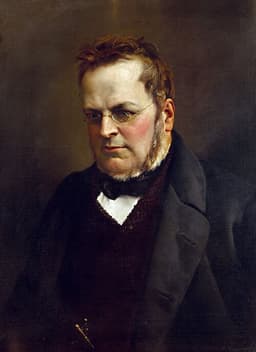
Camillo Cavour
Politician · Modern
65.0Total

V. K. Krishna Menon
Politician · Modern
50.5Total
Basic Information
Born
1810
1896
Died
1861
1974
Era
Modern
Modern
Nationality
Italy
India
Occupation
Politician
Politician
Civilization
Western
Indian
Score Comparison
Military (10%)
20.0
51.7
Political (20%)
82.0
42.3
Influence (20%)
65.0
58.0
Legacy (20%)
80.0
45.0
Leadership (15%)
79.8
48.4
Strategy (15%)
25.0
60.0
TOTAL
65.0
50.5
Camillo Cavour — Complete Timeline
1858 AD
Plombières AgreementPolitical Action
Cavour met secretly with Napoleon III at Plombi
UnificationDiplomacyFrance
Impact: regionalconstructive
1859 AD
Second Italian War of IndependenceWar◆ Major
Cavour provoked Austria into declaring war, then allied with France to defeat Austrian forces at Magenta and Solferino. The war resulted in Lombardy being annexed by Piedmont-Sardinia. Cavour resigned temporarily after Napoleon III's separate armistice at Villafranca.
UnificationWarAustria
Impact: regionalconstructive
1860 AD
Expedition of the ThousandPolitical Action◆ Major
Cavour secretly supported Garibaldi's expedition to conquer Sicily and Naples, while publicly maintaining neutrality. He sent Piedmontese troops south to meet Garibaldi and prevent him from marching on Rome. This maneuver led to the annexation of the Kingdom of the Two Sicilies.
UnificationGaribaldiAnnexation
Impact: regionalconstructive
1861 AD
Proclamation of the Kingdom of ItalyPolitical Action
Cavour, as prime minister, oversaw the first Italian parliament's proclamation of Victor Emmanuel II as King of Italy on March 17, 1861. The new kingdom excluded Venice and Rome. Cavour died three months later, leaving unification incomplete.
UnificationMonarchyParliament
Impact: globalconstructive
V. K. Krishna Menon — Complete Timeline
1953 AD
Led India's Delegation to the United NationsPolitical Action◆ Major
Krishna Menon led the Indian delegation to the UN, where he became a prominent voice for decolonization and non-alignment. He played a key role in the Korean War armistice negotiations and advocated for the admission of China to the UN.
United NationsDiplomacyNon-Alignment
Impact: globalconstructive
1954 AD
Instrumental in the Panchsheel AgreementPolitical Action◆ Major
Krishna Menon helped draft the Panchsheel, or Five Principles of Peaceful Coexistence, which were incorporated into the Sino-Indian Agreement on Tibet. The principles became a cornerstone of India's foreign policy and influenced the Non-Aligned Movement.
PanchsheelForeign PolicyChina
Impact: globalconstructive
1962 AD
Served as India's Defense Minister during the 1962 Sino-Indian WarWar◆ Major
As Defense Minister, Krishna Menon oversaw India's military response to the Chinese invasion. India suffered a decisive defeat, leading to widespread criticism of Menon's leadership and his eventual resignation from the post.
Sino-Indian WarDefense MinisterDefeat
Impact: nationaltragic
Resigned as Defense MinisterPolitical Action◆ Major
Following India's defeat in the Sino-Indian War, Krishna Menon resigned as Defense Minister under pressure from the Congress party and public opinion. His resignation marked the end of his tenure in high office.
ResignationSino-Indian WarAccountability
Impact: nationaltragic
Expert Analysis
Origins
Camillo Benso, Count of Cavour, was born in 1810 into a noble Piedmontese family. He received a military education but soon turned to politics and economics, traveling widely in Europe and absorbing liberal ideas. His early career involved managing his family's estate and founding the newspaper *Il Risorgimento*, which advocated for constitutional government and Italian unification.
Vengalil Krishnan Krishna Menon was born in 1896 in Kerala, India, into a wealthy family. He studied in Madras and later in England, where he became involved with the Labour Party and the India League. He was deeply influenced by Fabian socialism and anti-colonial movements. He earned a law degree and became a close associate of Jawaharlal Nehru.
Rise to Power
Cavour entered Piedmontese politics in 1848 and quickly rose through the ranks due to his economic expertise. He became Minister of Agriculture and Commerce in 1850, then Minister of Finance, and finally Prime Minister in 1852. His key turning point was the Plombières Agreement in 1858, where he secured French military support against Austria. By provoking the Second Italian War of Independence in 1859, he gained Lombardy and set the stage for unification.
Krishna Menon rose to prominence as a diplomat and advocate for Indian independence. He served as India's first High Commissioner to the United Kingdom (1947-1952) and then led India's delegation to the United Nations, where he became a vocal proponent of non-alignment. His close relationship with Prime Minister Nehru led to his appointment as Defense Minister in 1957, a position he held until 1962.
Leadership & Governance
Cavour governed with a pragmatic, realpolitik approach. He modernized Piedmont's economy, built railroads, and promoted free trade. In foreign policy, he used diplomacy and war strategically, allying with France and later manipulating Garibaldi's Expedition of the Thousand to incorporate southern Italy. His leadership was decisive and calculated, scoring 79.8 in leadership.
Krishna Menon's governance was marked by strong ideological commitment but poor execution. As Defense Minister, he focused on modernizing the army but neglected border defenses and intelligence. His confrontational style alienated military brass and allies alike. His political score of 42.3 reflects his inability to manage crises effectively.
Triumph & Tragedy
Cavour's greatest triumph was the Proclamation of the Kingdom of Italy in 1861, uniting most of the peninsula under Victor Emmanuel II. His greatest failure was his untimely death in 1861, just months after unification, leaving the new state without its architect. He also failed to include Rome and Venice, which were added later.
Krishna Menon's triumph was his role in the Panchsheel Agreement (1954) and his influence at the UN, where he championed anti-colonial causes. His tragedy was the 1962 Sino-Indian War, where India's military was unprepared for the Chinese invasion, leading to a humiliating defeat. He resigned as Defense Minister in disgrace, his legacy tarnished.
Character & Destiny
Cavour was a master strategist, patient and calculating. He understood the balance of power and used it to his advantage. His character shaped Italy's destiny as a unified nation, albeit incomplete. He scored 65.0 in total, with high political and legacy scores.
Krishna Menon was intelligent and eloquent but also arrogant and stubborn. His refusal to heed warnings about Chinese intentions and his micromanagement of the military contributed to the 1962 debacle. His character led to his downfall, scoring 50.5 total.
Legacy
Cavour's legacy is foundational: he is remembered as the 'brain' of Italian unification. His political and economic reforms laid the groundwork for modern Italy. His influence on European nationalism and realpolitik is enduring, with a legacy score of 80.0.
Krishna Menon's legacy is mixed. He is remembered as a fierce anti-colonialist and a key figure in Indian foreign policy, but the 1962 defeat overshadows his contributions. His legacy score of 45.0 reflects this ambivalence.
Conclusion
Camillo Cavour had a significantly greater impact on history than V.K. Krishna Menon. Cavour's strategic genius united a nation and reshaped Europe, while Menon's tenure ended in military disaster that weakened India's security. Cavour's total score of 65.0 versus Menon's 50.5 underscores this disparity. In the contest of statecraft and lasting influence, Cavour stands as a transformative figure, while Menon remains a cautionary tale.
Rankings
🥇
Camillo CavourLeader
Mil: 20.0Pol: 82.0Inf: 65.0
65.0
🥈
V. K. Krishna Menon
Mil: 51.7Pol: 42.3Inf: 58.0
50.5
+14.5 behind
How This Comparison Works
Algorithm
Each figure is scored on 6 dimensions (0—100 scale) based on structured historical data: Military (10%), Political (20%), Influence (20%), Legacy (20%), Leadership (15%), Strategy (15%). The weighted total produces the final ranking.
Data Sources
Scores are computed from structured sub-indicators in the database. Scale factors adjust for era (Ancient ×0.85, Modern ×1.0) and civilization size (Eastern ×1.05, Other ×0.80) to account for differences in population and military scale.
Maximum 3 Figures
Comparisons are limited to 2—3 figures to ensure readability and statistical meaningfulness.
Error Margins
±5 points per dimension — Sub-scores are derived from historical records with inherent uncertainty. Two figures within 5 points on a dimension should be considered roughly equivalent in that area.
Total Score Accuracy
±3 points overall — The weighted combination of 6 dimensions produces a total score with approximately ±3 points of uncertainty. Differences of less than 3 points are not statistically significant— the figures are effectively tied.
Known Limitations
- Historical records are incomplete and uneven across civilizations
- Figures from oral-tradition societies may be underrepresented
- Occupation labels can misclassify multi-role figures
- Scores measure capability and impact, not moral character
- Quantitative scoring is a comparison tool, not absolute truth
Capability Radar
Military (10%) — Battles & Warfare
Battles
5
43
Win Rate
5
45
Expansion
35
47
Political (20%) — Governance & Reform
Reform
85
20
Diplomacy
90
70
Economy
80
10
Influence (20%) — Cultural & Global Reach
Cultural
65
30
Global
75
50
Legacy (20%) — Historical Impact
Historical
85
40
Longevity
80
20
Leadership (15%) — Power & Stability
Tenure
60
30
Stability
70
10
Strategy (15%) — Tactics & Innovation
Strategy
30
54
Tactics
10
54
Reform
40
57
Similar Comparisons
Comments & Discussion
No comments yet. Be the first to share your thoughts!