Loading...
Camillo Cavour vs Julius Caesar
Julius Caesar leads by 17.8 pts · 2 figures compared
…
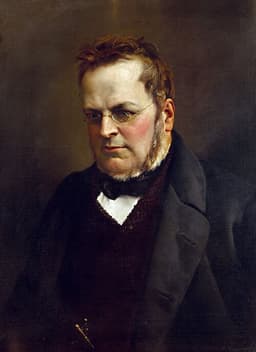
Camillo Cavour
Politician · Modern
65.0Total

Julius Caesar
General · Ancient
82.8Total
Basic Information
Born
1810
-100
Died
1861
-44
Era
Modern
Ancient
Nationality
Italy
Roman Republic
Occupation
Politician
General
Civilization
Western
Western
Score Comparison
Military (10%)
20.0
88.0
Political (20%)
82.0
78.0
Influence (20%)
65.0
85.0
Legacy (20%)
80.0
82.0
Leadership (15%)
79.8
80.0
Strategy (15%)
25.0
85.0
TOTAL
65.0
82.8
Camillo Cavour — Complete Timeline
1858 AD
Plombières AgreementPolitical Action
Cavour met secretly with Napoleon III at Plombi
UnificationDiplomacyFrance
Impact: regionalconstructive
1859 AD
Second Italian War of IndependenceWar◆ Major
Cavour provoked Austria into declaring war, then allied with France to defeat Austrian forces at Magenta and Solferino. The war resulted in Lombardy being annexed by Piedmont-Sardinia. Cavour resigned temporarily after Napoleon III's separate armistice at Villafranca.
UnificationWarAustria
Impact: regionalconstructive
1860 AD
Expedition of the ThousandPolitical Action◆ Major
Cavour secretly supported Garibaldi's expedition to conquer Sicily and Naples, while publicly maintaining neutrality. He sent Piedmontese troops south to meet Garibaldi and prevent him from marching on Rome. This maneuver led to the annexation of the Kingdom of the Two Sicilies.
UnificationGaribaldiAnnexation
Impact: regionalconstructive
1861 AD
Proclamation of the Kingdom of ItalyPolitical Action
Cavour, as prime minister, oversaw the first Italian parliament's proclamation of Victor Emmanuel II as King of Italy on March 17, 1861. The new kingdom excluded Venice and Rome. Cavour died three months later, leaving unification incomplete.
UnificationMonarchyParliament
Impact: globalconstructive
Julius Caesar — Complete Timeline
58 BC
Gallic WarsWar◆ Major
Caesar, as proconsul of Gaul, launched a series of campaigns that conquered all of Gaul (modern France, Belgium, and parts of Switzerland). He fought numerous battles, including against the Helvetii, the Belgae, and the Gallic chieftain Vercingetorix. The wars brought immense wealth and a loyal army to Caesar.
Gallic WarsConquestRoman Expansion
Impact: regional
49 BC
Crossing the RubiconPolitical Action◆ Major
Caesar led Legio XIII across the Rubicon River into Italy, defying the Roman Senate's order to disband his army. This act triggered a civil war against Pompey and the Optimates, ultimately leading to Caesar's dictatorship and the end of the Roman Republic.
Roman Civil WarEnd of RepublicPower Struggle
Impact: global
48 BC
Battle of PharsalusWar◆ Major
Caesar's outnumbered army defeated the larger forces of Pompey the Great at Pharsalus in Greece. Caesar's tactical use of a reserve line to counter Pompey's cavalry charge proved decisive. Pompey fled to Egypt, where he was assassinated, leaving Caesar as the undisputed master of the Roman world.
Roman Civil WarBattleDecisive Victory
Impact: regional
44 BC
Appointment as Dictator for LifePolitical Action◆ Major
The Roman Senate appointed Caesar dictator perpetuo (dictator for life), granting him unprecedented personal power. This move concentrated military, legislative, and judicial authority in one person, effectively ending the Roman Republic's traditional system of checks and balances and alarming many senators.
DictatorshipEnd of RepublicPower Consolidation
Impact: regionaldestructive
Assassination on the Ides of MarchPolitical Action◆ Major
A group of Roman senators, led by Marcus Junius Brutus and Gaius Cassius Longinus, stabbed Caesar to death at a meeting of the Senate in the Theatre of Pompey. The assassination was intended to restore the Republic, but instead triggered another civil war that led to the rise of the Roman Empire.
AssassinationRoman PoliticsEnd of Republic
Impact: globaldestructive
Expert Analysis
camillo-cavour-vs-julius-caesar
### The General and the Gambler: Two Paths to Power
On a January morning in 49 BCE, Julius Caesar stood at the banks of a small, muddy river in northern Italy. The Rubicon was a border, a legal line he was forbidden to cross with his army. To do so was an act of war against the Roman Republic itself. He hesitated, famously murmuring that the die was cast, and then he led his legions across. Nearly two thousand years later, in the spring of 1860, a very different kind of leader sat in a study in Turin, watching the chessboard of European diplomacy. Camillo Cavour had no legions. He had no sword. But he was about to cross his own Rubicon—not with soldiers, but with a letter of support for a fiery revolutionary named Giuseppe Garibaldi, a man he distrusted but desperately needed. How did two men, both obsessed with reshaping their worlds, take such different roads to the same destination?
### Origins
Caesar was born into the chaos of a dying republic. The son of a patrician family that had lost its luster, he grew up in a Rome torn by civil wars, street violence, and the ambitions of men like Marius and Sulla. His world was one of direct action: a senator’s word could be backed by a sword, and a general’s victory was measured in blood and gold. He learned early that fortune favored the bold, and that the Republic’s old rules were merely obstacles to be shattered.
Cavour, by contrast, was born in 1810 into a world of rigid order—Piedmont-Sardinia, a small, conservative kingdom in the shadow of Napoleon’s fallen empire. His family were aristocrats who served a king, not a mob. He was educated in military academies but found his true calling in economics and agriculture. While Caesar studied the art of war, Cavour studied the art of the possible: tariffs, railways, and parliamentary procedure. His Italy was not a battlefield but a patchwork of foreign-controlled states, and his enemy was not a rival general but the sheer inertia of history.
### Rise to Power
Caesar’s ascent was a masterclass in calculated risk. He borrowed fortunes to buy political influence, served as a governor in Spain, and then formed the First Triumvirate with Pompey and Crassus to seize control of Rome. His true springboard, however, was the conquest of Gaul. From 58 to 50 BCE, he waged a brutal, brilliant campaign that made him the richest and most feared man in the Republic. He wrote his own propaganda—the *Commentaries*—and used his victories to demand more power. When the Senate ordered him to disband his army, he chose war.
Cavour’s rise was quieter but no less cunning. He entered politics in the 1840s as a moderate reformer, advocating for constitutional monarchy and free trade. By 1852, he was prime minister of Piedmont-Sardinia, a small state with big ambitions. He understood that Italy could not be unified by Piedmont alone; it needed a European patron. His masterstroke came in 1858 at the Plombières Agreement, a secret meeting with Emperor Napoleon III of France. Cavour promised French support in a war against Austria in exchange for territory. It was a gamble: he was betting his kingdom’s future on a foreign emperor’s whim.
### Leadership & Governance
Caesar governed as he conquered: by personal authority and ruthless efficiency. As dictator, he reformed the calendar, granted citizenship to provincials, and launched massive public works. He centralized power in his own hands, packing the Senate with his supporters and treating opposition as treason. His style was charismatic and direct—he pardoned enemies when it suited him, but he never forgot a slight. His military genius was undeniable: at Alesia, he besieged a Gallic army while simultaneously defeating a relief force, a feat of logistics and tactics that still astounds historians.
Cavour governed through negotiation and indirection. He was not a general; his military score of 46.1 reflects his reliance on others to fight. Instead, he was a political architect. He built a modern state in Piedmont, strengthening the economy and army, while manipulating events from behind the scenes. During the Second Italian War of Independence in 1859, he provoked Austria into declaring war, then let French and Piedmontese armies win the battles at Magenta and Solferino. He was a master of the “revolution from above,” using diplomacy to create opportunities for nationalists like Garibaldi.
### Triumph & Tragedy
Caesar’s greatest triumph was his conquest of Gaul, which added a vast, wealthy province to Rome and made him a legend. His most devastating failure was his own assassination. On the Ides of March in 44 BCE, a conspiracy of senators stabbed him to death in the Senate chamber. He had centralized power so completely that his murder plunged Rome into another civil war. His tragedy was that he could not imagine a republic without him.
Cavour’s triumph came in 1861, when the Kingdom of Italy was proclaimed under King Victor Emmanuel II. He was the first prime minister, the man who had orchestrated the unification. But his tragedy was that he did not live to see it. He died just months later, at age 51, worn out by years of relentless work. He never saw Venice or Rome added to the nation he had created. His victory was incomplete, and he knew it.
### Character & Destiny
Caesar was a gambler who believed in his own star. He was vain, ambitious, and utterly fearless. His personality drove him to take risks that would have destroyed lesser men—crossing the Rubicon, pardoning his enemies, accepting the title of dictator for life. His destiny was to die by the sword, as he had lived. He could not imagine a world where he was not the center of it.
Cavour was a pragmatist who believed in systems. He was cautious, calculating, and deeply aware of his limits. He once said, “If we did for ourselves what we do for our country, what scoundrels we would be.” His personality drove him to build coalitions, not armies. His destiny was to succeed through others—and to fade into the background, the quiet architect of a noisy revolution.
### Legacy
Caesar’s legacy is the Roman Empire. He did not found it—Augustus did—but he made it inevitable. His name became a title: *Caesar* meant emperor for centuries. He is remembered as a military genius, a political revolutionary, and a warning about the dangers of unchecked ambition.
Cavour’s legacy is Italy itself. Without him, unification might have been delayed for decades, or never achieved. He is remembered as a statesman, a pragmatist, and the father of modern Italy. His methods—diplomacy, economic reform, and patient state-building—defined the nation’s character.
### Conclusion
One crossed a river with an army. The other crossed a continent with a treaty. Both men reshaped the world around them, but they did so in ways that reflected their times and their natures. Caesar’s Rome was a world of swords and glory, where power was taken at the point of a spear. Cavour’s Italy was a world of parliaments and railroads, where power was built one alliance at a time. The general and the gambler—each a master of his own game, each a prisoner of his own age. Their stories remind us that history is not made by one kind of hero, but by the endless, unpredictable collision of human ambition with the raw material of fate.
Rankings
🥇
Julius CaesarLeader
Mil: 88.0Pol: 78.0Inf: 85.0
82.8
🥈
Camillo Cavour
Mil: 20.0Pol: 82.0Inf: 65.0
65.0
+17.8 behind
How This Comparison Works
Algorithm
Each figure is scored on 6 dimensions (0—100 scale) based on structured historical data: Military (10%), Political (20%), Influence (20%), Legacy (20%), Leadership (15%), Strategy (15%). The weighted total produces the final ranking.
Data Sources
Scores are computed from structured sub-indicators in the database. Scale factors adjust for era (Ancient ×0.85, Modern ×1.0) and civilization size (Eastern ×1.05, Other ×0.80) to account for differences in population and military scale.
Maximum 3 Figures
Comparisons are limited to 2—3 figures to ensure readability and statistical meaningfulness.
Error Margins
±5 points per dimension — Sub-scores are derived from historical records with inherent uncertainty. Two figures within 5 points on a dimension should be considered roughly equivalent in that area.
Total Score Accuracy
±3 points overall — The weighted combination of 6 dimensions produces a total score with approximately ±3 points of uncertainty. Differences of less than 3 points are not statistically significant— the figures are effectively tied.
Known Limitations
- Historical records are incomplete and uneven across civilizations
- Figures from oral-tradition societies may be underrepresented
- Occupation labels can misclassify multi-role figures
- Scores measure capability and impact, not moral character
- Quantitative scoring is a comparison tool, not absolute truth
Capability Radar
Military (10%) — Battles & Warfare
Battles
5
95
Win Rate
5
92
Expansion
35
97
Political (20%) — Governance & Reform
Reform
85
90
Diplomacy
90
85
Economy
80
82
Influence (20%) — Cultural & Global Reach
Cultural
65
88
Global
75
94
Legacy (20%) — Historical Impact
Historical
85
95
Longevity
80
96
Leadership (15%) — Power & Stability
Tenure
60
75
Stability
70
60
Strategy (15%) — Tactics & Innovation
Strategy
30
94
Tactics
10
96
Reform
40
88
Similar Comparisons
Comments & Discussion
No comments yet. Be the first to share your thoughts!