Loading...
Camillo Cavour vs David Panuelo
Camillo Cavour leads by 25.1 pts · 2 figures compared
…
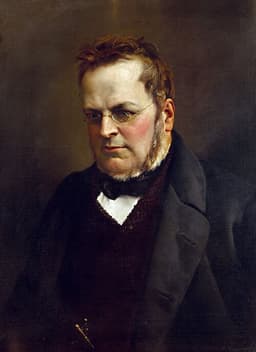
Camillo Cavour
Politician · Modern
65.0Total

David Panuelo
Politician · Modern
39.9Total
Basic Information
Born
1810
1964
Died
1861
—
Era
Modern
Modern
Nationality
Italy
Micronesia
Occupation
Politician
Politician
Civilization
Western
Other
Score Comparison
Military (10%)
20.0
19.2
Political (20%)
82.0
46.6
Influence (20%)
65.0
47.9
Legacy (20%)
80.0
37.5
Leadership (15%)
79.8
40.0
Strategy (15%)
25.0
36.5
TOTAL
65.0
39.9
Camillo Cavour — Complete Timeline
1858 AD
Plombières AgreementPolitical Action
Cavour met secretly with Napoleon III at Plombi
UnificationDiplomacyFrance
Impact: regionalconstructive
1859 AD
Second Italian War of IndependenceWar◆ Major
Cavour provoked Austria into declaring war, then allied with France to defeat Austrian forces at Magenta and Solferino. The war resulted in Lombardy being annexed by Piedmont-Sardinia. Cavour resigned temporarily after Napoleon III's separate armistice at Villafranca.
UnificationWarAustria
Impact: regionalconstructive
1860 AD
Expedition of the ThousandPolitical Action◆ Major
Cavour secretly supported Garibaldi's expedition to conquer Sicily and Naples, while publicly maintaining neutrality. He sent Piedmontese troops south to meet Garibaldi and prevent him from marching on Rome. This maneuver led to the annexation of the Kingdom of the Two Sicilies.
UnificationGaribaldiAnnexation
Impact: regionalconstructive
1861 AD
Proclamation of the Kingdom of ItalyPolitical Action
Cavour, as prime minister, oversaw the first Italian parliament's proclamation of Victor Emmanuel II as King of Italy on March 17, 1861. The new kingdom excluded Venice and Rome. Cavour died three months later, leaving unification incomplete.
UnificationMonarchyParliament
Impact: globalconstructive
David Panuelo — Complete Timeline
2015 AD
Election as President of the Federated States of MicronesiaPolitical Action◆ Major
David Panuelo was elected as the ninth President of the Federated States of Micronesia, representing the state of Pohnpei. He served from 2015 to 2019, focusing on strengthening ties with the United States under the Compact of Free Association.
PresidencyMicronesiaUS Relations
Impact: national
2018 AD
Renegotiation of Compact of Free AssociationPolitical Action◆ Major
Panuelo led negotiations with the United States to renew the Compact of Free Association, securing continued financial assistance and strategic partnership. The agreement provided economic support and defense ties for the FSM.
Compact of Free AssociationUS RelationsNegotiation
Impact: nationalconstructive
2019 AD
End of PresidencyPolitical Action
Panuelo's term ended in 2019 after serving one term. He was succeeded by David W. Panuelo (no relation). His presidency was marked by strengthened US ties.
PresidencyTransitionMicronesia
Impact: national
Expert Analysis
Origins
Camillo Benso, Count of Cavour, was born in 1810 into an aristocratic Piedmontese family. Educated at the Turin Military Academy, he later traveled extensively, absorbing liberal economic and political ideas. His early career included managing his family's estates and founding the newspaper *Il Risorgimento*, which advocated for constitutional government and Italian unification. In contrast, David Panuelo was born in 1964 on Pohnpei, part of the Federated States of Micronesia (FSM). He earned a degree in political science from the University of Hawaii and worked in various government roles, including as a budget advisor and later as a senator. His background was rooted in the small-island context of the Pacific, far removed from the grand European stage of Cavour.
Rise to Power
Cavour entered politics in 1848, becoming a deputy in the Sardinian parliament. He quickly rose to prominence as a skilled orator and economic reformer, and by 1852 he became Prime Minister of the Kingdom of Sardinia. His rise was marked by strategic alliances: he formed the 'Connubio' (marriage) with moderate leftist Urbano Rattazzi, consolidating power. The pivotal moment came with the Plombières Agreement in 1858, a secret meeting with Napoleon III where Cavour secured French military support against Austria in exchange for territorial concessions. This diplomatic coup set the stage for Italian unification. Panuelo's path was more modest. He served as a senator and then as governor of Pohnpei before being elected President of the FSM in 2015. His rise was not through dramatic deals but through consistent bureaucratic service and local political networking. He won the presidency with a focus on strengthening ties with the United States, which was crucial for the FSM's economy and security.
Leadership & Governance
Cavour's leadership style was pragmatic and calculating, blending liberal reforms with realpolitik. As Prime Minister, he modernized Sardinia's economy, promoted free trade, and strengthened the army. He used diplomacy to isolate Austria and military force to expand territory. For example, he provoked the Second Italian War of Independence in 1859, leading to the acquisition of Lombardy. He also orchestrated the Expedition of the Thousand by secretly supporting Garibaldi's conquest of Sicily and Naples, then sending Piedmontese troops to claim the territory. Panuelo's governance focused on sustaining the FSM's relationship with the United States under the Compact of Free Association (COFA). He renegotiated the compact, securing continued financial aid and strategic partnership. His leadership was less transformative, as he operated within a small, aid-dependent state. He emphasized climate change adaptation and regional cooperation, but his impact was limited by the FSM's size and resources. Cavour scores 82.0 in political skill, while Panuelo scores 46.6, reflecting the vast difference in scope and complexity of their governance challenges.
Triumph & Tragedy
Cavour's greatest triumph was the Proclamation of the Kingdom of Italy on March 17, 1861, uniting most of the Italian peninsula under Victor Emmanuel II. His diplomatic maneuvering and wars were instrumental. However, his tragedy was dying just three months later, on June 6, 1861, without seeing the complete unification (Venetia and Rome were still missing). He also faced criticism for his Machiavellian tactics, such as the cession of Nice and Savoy to France. Panuelo's triumph was the successful renegotiation of the COFA, ensuring continued US funding for 20 years, which is vital for the FSM's budget. His tragedy was a lack of broader achievement; his presidency did not significantly alter the FSM's dependence or address long-term sustainability. He left office in 2019 with a legacy of maintaining the status quo rather than transformative change.
Character & Destiny
Cavour was a master strategist, coldly rational, and willing to use deception and alliance to achieve his goals. His character was shaped by Enlightenment liberalism and aristocratic pragmatism. He believed in progress through calculated risk, as seen in his manipulation of Garibaldi. His early death cut short his vision, but his methods set a precedent for Italian statecraft. Panuelo, in contrast, was a consensus-builder, focused on stability and cooperation. His character reflected the Pacific islander emphasis on community and diplomacy. He was less ambitious in scope, content to manage within existing structures. Historians assess Cavour as a foundational figure in European history; Panuelo is seen as a competent administrator for a small nation. Cavour's leadership score of 79.8 far exceeds Panuelo's 40.0, reflecting the former's decisive impact.
Legacy
Cavour's legacy is immense: he is the architect of Italian unification, a model of liberal nationalism. His economic reforms and diplomatic strategies influenced later European integration. The Kingdom of Italy endured until 1946, and his ideas of parliamentary government and free trade persisted. In contrast, Panuelo's legacy is confined to Micronesia. His renegotiation of the COFA secured short-term stability but did not alter the FSM's trajectory. He is remembered as a steady hand, but his influence score of 47.9 versus Cavour's 65.0 highlights the difference in lasting impact. Cavour's total score of 65.0 compared to Panuelo's 39.9 underscores the chasm in historical significance.
Conclusion
Camillo Cavour had a far greater impact than David Panuelo. Cavour fundamentally reshaped Europe, creating a nation-state that became a major power. His political skill (82.0), leadership (79.8), and legacy (80.0) dwarf Panuelo's modest achievements. Panuelo's work was important for Micronesia but lacked global or even regional transformative power. The score gap of 25.1 points reflects this reality. Cavour's unification of Italy changed the balance of power in Europe, while Panuelo's presidency maintained the status quo for a small island nation. Thus, Cavour is clearly the more significant historical figure.
Rankings
🥇
Camillo CavourLeader
Mil: 20.0Pol: 82.0Inf: 65.0
65.0
🥈
David Panuelo
Mil: 19.2Pol: 46.6Inf: 47.9
39.9
+25.1 behind
How This Comparison Works
Algorithm
Each figure is scored on 6 dimensions (0—100 scale) based on structured historical data: Military (10%), Political (20%), Influence (20%), Legacy (20%), Leadership (15%), Strategy (15%). The weighted total produces the final ranking.
Data Sources
Scores are computed from structured sub-indicators in the database. Scale factors adjust for era (Ancient ×0.85, Modern ×1.0) and civilization size (Eastern ×1.05, Other ×0.80) to account for differences in population and military scale.
Maximum 3 Figures
Comparisons are limited to 2—3 figures to ensure readability and statistical meaningfulness.
Error Margins
±5 points per dimension — Sub-scores are derived from historical records with inherent uncertainty. Two figures within 5 points on a dimension should be considered roughly equivalent in that area.
Total Score Accuracy
±3 points overall — The weighted combination of 6 dimensions produces a total score with approximately ±3 points of uncertainty. Differences of less than 3 points are not statistically significant— the figures are effectively tied.
Known Limitations
- Historical records are incomplete and uneven across civilizations
- Figures from oral-tradition societies may be underrepresented
- Occupation labels can misclassify multi-role figures
- Scores measure capability and impact, not moral character
- Quantitative scoring is a comparison tool, not absolute truth
Capability Radar
Military (10%) — Battles & Warfare
Battles
5
21
Win Rate
5
22
Expansion
35
25
Political (20%) — Governance & Reform
Reform
85
30
Diplomacy
90
60
Economy
80
25
Influence (20%) — Cultural & Global Reach
Cultural
65
10
Global
75
15
Legacy (20%) — Historical Impact
Historical
85
15
Longevity
80
10
Leadership (15%) — Power & Stability
Tenure
60
55
Stability
70
40
Strategy (15%) — Tactics & Innovation
Strategy
30
33
Tactics
10
36
Reform
40
38
Similar Comparisons
Comments & Discussion
No comments yet. Be the first to share your thoughts!