Loading...
Bumin Qaghan vs Yuwen Yong
Bumin Qaghan leads by 0.4 pts · 2 figures compared
…
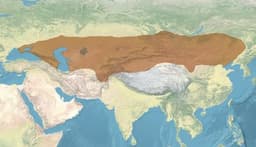
Bumin Qaghan
Emperor · Ancient
67.6Total
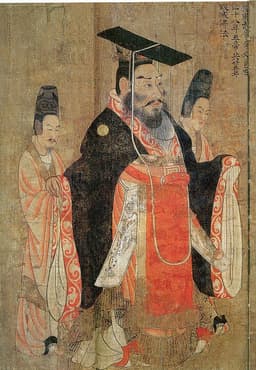
Yuwen Yong
Emperor · Medieval
67.2Total
Basic Information
Born
490
543
Died
552
578
Era
Ancient
Medieval
Nationality
Gokturk Khaganate
China
Occupation
Emperor
Emperor
Civilization
Eastern
Eastern
Score Comparison
Military (10%)
80.0
78.0
Political (20%)
60.0
78.0
Influence (20%)
82.0
58.0
Legacy (20%)
72.0
54.0
Leadership (15%)
40.0
85.0
Strategy (15%)
61.2
69.1
TOTAL
67.6
67.2
Bumin Qaghan — Complete Timeline
534 AD
Revolt against the Rouran KhaganatePolitical Action◆ Major
Bumin, a vassal of the Rouran Khaganate, led a revolt of the Turkic tribes (Ashina clan) against Rouran rule. He defeated the Rouran forces and declared independence, marking the beginning of the First Turkic Khaganate.
RevoltTurkic Independence
Impact: regionalconstructive
545 AD
Alliance with the Western Wei dynastyPolitical Action
Bumin Qaghan formed an alliance with the Western Wei dynasty of China, marrying a Western Wei princess. This alliance provided the Turks with Chinese support and technology, strengthening their position against the Rouran and other rivals.
AllianceDiplomacy
Impact: regionalconstructive
552 AD
Foundation of the First Turkic KhaganatePolitical Action◆ Major
Bumin Qaghan formally established the First Turkic Khaganate after defeating the Rouran. He took the title 'Qaghan' and set up his capital in the Orkhon Valley. The khaganate quickly became a major power on the Eurasian steppe.
Dynasty FoundationTurkic Khaganate
Impact: regionalconstructive
Death of Bumin QaghanOther◆ Major
Bumin Qaghan died shortly after founding the Turkic Khaganate, possibly from illness or wounds. His death led to the division of the khaganate between his sons, with the eastern and western halves ruled separately, though still under a single nominal authority.
DeathSuccession
Impact: regionaltragic
Yuwen Yong — Complete Timeline
574 AD
Suppression of Buddhism in Northern ZhouReform◆ Major
Emperor Wu of Northern Zhou (Yuwen Yong) ordered the suppression of Buddhism, confiscating monastic lands, forcing monks and nuns to return to lay life, and destroying temples. He aimed to increase state revenue and military manpower, strengthening the state.
Northern ZhouBuddhist PersecutionReform
Impact: nationaldestructive
577 AD
Conquest of Northern QiWar
Emperor Wu led a successful campaign against the rival Northern Qi dynasty, conquering its territory and unifying northern China under Northern Zhou. This victory ended the division of the north and set the stage for the Sui dynasty's unification of all China.
Northern ZhouUnificationNorthern Qi
Impact: regionalconstructive
578 AD
Death during campaign against the TurksWar◆ Major
Emperor Wu died of illness while leading a campaign against the G
Northern ZhouMilitary CampaignDeath
Impact: regionaltragic
Expert Analysis
Yuwen Yong vs Bumin Qaghan
# The Steppe and the Throne
On a spring morning in 552, a man who had just crushed an empire and crowned himself its successor lay dying. Bumin Qaghan, founder of the First Turkic Khaganate, had reigned for mere months. Half a world away and a generation later, another emperor—Yuwen Yong of Northern Zhou—would also die on campaign, his body failing him just as his armies prepared to sweep into the heart of the steppe. Both men built empires. Both died too soon. Yet their paths could not have been more different: one a rebel who rose from vassalage to dominate the Mongolian steppe, the other a Chinese emperor who suppressed Buddhism and unified a fractured north. What drove these two rulers, and why did their legacies diverge so sharply?
Origins
Bumin Qaghan was born in 490 into the Ashina clan, a Turkic tribe serving as ironworkers and vassals to the Rouran Khaganate—a vast but decaying nomadic empire that had dominated Central Asia for over a century. The steppe was a world of shifting loyalties, where a chieftain’s power depended on his ability to herd men as much as horses. Bumin learned early that survival meant patience: he watched the Rouran grow arrogant, their khans more interested in luxury than leadership, and he waited.
Yuwen Yong, born in 543, entered a different kind of chaos. Northern China was splintered into rival dynasties—Eastern Wei, Western Wei, Northern Qi, Northern Zhou—each fighting for supremacy. Yuwen’s family belonged to the Xianbei warrior aristocracy, a people of steppe origin who had settled in China and adopted Chinese bureaucracy. His father and brothers were generals. By the time Yuwen Yong was a teenager, his cousin had seized control of Western Wei, and the boy was raised in a court where power was measured in bloodlines and battlefield victories.
The difference in their origins is stark: Bumin’s world was a naked contest of tribal loyalty and personal charisma; Yuwen’s was a chessboard of established states, Confucian ritual, and military campaigns waged with siege engines and supply lines.
Rise to Power
Bumin’s rise began in 534, when he led a revolt against the Rouran Khaganate. It was not a spontaneous uprising. For years, he had consolidated the Turkic tribes under his banner, playing on their resentment of Rouran exactions. When the Rouran khan refused Bumin’s request for a princess in marriage—a slight that signaled contempt—Bumin struck. He defeated the Rouran army in a series of battles, and by 545, he had secured an alliance with the Western Wei dynasty of China, marrying a Western Wei princess. This alliance gave him access to Chinese silk and weapons, while guaranteeing that no Chinese army would stab him in the back.
Yuwen Yong’s path was more circuitous. He did not rebel; he inherited. In 560, at age 17, he was placed on the throne of Northern Zhou by his cousin Yuwen Hu, who ruled as regent. For twelve years, Yuwen Yong played the docile puppet, smiling at his cousin’s banquets while secretly training a personal guard. In 572, he ambushed Yuwen Hu during a palace audience, killed him with a single blow from a jade tablet, and took full power. It was a coup of cold-blooded patience, executed not on the battlefield but in a throne room.
The contrast is telling: Bumin rose by forging a coalition of tribes and striking an external enemy; Yuwen rose by outwaiting and eliminating a family rival. One was a steppe warlord, the other a palace politician.
Leadership & Governance
As rulers, both men were pragmatists, but their styles reflected their worlds. Bumin Qaghan, after founding the First Turkic Khaganate in 552, immediately set about structuring his empire. He divided the khaganate into eastern and western wings, installing his brother Istemi as ruler of the west—a move that ensured loyalty through blood ties while allowing for expansion in all directions. He also maintained the alliance with Western Wei, understanding that his steppe empire needed Chinese grain and prestige to survive.
Yuwen Yong, by contrast, ruled through state machinery. His most famous act was the suppression of Buddhism in 574—a sweeping reform that confiscated monastic lands, forced monks and nuns to return to lay life, and redirected temple wealth into the state treasury. He was not anti-religious; he was consolidating power. Buddhism had grown wealthy and independent during the centuries of division, and Yuwen saw it as a rival state. His crackdown was brutal but effective: it filled his coffers and broke the political influence of the sangha.
Militarily, both excelled. Yuwen Yong’s conquest of Northern Qi in 577 was a masterpiece of strategy: he feigned weakness, drew his enemy into a decisive battle at the Yellow River, and then pursued the fleeing army until the Northern Qi emperor was captured. Bumin’s military score is lower (60.5) than Yuwen’s (74.6), but this may reflect the nature of steppe warfare, which relied on speed and terror rather than set-piece battles.
Triumph & Tragedy
Bumin’s greatest triumph was also his tragedy: he founded an empire that stretched from the Caspian Sea to Manchuria, but he died within months of taking the title Qaghan. His death in 552, possibly from wounds or illness, left his young state in the hands of his brother and sons—a succession that would lead to civil war within a generation.
Yuwen Yong’s triumph was the unification of northern China in 577, ending decades of division. His tragedy came the following year: while leading a campaign against the Göktürks (the very empire Bumin had founded), he fell ill and died at age 35. His son, Emperor Xuan, reversed many of his reforms and plunged Northern Zhou into decadence. Within three years, the dynasty fell to a usurper who founded the Sui dynasty.
Both men died with their work unfinished. Bumin’s empire endured but fractured; Yuwen’s was swallowed by a more ambitious successor.
Character & Destiny
Bumin Qaghan was a builder—a man who saw opportunity in the cracks of a decaying order. His political score (76.3) and leadership score (82.7) reflect his ability to unite tribes, negotiate with Chinese dynasties, and create a new identity for the Turkic people. He was not a great strategist in the classical sense (72.0), but he understood that on the steppe, timing and alliances mattered more than maneuvers.
Yuwen Yong was a consolidator—a man who believed that order came from above, through law and force. His suppression of Buddhism and his coup against his cousin reveal a ruler who trusted no one. His strategy score (81.8) is his highest, fitting for a commander who won wars through careful planning. But his political score (72.0) is lower than Bumin’s, perhaps because he failed to secure his legacy: his son was a disaster.
Destiny played cruel tricks on both. Bumin died at the peak of his success, but his empire survived because it was built on tribal loyalty, not a single throne. Yuwen died just as his empire was reaching its zenith, but his dynasty collapsed because it was built on fear and family betrayal.
Legacy
Bumin Qaghan is remembered as the father of the Turkic people. The Göktürks, and later the Uighurs, Khazars, and even the Ottomans, traced their lineage to his Ashina clan. His legacy score of 77.3 reflects this enduring impact: he created a template for steppe empire that would be imitated for a millennium.
Yuwen Yong’s legacy is more ambiguous. His unification of northern China paved the way for the Sui and Tang dynasties, but his suppression of Buddhism was reversed by his successors. He is remembered more for his reforms than his conquests—a stern emperor who tried to impose order on a chaotic age.
Conclusion
Standing at the edge of the steppe and the gate of the Chinese capital, these two rulers represent the two poles of ancient Eurasian power: the mobile empire of the nomad and the settled empire of the bureaucrat. Bumin Qaghan built with blood and marriage; Yuwen Yong built with laws and armies. Both died young, both left empires that outlived them, but only one—the steppe warlord—created a legacy that still bears his people’s name. In the end, the difference was not in their ambition or skill, but in the worlds they inhabited: one where memory was written in tribal sagas, the other where it was carved on stone tablets. Both were emperors. Only one became a symbol.
Rankings
🥇
Bumin QaghanLeader
Mil: 80.0Pol: 60.0Inf: 82.0
67.6
🥈
Yuwen Yong
Mil: 78.0Pol: 78.0Inf: 58.0
67.2
+0.4 behind
How This Comparison Works
Algorithm
Each figure is scored on 6 dimensions (0—100 scale) based on structured historical data: Military (10%), Political (20%), Influence (20%), Legacy (20%), Leadership (15%), Strategy (15%). The weighted total produces the final ranking.
Data Sources
Scores are computed from structured sub-indicators in the database. Scale factors adjust for era (Ancient ×0.85, Modern ×1.0) and civilization size (Eastern ×1.05, Other ×0.80) to account for differences in population and military scale.
Maximum 3 Figures
Comparisons are limited to 2—3 figures to ensure readability and statistical meaningfulness.
Error Margins
±5 points per dimension — Sub-scores are derived from historical records with inherent uncertainty. Two figures within 5 points on a dimension should be considered roughly equivalent in that area.
Total Score Accuracy
±3 points overall — The weighted combination of 6 dimensions produces a total score with approximately ±3 points of uncertainty. Differences of less than 3 points are not statistically significant— the figures are effectively tied.
Known Limitations
- Historical records are incomplete and uneven across civilizations
- Figures from oral-tradition societies may be underrepresented
- Occupation labels can misclassify multi-role figures
- Scores measure capability and impact, not moral character
- Quantitative scoring is a comparison tool, not absolute truth
Capability Radar
Military (10%) — Battles & Warfare
Battles
70
75
Win Rate
75
80
Expansion
85
80
Political (20%) — Governance & Reform
Reform
70
85
Diplomacy
75
70
Economy
65
75
Influence (20%) — Cultural & Global Reach
Cultural
65
40
Global
65
40
Legacy (20%) — Historical Impact
Historical
80
65
Longevity
70
50
Leadership (15%) — Power & Stability
Tenure
60
60
Stability
55
70
Strategy (15%) — Tactics & Innovation
Strategy
80
75
Tactics
65
70
Reform
60
85
Similar Comparisons
Comments & Discussion
IroquoisPlover6/16/2026
Bumin Qaghan didn't die too soon—he died exactly when he had to. A steppe empire requires constant expansion to survive, and he had already conquered the Rouran. But here’s the fact that changes everything: Bumin got sick precisely as he was dividing his realm. That tells me he recognized the Mongol splits that would fracture his khaganate within a generation. Compare to Yuwen Yong—his death on campaign actually unified his legacy because Northern Zhou was bureaucratically stable. Steppe empires
北周铁骑6/16/2026
觉得你们都说错了。宇文邕527年灭佛不是暴政,是救急。北周当时人口不到北齐三分之一,寺庙却占了全国耕地七分之一。他让四万僧尼还俗参军,这才能用六年时间吞并北齐。结果洛阳刚拿下,史书说他"亲录囚徒,阅武于北城"—一边审案子一边练兵。你让那些不种地不打仗的和尚继续养着,周朝能在577年统一北方?对比木杆可汗,552年刚建国就传内乱基因。突厥可汗死一个拆一次,北周皇帝死一个稳一手。数据不会骗人:突厥传承五代用了八十年,北周宇文家三代三十年。碎得快是因为骨架不行,跟寿命无关。
TheSinologist6/16/2026
Wait, Bumin is being oversold as this steppe revolutionary. Let's look at the actual timeline: he spent decades as Rouran iron vassals, then only revolted in 552 when Anagui refused his marriage alliance demand. That's not a rebel genius—that's a disgruntled contractor who waited for the perfect supplier chain opportunity. His qaghanate survived because of his brother Istämi's western campaigns, not his own strategy. Meanwhile Yuwen Yong personally led every major campaign, reformed the governme
长安朔方6/16/2026
最烦用"英年早逝"给木杆可汗涂金。552年他死的时候,突厥还没消化完柔然人口,对中原连正经威胁都算不上。真正让突厥危险的,是他弟弟室点密在西域搞的丝绸之路收税生意。木杆那套"联柔然余部打铁勒"的战术,看着漂亮,本质是游牧式的以战养战。对比宇文邕,人家是真刀真枪拔掉了北齐二十多座军镇堡垒,比"可汗"这个名头扎实太多了。别把祖先