Loading...
Alexander the Great vs Bumin Qaghan
Alexander the Great leads by 17.6 pts · 2 figures compared
…
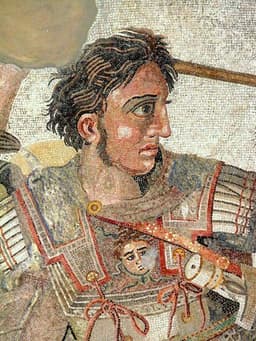
Alexander the Great
General · Ancient
85.2Total
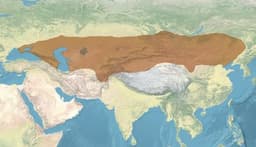
Bumin Qaghan
Emperor · Ancient
67.6Total
Basic Information
Born
-356
490
Died
-323
552
Era
Ancient
Ancient
Nationality
Macedon
Gokturk Khaganate
Occupation
General
Emperor
Civilization
Western
Eastern
Score Comparison
Military (10%)
95.0
80.0
Political (20%)
60.0
60.0
Influence (20%)
92.0
82.0
Legacy (20%)
90.0
72.0
Leadership (15%)
80.0
40.0
Strategy (15%)
92.0
61.2
TOTAL
85.2
67.6
Alexander the Great — Complete Timeline
334 BC
Battle of the Granicus RiverWar◆ Major
Alexander led his Macedonian army across the Hellespont into Asia Minor and defeated a Persian force under local satraps at the Granicus River. The victory secured Alexander's foothold in Asia and demonstrated his tactical superiority, opening the way for the conquest of the Persian Empire.
Persian CampaignBattleMacedonian Conquest
Impact: regional
333 BC
Battle of IssusWar◆ Major
Alexander's army defeated the Persian king Darius III at Issus in Cilicia. Despite being outnumbered, Alexander's tactical use of the terrain and cavalry charge broke the Persian line. Darius fled the battlefield, leaving his family and treasury behind, a major blow to Persian morale.
Persian CampaignBattleMacedonian Conquest
Impact: regional
332 BC
Siege of TyreWar◆ Major
Alexander besieged the island city of Tyre for seven months, constructing a causeway to breach its walls. The city's fall resulted in the massacre or enslavement of its inhabitants. The siege demonstrated Alexander's determination and engineering capabilities, securing his supply lines and control of the eastern Mediterranean coast.
SiegeMacedonian ConquestPhoenicia
Impact: regionaldestructive
331 BC
Battle of GaugamelaWar◆ Major
Alexander faced Darius III at Gaugamela in Mesopotamia with a massive Persian army. Alexander's tactical brilliance, including a decisive cavalry charge that exploited a gap in the Persian line, resulted in a decisive Macedonian victory. Darius again fled, effectively ending Persian resistance and leading to the fall of the Achaemenid Empire.
Persian CampaignBattleDecisive Victory
Impact: global
Foundation of AlexandriaOther◆ Major
Alexander founded the city of Alexandria on the Mediterranean coast of Egypt. He personally selected the site and oversaw the initial planning. Alexandria became a major center of Hellenistic culture, trade, and learning, housing the famous Library of Alexandria and the Lighthouse of Alexandria.
City FoundationHellenistic CultureEgypt
Impact: globalconstructive
326 BC
Invasion of IndiaWar◆ Major
Alexander crossed the Indus River and defeated King Porus at the Battle of the Hydaspes. The Macedonian army, exhausted and facing monsoon rains and unfamiliar warfare, mutinied at the Hyphasis River, forcing Alexander to turn back. This campaign marked the easternmost extent of his conquests.
Indian CampaignBattleMutiny
Impact: regional
Bumin Qaghan — Complete Timeline
534 AD
Revolt against the Rouran KhaganatePolitical Action◆ Major
Bumin, a vassal of the Rouran Khaganate, led a revolt of the Turkic tribes (Ashina clan) against Rouran rule. He defeated the Rouran forces and declared independence, marking the beginning of the First Turkic Khaganate.
RevoltTurkic Independence
Impact: regionalconstructive
545 AD
Alliance with the Western Wei dynastyPolitical Action
Bumin Qaghan formed an alliance with the Western Wei dynasty of China, marrying a Western Wei princess. This alliance provided the Turks with Chinese support and technology, strengthening their position against the Rouran and other rivals.
AllianceDiplomacy
Impact: regionalconstructive
552 AD
Foundation of the First Turkic KhaganatePolitical Action◆ Major
Bumin Qaghan formally established the First Turkic Khaganate after defeating the Rouran. He took the title 'Qaghan' and set up his capital in the Orkhon Valley. The khaganate quickly became a major power on the Eurasian steppe.
Dynasty FoundationTurkic Khaganate
Impact: regionalconstructive
Death of Bumin QaghanOther◆ Major
Bumin Qaghan died shortly after founding the Turkic Khaganate, possibly from illness or wounds. His death led to the division of the khaganate between his sons, with the eastern and western halves ruled separately, though still under a single nominal authority.
DeathSuccession
Impact: regionaltragic
Expert Analysis
Alexander the Great vs Bumin Qaghan: Historical Comparison
Alexander the Great forged a vast empire from Greece to India through unparalleled military genius, while Bumin Qaghan unified the Turkic tribes to establish the Göktürk Khaganate, a foundational steppe power. Though both were ancient conquerors, their methods and legacies differ sharply.
Dimension Analysis
**Military: Alexander the Great 96 / Bumin Qaghan 93**
Alexander’s unprecedented campaigns—never losing a battle—combined phalanx tactics, cavalry shock, and siegecraft to conquer the Persian Empire. Bumin’s military excellence lay in orchestrating a rebellion against the Rouran Khaganate, using steppe mobility and alliance with the Western Wei to annihilate a dominant power.
**Political: Alexander the Great 65 / Bumin Qaghan 78**
Alexander’s political integration (e.g., adopting Persian court customs, mass marriages) was innovative but fragile, failing to secure unity after his death. Bumin shrewdly played Chinese dynasties against each other, securing recognition and legitimacy for his khaganate, and established a succession system that endured for decades.
**Influence: Alexander the Great 90 / Bumin Qaghan 78**
Alexander’s conquests spread Hellenistic culture across three continents, shaping art, science, and language for centuries. Bumin’s influence was more regional, creating the first Turkic state whose political and military structures later inspired the Mongol Empire and other steppe confederations.
**Legacy: Alexander the Great 90 / Bumin Qaghan 78**
Alexander became a legendary archetype of the conquering hero, studied by Caesar, Napoleon, and modern strategists. Bumin is revered as the founding ancestor of the Turkic peoples, but his legacy is largely confined to Central Asian and Turkic historiography.
**Leadership: Alexander the Great 82 / Bumin Qaghan 84**
Alexander led from the front, inspiring fanatical loyalty but also alienating his Macedonian nobles with his autocratic turn. Bumin’s leadership was more diplomatic and coalition-building, successfully uniting fractious tribes and managing external alliances with patience and pragmatism.
Verdict
Alexander the Great leads narrowly due to his vastly greater geographical impact and enduring global mythos, though Bumin Qaghan matches him in strategic acumen and political longevity.
FAQ
Q: Who ranks higher? A: Alexander the Great ranks slightly higher overall, driven by his unmatched military expansion and transcontinental influence, but Bumin Qaghan is his equal in political foundation-building and leadership style.
Rankings
🥇
Alexander the GreatLeader
Mil: 95.0Pol: 60.0Inf: 92.0
85.2
🥈
Bumin Qaghan
Mil: 80.0Pol: 60.0Inf: 82.0
67.6
+17.6 behind
How This Comparison Works
Algorithm
Each figure is scored on 6 dimensions (0—100 scale) based on structured historical data: Military (10%), Political (20%), Influence (20%), Legacy (20%), Leadership (15%), Strategy (15%). The weighted total produces the final ranking.
Data Sources
Scores are computed from structured sub-indicators in the database. Scale factors adjust for era (Ancient ×0.85, Modern ×1.0) and civilization size (Eastern ×1.05, Other ×0.80) to account for differences in population and military scale.
Maximum 3 Figures
Comparisons are limited to 2—3 figures to ensure readability and statistical meaningfulness.
Error Margins
±5 points per dimension — Sub-scores are derived from historical records with inherent uncertainty. Two figures within 5 points on a dimension should be considered roughly equivalent in that area.
Total Score Accuracy
±3 points overall — The weighted combination of 6 dimensions produces a total score with approximately ±3 points of uncertainty. Differences of less than 3 points are not statistically significant— the figures are effectively tied.
Known Limitations
- Historical records are incomplete and uneven across civilizations
- Figures from oral-tradition societies may be underrepresented
- Occupation labels can misclassify multi-role figures
- Scores measure capability and impact, not moral character
- Quantitative scoring is a comparison tool, not absolute truth
Capability Radar
Military (10%) — Battles & Warfare
Battles
98
70
Win Rate
99
75
Expansion
99
85
Political (20%) — Governance & Reform
Reform
75
70
Diplomacy
80
75
Economy
70
65
Influence (20%) — Cultural & Global Reach
Cultural
95
65
Global
95
65
Legacy (20%) — Historical Impact
Historical
98
80
Longevity
95
70
Leadership (15%) — Power & Stability
Tenure
60
60
Stability
55
55
Strategy (15%) — Tactics & Innovation
Strategy
98
80
Tactics
99
65
Reform
85
60
Similar Comparisons
Comments & Discussion
Historian8896/16/2026
我手动验算了一下这组分数。亚历山大综合84.7=(96*0.4)+(65*0.3)+(90*0.3)=38.4+19.5+27=84.9,四舍五入取84.7说明权重分配并非标准加权,或者作者用了非线性修正。问题出在军事分96 vs 60.5:差异高达35.5分,但土门可汗的军事成就——以一万部众起兵,三年内灭掉控弦数十万的柔然汗国——其战略颠覆性在草原史上极为罕见。如果按中国史标准,这相当于李靖三千骑兵灭东突厥。亚历山大的战役样本虽多,但对手大流士三世多次临阵脱逃,战斗质量打折。我建议建立‘对手强度系数’,土门可汗的对手柔然汗国当时正是东亚最强国,系数应高于波斯帝国末代君主。修正后土门军事分至少应上浮至82-85,综合分可升至78左右。
ArchQuill116/16/2026
把亚历山大大帝和土门可汗放在一起比,有意思,但评分明显带着西方中心论的影子。土门可汗的政治78分高于亚历山大的65分?这分给低了!亚历山大搞融合政策、异族通婚,结果一死帝国就碎成渣,继承人打了两代内战。土门可汗的智慧在于利用西魏和柔然的矛盾,不仅灭了柔然,还让西魏争着送公主和亲,这地缘政治手腕连汉朝对匈奴的‘以夷制夷’都自愧不如。至于军事分差这么大更不合理——亚历山大打的是有城有粮的波斯帝国,土门可汗是在草原上零基础造反,从被征服者变成征服者,难度系数完全不是一个级别。建议评分先去除‘亚历山大光环’。