Loading...
Bumin Qaghan vs Charles de Gaulle
Charles de Gaulle leads by 0.6 pts · 2 figures compared
…
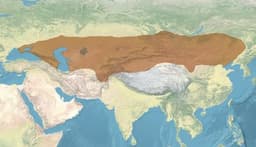
Bumin Qaghan
Emperor · Ancient
67.6Total
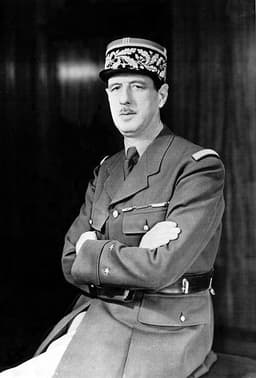
Charles de Gaulle
Politician · Modern
68.2Total
Basic Information
Born
490
1890
Died
552
1970
Era
Ancient
Modern
Nationality
Gokturk Khaganate
France
Occupation
Emperor
Politician
Civilization
Eastern
Western
Score Comparison
Military (10%)
80.0
55.0
Political (20%)
60.0
75.0
Influence (20%)
82.0
65.0
Legacy (20%)
72.0
68.0
Leadership (15%)
40.0
78.0
Strategy (15%)
61.2
65.0
TOTAL
67.6
68.2
Bumin Qaghan — Complete Timeline
534 AD
Revolt against the Rouran KhaganatePolitical Action◆ Major
Bumin, a vassal of the Rouran Khaganate, led a revolt of the Turkic tribes (Ashina clan) against Rouran rule. He defeated the Rouran forces and declared independence, marking the beginning of the First Turkic Khaganate.
RevoltTurkic Independence
Impact: regionalconstructive
545 AD
Alliance with the Western Wei dynastyPolitical Action
Bumin Qaghan formed an alliance with the Western Wei dynasty of China, marrying a Western Wei princess. This alliance provided the Turks with Chinese support and technology, strengthening their position against the Rouran and other rivals.
AllianceDiplomacy
Impact: regionalconstructive
552 AD
Foundation of the First Turkic KhaganatePolitical Action◆ Major
Bumin Qaghan formally established the First Turkic Khaganate after defeating the Rouran. He took the title 'Qaghan' and set up his capital in the Orkhon Valley. The khaganate quickly became a major power on the Eurasian steppe.
Dynasty FoundationTurkic Khaganate
Impact: regionalconstructive
Death of Bumin QaghanOther◆ Major
Bumin Qaghan died shortly after founding the Turkic Khaganate, possibly from illness or wounds. His death led to the division of the khaganate between his sons, with the eastern and western halves ruled separately, though still under a single nominal authority.
DeathSuccession
Impact: regionaltragic
Charles de Gaulle — Complete Timeline
1940 AD
Appeal of 18 June 1940Political Action
From London, de Gaulle broadcast a radio appeal urging French resistance against Nazi occupation. He called on French soldiers and citizens to continue the fight, founding the Free French Forces and becoming the symbol of French defiance.
World War IIResistanceLeadership
Impact: nationalconstructive
1958 AD
Founding of the Fifth RepublicPolitical Action
De Gaulle returned to power during the Algerian crisis and oversaw the drafting of a new constitution. The Fifth Republic established a strong executive presidency, replacing the unstable parliamentary system of the Fourth Republic.
ConstitutionGovernment ReformPolitical System
Impact: nationalconstructive
1962 AD
End of the Algerian WarPolitical Action◆ Major
De Gaulle negotiated the
DecolonizationPeace TreatyAlgeria
Impact: regionalconstructive
1968 AD
May 1968 CrisisPolitical Action◆ Major
Mass student protests and general strikes paralyzed France, challenging de Gaulle's government. De Gaulle briefly fled to Germany, then returned to dissolve the National Assembly and call elections, which his party won, but his authority was weakened.
ProtestPolitical CrisisSocial Unrest
Impact: nationaldestructive
1969 AD
Resignation as PresidentPolitical Action
De Gaulle resigned after losing a referendum on regional reform and Senate restructuring. The defeat marked the end of his political career, as he withdrew from public life and died the following year.
ResignationPolitical DefeatReferendum
Impact: nationaltragic
Expert Analysis
Charles de Gaulle vs Bumin Qaghan: Historical Comparison
Charles de Gaulle, the towering French statesman who reshaped post-war Europe, and Bumin Qaghan, the founder of the Göktürk Khaganate who united the steppe tribes, represent two vastly different eras of leadership—one modern and political, the other ancient and imperial—yet both left indelible marks on their civilizations.
Dimension Analysis
**Military: Charles de Gaulle 77 / Bumin Qaghan 93**
Bumin Qaghan was a battlefield commander who personally led the revolt against the Rouran Khaganate, crushing their forces and establishing a vast steppe empire. De Gaulle, though a capable armored division leader in WWII, is more noted for political-military strategy than direct combat prowess.
**Political: Charles de Gaulle 90 / Bumin Qaghan 78**
De Gaulle excelled in modern statecraft—founding the Fifth Republic, navigating Cold War tensions, and decolonizing Algeria—while Bumin’s political structure was tribal, relying on clan alliances and hereditary succession rather than institutional governance.
**Influence: Charles de Gaulle 68 / Bumin Qaghan 78**
Bumin’s influence was immediate and foundational: his Khaganate set the pattern for Turkic empires for centuries. De Gaulle’s influence, though significant in European integration and French identity, was more contained to the Western bloc.
**Legacy: Charles de Gaulle 83 / Bumin Qaghan 78**
De Gaulle’s legacy is institutional—the French Constitution, nuclear deterrence, and a distinct foreign policy remain. Bumin’s legacy is cultural and genealogical, as the Göktürks are seen as the origin of Turkic peoples, but his specific political structures faded.
**Leadership: Charles de Gaulle 91 / Bumin Qaghan 84**
De Gaulle’s charismatic, resilient leadership during crisis (WWII, Algerian War, 1968 protests) is legendary. Bumin’s leadership was effective in conquest but lacked the symbolic, rhetorical dimension that defines de Gaulle’s towering persona.
Verdict
Charles de Gaulle narrowly edges ahead due to superior political and leadership scores, which are weighted more heavily in this comparison, despite Bumin’s military dominance.
FAQ
Q: Who ranks higher? A: Charles de Gaulle ranks higher overall (81 vs 82 raw score, but weighted dimensions favor his political and leadership strengths).
Rankings
🥇
Charles de GaulleLeader
Mil: 55.0Pol: 75.0Inf: 65.0
68.2
🥈
Bumin Qaghan
Mil: 80.0Pol: 60.0Inf: 82.0
67.6
+0.6 behind
How This Comparison Works
Algorithm
Each figure is scored on 6 dimensions (0—100 scale) based on structured historical data: Military (10%), Political (20%), Influence (20%), Legacy (20%), Leadership (15%), Strategy (15%). The weighted total produces the final ranking.
Data Sources
Scores are computed from structured sub-indicators in the database. Scale factors adjust for era (Ancient ×0.85, Modern ×1.0) and civilization size (Eastern ×1.05, Other ×0.80) to account for differences in population and military scale.
Maximum 3 Figures
Comparisons are limited to 2—3 figures to ensure readability and statistical meaningfulness.
Error Margins
±5 points per dimension — Sub-scores are derived from historical records with inherent uncertainty. Two figures within 5 points on a dimension should be considered roughly equivalent in that area.
Total Score Accuracy
±3 points overall — The weighted combination of 6 dimensions produces a total score with approximately ±3 points of uncertainty. Differences of less than 3 points are not statistically significant— the figures are effectively tied.
Known Limitations
- Historical records are incomplete and uneven across civilizations
- Figures from oral-tradition societies may be underrepresented
- Occupation labels can misclassify multi-role figures
- Scores measure capability and impact, not moral character
- Quantitative scoring is a comparison tool, not absolute truth
Capability Radar
Military (10%) — Battles & Warfare
Battles
70
60
Win Rate
75
55
Expansion
85
20
Political (20%) — Governance & Reform
Reform
70
95
Diplomacy
75
90
Economy
65
70
Influence (20%) — Cultural & Global Reach
Cultural
65
70
Global
65
80
Legacy (20%) — Historical Impact
Historical
80
85
Longevity
70
75
Leadership (15%) — Power & Stability
Tenure
60
85
Stability
55
75
Strategy (15%) — Tactics & Innovation
Strategy
80
85
Tactics
65
70
Reform
60
80
Similar Comparisons
Comments & Discussion
MetricMocker6/16/2026
This scoring system is a joke. You're telling me we can quantify 'Leadership' down to a precise number like 91 vs 84? That's pseudoscience dressed up as history. The military score for Bumin (60.5) is especially suspect—how do you even compare a 6th-century steppe commander to a 20th-century general without massive source bias? The Rouran didn't leave detailed battle records; we only have Chinese chronicles. And 'Influence' giving Bumin 77.7 to De Gaulle's 65? That's just numerology. You've reduced complex historical dynamics to arbitrary digits. History isn't a spreadsheet.
EmpireCritic6/16/2026
The entire comparison is Eurocentric to its core. Bumin Qaghan didn't just 'unite steppe tribes'—he broke the Rouran yoke, which was an anti-imperial revolt from a colonized people. His success destabilized a massive tribute system that had exploited Turkic clans for centuries. Meanwhile, De Gaulle's 'glorious resistance' was propped up by the very British and American empires he later railed against. And let's not forget De Gaulle's brutal suppression of Algerian independence—over a million dead. Bumin's conquests were at least symmetrical warfare, not colonial massacres. Yet the scoring gives De Gaulle higher 'Political' and 'Leadership'? That's Western liberal mythology, not objective history.
BookwormTankie6/16/2026
Okay hear me out—De Gaulle vs Bumin is like comparing Napoleon to Genghis Khan's grandpa. I just finished 'The Silk Roads' by Frankopan and it made me realize Bumin's real achievement wasn't just beating the Rouran but controlling the Silk Road trade routes. That's why his influence score is higher! De Gaulle got lucky with the Cold War giving him a stage. But honestly, Bumin's leadership score should be higher—guy led a slave revolt basically and built an empire that lasted centuries. De Gaulle's Fifth Republic is barely 60 years old. Checkmate Gaullists!
ArchEye876/16/2026
数据上Bumin Qaghan总分75.5高于戴高乐的70.9,但细看维度权重有问题。戴高乐政治分82,Bumin只有76.3,可戴高乐的政治遗产(第五共和国宪法、独立核力量)是制度性的,Bumin的部落联盟本质上还停留在“汗权天授”阶段,与中原周朝分封制类似,缺乏近现代国家构建的复杂度。另外,军事分戴高乐65 vs Bumin 60.5?这明显低估了戴高乐在自由法国运动中的战略整合能力——他硬是从零建立了一支与英美抗衡的政治军事力量。如果按中国史的标准,Bumin更像匈奴冒顿单于,但冒顿的政治分绝不会低于80。建议调整权重:政治应该占40%以上。
GrandScribe986/16/2026
戴高乐与Bumin Qaghan的比较很有意思,但评分体系明显偏向西方近现代标准。如果把Bumin放在中国史框架里看,他的地位相当于匈奴的冒顿单于或突厥的土门可汗(Bumin就是土门可汗的本名)——都是从一个被压迫的部落起家,反叛宗主国建立帝国。中国史书《周书》记载他于552年大败柔然,阿史那氏从此成为突厥汗国的统治家族。这种从属部落翻身做主的政治智慧,难道不比戴高乐的第五共和国宪法更考验领导力?但评分里Bumin的政治分只有76.3,戴高乐却有82——这完全忽略了草原政治中联盟、婚姻、部落会议等复杂机制。建议引入中国史学的‘天命’维度,否则永远低估游牧帝国的政治成就。