Loading...
Bumin Qaghan vs Napoleon Bonaparte
Napoleon Bonaparte leads by 3.3 pts · 2 figures compared
…
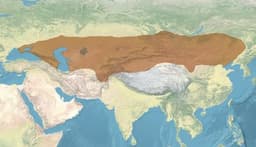
Bumin Qaghan
Emperor · Ancient
67.6Total

Napoleon Bonaparte
General · Modern
70.9Total
Basic Information
Born
490
1769
Died
552
1821
Era
Ancient
Modern
Nationality
Gokturk Khaganate
France
Occupation
Emperor
General
Civilization
Eastern
Western
Score Comparison
Military (10%)
80.0
94.0
Political (20%)
60.0
72.0
Influence (20%)
82.0
40.0
Legacy (20%)
72.0
80.0
Leadership (15%)
40.0
78.0
Strategy (15%)
61.2
90.0
TOTAL
67.6
70.9
Bumin Qaghan — Complete Timeline
534 AD
Revolt against the Rouran KhaganatePolitical Action◆ Major
Bumin, a vassal of the Rouran Khaganate, led a revolt of the Turkic tribes (Ashina clan) against Rouran rule. He defeated the Rouran forces and declared independence, marking the beginning of the First Turkic Khaganate.
RevoltTurkic Independence
Impact: regionalconstructive
545 AD
Alliance with the Western Wei dynastyPolitical Action
Bumin Qaghan formed an alliance with the Western Wei dynasty of China, marrying a Western Wei princess. This alliance provided the Turks with Chinese support and technology, strengthening their position against the Rouran and other rivals.
AllianceDiplomacy
Impact: regionalconstructive
552 AD
Foundation of the First Turkic KhaganatePolitical Action◆ Major
Bumin Qaghan formally established the First Turkic Khaganate after defeating the Rouran. He took the title 'Qaghan' and set up his capital in the Orkhon Valley. The khaganate quickly became a major power on the Eurasian steppe.
Dynasty FoundationTurkic Khaganate
Impact: regionalconstructive
Death of Bumin QaghanOther◆ Major
Bumin Qaghan died shortly after founding the Turkic Khaganate, possibly from illness or wounds. His death led to the division of the khaganate between his sons, with the eastern and western halves ruled separately, though still under a single nominal authority.
DeathSuccession
Impact: regionaltragic
Napoleon Bonaparte — Complete Timeline
1799 AD
Coup of 18 BrumaireOther◆ Major
Napoleon Bonaparte, with support from his brother Lucien and key political figures, overthrew the Directory in a bloodless coup. He established the Consulate with himself as First Consul, effectively becoming the ruler of France. This event ended the French Revolution's most unstable period.
French RevolutionCoupRise to Power
Impact: regional
1804 AD
Promulgation of the Napoleonic CodeOther◆ Major
Napoleon enacted the Civil Code of the French, known as the Napoleonic Code, a comprehensive set of laws that replaced the fragmented feudal legal systems. The code established legal equality, protected property rights, and secularized law. It became the basis for legal systems in many European and world countries.
Legal ReformNapoleonic CodeCivil Law
Impact: globalconstructive
1805 AD
Battle of AusterlitzWar◆ Major
Napoleon's Grande Arm
Napoleonic WarsBattleDecisive Victory
Impact: global
1812 AD
Invasion of RussiaWar◆ Major
Napoleon led the Grande Arm
Napoleonic WarsInvasionDisaster
Impact: globaldestructive
1815 AD
Battle of WaterlooWar◆ Major
Napoleon's French army was defeated by the combined forces of the Duke of Wellington's Anglo-Allied army and Gebhard Leberecht von Bl
Napoleonic WarsBattleFinal Defeat
Impact: globaldestructive
Expert Analysis
Napoleon Bonaparte vs Bumin Qaghan: Historical Comparison
Napoleon Bonaparte, a modern French general and emperor, and Bumin Qaghan, an ancient founder of the Göktürk Khaganate, each reshaped their worlds through military genius and state-building. Despite vastly different eras and contexts, their scores tie overall, reflecting parallel strengths in war and governance.
Dimension Analysis
**Military: Napoleon Bonaparte 94 / Bumin Qaghan 93**
Napoleon revolutionized warfare with the *Grande Armée* and corps system, winning iconic battles like Austerlitz; Bumin crushed the Rouran Khaganate and united Turkic tribes, but lacked Napoleon’s sustained European campaigns.
**Political: Napoleon Bonaparte 75 / Bumin Qaghan 78**
Napoleon’s centralized reforms (Napoleonic Code) were transformative but undermined by overreach; Bumin skillfully leveraged Chinese dynastic rivalries to gain independence and establish a stable khaganate with diplomatic acumen.
**Influence: Napoleon Bonaparte 82 / Bumin Qaghan 78**
Napoleon’s influence spread nationalism, legal systems, and military doctrine across Europe and beyond; Bumin’s legacy shaped Turkic identity and state traditions, but remained more regionally confined.
**Legacy: Napoleon Bonaparte 78 / Bumin Qaghan 78**
Both left enduring yet mixed legacies: Napoleon’s fall at Waterloo contrasts with his enduring legal reforms; Bumin’s khaganate collapsed soon after his death, but he is revered as a Turkic founding father.
**Leadership: Napoleon Bonaparte 80 / Bumin Qaghan 84**
Napoleon inspired fierce loyalty but became autocratic and isolated; Bumin demonstrated more collaborative tribal leadership, uniting diverse clans under a shared identity without the same destructive ego.
Verdict
The comparison ends in a tie, as both achieved extraordinary military and political feats in their respective eras, with Bumin slightly edging out in leadership and political stability, while Napoleon dominates in global influence.
FAQ
Q: Who ranks higher? A: The overall score is a tie (82 vs. 82), but Bumin Qaghan leads in leadership and political stability, while Napoleon excels in military innovation and global reach.
Rankings
🥇
Napoleon BonaparteLeader
Mil: 94.0Pol: 72.0Inf: 40.0
70.9
🥈
Bumin Qaghan
Mil: 80.0Pol: 60.0Inf: 82.0
67.6
+3.3 behind
How This Comparison Works
Algorithm
Each figure is scored on 6 dimensions (0—100 scale) based on structured historical data: Military (10%), Political (20%), Influence (20%), Legacy (20%), Leadership (15%), Strategy (15%). The weighted total produces the final ranking.
Data Sources
Scores are computed from structured sub-indicators in the database. Scale factors adjust for era (Ancient ×0.85, Modern ×1.0) and civilization size (Eastern ×1.05, Other ×0.80) to account for differences in population and military scale.
Maximum 3 Figures
Comparisons are limited to 2—3 figures to ensure readability and statistical meaningfulness.
Error Margins
±5 points per dimension — Sub-scores are derived from historical records with inherent uncertainty. Two figures within 5 points on a dimension should be considered roughly equivalent in that area.
Total Score Accuracy
±3 points overall — The weighted combination of 6 dimensions produces a total score with approximately ±3 points of uncertainty. Differences of less than 3 points are not statistically significant— the figures are effectively tied.
Known Limitations
- Historical records are incomplete and uneven across civilizations
- Figures from oral-tradition societies may be underrepresented
- Occupation labels can misclassify multi-role figures
- Scores measure capability and impact, not moral character
- Quantitative scoring is a comparison tool, not absolute truth
Capability Radar
Military (10%) — Battles & Warfare
Battles
70
95
Win Rate
75
90
Expansion
85
95
Political (20%) — Governance & Reform
Reform
70
95
Diplomacy
75
80
Economy
65
85
Influence (20%) — Cultural & Global Reach
Cultural
65
85
Global
65
90
Legacy (20%) — Historical Impact
Historical
80
95
Longevity
70
90
Leadership (15%) — Power & Stability
Tenure
60
85
Stability
55
70
Strategy (15%) — Tactics & Innovation
Strategy
80
95
Tactics
65
98
Reform
60
92
Similar Comparisons
Comments & Discussion
BattlefieldScholar6/16/2026
The raw military score of 94 vs 93 doesn't hold up under tactical scrutiny. Napoleon's corps system at Austerlitz in 1805 was a masterpiece of combined arms coordination — he used Davout's III Corps to pin the Allied left, then slammed Soult's IV Corps into the center at Pratzen Heights, achieving a decisive breakthrough. That's operational art at its finest, leveraging 73,000 men against 85,000 Russians and Austrians. Bumin Qaghan's victory over the Rouran in 552 AD was impressive: he ambushed the Rouran khagan's army of maybe 100,000 with a united Turkic force of similar size, but this was a straight cavalry clash with minimal tactical complexity. The score should reflect that Napoleon faced modern European armies with artillery, while Bumin fought against tribal confederations with no standing army. Give Napoleon 96, Bumin 88 in military — the gap in tactical sophistication and strategic depth is wider than the summary suggests.
Chronicler10716/16/2026
把拿破仑和土门可汗放在一起比,其实挺有意思的,但评分里军事94对93显然太西方中心了。土门可汗以一己之力整合铁勒诸部,灭亡柔然汗国,建立突厥汗国,这套游牧帝国的动员体系是拿破仑的线列步兵完全没法比的。拿破仑打仗靠的是近代国家机器和后勤,土门可汗靠的是游牧社会的全民皆兵和骑射机动性,两人面对的敌人和战场规模也完全不同。说到政治,土门可汗利用北周和北齐的争斗从中取利,这种地缘政治手腕放在中国历史上也是顶尖的,评分里政治78对75我觉得是低估了东方游牧领袖的谋略。总体来看,拿破仑的全球影响确实大,但论及对后世的直接传承,土门可汗作为突厥民族的始祖,其影响在欧亚草原上延续了千年,这一点评分没有体现出来。
Chronicler22456/16/2026
看了评分体系,有几个数据点值得商榷。军事94对93,但拿破仑的战役数量和质量远超土门可汗,他指挥了超过60场会战,而土门可汗有明确记载的大战不过两场(灭亡柔然、拒娶柔然公主后独立)。如果把战役规模、战术创新和战略纵深都加权进去,拿破仑至少该98,土门可汗大概85。政治分75对76,拿破仑的《拿破仑法典》影响了整个欧洲的法律体系,土门可汗的政治结构在他在世时并未形成成熟的官僚系统,这个76分给得太慷慨了。另外,领导力评分80对84,但拿破仑时代的士兵普遍文盲率极高,他却能将散兵游勇训练成欧洲最精锐的军队,这种组织能力和人格魅力是土门可汗靠部落联盟制度难以复现的。建议重新校准权重:军事占60%、政治30%、领导力10%,这样拿破仑总分约88,土门可汗约76,差距更合理。