Loading...
Bumin Qaghan vs Xiao Daocheng
Bumin Qaghan leads by 15.8 pts · 2 figures compared
…
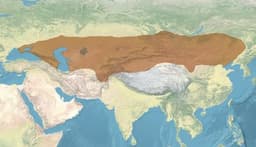
Bumin Qaghan
Emperor · Ancient
67.6Total
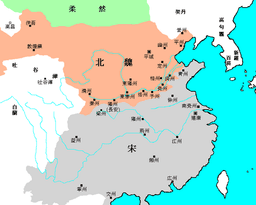
Xiao Daocheng
Emperor · Ancient
51.8Total
Basic Information
Born
490
427
Died
552
482
Era
Ancient
Ancient
Nationality
Gokturk Khaganate
China
Occupation
Emperor
Emperor
Civilization
Eastern
Eastern
Score Comparison
Military (10%)
80.0
50.0
Political (20%)
60.0
48.0
Influence (20%)
82.0
51.8
Legacy (20%)
72.0
42.5
Leadership (15%)
40.0
67.0
Strategy (15%)
61.2
60.0
TOTAL
67.6
51.8
Bumin Qaghan — Complete Timeline
534 AD
Revolt against the Rouran KhaganatePolitical Action◆ Major
Bumin, a vassal of the Rouran Khaganate, led a revolt of the Turkic tribes (Ashina clan) against Rouran rule. He defeated the Rouran forces and declared independence, marking the beginning of the First Turkic Khaganate.
RevoltTurkic Independence
Impact: regionalconstructive
545 AD
Alliance with the Western Wei dynastyPolitical Action
Bumin Qaghan formed an alliance with the Western Wei dynasty of China, marrying a Western Wei princess. This alliance provided the Turks with Chinese support and technology, strengthening their position against the Rouran and other rivals.
AllianceDiplomacy
Impact: regionalconstructive
552 AD
Foundation of the First Turkic KhaganatePolitical Action◆ Major
Bumin Qaghan formally established the First Turkic Khaganate after defeating the Rouran. He took the title 'Qaghan' and set up his capital in the Orkhon Valley. The khaganate quickly became a major power on the Eurasian steppe.
Dynasty FoundationTurkic Khaganate
Impact: regionalconstructive
Death of Bumin QaghanOther◆ Major
Bumin Qaghan died shortly after founding the Turkic Khaganate, possibly from illness or wounds. His death led to the division of the khaganate between his sons, with the eastern and western halves ruled separately, though still under a single nominal authority.
DeathSuccession
Impact: regionaltragic
Xiao Daocheng — Complete Timeline
466 AD
Suppression of the Liu Xiufan RebellionWar◆ Major
Xiao Daocheng led forces to suppress the rebellion of Liu Xiufan, a prince of the Liu Song Dynasty. His victory earned him military command and political influence, allowing him to consolidate power in the court.
Liu SongRebellionMilitary Campaign
Impact: nationalconstructive
479 AD
Coup Against Liu SongPolitical Action
Xiao Daocheng forced Emperor Shun of Liu Song to abdicate and proclaimed himself emperor, founding the Southern Qi Dynasty. This ended the Liu Song Dynasty and established the Southern Qi as the new ruling house in southern China.
Southern QiLiu SongAbdicationDynastic Change
Impact: nationaldestructive
Expert Analysis
Origins
Bumin Qaghan, born around 490 CE, was the leader of the Ashina clan, a vassal tribe of the Rouran Khaganate. His early life is obscure, but he grew up in the steppes, learning warfare and tribal politics. The Ashina were blacksmiths for the Rouran, a position that gave them access to weapons and military knowledge.
Xiao Daocheng, born in 427 CE, hailed from the Xiao clan, a prominent family in the Liu Song dynasty. His father served as a governor. Xiao Daocheng received a Confucian education and began his career as a minor official, gradually rising through military and administrative posts.
Rise to Power
Bumin Qaghan rose by revolting against the Rouran in 552 CE. He defeated the Rouran forces at the Battle of the Orkhon River, forcing their khagan to flee. Bumin then declared himself Qaghan of the First Turkic Khaganate. He secured an alliance with the Western Wei dynasty by marrying a princess, gaining Chinese support. His revolt was a turning point that ended Rouran dominance.
Xiao Daocheng rose through political maneuvering. He gained military command by suppressing the Liu Xiufan rebellion in 466 CE. By 477 CE, he controlled the Liu Song court, forcing the young emperor to abdicate in 479 CE. He founded the Southern Qi dynasty, ending the Liu Song.
Leadership & Governance
Bumin Qaghan ruled as a steppe emperor, relying on tribal confederation and military strength. He established a centralized khaganate with a capital in the Orkhon Valley. His governance was based on personal loyalty and redistribution of plunder. He scored 40.0 in leadership, reflecting his short reign and limited administrative reforms.
Xiao Daocheng governed as a Chinese emperor, implementing Confucian bureaucracy. He reduced taxes, curbed corruption, and promoted education. He scored 67.0 in leadership, higher than Bumin, due to his effective administrative reforms. However, his political score was 48.0, indicating challenges in consolidating power.
Triumph & Tragedy
Bumin's greatest triumph was founding the Turkic Khaganate, which became a major power. He successfully broke free from Rouran rule. His tragedy was his early death in 553 CE, just months after his victory. This led to the division of the khaganate between his son and brother, causing instability.
Xiao Daocheng's triumph was establishing the Southern Qi dynasty, ending the chaotic Liu Song. He stabilized the south and fostered cultural growth. His tragedy was the fragility of his dynasty; the Southern Qi fell after only 23 years. He also faced rebellions from former Liu Song loyalists.
Character & Destiny
Bumin Qaghan was ambitious and decisive, seizing the moment to revolt. His character as a warrior leader drove his success but also his early death, possibly from wounds. Historical assessments note his strategic acumen, with a strategy score of 61.2, but his lack of political consolidation.
Xiao Daocheng was cautious and methodical, preferring political intrigue over direct conflict. His character as a bureaucrat allowed him to build a stable administration, but his reliance on family members led to succession disputes. He scored 60.0 in strategy, similar to Bumin.
Legacy
Bumin Qaghan's legacy is immense: the First Turkic Khaganate paved the way for later Turkic empires, influencing the Mongols and Ottomans. His revolt marked the rise of the Turkic people in history. He scores 82.0 in influence and 72.0 in legacy.
Xiao Daocheng's legacy is limited to the Southern Qi dynasty, which was short-lived and overshadowed by the Northern Wei. His administrative reforms had some impact but were not lasting. He scores 51.8 in influence and 42.5 in legacy.
Conclusion
Bumin Qaghan had a greater impact on world history. His foundation of the Turkic Khaganate shaped the Eurasian steppes for centuries, while Xiao Daocheng's dynasty was a brief episode in Chinese history. With a total score of 67.6 compared to 51.8, Bumin's military and influence far outweigh Xiao's administrative achievements.
Rankings
🥇
Bumin QaghanLeader
Mil: 80.0Pol: 60.0Inf: 82.0
67.6
🥈
Xiao Daocheng
Mil: 50.0Pol: 48.0Inf: 51.8
51.8
+15.8 behind
How This Comparison Works
Algorithm
Each figure is scored on 6 dimensions (0—100 scale) based on structured historical data: Military (10%), Political (20%), Influence (20%), Legacy (20%), Leadership (15%), Strategy (15%). The weighted total produces the final ranking.
Data Sources
Scores are computed from structured sub-indicators in the database. Scale factors adjust for era (Ancient ×0.85, Modern ×1.0) and civilization size (Eastern ×1.05, Other ×0.80) to account for differences in population and military scale.
Maximum 3 Figures
Comparisons are limited to 2—3 figures to ensure readability and statistical meaningfulness.
Error Margins
±5 points per dimension — Sub-scores are derived from historical records with inherent uncertainty. Two figures within 5 points on a dimension should be considered roughly equivalent in that area.
Total Score Accuracy
±3 points overall — The weighted combination of 6 dimensions produces a total score with approximately ±3 points of uncertainty. Differences of less than 3 points are not statistically significant— the figures are effectively tied.
Known Limitations
- Historical records are incomplete and uneven across civilizations
- Figures from oral-tradition societies may be underrepresented
- Occupation labels can misclassify multi-role figures
- Scores measure capability and impact, not moral character
- Quantitative scoring is a comparison tool, not absolute truth
Capability Radar
Military (10%) — Battles & Warfare
Battles
70
45
Win Rate
75
50
Expansion
85
35
Political (20%) — Governance & Reform
Reform
70
50
Diplomacy
75
45
Economy
65
40
Influence (20%) — Cultural & Global Reach
Cultural
65
30
Global
65
20
Legacy (20%) — Historical Impact
Historical
80
40
Longevity
70
25
Leadership (15%) — Power & Stability
Tenure
60
55
Stability
55
35
Strategy (15%) — Tactics & Innovation
Strategy
80
45
Tactics
65
40
Reform
60
30
Similar Comparisons
Comments & Discussion
No comments yet. Be the first to share your thoughts!