Loading...
Bumin Qaghan vs Gyeongjong of Goryeo
Bumin Qaghan leads by 20.5 pts · 2 figures compared
…
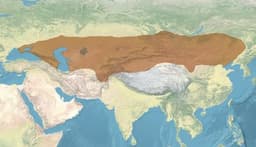
Bumin Qaghan
Emperor · Ancient
67.6Total
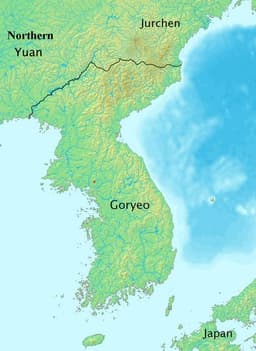
Gyeongjong of Goryeo
Emperor · Medieval
47.1Total
Basic Information
Born
490
955
Died
552
981
Era
Ancient
Medieval
Nationality
Gokturk Khaganate
Korea
Occupation
Emperor
Emperor
Civilization
Eastern
Eastern
Score Comparison
Military (10%)
80.0
20.0
Political (20%)
60.0
53.8
Influence (20%)
82.0
53.3
Legacy (20%)
72.0
47.5
Leadership (15%)
40.0
48.8
Strategy (15%)
61.2
45.0
TOTAL
67.6
47.1
Bumin Qaghan — Complete Timeline
534 AD
Revolt against the Rouran KhaganatePolitical Action◆ Major
Bumin, a vassal of the Rouran Khaganate, led a revolt of the Turkic tribes (Ashina clan) against Rouran rule. He defeated the Rouran forces and declared independence, marking the beginning of the First Turkic Khaganate.
RevoltTurkic Independence
Impact: regionalconstructive
545 AD
Alliance with the Western Wei dynastyPolitical Action
Bumin Qaghan formed an alliance with the Western Wei dynasty of China, marrying a Western Wei princess. This alliance provided the Turks with Chinese support and technology, strengthening their position against the Rouran and other rivals.
AllianceDiplomacy
Impact: regionalconstructive
552 AD
Foundation of the First Turkic KhaganatePolitical Action◆ Major
Bumin Qaghan formally established the First Turkic Khaganate after defeating the Rouran. He took the title 'Qaghan' and set up his capital in the Orkhon Valley. The khaganate quickly became a major power on the Eurasian steppe.
Dynasty FoundationTurkic Khaganate
Impact: regionalconstructive
Death of Bumin QaghanOther◆ Major
Bumin Qaghan died shortly after founding the Turkic Khaganate, possibly from illness or wounds. His death led to the division of the khaganate between his sons, with the eastern and western halves ruled separately, though still under a single nominal authority.
DeathSuccession
Impact: regionaltragic
Gyeongjong of Goryeo — Complete Timeline
976 AD
Institution of the Jeonsigwa Land SystemReform◆ Major
King Gyeongjong established the jeonsigwa, a land distribution system that allocated state-owned farmland to government officials based on their rank. This reform aimed to secure royal revenue and control over land, while providing a stable income for the bureaucracy.
Impact: nationalconstructive
Expert Analysis
Gyeongjong of Goryeo vs Bumin Qaghan
### The Khan and the King: Two Paths to Power on the Steppe and the Peninsula
History rarely offers a cleaner contrast than the one between Bumin Qaghan, the fiery founder of the Turkic Khaganate, and Gyeongjong of Goryeo, the quiet reformer of a Korean dynasty. One exploded onto the world stage with a revolt, forging an empire from the bones of his overlords. The other inherited a throne and spent his brief reign patiently stitching a new economic fabric. Both were rulers of the East, both faced the fundamental challenge of building a stable state, yet their lives and legacies could not be more different. What accounts for this divergence? The answer lies not just in their personalities, but in the starkly different worlds they inhabited.
### Origins
Bumin Qaghan was born around 490, a prince of the Ashina clan, a vassal tribe serving the Rouran Khaganate. His world was the Mongolian steppe, a vast, unforgiving sea of grass where power was measured in cavalry, loyalty was a fleeting currency, and the only constant was the struggle for survival. The Rouran, his masters, were a decaying empire, bloated and brittle. Bumin grew up in the shadow of their power, learning the arts of war and the delicate calculus of tribal alliances. His was a world of raw, kinetic force, where a single decisive battle could rewrite the map.
Gyeongjong of Goryeo, born in 955, inhabited a radically different universe: the Korean Peninsula, a land of settled agriculture, Confucian bureaucracy, and a thousand years of dynastic tradition. He was the fourth king of the Goryeo dynasty, which had unified the peninsula just decades earlier. His world was one of court intrigue, scribes, and tax records. The great challenge was not defeating a rival on the battlefield, but stabilizing a kingdom still scarred by unification wars. His father, King Gwangjong, had been a ruthless reformer who purged the aristocracy and freed slaves. Gyeongjong inherited a kingdom in need of healing, not fire.
### Rise to Power
Bumin’s rise was a masterclass in opportunism. In 534, he led a revolt of the Turkic tribes against the Rouran. It was not a spontaneous uprising but a calculated gamble. The Rouran were weakened, and Bumin had been secretly forging an alliance with the Western Wei dynasty of China, marrying a Western Wei princess in 545. This diplomatic masterstroke gave him both a powerful backer and a crucial supply of iron. The revolt succeeded spectacularly. By 552, Bumin had crushed the Rouran and formally established the First Turkic Khaganate, taking the title of ‘Qaghan.’ His rise was meteoric, a violent, brilliant arc from vassal to emperor in less than two decades.
Gyeongjong’s path was far more sedate. He ascended the throne in 975 upon his father’s death, inheriting a kingdom already consolidated. There was no dramatic revolt, no epic battle. His rise was a matter of bloodline and bureaucratic succession. The great turning point of his reign was not a war, but a law: the institution of the *jeonsigwa* land system in 976. This was a quiet revolution, a reform that reallocated state-owned farmland based on official rank, not hereditary privilege. It was a policy designed to strengthen the central government and stabilize the royal treasury. It was the work of a king who understood that power in his world flowed not from the sword, but from the land and the tax it produced.
### Leadership & Governance
Bumin was a warrior-king in the purest sense. His leadership was forged in the saddle. His military score of 60.5, while not the highest, reflects a commander who understood that victory depended on speed, surprise, and the loyalty of his tribal confederation. His political score of 76.3, however, reveals a deeper genius. He knew that an empire built on conquest alone would crumble. His alliance with Western Wei was a masterstroke of realpolitik, securing his flank and legitimizing his rule. He was a strategist who saw the chessboard beyond the battlefield. Yet his reign was brutally short. He died in 552, just months after founding his empire, likely from illness or wounds. The Khaganate he built would be divided between his sons, a testament to the fragility of personal empires.
Gyeongjong was a different breed of ruler. His military score is a modest 55.1, and his strategy score is a paltry 30.0. He was no general. His genius lay in statecraft. His political score of 60.5, while lower than Bumin’s, was deployed in a far more complex arena: a court of Confucian scholars, powerful clans, and a nascent bureaucracy. The *jeonsigwa* was his masterpiece. By tying land grants to official rank, he broke the power of the old aristocratic families who had amassed vast estates. He made the state, not birth, the arbiter of wealth. It was a quiet, administrative coup, far less dramatic than Bumin’s revolt, but arguably more profound in its long-term impact on Korean society.
### Triumph & Tragedy
Bumin’s triumph was singular and absolute: the destruction of the Rouran Khaganate and the birth of the Turkic Empire. He united the Turkic tribes under one banner for the first time, creating a power that would dominate Central Asia for centuries. His tragedy was equally absolute: he died at the moment of his greatest success. He never saw his empire flourish, never guided its growth. He was a father who left his children a grand palace but no blueprint for how to live in it.
Gyeongjong’s triumph was quieter but more enduring. The *jeonsigwa* system would become a cornerstone of Goryeo governance for generations, stabilizing state finances and curbing aristocratic power. His tragedy was that he reigned for only six years, from 975 to 981. He died young, at just 26, leaving his reforms vulnerable to reversal. His legacy, like Bumin’s, was incomplete. He was a builder who laid a foundation but never saw the house completed.
### Character & Destiny
Bumin Qaghan was a man of fire and steel. His personality was forged in the crucible of the steppe, where hesitation meant death. He was bold, decisive, and ruthless. He saw an opportunity in the Rouran’s decline and seized it with both hands. His destiny was to be a destroyer and a creator, a figure who breaks the old world to build a new one. His leadership score of 82.7 reflects a man who could inspire fierce loyalty, but his total score of 75.5 is a reminder that brilliance is not always matched by longevity.
Gyeongjong was a man of ink and parchment. He was cautious, methodical, and patient. He understood that power in his world was not won on a battlefield but in a royal decree. His character was shaped by the Confucian court, where wisdom was valued over ferocity. His destiny was to be a stabilizer, a consolidator. His total score of 60.6 is lower than Bumin’s, but it measures a different kind of greatness: the quiet, enduring work of building institutions, not empires.
### Legacy
Bumin Qaghan is remembered as the father of the Turkic peoples. His empire laid the foundation for later Turkic states, from the Uyghurs to the Seljuks to the Ottomans. His name is etched into the Orkhon inscriptions, the oldest written records of the Turkic language. He is a figure of mythic proportions, a founding hero. His influence score of 77.7 and legacy score of 77.3 place him among the great empire-builders of the ancient world.
Gyeongjong of Goryeo is a more obscure figure, but his legacy is no less real. The *jeonsigwa* system was a landmark in Korean administrative history, a model for how a state could manage its resources and control its elites. He is remembered as a reformer, a king who understood that lasting power comes not from conquest but from good governance. His influence score of 72.7 and legacy score of 64.4 are lower, but they reflect a quieter, more durable kind of impact.
### Conclusion
In the end, Bumin and Gyeongjong were both prisoners of their time. The steppe demanded a warrior; the court demanded a bureaucrat. One built an empire with a sword; the other built a kingdom with a land deed. Bumin’s story is one of explosive, world-changing violence; Gyeongjong’s is one of patient, incremental reform. Both were successful, both were incomplete, and both left their worlds forever changed. They remind us that greatness comes in many forms, and that the measure of a ruler is not just what he achieves, but what he leaves behind for those who come after.
Rankings
🥇
Bumin QaghanLeader
Mil: 80.0Pol: 60.0Inf: 82.0
67.6
🥈
Gyeongjong of Goryeo
Mil: 20.0Pol: 53.8Inf: 53.3
47.1
+20.5 behind
How This Comparison Works
Algorithm
Each figure is scored on 6 dimensions (0—100 scale) based on structured historical data: Military (10%), Political (20%), Influence (20%), Legacy (20%), Leadership (15%), Strategy (15%). The weighted total produces the final ranking.
Data Sources
Scores are computed from structured sub-indicators in the database. Scale factors adjust for era (Ancient ×0.85, Modern ×1.0) and civilization size (Eastern ×1.05, Other ×0.80) to account for differences in population and military scale.
Maximum 3 Figures
Comparisons are limited to 2—3 figures to ensure readability and statistical meaningfulness.
Error Margins
±5 points per dimension — Sub-scores are derived from historical records with inherent uncertainty. Two figures within 5 points on a dimension should be considered roughly equivalent in that area.
Total Score Accuracy
±3 points overall — The weighted combination of 6 dimensions produces a total score with approximately ±3 points of uncertainty. Differences of less than 3 points are not statistically significant— the figures are effectively tied.
Known Limitations
- Historical records are incomplete and uneven across civilizations
- Figures from oral-tradition societies may be underrepresented
- Occupation labels can misclassify multi-role figures
- Scores measure capability and impact, not moral character
- Quantitative scoring is a comparison tool, not absolute truth
Capability Radar
Military (10%) — Battles & Warfare
Battles
70
5
Win Rate
75
5
Expansion
85
5
Political (20%) — Governance & Reform
Reform
70
70
Diplomacy
75
40
Economy
65
65
Influence (20%) — Cultural & Global Reach
Cultural
65
30
Global
65
20
Legacy (20%) — Historical Impact
Historical
80
45
Longevity
70
40
Leadership (15%) — Power & Stability
Tenure
60
55
Stability
55
50
Strategy (15%) — Tactics & Innovation
Strategy
80
5
Tactics
65
5
Reform
60
5
Similar Comparisons
Comments & Discussion
BOOTS-AND-YURTS6/16/2026
Any serious steppe historian knows Bumin Qaghan was the real deal. He didn't inherit some cushy palace throne — he personally shattered the Rouran Khaganate at the Battle of Mount Modun in 552 AD. That's the kind of founding moment that legends are made of. Gyeongjong? He was just a sickly king who tinkered with land taxes. One changed the map of Eurasia; the other changed an accounting ledger. I know which one matters more.
草原钉子户6/16/2026
别提什么“和平改革”的童话了。高丽景宗搞的田柴科制度听起来很文明,但本质上就是把土地重新分给官僚,巩固门阀,老百姓照样种地交税。反观土门可汗,他在552年直接碾碎柔然,从一个附庸部落的酋长变成了整个突厥帝国的奠基人。你要我选一个真正的统治者?当然是拿起刀的那个,不是拿毛笔的那个。