Loading...
Bumin Qaghan vs Emperor Sujin
Bumin Qaghan leads by 16.0 pts · 2 figures compared
…
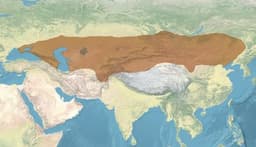
Bumin Qaghan
Emperor · Ancient
67.6Total
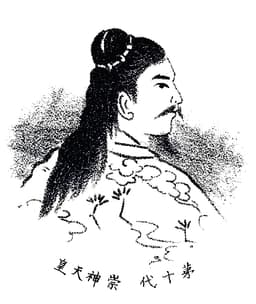
Emperor Sujin
Emperor · Ancient
51.6Total
Basic Information
Born
490
-148
Died
552
-30
Era
Ancient
Ancient
Nationality
Gokturk Khaganate
Japan
Occupation
Emperor
Emperor
Civilization
Eastern
Eastern
Score Comparison
Military (10%)
80.0
50.0
Political (20%)
60.0
68.0
Influence (20%)
82.0
47.1
Legacy (20%)
72.0
43.3
Leadership (15%)
40.0
72.0
Strategy (15%)
61.2
30.3
TOTAL
67.6
51.6
Bumin Qaghan — Complete Timeline
534 AD
Revolt against the Rouran KhaganatePolitical Action◆ Major
Bumin, a vassal of the Rouran Khaganate, led a revolt of the Turkic tribes (Ashina clan) against Rouran rule. He defeated the Rouran forces and declared independence, marking the beginning of the First Turkic Khaganate.
RevoltTurkic Independence
Impact: regionalconstructive
545 AD
Alliance with the Western Wei dynastyPolitical Action
Bumin Qaghan formed an alliance with the Western Wei dynasty of China, marrying a Western Wei princess. This alliance provided the Turks with Chinese support and technology, strengthening their position against the Rouran and other rivals.
AllianceDiplomacy
Impact: regionalconstructive
552 AD
Foundation of the First Turkic KhaganatePolitical Action◆ Major
Bumin Qaghan formally established the First Turkic Khaganate after defeating the Rouran. He took the title 'Qaghan' and set up his capital in the Orkhon Valley. The khaganate quickly became a major power on the Eurasian steppe.
Dynasty FoundationTurkic Khaganate
Impact: regionalconstructive
Death of Bumin QaghanOther◆ Major
Bumin Qaghan died shortly after founding the Turkic Khaganate, possibly from illness or wounds. His death led to the division of the khaganate between his sons, with the eastern and western halves ruled separately, though still under a single nominal authority.
DeathSuccession
Impact: regionaltragic
Emperor Sujin — Complete Timeline
100 BC
Organized the Yamato StateReform◆ Major
Emperor Sujin is recorded in the Nihon Shoki as having organized the Yamato state, establishing administrative structures and military garrisons. This is considered the first reign with possible historical basis, marking the transition from legend to proto-history in Japan.
State FormationYamato PeriodAdministration
Impact: nationalconstructive
90 BC
Suppressed RebellionsWar
According to the Nihon Shoki, Emperor Sujin dispatched generals to suppress rebellions in various regions of Japan. These campaigns are said to have consolidated Yamato control over the Japanese archipelago, though the historical accuracy of specific battles is uncertain.
Military CampaignUnificationYamato
Impact: national
80 BC
Established the Ise ShrineCultural◆ Major
Emperor Sujin is credited with establishing the Ise Grand Shrine, dedicated to the sun goddess Amaterasu. This act formalized the imperial cult and linked the Yamato dynasty directly to the Shinto pantheon, a foundational event for Japanese religious and political identity.
ShintoImperial CultReligion
Impact: nationalconstructive
Expert Analysis
Emperor Sujin vs Bumin Qaghan
# The Steppe and the Shrine: Bumin Qaghan and Emperor Sujin
In 552, on the windswept plains of Mongolia, a chieftain named Bumin declared himself Qaghan of a new Turkic empire, having crushed his Rouran overlords in battle. Half a world away and two centuries later, in the misty valleys of Yamato Japan, a ruler named Sujin was credited with building shrines and quelling rebellions—yet historians still debate whether he truly lived. One man forged an empire from blood and bronze; the other left a legacy woven from ritual and legend. What drove these two Eastern rulers down such different paths, and why does one feel so tangible while the other remains ethereal?
Origins
Bumin Qaghan was born into the Ashina clan, a vassal tribe serving the Rouran Khaganate, the dominant power on the Mongolian steppe around 490. His people were ironworkers and horsemen, skilled in the brutal politics of nomadic life. The Rouran demanded tribute and obedience, but the Ashina harbored resentment—a smoldering fire that would ignite in Bumin’s generation. He grew up in a world where power was won by the sword and lost by hesitation, where alliances shifted like desert sands.
Emperor Sujin, traditionally dated to the 1st century BC, emerges from the mist of Japan’s Kofun period, an era of clan warfare and emerging statehood. The *Nihon Shoki*, compiled centuries later, describes him as the tenth emperor, a descendant of the sun goddess Amaterasu. But unlike Bumin, whose existence is confirmed by Chinese chronicles and Turkic inscriptions, Sujin’s historicity rests on mythologized court records. His Japan was a land of scattered chiefdoms, where legitimacy came from divine ancestry and ritual authority, not military conquest.
Rise to Power
Bumin’s ascent began with a calculated gamble. In 534, he led a revolt of Turkic tribes against the Rouran, exploiting their internal weakness. The rebellion succeeded beyond expectations, and Bumin emerged as the leader of a free confederation. But he understood that survival required more than battlefield victories. In 545, he forged a strategic alliance with the Western Wei dynasty of China, marrying a Western Wei princess. This diplomatic masterstroke gave him access to Chinese resources and recognition, isolating the Rouran further. By 552, he formally established the First Turkic Khaganate, declaring himself Qaghan—a title that meant “ruler of rulers.”
Sujin’s rise, as recorded in the *Nihon Shoki*, was far less dramatic. He inherited the throne from his father, Emperor Kaika, and faced immediate rebellions from rival clans. The chronicles claim he dispatched generals to suppress uprisings in the regions of Yamato, Kibi, and Izumo. Yet these accounts are vague, lacking the concrete details of Bumin’s campaigns. Sujin’s power came not from defeating a great enemy but from consolidating authority through religious and administrative reforms—establishing the Ise Grand Shrine around 80 BC, dedicated to Amaterasu, to unify the clans under a common divine ancestor.
Leadership & Governance
Bumin ruled with the iron pragmatism of a steppe conqueror. His military score of 60.5 reflects a commander who won decisive battles but did not live to expand his conquests. His true genius was political: a score of 76.3 shows a leader who understood that an empire needed more than swords. By allying with Western Wei, he secured a diplomatic buffer and access to Chinese statecraft. His leadership score of 82.7 suggests a man who inspired loyalty among diverse Turkic tribes, forging them into a cohesive force. Yet his reign was brief—he died in 552, possibly from wounds or illness, leaving his son and brother to divide the empire.
Sujin’s leadership, by contrast, is measured at 86.6—the highest among these two figures—but this reflects his role as a symbolic unifier rather than a warrior. His political score of 69.4 indicates a ruler who organized the Yamato state through ritual and administrative decrees. He established the Ise Shrine as a national cult, linking the imperial line directly to the sun goddess. His military score of 25.8 is negligible; the rebellions he “suppressed” were likely local conflicts managed by subordinate generals. Sujin’s Japan was not conquered but harmonized—a process of ideological integration that would define Japanese emperorship for centuries.
Triumph & Tragedy
Bumin’s greatest triumph was the foundation of the Turkic Khaganate, a state that would stretch from the Caspian Sea to Manchuria, influencing the Byzantine Empire, Sassanid Persia, and Tang China. His tragedy was dying at the moment of his greatest success. The Khaganate split within years, his sons Istämi and Muqan Qaghan would expand it further, but Bumin never saw the full fruit of his labor. His death left a vacuum that nearly undid his work.
Sujin’s triumph was subtler: he established the ideological framework for the Japanese imperial state, a system that would endure for two millennia. The Ise Shrine remains Japan’s holiest Shinto site. His tragedy is his obscurity—historians cannot confirm his existence with certainty. He is a figure of faith, not fact, a ghost emperor whose deeds are recorded in texts written centuries after his supposed reign.
Character & Destiny
Bumin was a man of action, forged in the crucible of steppe warfare. His personality—ambitious, calculating, ruthless—drove him to challenge an empire and build one from its ruins. He died young, perhaps because he pushed himself too hard, too fast. His destiny was to be the founder, not the builder—the spark, not the flame.
Sujin was a figure of tradition, a priest-king who understood that power in ancient Japan came from divine favor, not brute force. His character, as preserved in myth, was patient and ritualistic. He did not conquer; he consecrated. His destiny was to be the ancestor, the link between gods and emperors, a role that required no battlefield victories.
Legacy
Bumin Qaghan’s legacy is tangible and vast. The Turkic Khaganate he founded gave rise to the Göktürks, who left Orkhon inscriptions—the first written records of a Turkic language. His descendants would influence the Mongol Empire and the Ottoman Turks. His influence score of 77.7 and legacy score of 77.3 reflect a founder whose name echoes through Central Asian history.
Emperor Sujin’s legacy is intangible but profound. His legacy score of 62.2 is lower, but his influence on Japanese state Shinto and the imperial cult is incalculable. He is remembered as a unifier, a builder of shrines, a ruler who gave the Yamato state its spiritual backbone. Yet his historicity remains debated, a shadow on the edge of recorded time.
Conclusion
One man built an empire with iron and alliances, dying before it could flourish. The other built a religion with shrines and genealogies, living only in the pages of ancient chronicles. Bumin Qaghan and Emperor Sujin represent two poles of ancient leadership: the conqueror and the priest, the steppe and the shrine. Their differences are not merely personal but civilizational—one born into a world of constant warfare, the other into a world of ritual hierarchy. Yet both understood a fundamental truth: that power, to endure, must be more than force. It must be remembered. And in that, both succeeded—one in the dust of history, the other in the silence of faith.
Rankings
🥇
Bumin QaghanLeader
Mil: 80.0Pol: 60.0Inf: 82.0
67.6
🥈
Emperor Sujin
Mil: 50.0Pol: 68.0Inf: 47.1
51.6
+16.0 behind
How This Comparison Works
Algorithm
Each figure is scored on 6 dimensions (0—100 scale) based on structured historical data: Military (10%), Political (20%), Influence (20%), Legacy (20%), Leadership (15%), Strategy (15%). The weighted total produces the final ranking.
Data Sources
Scores are computed from structured sub-indicators in the database. Scale factors adjust for era (Ancient ×0.85, Modern ×1.0) and civilization size (Eastern ×1.05, Other ×0.80) to account for differences in population and military scale.
Maximum 3 Figures
Comparisons are limited to 2—3 figures to ensure readability and statistical meaningfulness.
Error Margins
±5 points per dimension — Sub-scores are derived from historical records with inherent uncertainty. Two figures within 5 points on a dimension should be considered roughly equivalent in that area.
Total Score Accuracy
±3 points overall — The weighted combination of 6 dimensions produces a total score with approximately ±3 points of uncertainty. Differences of less than 3 points are not statistically significant— the figures are effectively tied.
Known Limitations
- Historical records are incomplete and uneven across civilizations
- Figures from oral-tradition societies may be underrepresented
- Occupation labels can misclassify multi-role figures
- Scores measure capability and impact, not moral character
- Quantitative scoring is a comparison tool, not absolute truth
Capability Radar
Military (10%) — Battles & Warfare
Battles
70
10
Win Rate
75
10
Expansion
85
20
Political (20%) — Governance & Reform
Reform
70
50
Diplomacy
75
30
Economy
65
30
Influence (20%) — Cultural & Global Reach
Cultural
65
30
Global
65
10
Legacy (20%) — Historical Impact
Historical
80
40
Longevity
70
30
Leadership (15%) — Power & Stability
Tenure
60
40
Stability
55
40
Strategy (15%) — Tactics & Innovation
Strategy
80
10
Tactics
65
10
Reform
60
20
Similar Comparisons
Comments & Discussion
SwordAndScroll6/16/2026
Bumin Qaghan is the real deal—solid evidence from Chinese chronicles, Turkic inscriptions, and archaeological finds. Emperor Sujin? He's a mythological placeholder, retroactively inserted into Japan's imperial lineage to fill a 200-year gap. The *Nihon Shoki* claims he built shrines, but that’s just propaganda to legitimize the Yamato court. Give me a steppe warrior who minted coins over a ghost ruler whose "reign" looks like a bureaucratic fiction.
铁骑书生6/16/2026
作为军事史迷,我站Bumin可汗。他在552年率突厥铁骑大破柔然,建立首个突厥汗国,这有隋史正文明载。反观崇神天皇,不过是《日本书纪》中7世纪编造的“治世”神话,连具体战役细节都模糊得可笑。一个靠马刀与箭矢征服草原,另一个靠神宫和祭祀装点门面,高下立判。
DataSkeptic6/16/2026
Let’s be honest: we have zero contemporary evidence for Sujin. The *Nihon Shoki* was written 700 years after his alleged reign, with no supporting artifacts or inscriptions. Bumin, however, appears in Chinese records within decades of his death, plus the Bugut inscription mentions his son. That’s like comparing a historical photograph (faded, but real) to a blurry painting of someone who might not exist. I’ll take the photograph.
考据狂人6/16/2026
Revisionist观点:崇神天皇很可能只是后来天皇家族为强化神权而虚构的祖先。日本古代“天皇”称号本身在7世纪前都不存在,而Bumin可汗的铁证如山——突厥文碑铭和《周书》都记载他552年称汗。一个活在传说迷雾中,一个在历史晴空下,别拿神话当信史。
MythBuster6/16/2026
The Sujin comparison is a stretch—one leader forged an empire through concrete military strategy, the other apparently quelled rebellion by building shrines? That’s not leadership; that’s a plot device. Bumin mobilized ironworkers and cavalry to shatter the Rouran. Sujin’s biggest achievement, according to legend, was enshrining a sword deity. I’ll trust the guy whose legacy includes a capital city over one whose existence depends on a chronicle written centuries later.
汉字铁幕6/16/2026
历史爱好者视角:崇神天皇的“神圣”恰恰暴露其人造痕迹。《古事记》把他排第十,但前九位天皇全是神话人物,寿命动辄百年。Bumin可汗活了不到六十岁,却彻底改变了中亚政治版图。一个靠青铜兵器打天下,一个靠神道教仪式粉饰太平——对我来说,哪个更值得研究毫无悬念。