Loading...
Emperor Sujin vs Pachacuti
Pachacuti leads by 17.8 pts · 2 figures compared
…
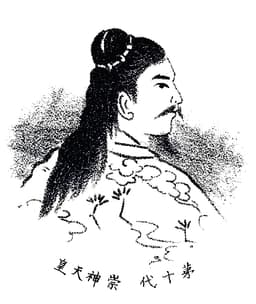
Emperor Sujin
Emperor · Ancient
51.6Total
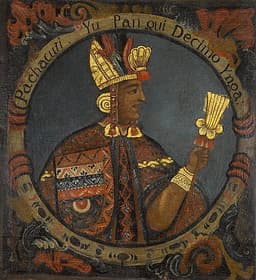
Pachacuti
Emperor · Medieval
69.4Total
Basic Information
Born
-148
1418
Died
-30
1472
Era
Ancient
Medieval
Nationality
Japan
Inca Empire
Occupation
Emperor
Emperor
Civilization
Eastern
Other
Score Comparison
Military (10%)
50.0
78.5
Political (20%)
68.0
58.1
Influence (20%)
47.1
65.0
Legacy (20%)
43.3
72.0
Leadership (15%)
72.0
78.0
Strategy (15%)
30.3
69.2
TOTAL
51.6
69.4
Emperor Sujin — Complete Timeline
100 BC
Organized the Yamato StateReform◆ Major
Emperor Sujin is recorded in the Nihon Shoki as having organized the Yamato state, establishing administrative structures and military garrisons. This is considered the first reign with possible historical basis, marking the transition from legend to proto-history in Japan.
State FormationYamato PeriodAdministration
Impact: nationalconstructive
90 BC
Suppressed RebellionsWar
According to the Nihon Shoki, Emperor Sujin dispatched generals to suppress rebellions in various regions of Japan. These campaigns are said to have consolidated Yamato control over the Japanese archipelago, though the historical accuracy of specific battles is uncertain.
Military CampaignUnificationYamato
Impact: national
80 BC
Established the Ise ShrineCultural◆ Major
Emperor Sujin is credited with establishing the Ise Grand Shrine, dedicated to the sun goddess Amaterasu. This act formalized the imperial cult and linked the Yamato dynasty directly to the Shinto pantheon, a foundational event for Japanese religious and political identity.
ShintoImperial CultReligion
Impact: nationalconstructive
Pachacuti — Complete Timeline
1438 AD
Conquest of the Chanka KingdomWar
Pachacuti led the Inca army to defeat the Chanka, a powerful rival, in a decisive battle near Cusco. This victory secured his position as Sapa Inca and initiated a period of rapid expansion, transforming the Inca from a small kingdom into a vast empire.
ConquestInca ExpansionChanka
Impact: regional
1440 AD
Reconstruction of CuscoCultural◆ Major
Pachacuti rebuilt Cusco as the imperial capital, designing it in the shape of a puma and constructing massive stone structures like Sacsayhuam
Urban PlanningArchitectureInca Empire
Impact: regionalconstructive
1450 AD
Initiation of Machu Picchu's ConstructionCultural◆ Major
Pachacuti ordered the construction of Machu Picchu, a royal estate and ceremonial site high in the Andes. The complex featured sophisticated dry-stone masonry and terraced agriculture, serving as a symbol of Inca engineering and a retreat for the emperor.
ArchitectureRoyal EstateInca Engineering
Impact: regionalconstructive
Expert Analysis
Pachacuti vs Emperor Sujin
# The Architect and the Ancestor
On a windswept Andean ridge, two miles above the sea, a king ordered stones so perfectly fitted that a knife blade cannot slip between them. Half a world away and fifteen centuries earlier, another ruler stood before a simple wooden shrine in a forest glade, consecrating a place where the sun goddess would dwell. One man built an empire of stone that still stuns the world; the other built a spiritual foundation that would sustain a civilization for two thousand years. Both were called emperors, but they lived in different worlds, spoke different languages, and answered entirely different questions about what power means. Their stories, separated by time and distance, reveal the deepest forces that shape how human societies organize themselves.
Origins
Pachacuti Inca Yupanqui was born in 1418 into a world of high-altitude warfare and shifting alliances. The Inca were then merely one kingdom among many in the Peruvian highlands, constantly threatened by the powerful Chanka confederation to the south. His father, Viracocha Inca, was a capable ruler but faced growing pressure from enemies encircling Cusco. Young Pachacuti grew up watching his people fight for survival, learning that power had to be seized and held by force.
Emperor Sujin, by contrast, emerged from the mists of prehistoric Japan around 148 BC. The Nihon Shoki, compiled nearly a millennium later, describes him as the tenth emperor, but even ancient chroniclers admitted uncertainty about his existence. He ruled over the Yamato state, a loose confederation of clans centered on the Nara basin, where authority rested not on military conquest but on ritual legitimacy and kinship ties. His world was one of rice paddies, bronze mirrors, and the slow consolidation of clan chieftains into something resembling a monarchy.
Rise to Power
Pachacuti’s ascent came through blood and desperation. In 1438, when the Chanka launched their final assault on Cusco, his father and designated heir fled the city, abandoning the capital. Pachacuti, then a prince of twenty, refused to run. He rallied the remaining warriors, armed them with stones and clubs, and met the Chanka army outside the city walls. The battle that followed was savage and close-run, but Pachacuti’s desperate gamble succeeded. He not only saved Cusco but captured thousands of Chanka prisoners, many of whom he later integrated into his own forces. This victory—his turning point—transformed him overnight from an obscure prince to the de facto ruler. His father returned to find a new king already crowned.
Sujin’s path was far quieter. According to tradition, he inherited the throne from his father, Emperor Kaika, and faced no dramatic coup or invasion. His challenge was different: how to transform a collection of semi-independent clans into a coherent state. He did so not by conquest but by establishing administrative structures, sending generals to suppress local rebellions around 90 BC, and—most importantly—creating a religious center that would unify the clans under a single divine authority.
Leadership & Governance
Pachacuti governed through terror and genius. He rebuilt Cusco starting in 1440, designing it in the shape of a puma, with massive stone walls that still stand today. He established a system of imperial roads, storehouses, and mit’a labor that allowed the state to move armies and supplies across the Andes with astonishing speed. He created a bureaucracy of noble administrators, imposed the Quechua language, and demanded that conquered peoples worship the sun god Inti. Yet he also showed strategic brilliance in incorporating defeated enemies: rather than slaughtering the Chanka, he made them allies through marriage and land grants. His leadership score of 84.5 reflects this blend of iron will and political calculation.
Sujin ruled through ritual and precedent. The Nihon Shoki records that he “organized the Yamato state,” but what this meant in practice was establishing tax districts, creating a court hierarchy, and—most crucially—institutionalizing the worship of Amaterasu at the Ise Shrine around 80 BC. This was a masterstroke of political theology: by making the sun goddess the ancestral deity of the imperial line, Sujin gave his descendants a claim to divine legitimacy that would last until the twentieth century. His leadership score of 86.6 is remarkably high for a figure of such uncertain historicity, but it reflects the Japanese tradition’s deep respect for the ruler who gave the state its spiritual bones.
Triumph & Tragedy
Pachacuti’s greatest triumph was the transformation of a minor kingdom into an empire. Under his rule, the Inca expanded from the Cusco valley to control territory stretching from modern Ecuador to Chile. He ordered the construction of Machu Picchu around 1450, a royal estate that would become the most iconic symbol of his civilization. But his tragedy was that his empire was built on personal authority. After his death in 1472, his successors inherited a system that required constant expansion to sustain itself—a system that would collapse within a century under Spanish assault.
Sujin’s triumph was more subtle but more enduring. By establishing the Ise Shrine, he created a religious institution that would outlast every dynasty, every war, every social revolution in Japanese history. The shrine has been rebuilt every twenty years for two millennia, and the emperor’s role as its chief priest remains central to Japanese identity. But Sujin’s tragedy is that we know almost nothing about him as a person. He exists only as a name in a chronicle, a placeholder for the moment when myth became history.
Character & Destiny
Pachacuti’s name means “he who shakes the earth,” and he lived up to it. He was ambitious, ruthless, and visionary—a man who thought in centuries and mountains. His decisions were shaped by the brutal logic of Andean warfare, where a single defeat could mean annihilation. He built an empire that reflected his personality: ordered, hierarchical, and magnificent, but also brittle.
Sujin’s name, by contrast, means “reverent ancestor.” He appears in the chronicles as a calm, ritualistic figure, more concerned with proper ceremony than personal glory. His decisions were shaped by the logic of kinship and tradition, where authority came from continuity rather than conquest. He built a state that reflected this: flexible, adaptive, and capable of absorbing change without breaking.
Legacy
Pachacuti left behind stones. Machu Picchu, Sacsayhuamán, the roads that still cross the Andes—these are his monuments. His military score of 66.8 and political score of 70.6 may seem modest, but they reflect a reality where his empire was overthrown before it could fully mature. Yet his influence score of 77.6 is undeniable: the Inca Empire remains the most famous pre-Columbian civilization, and Pachacuti is remembered as its founder.
Sujin left behind a tradition. The Ise Shrine still stands, the imperial line still traces its descent from Amaterasu, and the Japanese state still bears the marks of his organizational reforms. His military score of 25.8 is negligible, but his political score of 69.4 and legacy score of 62.2 reflect a different kind of power: the power to create institutions that outlast armies.
Conclusion
Two emperors, two worlds, two answers to the same question: how do you build something that lasts? Pachacuti answered with stone and blood, building an empire that would dazzle the world for centuries after its fall. Sujin answered with ritual and tradition, building a spiritual foundation that would endure for two thousand years. One shook the earth; the other planted a seed. In the end, both succeeded, but in ways that remind us that power takes many forms—and that the most lasting monuments are not always the ones we can see.
Rankings
🥇
PachacutiLeader
Mil: 78.5Pol: 58.1Inf: 65.0
69.4
🥈
Emperor Sujin
Mil: 50.0Pol: 68.0Inf: 47.1
51.6
+17.8 behind
How This Comparison Works
Algorithm
Each figure is scored on 6 dimensions (0—100 scale) based on structured historical data: Military (10%), Political (20%), Influence (20%), Legacy (20%), Leadership (15%), Strategy (15%). The weighted total produces the final ranking.
Data Sources
Scores are computed from structured sub-indicators in the database. Scale factors adjust for era (Ancient ×0.85, Modern ×1.0) and civilization size (Eastern ×1.05, Other ×0.80) to account for differences in population and military scale.
Maximum 3 Figures
Comparisons are limited to 2—3 figures to ensure readability and statistical meaningfulness.
Error Margins
±5 points per dimension — Sub-scores are derived from historical records with inherent uncertainty. Two figures within 5 points on a dimension should be considered roughly equivalent in that area.
Total Score Accuracy
±3 points overall — The weighted combination of 6 dimensions produces a total score with approximately ±3 points of uncertainty. Differences of less than 3 points are not statistically significant— the figures are effectively tied.
Known Limitations
- Historical records are incomplete and uneven across civilizations
- Figures from oral-tradition societies may be underrepresented
- Occupation labels can misclassify multi-role figures
- Scores measure capability and impact, not moral character
- Quantitative scoring is a comparison tool, not absolute truth
Capability Radar
Military (10%) — Battles & Warfare
Battles
10
85
Win Rate
10
90
Expansion
20
90
Political (20%) — Governance & Reform
Reform
50
92
Diplomacy
30
75
Economy
30
80
Influence (20%) — Cultural & Global Reach
Cultural
30
85
Global
10
65
Legacy (20%) — Historical Impact
Historical
40
80
Longevity
30
70
Leadership (15%) — Power & Stability
Tenure
40
85
Stability
40
82
Strategy (15%) — Tactics & Innovation
Strategy
10
88
Tactics
10
80
Reform
20
85
Similar Comparisons
Comments & Discussion
StoneArchitect6/16/2026
Pachacuti wins this hands down. Sujin is a legendary figure whose historicity is dubious; we have no contemporary evidence he even existed outside of later mythologies. Pachacuti, however, transformed the Inca from a minor highland kingdom into the largest empire in pre-Columbian America. He personally designed Cusco as a puma-shaped capital and terraformed the Sacred Valley. Sujin's "accomplishments" are religious rituals reconstructed centuries later. One built an empire; the other built legen
神代考究者6/16/2026
拿崇神天皇跟帕查库蒂比?这就像比较一张模糊的剪影和一尊精雕细琢的石像。崇神天皇的历史身份完全依赖于七八百年后编纂的《日本书纪》,里面充满神话与政治编造。而帕查库蒂的真实事迹有考古学支撑——马丘比丘的精确石工、萨克塞瓦曼的巨型城墙都是铁证。崇神可能只是个祭祖传说,帕查库蒂才是改变世界的真实人物。历史必须区分事实与虚构。
DataSkeptic6/16/2026
Let's be honest, we're comparing concrete empire-building against tribal ancestor worship rewritten by 8th-century propagandists. Pachacuti's population increase from 12,000 to nearly 10 million subjects within two generations is documented through quipu records and Spanish chronicles. Sujin's "reign" features no demographic or military stats—just vague mentions of deities and shrines. It's like putting Einstein next to a high schooler who dreamed of relativity. The analytical weight tips entire
铁血史评6/16/2026
从军事战略看,帕查库蒂是变革者,崇神不过是个维持现状的神话符号。萨帕·印卡重组了军队系统,建立驿站网络和梯田农业,把安第斯地理劣势变成防御优势。而崇神天皇被记载的最大功绩是迁建神社和祭祀——典型的宗教领袖,毫无领土扩张或军事创新。一个是真正的帝国建筑师,一个只是后世皇权合法化的道具。历史会把军政成就和神话传说分开打分的。