Loading...
Charles de Gaulle vs Emperor Sujin
Charles de Gaulle leads by 16.6 pts · 2 figures compared
…
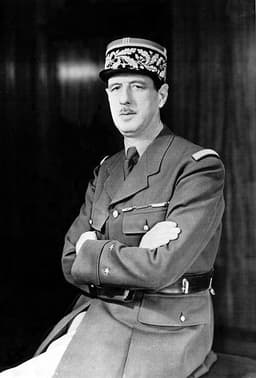
Charles de Gaulle
Politician · Modern
68.2Total
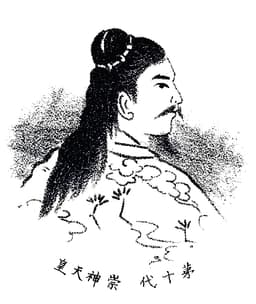
Emperor Sujin
Emperor · Ancient
51.6Total
Basic Information
Born
1890
-148
Died
1970
-30
Era
Modern
Ancient
Nationality
France
Japan
Occupation
Politician
Emperor
Civilization
Western
Eastern
Score Comparison
Military (10%)
55.0
50.0
Political (20%)
75.0
68.0
Influence (20%)
65.0
47.1
Legacy (20%)
68.0
43.3
Leadership (15%)
78.0
72.0
Strategy (15%)
65.0
30.3
TOTAL
68.2
51.6
Charles de Gaulle — Complete Timeline
1940 AD
Appeal of 18 June 1940Political Action
From London, de Gaulle broadcast a radio appeal urging French resistance against Nazi occupation. He called on French soldiers and citizens to continue the fight, founding the Free French Forces and becoming the symbol of French defiance.
World War IIResistanceLeadership
Impact: nationalconstructive
1958 AD
Founding of the Fifth RepublicPolitical Action
De Gaulle returned to power during the Algerian crisis and oversaw the drafting of a new constitution. The Fifth Republic established a strong executive presidency, replacing the unstable parliamentary system of the Fourth Republic.
ConstitutionGovernment ReformPolitical System
Impact: nationalconstructive
1962 AD
End of the Algerian WarPolitical Action◆ Major
De Gaulle negotiated the
DecolonizationPeace TreatyAlgeria
Impact: regionalconstructive
1968 AD
May 1968 CrisisPolitical Action◆ Major
Mass student protests and general strikes paralyzed France, challenging de Gaulle's government. De Gaulle briefly fled to Germany, then returned to dissolve the National Assembly and call elections, which his party won, but his authority was weakened.
ProtestPolitical CrisisSocial Unrest
Impact: nationaldestructive
1969 AD
Resignation as PresidentPolitical Action
De Gaulle resigned after losing a referendum on regional reform and Senate restructuring. The defeat marked the end of his political career, as he withdrew from public life and died the following year.
ResignationPolitical DefeatReferendum
Impact: nationaltragic
Emperor Sujin — Complete Timeline
100 BC
Organized the Yamato StateReform◆ Major
Emperor Sujin is recorded in the Nihon Shoki as having organized the Yamato state, establishing administrative structures and military garrisons. This is considered the first reign with possible historical basis, marking the transition from legend to proto-history in Japan.
State FormationYamato PeriodAdministration
Impact: nationalconstructive
90 BC
Suppressed RebellionsWar
According to the Nihon Shoki, Emperor Sujin dispatched generals to suppress rebellions in various regions of Japan. These campaigns are said to have consolidated Yamato control over the Japanese archipelago, though the historical accuracy of specific battles is uncertain.
Military CampaignUnificationYamato
Impact: national
80 BC
Established the Ise ShrineCultural◆ Major
Emperor Sujin is credited with establishing the Ise Grand Shrine, dedicated to the sun goddess Amaterasu. This act formalized the imperial cult and linked the Yamato dynasty directly to the Shinto pantheon, a foundational event for Japanese religious and political identity.
ShintoImperial CultReligion
Impact: nationalconstructive
Expert Analysis
Charles de Gaulle vs Emperor Sujin
# The Crossroads of Leadership: De Gaulle and Emperor Sujin
One stood on a London balcony, a solitary voice against the collapse of a continent. The other knelt before a shrine, laying the spiritual foundation of an island nation. Charles de Gaulle, towering and defiant, spoke into a microphone and summoned France to resist. Emperor Sujin, shrouded in myth and half-light, bowed to the sun goddess and bound Japan to its gods. Two leaders, separated by two millennia and half a world, yet both faced the same elemental challenge: how to forge order from chaos, how to make a people believe in their own destiny. Why did one leave a legacy of constitutional stability and the other a legacy of sacred tradition? The answer lies not in their achievements alone, but in the deepest currents of their times.
Origins
Charles de Gaulle was born in 1890 into a devoutly Catholic, patriotic family in Lille, northern France. His father taught history and literature, instilling in young Charles a sense of France’s grandeur and a reverence for its long, often tragic story. The Franco-Prussian War of 1870, a humiliating defeat that haunted French memory, was a ghost at every dinner table. De Gaulle grew up believing that France was not merely a country but an idea—a civilization destined for greatness, betrayed only by weak leadership. This conviction would never leave him.
Emperor Sujin, believed to have been born around 148 BCE, emerges from the mist of Japanese prehistory. The Nihon Shoki, an eighth-century chronicle, records him as the tenth emperor, the first with plausible historical existence. His Japan was a patchwork of warring clans, a land where the Yamato court struggled to assert authority over rival chieftains. There were no radios, no parliaments, no written constitutions—only oral traditions, bronze mirrors, and the authority of the kami, the spirits of nature and ancestors. Sujin’s world was one of ritual and blood, where leadership meant not persuasion but the command of armed men and the favor of gods.
Rise to Power
De Gaulle’s path was forged in war. A captain in World War I, he was wounded and captured at Verdun, spending nearly three years as a prisoner of war—a humbling, formative experience. After the war, he became a military theorist, arguing for armored warfare and professional armies, ideas ignored by the French high command. His moment came in June 1940, when France fell to Nazi Germany in six weeks. While most of his government capitulated, de Gaulle fled to London. On June 18, he broadcast his famous appeal: “France has lost a battle, but France has not lost the war.” He was a brigadier general speaking for a country that no longer existed, yet his voice carried the weight of a nation’s honor.
Sujin’s rise is less dramatic but no less significant. According to the Nihon Shoki, he inherited a throne troubled by plagues and rebellions. His authority was challenged by powerful local clans who saw the Yamato king as one chieftain among many. To secure his rule, Sujin turned to the heavens. He is credited with establishing the Ise Grand Shrine around 80 BCE, dedicating it to Amaterasu, the sun goddess and mythical ancestor of the imperial line. This was a political masterstroke: by linking his throne directly to the highest deity, Sujin transformed the emperor from a warlord into a priest-king, a mediator between the divine and the mortal.
Leadership & Governance
De Gaulle governed through words and institutions. The Fifth Republic, founded in 1958, was his constitutional masterpiece. He designed a presidency with strong executive powers, capable of decisive action in times of crisis—a direct response to the parliamentary paralysis that had doomed the Third Republic. He believed in “a certain idea of France,” and his leadership was autocratic yet legalistic. He ended the Algerian War in 1962 through the Évian Accords, a painful but necessary decolonization that faced fierce opposition from French settlers and the military. He weathered the May 1968 crisis—student protests and general strikes that paralyzed France—by dissolving parliament and calling elections, a gamble that succeeded but left him politically wounded.
Sujin’s governance was built on ritual and military force. The Nihon Shoki records that he “organized the Yamato state,” establishing administrative structures and dispatching generals to suppress rebellions in various regions around 90 BCE. His leadership was not about policy debates but about maintaining cosmic order. By establishing the Ise Shrine and formalizing the worship of Amaterasu, he created a spiritual center that unified the clans under a single divine lineage. His authority rested on his ability to perform rituals correctly, to ensure good harvests and divine favor. Where de Gaulle commanded through charisma and law, Sujin ruled through myth and ceremony.
Triumph & Tragedy
De Gaulle’s greatest triumph was the restoration of French pride. He turned a defeated, occupied nation into a nuclear power, a founding member of the United Nations Security Council, and a leader of European integration. He stood up to both American and Soviet hegemony, withdrawing France from NATO’s integrated command and vetoing British entry into the European Economic Community. His greatest tragedy came in 1969, when he resigned after losing a referendum on regional reform and Senate restructuring. The man who had saved France twice—from Nazi occupation and from civil war—was brought down by a vote on local government. It was a humbling end for a titan.
Sujin’s triumph was the consolidation of the imperial state. By suppressing rebellions and establishing the Ise Shrine, he laid the groundwork for a dynasty that would claim to rule for over two thousand years—the longest continuous monarchy in history. His tragedy is that we know so little of him. The Nihon Shoki, written centuries after his death, mixes history with legend. We cannot be certain if he truly existed, or if his deeds were invented by later chroniclers to legitimize the Yamato line. He is a ghost emperor, remembered not for his personality but for his function.
Character & Destiny
De Gaulle was famously aloof, proud, and stubborn. He once said, “The graveyards are full of indispensable men.” Yet he acted as if he were the only one who could save France. His character was shaped by a profound sense of historical mission, a belief that he was the instrument of France’s destiny. This conviction gave him the courage to defy the Nazis, to abandon Algeria, and to resign when his vision was rejected. His destiny was to be the man who saved French honor, then French democracy.
Sujin’s character is unknowable. The Nihon Shoki portrays him as a wise and pious ruler, but these are tropes, not biography. What we can infer is that his destiny was to be a bridge between two worlds: the age of myth and the age of history. He is the first emperor whose existence might be real, and his legacy is the template for all later emperors—not as generals or administrators, but as living symbols of national unity.
Legacy
De Gaulle’s legacy is the Fifth Republic, which endures today. His constitution gave France stability through decades of political and social change. His vision of an independent, sovereign France remains a powerful force in French politics. He is remembered as the man who said no—to Hitler, to the Americans, to the Algerians, to the protesters. His statue stands in Paris, and his name is on airports, streets, and schools. But his greatest monument is the French state itself, which he rebuilt from the ashes of war and the chaos of decolonization.
Emperor Sujin’s legacy is the Ise Grand Shrine, which still stands, rebuilt every twenty years in a cycle of renewal that has continued for over two millennia. He is remembered as the organizer of the Yamato state, the founder of the imperial cult, the first emperor who made Japan a nation under the sun goddess. His legacy is not a constitution or a political system but a spiritual tradition that gave Japan its sense of identity and continuity. In a world of change, Sujin’s Japan endured.
Conclusion
De Gaulle and Sujin lived in different ages, spoke different languages, and faced different enemies. One commanded armies and parliaments; the other commanded priests and shamans. Yet both understood a fundamental truth: that leadership is not about power alone, but about meaning. De Gaulle gave France a story of resistance and renewal. Sujin gave Japan a story of divine origin and eternal lineage. Their methods were as different as radio waves and sacred mirrors, but their purpose was the same: to make a people believe that their history was not over, that their nation still had a destiny to fulfill. In the end, both succeeded—and that is why we remember them still.
Rankings
🥇
Charles de GaulleLeader
Mil: 55.0Pol: 75.0Inf: 65.0
68.2
🥈
Emperor Sujin
Mil: 50.0Pol: 68.0Inf: 47.1
51.6
+16.6 behind
How This Comparison Works
Algorithm
Each figure is scored on 6 dimensions (0—100 scale) based on structured historical data: Military (10%), Political (20%), Influence (20%), Legacy (20%), Leadership (15%), Strategy (15%). The weighted total produces the final ranking.
Data Sources
Scores are computed from structured sub-indicators in the database. Scale factors adjust for era (Ancient ×0.85, Modern ×1.0) and civilization size (Eastern ×1.05, Other ×0.80) to account for differences in population and military scale.
Maximum 3 Figures
Comparisons are limited to 2—3 figures to ensure readability and statistical meaningfulness.
Error Margins
±5 points per dimension — Sub-scores are derived from historical records with inherent uncertainty. Two figures within 5 points on a dimension should be considered roughly equivalent in that area.
Total Score Accuracy
±3 points overall — The weighted combination of 6 dimensions produces a total score with approximately ±3 points of uncertainty. Differences of less than 3 points are not statistically significant— the figures are effectively tied.
Known Limitations
- Historical records are incomplete and uneven across civilizations
- Figures from oral-tradition societies may be underrepresented
- Occupation labels can misclassify multi-role figures
- Scores measure capability and impact, not moral character
- Quantitative scoring is a comparison tool, not absolute truth
Capability Radar
Military (10%) — Battles & Warfare
Battles
60
10
Win Rate
55
10
Expansion
20
20
Political (20%) — Governance & Reform
Reform
95
50
Diplomacy
90
30
Economy
70
30
Influence (20%) — Cultural & Global Reach
Cultural
70
30
Global
80
10
Legacy (20%) — Historical Impact
Historical
85
40
Longevity
75
30
Leadership (15%) — Power & Stability
Tenure
85
40
Stability
75
40
Strategy (15%) — Tactics & Innovation
Strategy
85
10
Tactics
70
10
Reform
80
20
Similar Comparisons
Comments & Discussion
LEGIONARY_LENS6/16/2026
Military historian here. You can't compare a field commander who redefined armored warfare doctrine in *Vers l’Armée de Métier* to a semi-mythical figure who supposedly suppressed localized rebellions with divine magic. De Gaulle actually led Free French forces in combat; Sujin's "campaigns" are pious fiction designed to legitimize Yamato hegemony. One wrote tactical theory, the other received a bronze mirror from a goddess. Spare me the false equivalence. One bleeds, the other glows in the dark
神话拆解机6/16/2026
作为文献考据派,我坚决反对把这两位并列。神武天皇的存在在考古学上站不住脚——弥生时代的墓葬里根本没有能对应"征讨四方"的大型武器或防御工事。反过来,戴高乐的伦敦广播讲话是有录音为证的,他在1940年6月18日只带着一个行李箱和一台打字机就重塑了法国。一边是史前传说的拼贴画,一边是活生生有手稿的现代人。非要并排放的话,等于拿《封神演义》对比《战争回忆录》。
CUSTODIAN_OF_SYMBOLS6/16/2026
You misunderstand both figures. De Gaulle's true power wasn't military—it was symbolic. His 1958 constitution created the Fifth Republic precisely because he understood France needed a "certain idea" of itself, just as Sujin's ritual at the Ise Grand Shrine codified the emperor's role as sacred mediator. Both men institutionalized a myth: De Gaulle made modern France believe in presidential authority, Sujin made ancient Japan believe in imperial divinity. Myths aren't lies—they're the architectu
跨时空记账员6/16/2026
从硬数据看,这对比漏洞太大。戴高乐执政11年,带着法国打赢二战、建立第五共和国、搞了核武器;而崇神天皇在《日本书纪》里的"治理"就是建神社、收贡品、传诏书。你告诉我前者创造了稳定的宪政体系(历经72年无政变),后者只留下了一个后来被军国主义者滥用的神权模板。这不是同级较量——戴高乐是工程师,崇神是概念图。别拿概念图跟完整的建筑比较。
CONTRARIAN_TRADITIONALIST6/16/2026
Actually, Sujin's tradition is more politically potent than de Gaulle's republic. The Japanese imperial lineage, claiming unbroken descent from Amaterasu, outlasted every constitution de Gaulle ever witnessed (including his own wartime one). De Gaulle's legacy depends on paper documents that can be amended or ignored. Sujin's legacy requires no vote—it's a spiritual fact embedded in Shinto practice. Which sounds more stable: a general's signature or a goddess's bloodline? I'll take the myth that