Loading...
Bumin Qaghan vs Constantine IV
Bumin Qaghan leads by 6.4 pts · 2 figures compared
…
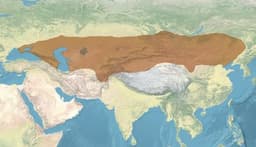
Bumin Qaghan
Emperor · Ancient
67.6Total

Constantine IV
Emperor · Ancient
61.2Total
Basic Information
Born
490
-650
Died
552
—
Era
Ancient
Ancient
Nationality
Gokturk Khaganate
Byzantine Empire
Occupation
Emperor
Emperor
Civilization
Eastern
Western
Score Comparison
Military (10%)
80.0
67.3
Political (20%)
60.0
62.7
Influence (20%)
82.0
58.0
Legacy (20%)
72.0
52.0
Leadership (15%)
40.0
72.0
Strategy (15%)
61.2
67.2
TOTAL
67.6
61.2
Bumin Qaghan — Complete Timeline
534 AD
Revolt against the Rouran KhaganatePolitical Action◆ Major
Bumin, a vassal of the Rouran Khaganate, led a revolt of the Turkic tribes (Ashina clan) against Rouran rule. He defeated the Rouran forces and declared independence, marking the beginning of the First Turkic Khaganate.
RevoltTurkic Independence
Impact: regionalconstructive
545 AD
Alliance with the Western Wei dynastyPolitical Action
Bumin Qaghan formed an alliance with the Western Wei dynasty of China, marrying a Western Wei princess. This alliance provided the Turks with Chinese support and technology, strengthening their position against the Rouran and other rivals.
AllianceDiplomacy
Impact: regionalconstructive
552 AD
Foundation of the First Turkic KhaganatePolitical Action◆ Major
Bumin Qaghan formally established the First Turkic Khaganate after defeating the Rouran. He took the title 'Qaghan' and set up his capital in the Orkhon Valley. The khaganate quickly became a major power on the Eurasian steppe.
Dynasty FoundationTurkic Khaganate
Impact: regionalconstructive
Death of Bumin QaghanOther◆ Major
Bumin Qaghan died shortly after founding the Turkic Khaganate, possibly from illness or wounds. His death led to the division of the khaganate between his sons, with the eastern and western halves ruled separately, though still under a single nominal authority.
DeathSuccession
Impact: regionaltragic
Constantine IV — Complete Timeline
678 AD
Defeated the Arab siege of ConstantinopleWar
Constantine IV successfully defended Constantinople against a massive Arab siege that lasted from 674 to 678. The Byzantine victory, aided by the use of Greek fire, forced the Umayyad Caliphate to sue for peace and pay tribute.
Arab-Byzantine WarsSiegeGreek Fire
Impact: globalconstructive
680 AD
Reorganized the Byzantine army into themesReform◆ Major
Constantine IV continued the reorganization of the Byzantine military into thematic provinces. This system, which combined civil and military authority, proved effective in defending the empire against external threats.
Military ReformAdministrationByzantine Empire
Impact: nationalconstructive
Convened the Third Council of ConstantinopleCultural◆ Major
Constantine IV convened the Third Council of Constantinople, which condemned Monothelitism as a heresy. The council restored religious unity between Constantinople and Rome, ending a long-standing theological dispute.
Ecumenical CouncilReligious UnityByzantine Empire
Impact: regionalconstructive
Expert Analysis
Origins
Bumin Qaghan (born c. 490s) emerged from the Ashina clan, a vassal tribe of the Rouran Khaganate in the Mongolian steppe. His early life was shaped by the nomadic traditions of the Turks, who served as ironworkers and warriors for the Rouran. Bumin's rise began when he leveraged his position as a tribal leader to gain favor with the Rouran, but he also forged ties with the Western Wei dynasty of China, marrying a Western Wei princess in 545. This alliance gave him access to Chinese resources and prestige, setting the stage for his revolt.
Constantine IV (born c. 652) was the eldest son of Emperor Constans II of the Byzantine Empire. Raised in Constantinople, he was trained in military and administrative affairs from a young age. He became co-emperor in 654 and sole emperor in 668 after his father's assassination. His upbringing in the imperial court, surrounded by religious controversies and external threats, prepared him for the challenges of defending a shrinking empire.
Rise to Power
Bumin's rise to power was sudden and decisive. In 552, he led a revolt against the Rouran Khaganate after being refused a marriage alliance with the Rouran khagan. With support from the Western Wei, Bumin defeated the Rouran in battle, killing their khagan. He then declared himself Qaghan of the First Turkic Khaganate, uniting the Turkic tribes under his rule. His revolt was a turning point in Central Asian history, as it ended Rouran dominance and established the Turks as a major power.
Constantine IV ascended the throne at age 16 amid a crisis. The Byzantine Empire faced attacks from Arabs, Slavs, and Lombards. His father's murder left him as the sole ruler, but he had to contend with his brothers Heraclius and Tiberius, whom he initially ruled alongside. In 669, he suppressed a rebellion by the Byzantine general Saborios, and later in 681, he defeated a Bulgarian threat. However, his greatest challenge came from the Arab siege of Constantinople (674-678), which he successfully defended, cementing his reputation.
Leadership & Governance
Bumin's leadership was that of a steppe conqueror. He quickly organized the Turkic tribes into a cohesive military force, using the decimal system for army organization. He established his capital at the Orkhon River and adopted the title 'Qaghan,' centralizing authority. His governance relied on tribal alliances and Chinese-style diplomacy, as seen in his marriage to a Western Wei princess. However, his reign lasted only a few months after founding the khaganate, so his administrative impact was limited.
Constantine IV's leadership was more bureaucratic and religious. He convened the Third Council of Constantinople (680-681), which condemned Monothelitism and restored unity with Rome. This was a major political achievement, as religious disputes had weakened the empire. He continued the theme system, reorganizing the army into provincial forces that combined civil and military authority, making the empire more defensible. His defense of Constantinople used Greek fire and naval tactics, showcasing innovative military leadership. Constantine IV scored 72.0 in leadership, significantly higher than Bumin's 40.0.
Triumph & Tragedy
Bumin's greatest triumph was founding the First Turkic Khaganate, which would dominate Central Asia for centuries. His revolt against the Rouran was a masterstroke, and he successfully united the Turkic tribes. However, his tragedy was his premature death in 553, just months after his victory. This led to a division of the khaganate between his son and brother, sowing internal conflict. His death also prevented him from consolidating his gains, leaving the empire vulnerable.
Constantine IV's triumph was the successful defense of Constantinople against the Arab siege from 674 to 678. This victory stopped the Umayyad Caliphate's expansion into Europe and preserved the Byzantine Empire. He also achieved religious unity at the Third Council of Constantinople. His tragedy, however, was the loss of the Byzantine fleet in a later campaign against the Arabs in 678, and his inability to fully recover lost territories. He also faced the rise of the Bulgarian threat, which he could not eliminate. His scores reflect this: military 67.3, political 62.7.
Character & Destiny
Bumin was ambitious and opportunistic, seizing the moment to break free from Rouran vassalage. His decision to ally with Western Wei showed strategic foresight, but his early death suggests he may have been reckless or physically weakened by his campaigns. His character was typical of a steppe conqueror: ruthless in war but pragmatic in diplomacy. His destiny was to spark a Turkic empire that would shape Eurasia.
Constantine IV was a capable administrator and defender, but also a religious peacemaker. He was decisive in military matters but also willing to compromise on doctrine to achieve unity. His character was more cautious than Bumin's, as seen in his careful handling of the siege and the council. His destiny was to be remembered as the emperor who saved Constantinople from the Arabs, but his later reign was marred by setbacks. Historians rate his political skills at 62.7, reflecting a mixed legacy.
Legacy
Bumin's legacy is immense. He founded the First Turkic Khaganate, which became a model for later steppe empires like the Mongol Empire. The Turks emerged as a major force in world history, and Bumin is considered a founding father. His scores in influence (82.0) and legacy (72.0) reflect this. However, his direct impact was short-lived due to his early death.
Constantine IV's legacy is more localized. He is remembered for saving Constantinople and for the Third Council, which shaped Eastern Orthodox doctrine. The theme system he continued would last for centuries. However, his empire continued to decline after his death. His influence score (58.0) and legacy (52.0) are lower than Bumin's, indicating a narrower impact.
Conclusion
Bumin Qaghan had a greater impact on world history than Constantine IV. While Constantine defended an empire, Bumin created one that would influence Central Asia and beyond for millennia. Bumin's total score of 67.6 edges out Constantine's 61.2, and his influence and legacy scores are significantly higher. Constantine's achievements were reactive and defensive, whereas Bumin's were foundational and expansive. Therefore, Bumin Qaghan's role as the founder of the Turkic Khaganate gives him a more profound and lasting historical significance.
Rankings
🥇
Bumin QaghanLeader
Mil: 80.0Pol: 60.0Inf: 82.0
67.6
🥈
Constantine IV
Mil: 67.3Pol: 62.7Inf: 58.0
61.2
+6.4 behind
How This Comparison Works
Algorithm
Each figure is scored on 6 dimensions (0—100 scale) based on structured historical data: Military (10%), Political (20%), Influence (20%), Legacy (20%), Leadership (15%), Strategy (15%). The weighted total produces the final ranking.
Data Sources
Scores are computed from structured sub-indicators in the database. Scale factors adjust for era (Ancient ×0.85, Modern ×1.0) and civilization size (Eastern ×1.05, Other ×0.80) to account for differences in population and military scale.
Maximum 3 Figures
Comparisons are limited to 2—3 figures to ensure readability and statistical meaningfulness.
Error Margins
±5 points per dimension — Sub-scores are derived from historical records with inherent uncertainty. Two figures within 5 points on a dimension should be considered roughly equivalent in that area.
Total Score Accuracy
±3 points overall — The weighted combination of 6 dimensions produces a total score with approximately ±3 points of uncertainty. Differences of less than 3 points are not statistically significant— the figures are effectively tied.
Known Limitations
- Historical records are incomplete and uneven across civilizations
- Figures from oral-tradition societies may be underrepresented
- Occupation labels can misclassify multi-role figures
- Scores measure capability and impact, not moral character
- Quantitative scoring is a comparison tool, not absolute truth
Capability Radar
Military (10%) — Battles & Warfare
Battles
70
75
Win Rate
75
80
Expansion
85
40
Political (20%) — Governance & Reform
Reform
70
55
Diplomacy
75
70
Economy
65
60
Influence (20%) — Cultural & Global Reach
Cultural
65
50
Global
65
60
Legacy (20%) — Historical Impact
Historical
80
65
Longevity
70
55
Leadership (15%) — Power & Stability
Tenure
60
65
Stability
55
65
Strategy (15%) — Tactics & Innovation
Strategy
80
75
Tactics
65
70
Reform
60
60
Similar Comparisons
Comments & Discussion
No comments yet. Be the first to share your thoughts!