Loading...
Charles VII of France vs Emperor Taizu of Liao
Emperor Taizu of Liao leads by 5.1 pts · 2 figures compared
…
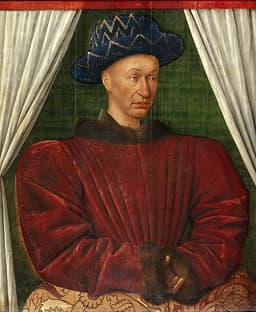
Charles VII of France
Emperor · Medieval
61.7Total
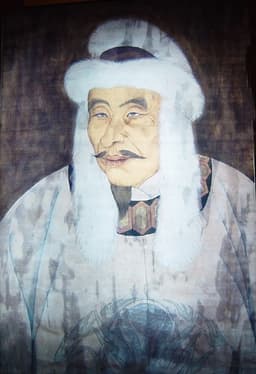
Emperor Taizu of Liao
Emperor · Medieval
66.8Total
Basic Information
Born
1403
872
Died
1461
926
Era
Medieval
Medieval
Nationality
France
China
Occupation
Emperor
Emperor
Civilization
Western
Eastern
Score Comparison
Military (10%)
67.5
76.0
Political (20%)
70.0
78.0
Influence (20%)
56.7
72.0
Legacy (20%)
55.0
40.0
Leadership (15%)
66.0
80.0
Strategy (15%)
66.3
75.0
TOTAL
61.7
66.8
Charles VII of France — Complete Timeline
1429 AD
Siege of OrléansWar◆ Major
Joan of Arc, acting under Charles VII's authority, led French forces to lift the English siege of Orl
Hundred Years' WarSiegeJoan of Arc
Impact: regional
Coronation at ReimsPolitical Action
Charles VII was crowned King of France at Reims Cathedral, a traditional site for French coronations, following the military successes of Joan of Arc. This coronation legitimized his claim against the English-backed Henry VI and boosted French morale.
CoronationHundred Years' WarJoan of Arc
Impact: nationalconstructive
1435 AD
Treaty of ArrasPolitical Action◆ Major
Charles VII signed the Treaty of Arras with Philip the Good of Burgundy, ending the Burgundian alliance with England. This diplomatic victory isolated the English and paved the way for French reconquest of English-held territories.
TreatyBurgundyDiplomacy
Impact: regionalconstructive
1438 AD
Pragmatic Sanction of BourgesReform◆ Major
Charles VII issued the Pragmatic Sanction of Bourges, asserting the authority of the French crown over the Catholic Church in France. It limited papal interference in ecclesiastical appointments and revenues, strengthening royal control.
Church ReformRoyal AuthorityGallicanism
Impact: nationalconstructive
1453 AD
Battle of CastillonWar
French forces under Charles VII's command defeated the English at Castillon, the final battle of the Hundred Years' War. The English lost Gascony, ending their territorial presence in France except for Calais.
Hundred Years' WarBattleEnd of War
Impact: regional
Emperor Taizu of Liao — Complete Timeline
907 AD
Founding of the Liao DynastyPolitical Action
Abaoji, a Khitan chieftain, unified the Khitan tribes and proclaimed himself emperor, founding the Liao dynasty. This established the first major steppe-based dynasty to rule parts of northern China.
Dynasty FoundingUnification
Impact: regionalconstructive
916 AD
Establishment of the Dual Administration SystemReform◆ Major
Emperor Taizu established a dual administration system, with separate institutions for Khitan and Chinese subjects. This allowed the Liao to effectively govern both nomadic and agricultural populations, a model later adopted by other conquest dynasties.
Government ReformAdministration
Impact: regionalconstructive
920 AD
Creation of the Khitan ScriptCultural◆ Major
Emperor Taizu ordered the creation of a Khitan script, based on Chinese characters, to write the Khitan language. This script was used for official documents and inscriptions, promoting Khitan culture and administration.
Writing SystemCultural Development
Impact: regionalconstructive
926 AD
Conquest of the Bohai KingdomWar◆ Major
Emperor Taizu led a campaign that conquered the Bohai Kingdom in Manchuria. This victory expanded Liao territory eastward and eliminated a rival state, securing the Liao's eastern frontier.
ConquestExpansion
Impact: regionalconstructive
Death of Emperor TaizuPolitical Action
Emperor Taizu died during a campaign against the Bohai Kingdom. His death led to a succession struggle among his sons, but his son Yel
DeathSuccession
Impact: national
Expert Analysis
Origins
Charles VII of France was born in 1403 to King Charles VI and Isabeau of Bavaria. His father suffered from mental illness, leading to a power vacuum and civil war between Armagnacs and Burgundians. Charles grew up in a fractured kingdom, with much of northern France under English control after the Treaty of Troyes (1420) disinherited him. He received a modest education but was overshadowed by his older brothers, all of whom died young. His mother's neglect and the political chaos shaped his cautious, secretive nature.
Abaoji, later Emperor Taizu of Liao, was born in 872 among the Khitan tribes of present-day Inner Mongolia. His father was a tribal chief, and Abaoji rose through military prowess. The Khitan were nomadic herders, often in conflict with neighboring Chinese states and other steppe peoples. Abaoji learned Chinese administrative techniques from captured officials and adopted elements of Chinese culture while maintaining Khitan traditions. His early experiences in tribal warfare and diplomacy laid the foundation for his empire-building.
Rise to Power
Charles VII became Dauphin in 1417 after his brothers' deaths. In 1418, he fled Paris as Burgundian forces took the city. His claim to the throne was contested by the English and Burgundians. In 1422, his father died, and Charles proclaimed himself king, but he controlled only the Loire Valley. His turning point came in 1429 when Joan of Arc, a peasant girl claiming divine guidance, arrived at his court. She convinced him to let her lead an army to relieve Orléans, which she did on May 8, 1429. This victory allowed Charles to march to Reims and be crowned on July 17, 1429, legitimizing his rule. Joan's capture and execution in 1431 harmed his reputation, but he did not intervene. Over the next two decades, through military reforms and diplomacy, he gradually expelled the English from France.
Abaoji was elected chief of the Khitan in 907, after the death of the previous khan. He unified the eight Khitan tribes through a combination of warfare and alliances. In 916, he formally proclaimed himself emperor, founding the Liao dynasty. He adopted the Chinese-style reign name Shence. Consolidating power required suppressing rivals, including his brothers who rebelled multiple times. By 926, he had conquered the Bohai Kingdom, a prosperous state in Manchuria, expanding Liao territory and resources. His rise was marked by strategic marriages, military campaigns, and the incorporation of Chinese advisors.
Leadership & Governance
Charles VII's leadership was cautious and pragmatic. He focused on rebuilding France after decades of war. His military reforms included creating a standing army (the Compagnies d'Ordonnance) and standardizing artillery use. Politically, he asserted royal authority through the Pragmatic Sanction of Bourges (1438), which limited papal influence over the French Church. He also improved tax collection and reduced banditry. However, his style was reactive; he often relied on capable advisors like Jacques Cœur and his mistress Agnès Sorel. His governance score of 70.0 reflects his effective but uncharismatic rule.
Emperor Taizu was a visionary leader who blended Khitan and Chinese institutions. He created a dual administration system: the Northern Administration for Khitan affairs (using tribal customs) and the Southern Administration for Chinese subjects (using Chinese bureaucracy). This allowed efficient governance of diverse populations. He also ordered the creation of the Khitan script (920), promoting literacy and cultural identity. Militarily aggressive, he expanded Liao borders, but his leadership score of 80.0 indicates his ability to unite tribes and build a lasting state. He was more hands-on than Charles, personally leading campaigns.
Triumph & Tragedy
Charles VII's greatest triumph was ending the Hundred Years' War in 1453 with the Battle of Castillon, securing English recognition of French sovereignty (except Calais). He restored royal finances and centralized power. His tragedy was his failure to save Joan of Arc, whom he abandoned after her capture. His later years saw conflicts with his son, the future Louis XI, who rebelled. He died in 1461, possibly from starvation due to a fear of poisoning.
Taizu's triumph was founding the Liao dynasty, which lasted over two centuries (907-1125). His dual administration system was innovative and effective. His tragedy: he died in 926 while returning from a campaign, possibly from a wound or illness. This led to a succession crisis, though his son Yelü Deguang eventually succeeded. His conquest of Bohai was incomplete, causing later revolts.
Character & Destiny
Charles VII was indecisive and suspicious, yet patient. His caution allowed him to outlast enemies but also led to missed opportunities. He scored 66.0 in leadership, reflecting his ability to manage a complex court but not inspire loyalty like Joan. His destiny was to be the 'Victor of the Hundred Years' War,' but his legacy is overshadowed by Joan.
Taizu was bold, strategic, and culturally adaptable. His 80.0 leadership score shows his charisma and vision. He was a unifier who created a hybrid state that influenced later dynasties like the Jin and Yuan. His death in the field mirrored his warrior ethos.
Legacy
Charles VII's legacy is the consolidation of French royal power and the end of English territorial claims. His military and fiscal reforms laid groundwork for the French Renaissance. However, his influence score of 56.7 is moderate because his achievements were part of a longer process. The Pragmatic Sanction influenced Gallicanism.
Taizu's legacy is profound in Chinese and Inner Asian history. The Liao dynasty established a model for ruling multi-ethnic empires, later adapted by the Yuan and Qing. His creation of a Khitan script preserved Khitan culture. Yet his legacy score of 40.0 is lower because the Liao dynasty eventually fell and left fewer enduring institutions in China proper.
Conclusion
Emperor Taizu of Liao had greater impact as a founder of a dynasty that shaped the political landscape of East Asia for centuries. His total score of 66.8 vs Charles's 61.7 reflects his superior military (76.0 vs 67.5), political (78.0 vs 70.0), and leadership (80.0 vs 66.0) scores. While Charles ended a major war and strengthened France, his achievements were more reactive and less innovative. Taizu's dual administration system was a pioneering solution to governing a multicultural empire, influencing later Chinese dynasties. Therefore, Taizu's impact was greater.
Rankings
🥇
Emperor Taizu of LiaoLeader
Mil: 76.0Pol: 78.0Inf: 72.0
66.8
🥈
Charles VII of France
Mil: 67.5Pol: 70.0Inf: 56.7
61.7
+5.1 behind
How This Comparison Works
Algorithm
Each figure is scored on 6 dimensions (0—100 scale) based on structured historical data: Military (10%), Political (20%), Influence (20%), Legacy (20%), Leadership (15%), Strategy (15%). The weighted total produces the final ranking.
Data Sources
Scores are computed from structured sub-indicators in the database. Scale factors adjust for era (Ancient ×0.85, Modern ×1.0) and civilization size (Eastern ×1.05, Other ×0.80) to account for differences in population and military scale.
Maximum 3 Figures
Comparisons are limited to 2—3 figures to ensure readability and statistical meaningfulness.
Error Margins
±5 points per dimension — Sub-scores are derived from historical records with inherent uncertainty. Two figures within 5 points on a dimension should be considered roughly equivalent in that area.
Total Score Accuracy
±3 points overall — The weighted combination of 6 dimensions produces a total score with approximately ±3 points of uncertainty. Differences of less than 3 points are not statistically significant— the figures are effectively tied.
Known Limitations
- Historical records are incomplete and uneven across civilizations
- Figures from oral-tradition societies may be underrepresented
- Occupation labels can misclassify multi-role figures
- Scores measure capability and impact, not moral character
- Quantitative scoring is a comparison tool, not absolute truth
Capability Radar
Military (10%) — Battles & Warfare
Battles
65
75
Win Rate
70
80
Expansion
55
85
Political (20%) — Governance & Reform
Reform
85
90
Diplomacy
75
80
Economy
70
75
Influence (20%) — Cultural & Global Reach
Cultural
60
65
Global
55
60
Legacy (20%) — Historical Impact
Historical
75
75
Longevity
70
70
Leadership (15%) — Power & Stability
Tenure
70
85
Stability
65
70
Strategy (15%) — Tactics & Innovation
Strategy
75
85
Tactics
60
70
Reform
80
90
Similar Comparisons
Comments & Discussion
No comments yet. Be the first to share your thoughts!