Loading...
Bipin Rawat vs Shi Dakai
Shi Dakai leads by 4.6 pts · 2 figures compared
…
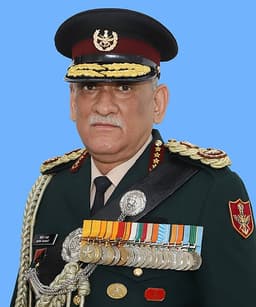
Bipin Rawat
General · Modern
55.0Total
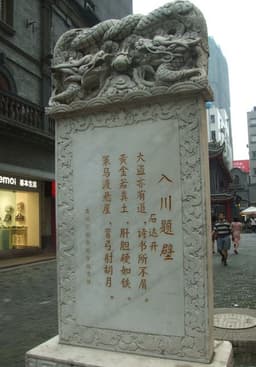
Shi Dakai
General · Modern
59.6Total
Basic Information
Born
1958
1831
Died
—
1863
Era
Modern
Modern
Nationality
India
China
Occupation
General
General
Civilization
Indian
Eastern
Score Comparison
Military (10%)
40.0
76.0
Political (20%)
68.0
45.0
Influence (20%)
59.0
56.7
Legacy (20%)
45.0
54.0
Leadership (15%)
62.0
72.0
Strategy (15%)
55.0
68.1
TOTAL
55.0
59.6
Bipin Rawat — Complete Timeline
2016 AD
Led Counter-Insurgency Operations in KashmirWar
As Army Chief, Rawat oversaw intensified counter-insurgency operations in Kashmir following the 2016 unrest. He advocated for a tough approach against militants, leading to increased military presence.
KashmirCounter-insurgencyMilitary Operations
Impact: regional
Served as Chief of Army StaffPolitical Action◆ Major
Rawat was appointed Chief of Army Staff in 2016. He oversaw operations in Jammu and Kashmir, including the 2016 surgical strikes across the Line of Control, and focused on counter-insurgency.
Army ChiefSurgical StrikesCounter-insurgency
Impact: national
2019 AD
Appointed First Chief of Defence Staff of IndiaPolitical Action
General Bipin Rawat was appointed as India's first Chief of Defence Staff (CDS), a new position created to integrate the three armed services. He was tasked with improving jointness and military efficiency.
CDSMilitary ReformIntegration
Impact: nationalconstructive
2021 AD
Died in Helicopter CrashOther◆ Major
General Rawat, his wife, and 11 others died in a helicopter crash in Tamil Nadu. The crash occurred while he was traveling to a military event, and an inquiry attributed it to weather and pilot error.
DeathAccidentHelicopter Crash
Impact: nationaltragic
Shi Dakai — Complete Timeline
1851 AD
Jintian UprisingWar◆ Major
Shi Dakai joined the Taiping Rebellion at its inception in Jintian, Guangxi. As a core leader, he helped organize the rebel forces and was appointed Wing King, becoming one of the key military commanders of the Taiping Heavenly Kingdom.
Taiping RebellionUprisingMilitary Command
Impact: national
1854 AD
Battle of XiangtanWar◆ Major
Shi Dakai led Taiping forces to a major victory at Xiangtan, Hunan, defeating Qing imperial troops. This battle secured Taiping control over key territories in the Yangtze River valley and demonstrated his military skill.
Taiping RebellionBattleVictory
Impact: regional
1856 AD
Tianjing IncidentPolitical Action
Shi Dakai returned to Tianjing (Nanjing) after the internal purge of the Eastern King Yang Xiuqing and the murder of the Northern King Wei Changhui. He condemned the violence and was forced to flee, leading to a split in Taiping leadership.
Taiping RebellionInternal ConflictPurge
Impact: nationaltragic
1858 AD
Campaign in Zhejiang and FujianWar
Shi Dakai led a separate Taiping army into Zhejiang and Fujian provinces, capturing several cities. This campaign expanded Taiping influence into southeastern China but also isolated his forces from the main Taiping base.
Taiping RebellionCampaignExpansion
Impact: regional
1863 AD
Battle of Baishui RiverWar◆ Major
Shi Dakai's army was trapped and defeated by Qing forces at the Baishui River in Sichuan. He was captured and executed shortly after, marking the end of his military career and a significant loss for the Taiping cause.
Taiping RebellionBattleDefeatDeath
Impact: nationaltragic
Expert Analysis
Shi Dakai vs Bipin Rawat
# Two Generals, Two Worlds
The contrast could not be starker. On one side, a 32-year-old Chinese rebel leader, captured after a desperate river crossing in Sichuan, facing execution by a thousand cuts. On the other, a 63-year-old Indian military chief, flying in a helicopter over Tamil Nadu, suddenly swallowed by flame and wreckage. Shi Dakai died in 1863, his body tortured and dismembered; Bipin Rawat died in 2021, instantly, his uniform still intact. Both were generals. Both shaped the fates of their nations. But the worlds they inhabited—and the histories they left behind—could hardly be more different.
Origins
Shi Dakai was born in 1831 into a prosperous Hakka family in Guangxi, southern China. The Qing Dynasty was crumbling, weakened by foreign wars, internal corruption, and a population explosion that had left millions starving. Shi received a classical Confucian education but grew up in a region seething with resentment against Manchu rule. When a failed scholar named Hong Xiuquan declared himself the brother of Jesus Christ and launched the Taiping Rebellion in 1851, Shi was among the first to join. He was barely twenty years old.
Bipin Rawat was born in 1958 in Pauri, Uttarakhand, into a military family. His father was a senior army officer; his mother came from a lineage of soldiers. Independent India was a rising power, still recovering from partition but determined to assert itself. Rawat attended the National Defence Academy and was commissioned into the Indian Army in 1978. Where Shi entered history through a peasant rebellion, Rawat entered through an institution—the modern nation-state's military machine.
The difference in their origins is not merely personal. Shi Dakai belonged to an era when legitimacy was contested by swords and prophecies. Rawat belonged to an era when legitimacy was conferred by parliaments and constitutions.
Rise to Power
Shi Dakai's rise was meteoric. At the Jintian Uprising in 1851, he was already a core leader. By 1854, at the Battle of Xiangtan, he had become the Taiping's most brilliant field commander. His victory there, crushing Qing imperial troops in Hunan, secured the Taiping's western flank and opened the road to the Yangtze River valley. He was given the title "Wing King"—a name that captured his role as the movement's shield and spear.
But the Taiping Heavenly Kingdom was never a normal state. It was a theocracy ruled by Hong Xiuquan, a man increasingly unstable and paranoid. In 1856, the Tianjing Incident erupted: Hong ordered the murder of the Eastern King Yang Xiuqing, then the Northern King Wei Changhui launched a bloody purge that killed tens of thousands. Shi Dakai rushed back to the capital, tried to stop the slaughter, and was nearly killed himself. He fled, taking his army with him.
Bipin Rawat's rise was slower, steadier, and more institutional. He commanded troops in counter-insurgency operations, served in United Nations peacekeeping missions, and held key staff positions. In 2016, he was appointed Chief of Army Staff. That same year, he oversaw the "surgical strikes" across the Line of Control in Kashmir—a response to a militant attack on an Indian army base. The operation was celebrated domestically, though its strategic impact remains debated.
In 2019, Rawat reached the apex of his career: he was appointed India's first Chief of Defence Staff, a position created to integrate the army, navy, and air force. It was a political achievement as much as a military one, requiring negotiation with bureaucrats and politicians.
Leadership & Governance
Shi Dakai was a military genius by any standard. His strategy was fluid and adaptive; he could march his army across hundreds of miles of hostile terrain, supply his troops from captured stores, and win battles against larger forces. His political score of 64.8 reflects his limitations: he was a brilliant general but never a statesman. He could not build institutions, only armies. He could not govern, only fight.
Rawat, by contrast, had a political score of 70.3—higher than his military score of 45.8. He was a modern military bureaucrat, skilled in navigating India's complex civil-military relations. His leadership score of 75.7 is comparable to Shi's 76.6, but the nature of that leadership was entirely different. Rawat led through policy papers, press conferences, and parliamentary committees. Shi led through personal courage and battlefield presence.
Triumph & Tragedy
Shi Dakai's greatest triumph was the Battle of Xiangtan in 1854, where he demonstrated that the Taiping could defeat Qing regulars in open battle. His greatest tragedy was the Tianjing Incident of 1856, which shattered the Taiping's unity and forced him into the wilderness. He spent the next seven years leading a separate campaign across southern China, never able to return to the capital.
His final tragedy came in 1863 at the Battle of Baishui River in Sichuan. Outnumbered, exhausted, and betrayed by local guides, his army was trapped against the river. He surrendered on the promise that his men would be spared. The Qing broke their word: they executed him slowly, and his surviving soldiers were massacred.
Bipin Rawat's triumph was the creation of the Chief of Defence Staff position—a structural reform that may outlast him. His tragedy was the helicopter crash in 2021, which killed him, his wife, and eleven others. It was sudden, meaningless, and utterly without the drama of Shi's end. But perhaps that is the point: modern generals die in accidents, not on battlefields.
Character & Destiny
Shi Dakai was a man of honor in a movement of fanatics. He refused to participate in the Tianjing purge, even when it cost him everything. He surrendered to save his men, even when he knew the risk. His character was his destiny: noble, but ultimately fatal in a world that rewarded ruthlessness.
Rawat was a man of ambition in a system of constraints. He pushed for integration, for modernization, for a more aggressive posture toward Pakistan and China. His character was his destiny: effective, but limited by the very institutions he served.
Legacy
Shi Dakai's legacy is a strange one. In China, he is remembered as a tragic hero—a brilliant general who fought for a lost cause. His military score of 84.6 and strategy score of 81.6 place him among history's great commanders. But his political score of 64.8 and legacy score of 65.9 reflect the fundamental problem: he fought for a kingdom that collapsed, a rebellion that failed.
Rawat's legacy is still being written. His total score of 67.4 is slightly below Shi's 71.4, but his influence score of 73.1 is higher. He shaped India's military institutions in ways that may last for decades. His death made him a national symbol—a martyr for the cause of military modernization.
Conclusion
The difference between these two generals is not just about scores or centuries. It is about what it means to lead in different worlds. Shi Dakai led through personal sacrifice and battlefield courage, but his world was one of chaos, where legitimacy was won with blood and lost with blood. Rawat led through institutional reform and political maneuvering, in a world where legitimacy is granted by the state and death comes not from an enemy's sword but from a mechanical failure at 2,000 feet.
Both were generals. Both served their nations as they understood them. But Shi Dakai died for a kingdom that could not be saved, while Bipin Rawat died for a nation that will continue without him. That, perhaps, is the deepest difference of all.
Rankings
🥇
Shi DakaiLeader
Mil: 76.0Pol: 45.0Inf: 56.7
59.6
🥈
Bipin Rawat
Mil: 40.0Pol: 68.0Inf: 59.0
55.0
+4.6 behind
How This Comparison Works
Algorithm
Each figure is scored on 6 dimensions (0—100 scale) based on structured historical data: Military (10%), Political (20%), Influence (20%), Legacy (20%), Leadership (15%), Strategy (15%). The weighted total produces the final ranking.
Data Sources
Scores are computed from structured sub-indicators in the database. Scale factors adjust for era (Ancient ×0.85, Modern ×1.0) and civilization size (Eastern ×1.05, Other ×0.80) to account for differences in population and military scale.
Maximum 3 Figures
Comparisons are limited to 2—3 figures to ensure readability and statistical meaningfulness.
Error Margins
±5 points per dimension — Sub-scores are derived from historical records with inherent uncertainty. Two figures within 5 points on a dimension should be considered roughly equivalent in that area.
Total Score Accuracy
±3 points overall — The weighted combination of 6 dimensions produces a total score with approximately ±3 points of uncertainty. Differences of less than 3 points are not statistically significant— the figures are effectively tied.
Known Limitations
- Historical records are incomplete and uneven across civilizations
- Figures from oral-tradition societies may be underrepresented
- Occupation labels can misclassify multi-role figures
- Scores measure capability and impact, not moral character
- Quantitative scoring is a comparison tool, not absolute truth
Capability Radar
Military (10%) — Battles & Warfare
Battles
45
75
Win Rate
50
70
Expansion
30
75
Political (20%) — Governance & Reform
Reform
55
50
Diplomacy
50
45
Economy
30
40
Influence (20%) — Cultural & Global Reach
Cultural
35
55
Global
30
40
Legacy (20%) — Historical Impact
Historical
40
60
Longevity
20
45
Leadership (15%) — Power & Stability
Tenure
40
55
Stability
45
35
Strategy (15%) — Tactics & Innovation
Strategy
65
80
Tactics
60
85
Reform
75
60
Similar Comparisons
Comments & Discussion
RebelArchitect6/16/2026
Shi Dakai wasn’t just a general—he was the Taiping’s strategic mind. The military historians romanticize his heroism, but his real failure was logistics. At the Dadu River in 1863, he had options: build a pontoon bridge upstream or bribe local boatmen. Instead, he waited three days for his family’s baggage train, losing the element of surprise to Qing forces. A 21st-century officer would’ve seen that coming. Rawat died by chance; Shi died by stubborn pride.
天命虎将6/16/2026
石达开的悲剧在于,他活在一个连撤退都比进攻更复杂的时代。太平天国将领总是被神化,但别忘了——他放弃天京时带走了二十万精兵,结果在四川被地方团练围剿到只剩几千人。比平·拉瓦特至少死于意外事故,达开是被自己的声望绑架了,青年英雄变成孤军统帅,最后只能接受凌迟。这不是英勇,是战略死局。
LogicBomb6/16/2026
This comparison is intellectually dishonest. You’re contrasting a 19th-century rebel with a 21st-century career bureaucrat who never led troops in battle as a theater commander. Rawat’s big claim to fame was the 2016 surgical strikes—media hype, not military innovation. Meanwhile, Shi Dakai implemented land reforms and meritocratic governance in his territories that actually worked. Rawat died in a routine helicopter flight; Shi’s death by a thousand cuts reflects state terror. Apples and attack
血色黎明6/16/2026
如果石达开活在今天,他不会被凌迟,但可能被军事法庭判死刑。他的战略选择充满典型失败:1862年远征四川是为了重建根据地,但补给线被切断后,士兵抢掠百姓,失去民众支持。比平·拉瓦特呢?他是印度陆军现代化推动者,死得突然但留下了联合战区改革框架。一个试图创造新政权却败给现实,一个在现有体系里搞变革。结局不同,但都死于系统性缺陷。