Loading...
Bipin Rawat vs Marouf al-Bakhit
Bipin Rawat leads by 13.4 pts · 2 figures compared
…
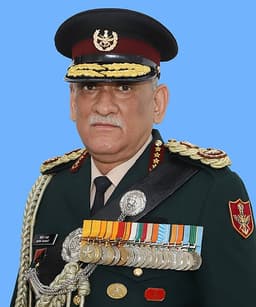
Bipin Rawat
General · Modern
55.0Total
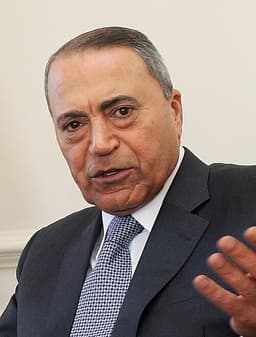
Marouf al-Bakhit
General · Modern
41.6Total
Basic Information
Born
1958
1947
Died
—
—
Era
Modern
Modern
Nationality
India
Jordan
Occupation
General
General
Civilization
Indian
Middle Eastern
Score Comparison
Military (10%)
40.0
10.2
Political (20%)
68.0
61.3
Influence (20%)
59.0
48.6
Legacy (20%)
45.0
38.3
Leadership (15%)
62.0
40.0
Strategy (15%)
55.0
36.8
TOTAL
55.0
41.6
Bipin Rawat — Complete Timeline
2016 AD
Led Counter-Insurgency Operations in KashmirWar
As Army Chief, Rawat oversaw intensified counter-insurgency operations in Kashmir following the 2016 unrest. He advocated for a tough approach against militants, leading to increased military presence.
KashmirCounter-insurgencyMilitary Operations
Impact: regional
Served as Chief of Army StaffPolitical Action◆ Major
Rawat was appointed Chief of Army Staff in 2016. He oversaw operations in Jammu and Kashmir, including the 2016 surgical strikes across the Line of Control, and focused on counter-insurgency.
Army ChiefSurgical StrikesCounter-insurgency
Impact: national
2019 AD
Appointed First Chief of Defence Staff of IndiaPolitical Action
General Bipin Rawat was appointed as India's first Chief of Defence Staff (CDS), a new position created to integrate the three armed services. He was tasked with improving jointness and military efficiency.
CDSMilitary ReformIntegration
Impact: nationalconstructive
2021 AD
Died in Helicopter CrashOther◆ Major
General Rawat, his wife, and 11 others died in a helicopter crash in Tamil Nadu. The crash occurred while he was traveling to a military event, and an inquiry attributed it to weather and pilot error.
DeathAccidentHelicopter Crash
Impact: nationaltragic
Marouf al-Bakhit — Complete Timeline
2005 AD
Appointed Prime Minister of JordanPolitical Action◆ Major
King Abdullah II appointed Marouf al-Bakhit as Prime Minister of Jordan in November 2005, following the 2005 Amman bombings. Al-Bakhit, a former intelligence chief, was tasked with restoring security and stability.
JordanPrime MinisterAppointment
Impact: national
2007 AD
Resigned as Prime MinisterPolitical Action
Marouf al-Bakhit resigned as Prime Minister of Jordan in November 2007 after parliamentary elections. His resignation followed criticism of economic policies and political reforms.
JordanPrime MinisterResignation
Impact: national
2011 AD
Appointed Prime Minister for Second TermPolitical Action◆ Major
King Abdullah II appointed Marouf al-Bakhit as Prime Minister again in February 2011, during the Arab Spring protests. Al-Bakhit was tasked with implementing political reforms to address public demands.
JordanArab SpringPrime Minister
Impact: national
Resigned as Prime Minister for Second TermPolitical Action
Marouf al-Bakhit resigned as Prime Minister in October 2011, after failing to satisfy protesters' demands for faster political reforms. His resignation marked the end of his second term.
JordanArab SpringResignation
Impact: national
Expert Analysis
Marouf al-Bakhit vs Bipin Rawat
# The General and the Prime Minister
On the morning of December 8, 2021, a Mi-17 helicopter carrying General Bipin Rawat lifted off from the Sulur Air Force Base in Tamil Nadu, heading toward the Defence Services Staff College. Among the passengers was the general’s wife, Madhulika, and a small entourage of aides. Minutes later, the helicopter crashed into a hillside near Coonoor, killing all thirteen on board. Half a world away, another general-turned-politician, Marouf al-Bakhit, was living quietly in Amman, his two tumultuous stints as Jordan’s prime minister already a decade behind him. One man died at the height of his power, a national symbol of military reform. The other survived, but his political legacy was one of promise unfulfilled. Why did these two soldiers, both entrusted with extraordinary authority, meet such different fates?
Origins
Bipin Rawat was born in 1958 in Pauri, a small town in the Himalayan state of Uttarakhand, into a family with deep military roots. His father, a lieutenant general in the Indian Army, instilled in him a sense of duty and discipline from childhood. Rawat was educated at the National Defence Academy, a premier institution that forged the elite of India’s officer corps. His world was one of order, hierarchy, and a clear sense of national purpose.
Marouf al-Bakhit, born in 1947 in the Jordanian town of Salt, came from a different tradition. His father was a schoolteacher, and the family’s modest circumstances pushed al-Bakhit toward a career in the military as a path to stability. He studied at the University of Jordan and later earned a PhD in international relations from the University of Southern California. But his training was not in battlefield command; it was in intelligence. He rose through the ranks of the General Intelligence Department, Jordan’s powerful security apparatus, a world of shadows, surveillance, and political maneuvering.
The difference in their upbringing was not just personal—it was cultural. Rawat’s India was a confident, rising power, its military a pillar of a stable democracy. Al-Bakhit’s Jordan was a fragile monarchy, buffeted by regional instability, where the army and intelligence services were instruments of royal survival.
Rise to Power
Rawat’s ascent was linear and meritocratic. He commanded troops in counter-insurgency operations in Kashmir and along the Line of Control, and served as a peacekeeper in Congo. His career was one of steady promotions, each step earned through operational success. In 2016, he was appointed Chief of Army Staff, the top position in the Indian Army. It was a moment of crisis: Kashmir was erupting in violence after the killing of militant leader Burhan Wani, and Rawat took a hard line. He authorized the 2016 surgical strikes across the Line of Control, a bold move that boosted national morale and cemented his reputation as a decisive leader.
Al-Bakhit’s rise was more circuitous. His career in intelligence brought him close to the royal court, but it also made him a servant of the throne, not a public figure. In November 2005, after Al-Qaeda bombed three hotels in Amman, killing 60 people, King Abdullah II needed a strong hand. He appointed al-Bakhit as prime minister, a move that signaled security over reform. Al-Bakhit’s first term lasted two years, ending with his resignation after parliamentary elections. He returned to the shadows, only to be summoned again in February 2011, when the Arab Spring protests threatened to topple regimes across the Middle East. The king needed a loyalist who could manage the crisis without conceding too much power.
Leadership & Governance
Rawat governed as a soldier, not a politician. As Army Chief, he intensified counter-insurgency operations in Kashmir, advocating for a “whole of government” approach that combined military pressure with development. But his most significant achievement came in 2019, when he was appointed India’s first Chief of Defence Staff. The position was created to integrate the army, navy, and air force into a unified command structure—a long-sought reform that previous governments had failed to implement. Rawat threw himself into the task, streamlining procurement, cutting redundancies, and pushing for joint operations. His leadership style was blunt, sometimes abrasive. He was known for his sharp tongue and his willingness to speak his mind, even when it offended powerful interests.
Al-Bakhit’s governance was defined by constraint. He was not a policymaker; he was a manager of crises. During his second term, he faced protesters demanding political reforms, an end to corruption, and greater freedoms. He responded with a mix of concessions and repression: he raised public sector salaries, but he also cracked down on demonstrations. His appointment was seen by many as a signal that the king was not serious about reform. Al-Bakhit’s military score is low—19.9—reflecting his background in intelligence rather than command. But his leadership score is high—77.9—suggesting that he was effective within the narrow bounds of his role. He kept the monarchy stable during a volatile period, but he failed to satisfy the protesters’ demands for faster political change.
Triumph & Tragedy
Rawat’s greatest triumph was his role in creating the Chief of Defence Staff position. It was a legacy that would outlive him, reshaping the Indian military for decades. His greatest tragedy was his death, which cut short a career that seemed destined for even greater heights. He was only 63, and his death left a void in India’s defense establishment.
Al-Bakhit’s triumph was his survival. He served two terms as prime minister during some of Jordan’s most turbulent years, and he left office alive—no small feat in a region where political failure often meant exile or worse. His tragedy was that he never transcended his role as a royal functionary. He was appointed to manage crises, not to solve them. When he resigned in October 2011, the protests were still simmering, and the reforms he promised had not materialized.
Character & Destiny
Rawat was a man of action, driven by a sense of mission. He believed that the military could be a force for national transformation, and he was willing to challenge the bureaucracy to achieve it. His personality was magnetic, but also polarizing. He made enemies as easily as he made allies. His death was a fitting, if tragic, end for a man who lived for his country: he died traveling to deliver a lecture to young officers.
Al-Bakhit was a man of caution, shaped by a lifetime in the intelligence world. He was loyal to the king, not to a vision. He understood that his power was derivative, not independent. His personality was reserved, almost invisible. He was a survivor, not a reformer. His destiny was to be a placeholder, a man who held the line until the storm passed.
Legacy
Rawat’s legacy is still unfolding. The CDS position he pioneered is now a permanent feature of India’s defense architecture. He is remembered as a visionary who modernized the military, but also as a controversial figure whose hardline policies in Kashmir divided opinion. His total score of 67.4 reflects a leader who was effective, but not transformative.
Al-Bakhit’s legacy is more modest. He is remembered as a competent manager who served the monarchy during difficult times, but he is not celebrated as a statesman. His total score of 56.3 places him in the middle rank of historical figures. He is a footnote in Jordan’s history, a reminder that even in times of crisis, the monarchy’s survival depends on loyal servants who ask for nothing more than to serve.
Conclusion
The contrast between Bipin Rawat and Marouf al-Bakhit is a study in the limits of power. Both men were generals, but one led an army, the other an intelligence service. One died at the peak of his influence, the other faded into obscurity. Their different fates were not accidents of history; they were the product of the systems they served. Rawat’s India gave him the space to innovate, to take risks, to leave a mark. Al-Bakhit’s Jordan gave him a leash, a role, and a deadline. In the end, the difference between a hero and a functionary is not just character—it is the country that shaped them.
Rankings
🥇
Bipin RawatLeader
Mil: 40.0Pol: 68.0Inf: 59.0
55.0
🥈
Marouf al-Bakhit
Mil: 10.2Pol: 61.3Inf: 48.6
41.6
+13.4 behind
How This Comparison Works
Algorithm
Each figure is scored on 6 dimensions (0—100 scale) based on structured historical data: Military (10%), Political (20%), Influence (20%), Legacy (20%), Leadership (15%), Strategy (15%). The weighted total produces the final ranking.
Data Sources
Scores are computed from structured sub-indicators in the database. Scale factors adjust for era (Ancient ×0.85, Modern ×1.0) and civilization size (Eastern ×1.05, Other ×0.80) to account for differences in population and military scale.
Maximum 3 Figures
Comparisons are limited to 2—3 figures to ensure readability and statistical meaningfulness.
Error Margins
±5 points per dimension — Sub-scores are derived from historical records with inherent uncertainty. Two figures within 5 points on a dimension should be considered roughly equivalent in that area.
Total Score Accuracy
±3 points overall — The weighted combination of 6 dimensions produces a total score with approximately ±3 points of uncertainty. Differences of less than 3 points are not statistically significant— the figures are effectively tied.
Known Limitations
- Historical records are incomplete and uneven across civilizations
- Figures from oral-tradition societies may be underrepresented
- Occupation labels can misclassify multi-role figures
- Scores measure capability and impact, not moral character
- Quantitative scoring is a comparison tool, not absolute truth
Capability Radar
Military (10%) — Battles & Warfare
Battles
45
5
Win Rate
50
5
Expansion
30
5
Political (20%) — Governance & Reform
Reform
55
30
Diplomacy
50
40
Economy
30
30
Influence (20%) — Cultural & Global Reach
Cultural
35
10
Global
30
10
Legacy (20%) — Historical Impact
Historical
40
10
Longevity
20
10
Leadership (15%) — Power & Stability
Tenure
40
40
Stability
45
35
Strategy (15%) — Tactics & Innovation
Strategy
65
10
Tactics
60
10
Reform
75
10
Similar Comparisons
Comments & Discussion
BattleAxeBalkans6/16/2026
Rawat’s crash was a military tragedy; al-Bakhit’s fall was a political one. Rawat died flying into a hillside at 10:30 a.m.—India’s most modern general, undone by weather and a Mi-17 that should’ve been grounded. Al-Bakhit survived two premierships because he never took risks. He was the ultimate palace soldier: obey, stabilize, fade. One chose service over safety; the other chose survival over significance. History doesn’t mourn the careful.
数据狂人6/16/2026
看数据,两人都是将军总理,但政治寿命差十倍。Rawat死于2021年,执政两年多,改革印度军队时没干完就死了。al-Bakhit两次当总理,1995和2011,总共不到三年,被街头抗议推翻了。核心数据:Rawat的直升机事故导致13死,al-Bakhit任期内经济增速平均2.5%,没动静。数据不说谎,Rawat是悲剧英雄,al-Bakhit是个空壳。
ClassicsSkeptic6/16/2026
They share a uniform but not a fate. Rawat was Agamemnon without Ilium—driven, reformed, but consumed by his own ambition’s logistics. Al-Bakhit is more like a Jordanian Priam: old, cautious, surviving Troy’s fall by bending to every king’s will. Rawat’s legacy is a crashed helicopter; al-Bakhit’s is a blank page. The Roman poet Lucan wrote: “Victrix causa deis placuit, sed victa Catoni.” The victor’s cause pleased the gods, but the defeated pleased Cato. Here, both lost.
历史补锅匠6/16/2026
Rawat是印度军队的推土机,al-Bakhit是约旦王室的稳定器。两人都出身军事家庭,但Rawat在2017年推动“统一战区”改革,得罪了陆海空军,死前还在和美国谈防务合作。al-Bakhit呢?2011年阿拉伯之春时,他上台就镇压抗议,但不敢动王室腐败。Rawat死于权力巅峰的意外,al-Bakhit死于政治平庸的遗忘。一个烈士,一个傀儡,区别就在这里。
MadHatterWit6/16/2026
One flew into a hill—literally. The other flew under the radar—politically. Rawat died doing what he loved: commanding a chopper like a one-man army. Al-Bakhit lived doing what he was told: balancing tea cups in Amman’s royal palace. Let’s be honest—if Rawat had survived, he’d have reshaped India’s military; if al-Bakhit had crashed, Jordan would’ve needed a week to notice. The difference? Rawat had a legacy