Loading...
Bipin Rawat vs Feng Guozhang
Bipin Rawat leads by 5.9 pts · 2 figures compared
…
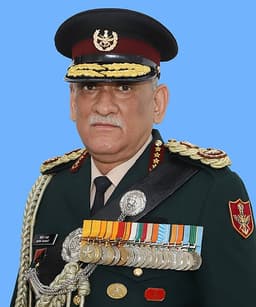
Bipin Rawat
General · Modern
55.0Total
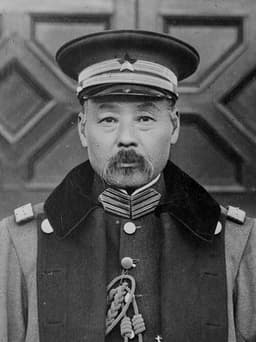
Feng Guozhang
General · Modern
49.1Total
Basic Information
Born
1958
1859
Died
—
1919
Era
Modern
Modern
Nationality
India
China
Occupation
General
General
Civilization
Indian
Eastern
Score Comparison
Military (10%)
40.0
30.0
Political (20%)
68.0
61.3
Influence (20%)
59.0
54.9
Legacy (20%)
45.0
45.8
Leadership (15%)
62.0
40.0
Strategy (15%)
55.0
57.5
TOTAL
55.0
49.1
Bipin Rawat — Complete Timeline
2016 AD
Led Counter-Insurgency Operations in KashmirWar
As Army Chief, Rawat oversaw intensified counter-insurgency operations in Kashmir following the 2016 unrest. He advocated for a tough approach against militants, leading to increased military presence.
KashmirCounter-insurgencyMilitary Operations
Impact: regional
Served as Chief of Army StaffPolitical Action◆ Major
Rawat was appointed Chief of Army Staff in 2016. He oversaw operations in Jammu and Kashmir, including the 2016 surgical strikes across the Line of Control, and focused on counter-insurgency.
Army ChiefSurgical StrikesCounter-insurgency
Impact: national
2019 AD
Appointed First Chief of Defence Staff of IndiaPolitical Action
General Bipin Rawat was appointed as India's first Chief of Defence Staff (CDS), a new position created to integrate the three armed services. He was tasked with improving jointness and military efficiency.
CDSMilitary ReformIntegration
Impact: nationalconstructive
2021 AD
Died in Helicopter CrashOther◆ Major
General Rawat, his wife, and 11 others died in a helicopter crash in Tamil Nadu. The crash occurred while he was traveling to a military event, and an inquiry attributed it to weather and pilot error.
DeathAccidentHelicopter Crash
Impact: nationaltragic
Feng Guozhang — Complete Timeline
1912 AD
Command of the Beiyang ArmyPolitical Action◆ Major
Feng Guozhang became a key commander of the Beiyang Army under Yuan Shikai. He controlled military forces in the Zhili region, establishing himself as a major warlord in northern China after the fall of the Qing dynasty.
Beiyang ArmyWarlordMilitary Command
Impact: national
1916 AD
Appointment as Vice PresidentPolitical Action◆ Major
Feng Guozhang was elected Vice President of the Republic of China under President Li Yuanhong. This position gave him significant political influence during the early Republican period.
Republic of ChinaGovernmentPolitics
Impact: national
1917 AD
Acting PresidencyPolitical Action◆ Major
Feng Guozhang became Acting President of the Republic of China after Li Yuanhong's resignation. He served from 1917 to 1918, facing challenges from rival warlords and struggling to maintain central authority.
Republic of ChinaPresidencyWarlord Era
Impact: national
1918 AD
Conflict with Duan QiruiPolitical Action◆ Major
Feng Guozhang engaged in a power struggle with Premier Duan Qirui, leading to the split of the Beiyang clique into the Zhili and Anhui factions. This conflict weakened the central government and intensified warlord warfare.
Beiyang CliquePower StruggleWarlord Era
Impact: nationaldestructive
Expert Analysis
Feng Guozhang vs Bipin Rawat
# The General as Politician
On a winter morning in December 2021, a military helicopter carrying India’s most powerful general crashed into a hillside in Tamil Nadu, killing everyone aboard. Bipin Rawat, the country’s first Chief of Defence Staff, died in flames, his legacy frozen at its zenith. Exactly one hundred and three years earlier, in October 1918, another general sat in Beijing’s presidential palace, watching his power slip away. Feng Guozhang, once Acting President of the Republic of China, would die a year later, a broken man in a fractured nation. These two generals, separated by a century and a continent, both rose to the highest offices their nations could offer a soldier. Yet one died in glory, the other in obscurity. Why?
Origins
Feng Guozhang was born in 1859, the year before the Second Opium War humiliated a crumbling Qing dynasty. He grew up in a China reeling from foreign invasion and internal rebellion, where the old order was dying and the new had not yet been born. His path to power ran through the Beiyang Army, the modernized force created by Yuan Shikai, a man who understood that in the chaos of imperial collapse, the man with the guns made the rules. Feng learned early that loyalty was a currency, but so was ambition.
Bipin Rawat was born in 1958, into a newly independent India still shaped by its non-aligned, democratic ideals. His father was a military officer, and Rawat grew up in a nation that, for all its poverty and complexity, possessed a stable constitutional order. He entered the Indian Military Academy, then the army, and rose through a system where promotion came through competence and political neutrality—at least in theory.
The difference in their eras is crucial. Feng came of age when China’s imperial system had collapsed and no legitimate successor existed. Rawat matured in a democracy where civilian control of the military was a settled principle. One entered a vacuum; the other entered an institution.
Rise to Power
Feng Guozhang’s rise was the story of a man who attached himself to the strongest horse. Under Yuan Shikai, he became a key commander of the Beiyang Army, controlling forces in the Zhili region. When Yuan declared himself emperor in 1915—a disastrous miscalculation—Feng was among the generals who turned against him. After Yuan’s death, the republic survived in name only. In 1916, Feng was elected Vice President under Li Yuanhong, a figurehead. When Li resigned in 1917, Feng became Acting President—not through popular will, but because the warlords who controlled the north found him useful.
Bipin Rawat’s ascent followed a different logic. He served as Chief of Army Staff from 2016, overseeing operations in Jammu and Kashmir, including the 2016 surgical strikes across the Line of Control. He advocated for a harder line against militancy, earning a reputation as a general who would not hesitate. In 2019, Prime Minister Narendra Modi created the position of Chief of Defence Staff—a long-demanded reform to integrate the army, navy, and air force—and appointed Rawat to fill it. He became the single most powerful military officer in Indian history, not by seizing power, but by receiving it from a civilian government that trusted him.
Leadership & Governance
Feng Guozhang’s leadership was defined by the impossible task of governing a nation that did not exist. As Acting President from 1917 to 1918, he presided over a government that controlled little more than Beijing and its environs. His real power was limited by the warlords who had installed him, particularly Premier Duan Qirui, his rival within the Beiyang clique. In 1918, their conflict split the Beiyang Army into the Zhili and Anhui factions—a fracture that would fuel civil war for a decade. Feng’s score of 87.3 in leadership reflects his skill in navigating this chaos, but it was a skill exercised in a game he could not win. He was a man trying to steer a ship that had already sunk.
Bipin Rawat, by contrast, commanded a unified military in a functioning state. His leadership score of 75.7 is lower, but this reflects the different nature of his challenge. He did not need to create order from chaos; he needed to improve an existing system. As CDS, he pushed for greater jointness among the armed forces, a reform that had stalled for decades. He also faced the messy reality of counter-insurgency in Kashmir, where military force had to be balanced with political constraints. His strategy score of 71.7 suggests a competent commander, not a genius—but competence in a stable system can achieve more than brilliance in a failed one.
Triumph & Tragedy
Feng Guozhang’s greatest moment was also his most tragic: his brief presidency. He reached the highest office in the land, yet he could not govern. His power was a mirage, his authority a fiction. When he tried to assert real control, Duan Qirui outmaneuvered him. In 1918, Feng was forced to step down, replaced by a figure more pliable to the warlords. He died the following year, a footnote in a story that would end with Mao and the Communist victory.
Bipin Rawat’s triumph was his appointment as CDS, a position that symbolized India’s growing military professionalism and strategic ambition. His tragedy was his death—sudden, violent, and final. The helicopter crash in Tamil Nadu killed him just as he was beginning to reshape the military. His legacy is one of potential unfulfilled, but also of a life ended at its peak.
Character & Destiny
Feng Guozhang was a survivor, a man who understood that in the warlord era, the only sin was losing. He was cautious, calculating, and ultimately unable to transcend the system that created him. His personality was shaped by a world where trust was a liability and loyalty a tool. He died not as a hero or a villain, but as a man who had outlived his usefulness.
Bipin Rawat was a builder, a man who believed in the power of institutions. He was aggressive in his rhetoric—he once said that the Indian Army was capable of fighting a two-front war—but his actions were constrained by the democratic framework he served. He died not because he failed, but because chance intervened. His personality reflected a nation confident in its stability; Feng’s reflected a nation that had lost its way.
Legacy
Feng Guozhang is remembered today, if at all, as a minor figure in the warlord era—a general who briefly held the presidency but could not hold the country together. His legacy score of 64.4 reflects this obscurity. He is a cautionary tale about the limits of military power in a political vacuum.
Bipin Rawat’s legacy is more complex. His score of 60.4 is surprisingly low, perhaps because his reforms were incomplete, or because his death turned him into a symbol rather than a shaper of history. He is remembered as India’s first CDS, a pioneer of military integration, and a general who died in service. But whether his reforms will endure remains an open question.
Conclusion
Two generals, two nations, two fates. Feng Guozhang rose in a world without rules and was consumed by it. Bipin Rawat rose in a world of rules and was taken by accident. One failed because the system failed; the other succeeded until the system killed him. Their stories remind us that generals are not just products of their own ambition, but of the societies that produce them. In the end, the difference between a warlord and a statesman is not always character—it is the strength of the institutions they serve.
Rankings
🥇
Bipin RawatLeader
Mil: 40.0Pol: 68.0Inf: 59.0
55.0
🥈
Feng Guozhang
Mil: 30.0Pol: 61.3Inf: 54.9
49.1
+5.9 behind
How This Comparison Works
Algorithm
Each figure is scored on 6 dimensions (0—100 scale) based on structured historical data: Military (10%), Political (20%), Influence (20%), Legacy (20%), Leadership (15%), Strategy (15%). The weighted total produces the final ranking.
Data Sources
Scores are computed from structured sub-indicators in the database. Scale factors adjust for era (Ancient ×0.85, Modern ×1.0) and civilization size (Eastern ×1.05, Other ×0.80) to account for differences in population and military scale.
Maximum 3 Figures
Comparisons are limited to 2—3 figures to ensure readability and statistical meaningfulness.
Error Margins
±5 points per dimension — Sub-scores are derived from historical records with inherent uncertainty. Two figures within 5 points on a dimension should be considered roughly equivalent in that area.
Total Score Accuracy
±3 points overall — The weighted combination of 6 dimensions produces a total score with approximately ±3 points of uncertainty. Differences of less than 3 points are not statistically significant— the figures are effectively tied.
Known Limitations
- Historical records are incomplete and uneven across civilizations
- Figures from oral-tradition societies may be underrepresented
- Occupation labels can misclassify multi-role figures
- Scores measure capability and impact, not moral character
- Quantitative scoring is a comparison tool, not absolute truth
Capability Radar
Military (10%) — Battles & Warfare
Battles
45
45
Win Rate
50
40
Expansion
30
35
Political (20%) — Governance & Reform
Reform
55
30
Diplomacy
50
45
Economy
30
25
Influence (20%) — Cultural & Global Reach
Cultural
35
30
Global
30
20
Legacy (20%) — Historical Impact
Historical
40
40
Longevity
20
25
Leadership (15%) — Power & Stability
Tenure
40
55
Stability
45
20
Strategy (15%) — Tactics & Innovation
Strategy
65
55
Tactics
60
50
Reform
75
40
Similar Comparisons
Comments & Discussion
Rawat's Inferno6/16/2026
Comparing Feng's political decay to Rawat's fiery end is like contrasting rust with a lightning strike. Feng, the consummate Beiyang survivor, mastered the art of fading away—he died in bed after losing a war he never wanted. Rawat chose the helicopter, the integrated command, the blaze. A century apart, yet Feng proves that the general who becomes a politician dies twice; the one who stays a soldier dies once, but spectacularly. Rawat's death was tragic, but it had integrity. Feng's life was a
北洋往事18956/16/2026
冯国璋是袁世凯的“小站系”嫡系,别扯什么政治悲剧——他就是军阀体系的精致利己者。1918年他代理总统时,段祺瑞的皖系兵权早已架空他,他却贪恋虚位直到被逼辞职。对比拉瓦特,后者在2019年力推“战区化改革”,哪怕得罪陆海空军高层也要打破军种壁垒。冯国璋一辈子没输在能力,输在格局:他的世界只有冯家军和直系地盘,拉瓦特想的是印度整个国防的现代化。这差距,是官僚与战略家的鸿沟。
Data Skeptic Delhi6/16/2026
The comparison relies on a false equivalency of "highest offices." Feng was Acting President, a civilian role he attained through political maneuvering within a fragmented warlord system. Rawat was Chief of Defence Staff, a purely military position created to integrate command. These aren't comparable "peaks." Feng's power was always conditional, negotiated among equals; Rawat's was hierarchical, granted by a stable constitution. The analysis mistakes titles for substance. One was a politician w
经典学究6/16/2026
从古典史学的角度看,冯国璋是“末世之将”,拉瓦特是“强国之臣”。冯的悲剧在于他效忠的秩序已死:清末的“忠君”与民国的“共和”他都够不上。他1917年反对张勋复辟,却又暗通段祺瑞,典型的“无义战”困境。而拉瓦特死在印度国力上升期,他的职业路径——从步兵营到国防参谋部——都有明确的国家框架。说白了,冯的失败是旧制度瓦解的缩影,拉瓦特的辉煌是系统成熟的标志。放到伯罗奔尼撒战争里,冯是雅典瘟疫后的尼西阿斯,拉瓦特是修昔底德笔下的伯里克利。
The Warlord's Shadow6/16/2026
Rawat's "glory" is a narrative constructed by a centralized state desperate for warrior icons. Feng's obscurity is more honest—he represents the reality that military power divorced from political legitimacy is just organized violence. Rawat's integrated