Loading...
Bhagat Singh vs Vladimir Lenin
Vladimir Lenin leads by 24.4 pts · 2 figures compared
…
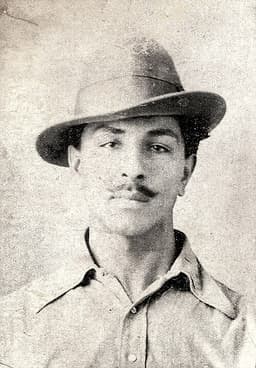
Bhagat Singh
Revolutionary · Modern
46.8Total
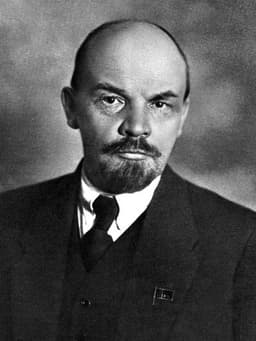
Vladimir Lenin
Revolutionary · Modern
71.2Total
Basic Information
Born
1907
1870
Died
1931
1924
Era
Modern
Modern
Nationality
India
Russia
Occupation
Revolutionary
Revolutionary
Civilization
Indian
Western
Score Comparison
Military (10%)
30.0
30.0
Political (20%)
25.0
78.0
Influence (20%)
61.0
82.0
Legacy (20%)
50.0
72.0
Leadership (15%)
65.0
80.0
Strategy (15%)
25.0
60.0
TOTAL
46.8
71.2
Bhagat Singh — Complete Timeline
1928 AD
Killing of John SaundersPolitical Action◆ Major
Bhagat Singh and his associates killed British police officer John Saunders in Lahore, mistaking him for James Scott, who had ordered the lathi charge that killed Lala Lajpat Rai. This act of revenge escalated the revolutionary movement.
AssassinationRevolutionary Action
Impact: national
1929 AD
Central Legislative Assembly BombingPolitical Action◆ Major
Bhagat Singh and Batukeshwar Dutt threw bombs in the Central Legislative Assembly in Delhi to protest the Public Safety Bill and Trade Disputes Act. They were arrested and used the trial to propagate revolutionary ideas.
ProtestRevolutionary Action
Impact: national
Hunger Strike in JailPolitical Action◆ Major
Bhagat Singh and fellow prisoners went on a 116-day hunger strike in Lahore jail demanding better treatment for political prisoners. The strike drew national attention and forced the British to make concessions.
ProtestPrison Reform
Impact: national
1931 AD
Execution by HangingPolitical Action◆ Major
Bhagat Singh was executed by hanging at Lahore jail at age 23, along with Rajguru and Sukhdev. His execution sparked widespread protests and made him a martyr for the Indian independence movement.
ExecutionMartyrdom
Impact: nationaltragic
Vladimir Lenin — Complete Timeline
1903 AD
Founding of the Bolshevik PartyPolitical Action
At the Second Congress of the Russian Social Democratic Labour Party in London, Lenin led a split that created the Bolshevik faction. The Bolsheviks advocated for a disciplined vanguard party of professional revolutionaries, a key element of Lenin's political strategy.
Political PartyRevolutionIdeology
Impact: global
1917 AD
April ThesesPolitical Action◆ Major
Lenin returned to Russia from exile and published the April Theses, calling for the overthrow of the Provisional Government, transfer of power to the soviets, and an end to World War I. This document set the Bolshevik agenda for the coming revolution.
RevolutionIdeologyPolitical Strategy
Impact: national
October RevolutionPolitical Action
Lenin led the Bolshevik seizure of power in Petrograd, capturing key government buildings and the Winter Palace. The revolution overthrew the Provisional Government and established the world's first socialist state, the Russian Soviet Federative Socialist Republic.
RevolutionCoupCommunism
Impact: global
1918 AD
Treaty of Brest-LitovskPolitical Action◆ Major
Lenin signed a separate peace treaty with the Central Powers, ceding vast territories including Ukraine, Belarus, and the Baltic states. The treaty ended Russia's involvement in World War I but caused significant territorial losses and internal opposition.
TreatyWorld War ITerritorial Loss
Impact: globaldestructive
1921 AD
New Economic Policy (NEP)Reform◆ Major
Lenin introduced the NEP, allowing limited private enterprise and market mechanisms to revive the war-torn Soviet economy. The policy replaced War Communism, permitting small-scale capitalism while the state retained control of major industries.
Economic ReformPolicyRecovery
Impact: nationalconstructive
1922 AD
Establishment of the Soviet UnionPolitical Action
Lenin oversaw the creation of the Union of Soviet Socialist Republics (USSR), a federation of Soviet republics. The new state consolidated Bolshevik control over much of the former Russian Empire and became a model for communist states worldwide.
State FormationCommunismFederation
Impact: global
Expert Analysis
Vladimir Lenin vs Bhagat Singh
# The Revolutionary's Two Paths
In the winter of 1917, a balding man in a rumpled suit stepped off a sealed train at Petrograd’s Finland Station, greeted by throngs of workers and soldiers waving red flags. Vladimir Lenin had returned from exile to claim his moment. Just fourteen years later, on a gray March morning in 1931, a young man of twenty-three walked calmly to the gallows in Lahore’s Central Jail, his last words a defiant cry of “Inquilab Zindabad!”—Long live the revolution. Lenin died in bed at fifty-three, revered as the architect of a new world order. Bhagat Singh died at the rope’s end, a martyr whose unfinished revolution would haunt a subcontinent for generations. Both were revolutionaries, but their trajectories could not have been more different. What drove one to power and the other to the pyre?
Origins
Lenin was born Vladimir Ilyich Ulyanov in 1870 into a family of respectable privilege in Simbirsk, a provincial town on the Volga. His father was a school inspector, his mother the daughter of a physician. The Ulyanovs were educated, moderately liberal, and deeply Russian Orthodox. When Lenin’s elder brother Alexander was executed in 1887 for plotting to assassinate Tsar Alexander III, the family’s world shattered. The seventeen-year-old Vladimir reportedly remarked, “My brother died for the people, but he did not know how to go about it.” That cold calculation—the belief that revolutionary success required ruthless method—became Lenin’s lifelong creed.
Bhagat Singh was born in 1907 in the village of Banga, Punjab, into a family steeped in anti-colonial resistance. His father and uncles had been jailed for supporting the Ghadar Party, an Indian revolutionary group. His grandfather had fought in the 1857 Rebellion against British rule. Where Lenin’s radicalism was born of intellectual rigor and personal tragedy, Bhagat Singh’s was inherited like a birthright. He grew up hearing tales of British oppression, of peasants dispossessed, of patriots hanged. By age twelve, he had read the lives of Irish rebels and Russian nihilists. He would later write, “The sword of revolution is sharpened on the whetstone of ideas.” For him, revolution was not a theory—it was a family heirloom.
Rise to Power
Lenin’s path to power was a slow, deliberate climb through the underground of European socialism. He spent years in exile—in Siberia, then in Geneva, Paris, and Zurich—writing, organizing, and splitting factions. At the Second Congress of the Russian Social Democratic Labour Party in London in 1903, he engineered a schism that created the Bolsheviks, a vanguard party of disciplined revolutionaries. For fourteen years, he waited, honing his theory of imperialism and the state, convinced that a small, dedicated cadre could seize history by the throat. The First World War, with its slaughter and collapse, handed him his opportunity. When the Tsar fell in February 1917, Lenin rushed home in that sealed train, financed by Germany as a weapon against Russia. He arrived with his famous April Theses, demanding the overthrow of the Provisional Government. In October, he struck.
Bhagat Singh’s rise was compressed into a feverish few years. He joined the Hindustan Republican Association as a teenager, then helped found the Hindustan Socialist Republican Association in 1928. His first major act was the killing of British police officer John Saunders in Lahore in December 1928—a case of mistaken identity, meant to avenge the death of veteran leader Lala Lajpat Rai. The assassination was a failure of precision but a success of terror. Then, in April 1929, Bhagat Singh and Batukeshwar Dutt threw bombs into the Central Legislative Assembly in Delhi. The bombs were deliberately non-lethal; the aim was not murder but to “make the deaf hear,” as Singh later wrote. They surrendered, expecting to use the trial as a platform. And they did—but the platform became a gallows.
Leadership & Governance
Lenin governed for just six years, but those years reshaped the world. As head of the Council of People’s Commissars, he ruled with an iron will, nationalizing banks, land, and industry, and crushing opposition with the Cheka, the secret police. His military score of 30.0 reflects his lack of personal battlefield command, but his strategic score of 65.0 captures a different kind of warfare: the politics of survival. When the Civil War raged, he authorized the Red Terror, executing thousands of perceived enemies. Yet he also showed tactical flexibility: in 1921, facing economic collapse, he introduced the New Economic Policy, allowing limited private enterprise. “We must learn to trade,” he told his comrades. The NEP saved the revolution—for a time.
Bhagat Singh never governed. He was a revolutionary in the classic sense: the destroyer, not the builder. His political score of 40.0 reflects his lack of administrative experience, but his influence score of 72.2 shows the power of his ideas. From his prison cell, he wrote essays on atheism, socialism, and the meaning of revolution. He argued that true revolution was not merely the transfer of power but the transformation of society. In his famous essay “Why I Am an Atheist,” he wrote, “The sword of revolution is sharpened on the whetstone of ideas.” He was a thinker as much as a fighter, but he never had the chance to test his theories in power.
Triumph & Tragedy
Lenin’s greatest triumph was the October Revolution itself—a coup that, against all odds, succeeded. In a matter of hours, his Red Guards seized the Winter Palace, and the world’s first socialist state was born. His greatest tragedy came later: the descent into civil war, famine, and the consolidation of one-party dictatorship. By the time of his death in 1924, the revolution had devoured many of its own children. His legacy was already ambiguous.
Bhagat Singh’s triumph was his martyrdom. His 116-day hunger strike in Lahore jail in 1929, demanding better treatment for political prisoners, turned him into a national icon. His execution in 1931, at the age of twenty-three, sparked protests across India. His tragedy was that he never saw the India he dreamed of—a socialist republic free of caste, class, and colonial rule. His last letter, written days before his hanging, read: “I have no desire to live as a slave.”
Character & Destiny
Lenin was a man of cold intellect and fierce will. He brooked no dissent, tolerated no rivals, and believed that the ends justified any means. “We must be ready to employ trickery, deceit, law-breaking, withholding and concealing truth,” he wrote. His personality shaped a system that would outlive him—a system of centralized control, ideological purity, and ruthless pragmatism. He was the revolutionary as architect, building a state on the bones of the old.
Bhagat Singh was the revolutionary as flame—bright, brief, and impossible to extinguish. He was idealistic, intellectual, and utterly fearless. He knew he would die young; he accepted it. In his prison diary, he wrote, “The life of a revolutionary is not a bed of roses. It is full of thorns.” His personality—romantic, principled, unyielding—denied him the flexibility to compromise or survive. But it gave him a death that resonated far beyond his years.
Legacy
Lenin’s legacy is a paradox. He created the Soviet Union, a superpower that lasted seventy years and shaped the twentieth century. His ideology, Marxism-Leninism, inspired revolutions from China to Cuba. Yet his methods—the Cheka, the Red Terror, the suppression of all dissent—also laid the groundwork for Stalin’s purges. His total score of 69.5 reflects a figure of immense impact but deeply contested meaning. Today, Lenin’s embalmed body lies in a mausoleum in Moscow, a relic of a vanished empire.
Bhagat Singh’s legacy is one of inspiration, not institution. He never ruled, never built a state, never wrote a constitution. But his name became a rallying cry for generations of Indian radicals, from the independence movement to the Maoist insurgencies of today. His total score of 53.4 understates his symbolic weight. In India, he is remembered not as a failed revolutionary but as a martyr who proved that a single life, given freely, can shake an empire.
Conclusion
Lenin and Bhagat Singh lived in different worlds—one in the heart of Europe, the other on the periphery of the British Empire. One built a state; the other became a symbol. One died in power; the other died in chains. Yet both believed that history could be bent by human will. Lenin bent it, but at a terrible cost. Bhagat Singh tried, and in failing, perhaps succeeded in a deeper way. The difference between them is the difference between the architect and the flame—one leaves a structure, the other leaves a light. And sometimes, in the long darkness of history, the light is what endures.
Rankings
🥇
Vladimir LeninLeader
Mil: 30.0Pol: 78.0Inf: 82.0
71.2
🥈
Bhagat Singh
Mil: 30.0Pol: 25.0Inf: 61.0
46.8
+24.4 behind
How This Comparison Works
Algorithm
Each figure is scored on 6 dimensions (0—100 scale) based on structured historical data: Military (10%), Political (20%), Influence (20%), Legacy (20%), Leadership (15%), Strategy (15%). The weighted total produces the final ranking.
Data Sources
Scores are computed from structured sub-indicators in the database. Scale factors adjust for era (Ancient ×0.85, Modern ×1.0) and civilization size (Eastern ×1.05, Other ×0.80) to account for differences in population and military scale.
Maximum 3 Figures
Comparisons are limited to 2—3 figures to ensure readability and statistical meaningfulness.
Error Margins
±5 points per dimension — Sub-scores are derived from historical records with inherent uncertainty. Two figures within 5 points on a dimension should be considered roughly equivalent in that area.
Total Score Accuracy
±3 points overall — The weighted combination of 6 dimensions produces a total score with approximately ±3 points of uncertainty. Differences of less than 3 points are not statistically significant— the figures are effectively tied.
Known Limitations
- Historical records are incomplete and uneven across civilizations
- Figures from oral-tradition societies may be underrepresented
- Occupation labels can misclassify multi-role figures
- Scores measure capability and impact, not moral character
- Quantitative scoring is a comparison tool, not absolute truth
Capability Radar
Military (10%) — Battles & Warfare
Battles
0
20
Win Rate
0
35
Expansion
0
70
Political (20%) — Governance & Reform
Reform
15
95
Diplomacy
5
75
Economy
0
60
Influence (20%) — Cultural & Global Reach
Cultural
55
80
Global
50
90
Legacy (20%) — Historical Impact
Historical
60
95
Longevity
55
85
Leadership (15%) — Power & Stability
Tenure
0
55
Stability
0
40
Strategy (15%) — Tactics & Innovation
Strategy
5
55
Tactics
10
30
Reform
0
85
Similar Comparisons
Comments & Discussion
TrainMaster Lenin6/16/2026
Lenin proved that revolutions aren't won by passion but by timing and strategy. He didn't just ride a wave—he created the conditions for it. The April Theses weren't emotional outbursts; they were cold, tactical masterstrokes. Meanwhile, Singh's sacrifice was noble but strategically barren. Martyrdom inspires, but it doesn't build a state. Lenin built one that lasted 70 years. Singh's legacy? Poetic, but powerless.
MartyrBuff 烈士迷6/16/2026
说真的,把Bhagat Singh和列宁放一起比,本身就是对列宁的侮辱。一个是理论家+实干家,另一个只是有勇无谋的炸弹少年。列宁在1917年领导十月革命时,Singh才十岁。等他成熟了?除了扔炸弹和写烈士日记,根本拿不出任何建国的方案。崇拜英雄可以,但别把浪漫当战略。
SkepticalSteve6/16/2026
Am I the only one who finds these "great revolutionary" narratives overblown? Lenin's "sealed train" was funded by the German enemy—talk about foreign interference. And Singh's famous hunger strike? Noble, sure, but he was in a colonial prison making symbolic gestures while real power dynamics shifted elsewhere. Both men were products of their times, but let's not pretend their individual actions single-handedly changed history. Context is everything.
数据侦探6/16/2026
数据不骗人:列宁领导的布尔什维克1917年只有约24万党员,却在短短几个月内夺取了政权;而Singh领导的HRA/HSRA最多不过几百人,绝大多数行动以失败告终。这不是谁更勇敢的问题,而是组织效率和战略眼光的天壤之别。列宁读过《资本论》,写了《怎么办?》;Singh读过列宁吗?应该读过,但他没学到精髓。
IronyWatcher6/16/2026
Funny how Western textbooks romanticize Singh as a "freedom fighter" while demonizing Lenin as a "tyrant." Both advocated violence. Both opposed imperialism. But one succeeded and is called a monster; the other failed and is called a hero. Let's be consistent: either both are revolutionaries, or neither is. The difference isn't morality—it's outcome. And as Lenin knew, history is written by the victors.