Loading...
Bal Gangadhar Tilak vs Bhagat Singh
Bal Gangadhar Tilak leads by 6.1 pts · 2 figures compared
…
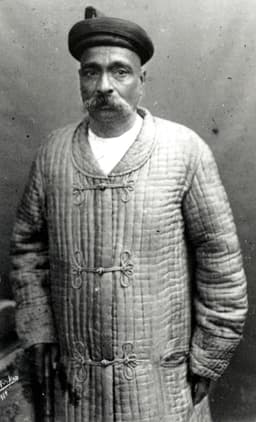
Bal Gangadhar Tilak
Revolutionary · Modern
52.9Total
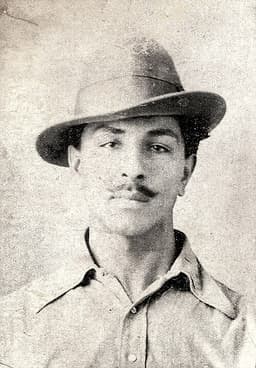
Bhagat Singh
Revolutionary · Modern
46.8Total
Basic Information
Born
1856
1907
Died
1920
1931
Era
Modern
Modern
Nationality
India
India
Occupation
Revolutionary
Revolutionary
Civilization
Indian
Indian
Score Comparison
Military (10%)
50.0
30.0
Political (20%)
48.0
25.0
Influence (20%)
58.3
61.0
Legacy (20%)
56.0
50.0
Leadership (15%)
50.7
65.0
Strategy (15%)
45.0
25.0
TOTAL
52.9
46.8
Bal Gangadhar Tilak — Complete Timeline
1881 AD
Launch of the Maratha and Kesari NewspapersCultural◆ Major
Tilak founded the Marathi-language newspaper 'Kesari' and the English-language 'Maratha' to spread nationalist ideas. These newspapers became influential platforms for criticizing British rule and mobilizing public opinion.
MediaNationalism
Impact: nationalconstructive
1897 AD
Imprisonment for SeditionPolitical Action◆ Major
Tilak was arrested and sentenced to 18 months imprisonment for sedition after publishing articles critical of British rule. His imprisonment increased his popularity and made him a martyr for the nationalist cause.
ImprisonmentSedition
Impact: national
1905 AD
Introduction of Swadeshi MovementPolitical Action◆ Major
Bal Gangadhar Tilak promoted the Swadeshi movement, advocating for the boycott of British goods and the use of Indian-made products. This movement gained widespread support and became a key part of the Indian independence struggle.
NationalismEconomic Boycott
Impact: nationalconstructive
1908 AD
Lucky Ali TrialPolitical Action◆ Major
Tilak was tried and sentenced to six years in Mandalay prison for sedition after defending the use of violence against British officials. His trial and imprisonment further galvanized the Indian independence movement.
TrialImprisonment
Impact: national
1916 AD
Formation of the Home Rule LeaguePolitical Action◆ Major
Tilak founded the Indian Home Rule League in 1916, demanding self-government for India within the British Empire. The movement gained mass support and pressured the British government to consider political reforms.
Political MovementSelf-Government
Impact: nationalconstructive
Bhagat Singh — Complete Timeline
1928 AD
Killing of John SaundersPolitical Action◆ Major
Bhagat Singh and his associates killed British police officer John Saunders in Lahore, mistaking him for James Scott, who had ordered the lathi charge that killed Lala Lajpat Rai. This act of revenge escalated the revolutionary movement.
AssassinationRevolutionary Action
Impact: national
1929 AD
Central Legislative Assembly BombingPolitical Action◆ Major
Bhagat Singh and Batukeshwar Dutt threw bombs in the Central Legislative Assembly in Delhi to protest the Public Safety Bill and Trade Disputes Act. They were arrested and used the trial to propagate revolutionary ideas.
ProtestRevolutionary Action
Impact: national
Hunger Strike in JailPolitical Action◆ Major
Bhagat Singh and fellow prisoners went on a 116-day hunger strike in Lahore jail demanding better treatment for political prisoners. The strike drew national attention and forced the British to make concessions.
ProtestPrison Reform
Impact: national
1931 AD
Execution by HangingPolitical Action◆ Major
Bhagat Singh was executed by hanging at Lahore jail at age 23, along with Rajguru and Sukhdev. His execution sparked widespread protests and made him a martyr for the Indian independence movement.
ExecutionMartyrdom
Impact: nationaltragic
Expert Analysis
Bal Gangadhar Tilak vs Bhagat Singh
# The Revolutionary’s Dilemma: Tilak and Bhagat Singh
On an August morning in 1920, an old man lay dying in Bombay, surrounded by mourners who would soon number in the hundreds of thousands. Bal Gangadhar Tilak, the man the British called “the father of Indian unrest,” had spent his final years fighting not just the Empire but also his own failing health. Eleven years later, in March 1931, a young man of twenty-three walked to the gallows in Lahore jail, singing as the rope tightened around his neck. Between these two deaths lay the entire arc of India’s revolutionary awakening—and a question that still haunts movements of resistance everywhere: how much violence is justified in the pursuit of freedom?
Origins
Tilak was born in 1856 into a Chitpavan Brahmin family in Ratnagiri, a coastal town that had already produced generations of scholars and administrators. His father was a schoolteacher who believed in modern education, and young Bal Gangadhar grew up fluent in Sanskrit, mathematics, and the English classics. This was a world where the British Raj seemed permanent, where educated Indians still hoped for gradual reform through petitions and persuasion.
Bhagat Singh came into a different India. Born in 1907 in a small village in Punjab, he was raised in a family of revolutionaries—his uncle had been hanged for killing a British officer, his father was a follower of the Arya Samaj movement. The Jallianwala Bagh massacre of 1919, when he was twelve, seared itself into his consciousness. By the time he was a teenager, the patient constitutionalism of Tilak’s generation had given way to something far more urgent.
Rise to Power
Tilak entered politics through journalism. In 1881, he launched the Marathi newspaper *Kesari* and the English *Maratha*, using them as platforms to expose British exploitation and to argue that self-rule was not a gift to be begged for but a right to be claimed. His breakthrough came in 1897, when he was arrested for sedition after publishing articles criticizing British policies during a plague epidemic. The eighteen-month sentence made him a national hero. He understood something that eluded more moderate leaders: that martyrdom, even on a small scale, could transform a regional figure into a symbol of resistance.
Bhagat Singh’s path was shorter and steeper. In 1928, he and his comrades killed John Saunders, a British police officer, in a case of mistaken identity—they had been aiming for James Scott, the man who had ordered the lathi charge that killed the elderly nationalist Lala Lajpat Rai. The following year, Singh and Batukeshwar Dutt threw bombs into the Central Legislative Assembly in Delhi. The bombs were designed not to kill but to protest the Public Safety Bill; they shouted “Inquilab Zindabad” as they were arrested. But it was the 116-day hunger strike in Lahore jail that truly captured the nation’s imagination, forcing the British to negotiate with prisoners they had dismissed as common criminals.
Leadership & Governance
Tilak was a builder of institutions. He organized the Swadeshi movement in 1905, urging Indians to boycott British goods and revive indigenous industries. He founded the Home Rule League in 1916, creating a mass political organization that demanded self-government within the Empire. His strategy was patient, legal, and aimed at mobilizing public opinion through newspapers, public meetings, and educational campaigns. Even in prison—he spent six years in Mandalay after the 1908 Lucky Ali trial—he read, wrote, and planned.
Bhagat Singh had no time for institutions. He was twenty-three when he died. His leadership was symbolic and intellectual: he wrote essays on anarchism, studied the Russian Revolution, and debated the ethics of violence with his comrades. His most famous act—the Assembly bombing—was deliberately theatrical, designed to make a statement rather than cause casualties. He understood that in an age of mass media, the revolutionary’s weapon was not the bullet but the idea.
Triumph & Tragedy
Tilak’s greatest moment came in 1916, when he united with Muhammad Ali Jinnah and Annie Besant to demand Home Rule. He had spent decades building alliances, surviving imprisonment, and outlasting rivals. His tragedy was that he died in 1920, just as Gandhi was emerging as the new leader of the Indian freedom struggle. He never saw the independence he had worked for.
Bhagat Singh’s triumph was his death. The British hanged him on March 23, 1931, along with Rajguru and Sukhdev. The execution sparked protests across India; tens of thousands lined the streets for his funeral procession. His tragedy was that he never lived to see whether his methods would work. He left behind a question mark: had he lived, would he have become a statesman like Tilak, or would he have remained a revolutionary, forever outside the system?
Character & Destiny
Tilak was a strategist who believed in the long game. He once said, “Swaraj is my birthright, and I shall have it.” The phrase was a manifesto, not a threat. He was willing to go to prison, but he was also willing to negotiate with the British, to work within the system when it served his purposes. His personality was that of a teacher and organizer, patient and calculating.
Bhagat Singh was a romantic who believed in the power of sacrifice. “The sword of revolution is sharpened on the whetting stone of ideas,” he wrote from prison. He was willing to die young, to become a symbol that would outlast him. His personality was that of a poet and martyr, impulsive and absolute. Where Tilak built organizations, Bhagat Singh built legends.
Legacy
Tilak is remembered as the “Lokmanya”—the revered leader. His political methods—the use of newspapers, the organization of boycotts, the demand for self-rule—became the foundation of the Indian National Congress. Gandhi called him “the maker of modern India.” His scores in political wisdom and leadership reflect a man who understood power as a slow accumulation of influence.
Bhagat Singh is remembered as the “Shaheed”—the martyr. His image adorns posters in student hostels and revolutionary movements across India. His legacy is more emotional than institutional: he represents the idea that freedom is worth dying for. His scores in influence and legacy, nearly as high as Tilak’s despite his youth, show that a short life can leave a long shadow.
Conclusion
Standing at the crossroads of these two lives, one sees the fundamental tension in every freedom movement. Tilak believed that revolution was a marathon, requiring patience, organization, and the willingness to compromise. Bhagat Singh believed that revolution was a sprint, requiring sacrifice, drama, and the willingness to die. Both were right. Without Tilak’s patient institution-building, the Indian National Congress might never have become a mass movement. Without Bhagat Singh’s dramatic sacrifice, the British might never have felt the moral pressure to leave. Their differences were not contradictions but complements—two faces of the same struggle, each necessary, each incomplete without the other.
Rankings
🥇
Bal Gangadhar TilakLeader
Mil: 50.0Pol: 48.0Inf: 58.3
52.9
🥈
Bhagat Singh
Mil: 30.0Pol: 25.0Inf: 61.0
46.8
+6.1 behind
How This Comparison Works
Algorithm
Each figure is scored on 6 dimensions (0—100 scale) based on structured historical data: Military (10%), Political (20%), Influence (20%), Legacy (20%), Leadership (15%), Strategy (15%). The weighted total produces the final ranking.
Data Sources
Scores are computed from structured sub-indicators in the database. Scale factors adjust for era (Ancient ×0.85, Modern ×1.0) and civilization size (Eastern ×1.05, Other ×0.80) to account for differences in population and military scale.
Maximum 3 Figures
Comparisons are limited to 2—3 figures to ensure readability and statistical meaningfulness.
Error Margins
±5 points per dimension — Sub-scores are derived from historical records with inherent uncertainty. Two figures within 5 points on a dimension should be considered roughly equivalent in that area.
Total Score Accuracy
±3 points overall — The weighted combination of 6 dimensions produces a total score with approximately ±3 points of uncertainty. Differences of less than 3 points are not statistically significant— the figures are effectively tied.
Known Limitations
- Historical records are incomplete and uneven across civilizations
- Figures from oral-tradition societies may be underrepresented
- Occupation labels can misclassify multi-role figures
- Scores measure capability and impact, not moral character
- Quantitative scoring is a comparison tool, not absolute truth
Capability Radar
Military (10%) — Battles & Warfare
Battles
23
0
Win Rate
30
0
Expansion
30
0
Political (20%) — Governance & Reform
Reform
70
15
Diplomacy
60
5
Economy
20
0
Influence (20%) — Cultural & Global Reach
Cultural
65
55
Global
55
50
Legacy (20%) — Historical Impact
Historical
70
60
Longevity
60
55
Leadership (15%) — Power & Stability
Tenure
30
0
Stability
40
0
Strategy (15%) — Tactics & Innovation
Strategy
37
5
Tactics
39
10
Reform
43
0
Similar Comparisons
Comments & Discussion
RevolutionaryScales6/16/2026
Tilak was the political architect who built the scaffolding of mass nationalism; Bhagat Singh was the spark that made the British realize scaffolding could burn. Tilak gave us Swaraj as our birthright—a lawyer’s argument that mobilized millions. Singh gave us the bomb as a duty—a soldier’s logic that terrified an empire. Without Tilak’s foundation, Singh’s martyrdom would have been just another execution. Without Singh’s fire, Tilak’s legacy would have been just another reformist footnote. They
铁血辩证法6/16/2026
如果把革命比作一棵大树,提拉克是沉默的根系,在帝国法律的冻土下悄悄延伸;巴格特·辛格是劈开雷霆的闪电,照亮了黑夜却瞬间消散。数据不会说谎:提拉克创办的《狮报》让民族主义从精英沙龙走进茶馆巷陌,而辛格的炸弹宣言让英国当局花在监控上的钱翻了四倍。两人合在一起,才构成变革的完整方程式——一个负责播种,一个负责引爆。
ThermidorianTilak6/16/2026
Everyone romanticizes the young martyr while overlooking the old strategist, but here’s the uncomfortable truth: Tilak actually lived to see his ideas penetrate the Congress Party, while Bhagat Singh’s utopian socialism never outlasted his executioners. Singh shouted "Inquilab Zindabad" from the gallows—thrilling, yes—but within five years his own comrades had joined the very parliamentary system he despised. Tilak’s pragmatic Hindutva-infused nationalism proved far more durable than Singh’s rom
青春与白发6/16/2026
历史总是偏爱年轻人,因为他们的死亡像悲剧一样完美。但我想说句刻薄话:巴格特·辛格的《狱中笔记》读起来像大学生辩论队的激情演说,而提拉克在狱中写下的《吉檀迦利》注释却藏着一整套哲学。辛格的英雄主义是瞬间绽放的烟花,提拉克的韧性是暗夜中永不熄灭的油灯。一个适合做旗帜,一个适合做地基——但请记住,旗帜可以换,地基一旦动摇,整座大厦都会坍塌。
StatisticsSkeptic6/16/2026
Forget the hagiography: Tilak’s real innovation was crowd-psychology, not philosophy. He took Marathi folk theatre and turned it into political propaganda—Ganesh Chaturthi became a mass mobilization tool. And Bhagat Singh? His most effective weapon wasn’t bombs but hunger strikes—a PR victory that made the British look like barbarians. Both men understood that perception is power. Tilak manufactured cultural grievances; Singh manufactured moral outrage. Neither offered a coherent economic progra