Loading...
This comparison has not been analyzed yet.
One-time AI generation (~1 minute). Scores and timeline are already available below.
Bernardino Caballero vs Shi Dakai
Shi Dakai leads by 4.6 pts · 2 figures compared
…

Bernardino Caballero
General · Modern
55.0Total
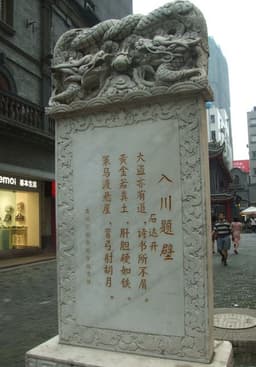
Shi Dakai
General · Modern
59.6Total
Basic Information
Born
1839
1831
Died
1912
1863
Era
Modern
Modern
Nationality
Paraguay
China
Occupation
General
General
Civilization
Western
Eastern
Score Comparison
Military (10%)
10.0
76.0
Political (20%)
68.0
45.0
Influence (20%)
60.0
56.7
Legacy (20%)
58.0
54.0
Leadership (15%)
65.0
72.0
Strategy (15%)
45.0
68.1
TOTAL
55.0
59.6
Bernardino Caballero — Complete Timeline
1865 AD
Fought in the War of the Triple AllianceWar◆ Major
Caballero served as a cavalry officer in the Paraguayan army under Francisco Solano L
War of the Triple AllianceMilitary ServiceOfficer
Impact: regional
1880 AD
Served as President of ParaguayPolitical Action◆ Major
Caballero served as President of Paraguay from 1880 to 1886. His administration focused on reconstruction after the War of the Triple Alliance, promoting immigration and economic development, but also consolidating the power of the military and the emerging Colorado Party.
PresidencyReconstructionColorado Party
Impact: nationalconstructive
1887 AD
Founded the Colorado PartyPolitical Action◆ Major
Caballero founded the National Republican Association (Colorado Party) in Asunci
Political PartyFoundingColorado Party
Impact: nationalconstructive
1904 AD
Exiled after Liberal RevolutionPolitical Action
After the Liberal Revolution of 1904 overthrew the Colorado government, Caballero was forced into exile in Argentina. He remained a symbolic leader of the Colorado Party until his death in 1912.
ExileLiberal RevolutionPolitical Defeat
Impact: nationaltragic
Shi Dakai — Complete Timeline
1851 AD
Jintian UprisingWar◆ Major
Shi Dakai joined the Taiping Rebellion at its inception in Jintian, Guangxi. As a core leader, he helped organize the rebel forces and was appointed Wing King, becoming one of the key military commanders of the Taiping Heavenly Kingdom.
Taiping RebellionUprisingMilitary Command
Impact: national
1854 AD
Battle of XiangtanWar◆ Major
Shi Dakai led Taiping forces to a major victory at Xiangtan, Hunan, defeating Qing imperial troops. This battle secured Taiping control over key territories in the Yangtze River valley and demonstrated his military skill.
Taiping RebellionBattleVictory
Impact: regional
1856 AD
Tianjing IncidentPolitical Action
Shi Dakai returned to Tianjing (Nanjing) after the internal purge of the Eastern King Yang Xiuqing and the murder of the Northern King Wei Changhui. He condemned the violence and was forced to flee, leading to a split in Taiping leadership.
Taiping RebellionInternal ConflictPurge
Impact: nationaltragic
1858 AD
Campaign in Zhejiang and FujianWar
Shi Dakai led a separate Taiping army into Zhejiang and Fujian provinces, capturing several cities. This campaign expanded Taiping influence into southeastern China but also isolated his forces from the main Taiping base.
Taiping RebellionCampaignExpansion
Impact: regional
1863 AD
Battle of Baishui RiverWar◆ Major
Shi Dakai's army was trapped and defeated by Qing forces at the Baishui River in Sichuan. He was captured and executed shortly after, marking the end of his military career and a significant loss for the Taiping cause.
Taiping RebellionBattleDefeatDeath
Impact: nationaltragic
This comparison has not been analyzed yet.
One-time AI generation (~1 minute). Scores and timeline are already available below.
Rankings
🥇
Shi DakaiLeader
Mil: 76.0Pol: 45.0Inf: 56.7
59.6
🥈
Bernardino Caballero
Mil: 10.0Pol: 68.0Inf: 60.0
55.0
+4.6 behind
How This Comparison Works
Algorithm
Each figure is scored on 6 dimensions (0—100 scale) based on structured historical data: Military (10%), Political (20%), Influence (20%), Legacy (20%), Leadership (15%), Strategy (15%). The weighted total produces the final ranking.
Data Sources
Scores are computed from structured sub-indicators in the database. Scale factors adjust for era (Ancient ×0.85, Modern ×1.0) and civilization size (Eastern ×1.05, Other ×0.80) to account for differences in population and military scale.
Maximum 3 Figures
Comparisons are limited to 2—3 figures to ensure readability and statistical meaningfulness.
Error Margins
±5 points per dimension — Sub-scores are derived from historical records with inherent uncertainty. Two figures within 5 points on a dimension should be considered roughly equivalent in that area.
Total Score Accuracy
±3 points overall — The weighted combination of 6 dimensions produces a total score with approximately ±3 points of uncertainty. Differences of less than 3 points are not statistically significant— the figures are effectively tied.
Known Limitations
- Historical records are incomplete and uneven across civilizations
- Figures from oral-tradition societies may be underrepresented
- Occupation labels can misclassify multi-role figures
- Scores measure capability and impact, not moral character
- Quantitative scoring is a comparison tool, not absolute truth
Capability Radar
Military (10%) — Battles & Warfare
Battles
45
75
Win Rate
40
70
Expansion
25
75
Political (20%) — Governance & Reform
Reform
45
50
Diplomacy
50
45
Economy
30
40
Influence (20%) — Cultural & Global Reach
Cultural
40
55
Global
30
40
Legacy (20%) — Historical Impact
Historical
55
60
Longevity
60
45
Leadership (15%) — Power & Stability
Tenure
60
55
Stability
20
35
Strategy (15%) — Tactics & Innovation
Strategy
30
80
Tactics
35
85
Reform
20
60
Similar Comparisons
Comments & Discussion
No comments yet. Be the first to share your thoughts!