Loading...
Baybars vs Tailapa II
Baybars leads by 3.4 pts · 2 figures compared
…
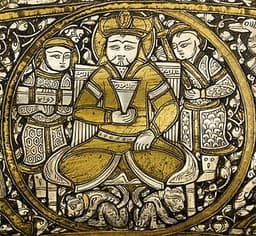
Baybars
Emperor · Medieval
63.8Total
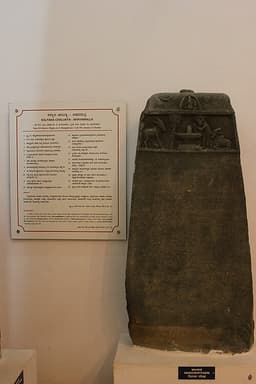
Tailapa II
Emperor · Medieval
60.4Total
Basic Information
Born
1223
957
Died
1277
997
Era
Medieval
Medieval
Nationality
Egypt
India
Occupation
Emperor
Emperor
Civilization
Middle Eastern
Indian
Score Comparison
Military (10%)
85.0
74.7
Political (20%)
70.0
53.8
Influence (20%)
55.0
61.0
Legacy (20%)
52.0
52.0
Leadership (15%)
72.0
72.0
Strategy (15%)
72.0
58.0
TOTAL
63.8
60.4
Baybars — Complete Timeline
1260 AD
Battle of Ain Jalut (1260)War◆ Major
Baybars served as a key commander under Qutuz at the Battle of Ain Jalut. He led the vanguard and played a crucial role in the Mamluk victory over the Mongols. This battle established his reputation as a military leader.
Mongol InvasionBattleMamluk Victory
Impact: globalconstructive
Accession as Sultan (1260)Political Action◆ Major
After assassinating Qutuz, Baybars proclaimed himself Sultan of Egypt. He was accepted by the Mamluk commanders and the Abbasid Caliph. His reign began a period of Mamluk dominance in the Middle East, lasting for decades.
SuccessionMamluk SultanateAssassination
Impact: regional
1265 AD
Campaigns against the Crusader States (1260s-1270s)War◆ Major
Baybars launched a series of campaigns against the remaining Crusader states in the Levant. He captured key fortresses including Arsuf (1265), Safed (1266), Jaffa (1268), and Antioch (1268). These victories reduced Crusader territory to a few coastal enclaves.
Crusader WarsConquestMamluk Expansion
Impact: regionaldestructive
1277 AD
Defeat of the Mongols at Elbistan (1277)War◆ Major
Baybars defeated a Mongol army at the Battle of Elbistan in Anatolia. He invaded the Seljuk Sultanate of Rum, which was under Mongol suzerainty. Although a tactical victory, Baybars could not hold Anatolia and returned to Syria.
Mongol WarsBattleAnatolia
Impact: regionalconstructive
Death of Baybars (1277)Other◆ Major
Baybars died in Damascus, possibly from poisoning or illness. His death was kept secret for a time to prevent unrest. He was succeeded by his son Al-Said Barakah. Baybars' reign is considered the peak of the early Mamluk Sultanate.
DeathSuccessionMamluk Sultanate
Impact: regionaltragic
Tailapa II — Complete Timeline
973 AD
Founding of the Western Chalukya DynastyPolitical Action◆ Major
Tailapa II overthrew the Rashtrakuta ruler Karka II and established the Western Chalukya dynasty. This marked the end of Rashtrakuta rule in the Deccan and the beginning of a new Chalukya era.
Impact: regional
995 AD
Defeat of the Paramara King MunjaWar◆ Major
Tailapa II defeated and captured the Paramara king Munja of Malwa. This victory consolidated Western Chalukya control over the northern Deccan and established their military reputation.
Impact: regional
Expert Analysis
Baybars vs Tailapa II
### The Throne and the Sword
In the year 973, on the parched plains of the Deccan, a descendant of a fallen dynasty, Tailapa II, raised his standard against the Rashtrakuta emperor Karka II. It was a local rebellion, a bloody squabble over an ancient Indian kingdom. Just over two centuries later, in 1260, a slave-soldier named Baybars rode at the head of a Mamluk vanguard into the valley of Ain Jalut, near Nazareth, to face the seemingly invincible Mongol horde. One man fought to reclaim a heritage; the other to save a civilization. Both founded dynasties and left indelible marks on their worlds. Yet their paths, their tools, and their ultimate destinies were as different as the landscapes they ruled. Why did one founder become a revered restorer, while the other became a legend forged in the crucible of holy war?
### Origins
Tailapa II was born in 957, a prince of the Chalukya bloodline, a family that had once ruled much of the Deccan before being eclipsed by the Rashtrakutas. His birthright was a memory, a claim written in the blood of ancestors. He grew up in a world of complex Hindu kingship, where dharma, ritual, and the balance of power between rival clans dictated a ruler’s life. His path was one of restoration, of re-establishing an old order.
Baybars, born in 1223, was a Kipchak Turk from the steppes north of the Black Sea. Captured as a boy and sold into slavery, he had no birthright but his own strength and cunning. His world was the brutal Mamluk system of Cairo, where military slaves could rise to the highest power through sheer merit and ruthlessness. He grew up not in a palace, but in barracks, learning the sword and the bow. His path was not one of restoration, but of survival and conquest against existential threats: the Crusaders and the Mongols.
### Rise to Power
Tailapa II’s rise was a classic medieval Indian coup. He bided his time, gathering support among disaffected Chalukya feudatories, and struck when the Rashtrakuta empire was weakened by internal strife. In 973, he overthrew Karka II, a decisive political action that scored a 62.2. It was a swift, clean seizure of power, a palace revolution writ large. He did not need to reinvent the state; he needed to reclaim it.
Baybars’s rise was far more violent and treacherous. He first made his name as a brilliant commander under Sultan Qutuz. At the Battle of Ain Jalut in 1260, Baybars led the decisive ambush that shattered the Mongol advance, a military masterstroke (Strategy: 71.6). But immediately after the victory, he assassinated Qutuz, seizing the sultanate for himself in a moment of cold-blooded ambition. His political score of 75.7 reflects this brutal pragmatism. He did not inherit a throne; he murdered his way onto it.
### Leadership & Governance
As rulers, the two men reveal their deepest contrasts. Tailapa II was a restorer. His leadership score of 73.3 came from re-establishing the Chalukya administrative system, patronizing Hindu temples, and consolidating control over the Deccan. His war with the Paramara king Munja in 995, whom he defeated and captured, was a traditional struggle for regional supremacy. He governed as a Hindu monarch, his legitimacy rooted in lineage and ritual. He was a consolidator, not a revolutionary.
Baybars, with a leadership score of 80.2, was a warrior-architect. He did not restore an old order; he built a new one. He reformed the Mamluk military, creating a professional army of slave-soldiers that would dominate the region for centuries. He launched relentless campaigns against the Crusader states from 1265 onward, capturing their key fortresses. He also fought the Mongols, defeating them at Elbistan in 1277. His governance was a constant state of war, a machine built for survival. He was a builder, but his foundation was blood and iron.
### Triumph & Tragedy
Tailapa II’s greatest triumph was the founding of the Western Chalukya dynasty, which would last for over two centuries. His tragedy is that his victories were limited. He could not break the power of the Cholas to the south, and his realm remained one among many in the fractured Indian political landscape. His legacy score of 66.9 reflects a respected but not transcendent figure.
Baybars’s triumph was epic. He was the man who broke the Mongol myth of invincibility at Ain Jalut, saving Egypt and Islam from annihilation. His campaigns dismantled the Crusader kingdoms. His tragedy was his own success: he died in 1277, possibly poisoned, in Damascus, a ruler who could trust no one, not even his own cupbearer. His death was kept secret for weeks to prevent chaos. He was a hero who lived in a state of perpetual siege.
### Character & Destiny
Tailapa II’s destiny was shaped by the past. He was a prince reclaiming a throne, his actions dictated by the memory of his ancestors. He was cautious, patient, and conservative. His personality was that of a steward, a man who believed in order and tradition.
Baybars’s destiny was shaped by the present. He was a slave who became a sultan, his actions dictated by the brutal realities of his time. He was ruthless, brilliant, and paranoid. He trusted no one because he had no one to trust. His personality was that of a survivor, a man who believed only in power and its immediate application.
### Legacy
Tailapa II is remembered today as a founder, a footnote in the grand narrative of Indian history, his dynasty a bridge between the ancient Chalukyas and the later Vijayanagara Empire. His influence score of 73.5 is moderate; he is a name for specialists.
Baybars is a legend. In the Middle East, he is a folk hero, the sultan who stood against the Mongols and the Crusaders. His name adorns streets and squares. His influence score of 72.3 is matched by an almost mythical status. He is a symbol of resistance, a warrior-king whose story is told to children.
### Conclusion
One man restored a kingdom; the other saved a civilization. Tailapa II fought for a dynasty; Baybars fought for a world. The difference is not in their courage or skill, but in the scale of the threats they faced and the nature of the worlds they inhabited. Tailapa II’s India was a land of competing kingdoms; Baybars’s Middle East was a battlefield of empires. Their stories remind us that history judges not just by what a man does, but by what he faces. One was a restorer; the other was a shield. Both were necessary for their times.
Rankings
🥇
BaybarsLeader
Mil: 85.0Pol: 70.0Inf: 55.0
63.8
🥈
Tailapa II
Mil: 74.7Pol: 53.8Inf: 61.0
60.4
+3.4 behind
How This Comparison Works
Algorithm
Each figure is scored on 6 dimensions (0—100 scale) based on structured historical data: Military (10%), Political (20%), Influence (20%), Legacy (20%), Leadership (15%), Strategy (15%). The weighted total produces the final ranking.
Data Sources
Scores are computed from structured sub-indicators in the database. Scale factors adjust for era (Ancient ×0.85, Modern ×1.0) and civilization size (Eastern ×1.05, Other ×0.80) to account for differences in population and military scale.
Maximum 3 Figures
Comparisons are limited to 2—3 figures to ensure readability and statistical meaningfulness.
Error Margins
±5 points per dimension — Sub-scores are derived from historical records with inherent uncertainty. Two figures within 5 points on a dimension should be considered roughly equivalent in that area.
Total Score Accuracy
±3 points overall — The weighted combination of 6 dimensions produces a total score with approximately ±3 points of uncertainty. Differences of less than 3 points are not statistically significant— the figures are effectively tied.
Known Limitations
- Historical records are incomplete and uneven across civilizations
- Figures from oral-tradition societies may be underrepresented
- Occupation labels can misclassify multi-role figures
- Scores measure capability and impact, not moral character
- Quantitative scoring is a comparison tool, not absolute truth
Capability Radar
Military (10%) — Battles & Warfare
Battles
85
70
Win Rate
90
75
Expansion
80
75
Political (20%) — Governance & Reform
Reform
80
65
Diplomacy
78
60
Economy
72
65
Influence (20%) — Cultural & Global Reach
Cultural
65
55
Global
65
40
Legacy (20%) — Historical Impact
Historical
75
60
Longevity
60
50
Leadership (15%) — Power & Stability
Tenure
75
70
Stability
70
60
Strategy (15%) — Tactics & Innovation
Strategy
85
70
Tactics
88
65
Reform
82
60
Similar Comparisons
Comments & Discussion
BaybarsBlitz6/16/2026
Comparing Tailapa II to Baybars is like comparing a local sheriff to a world heavyweight champion. Tailapa II reconquered a kingdom; Baybars stopped the Mongol Empire cold at Ain Jalut. One fact says it all: Baybars captured 13,000 Mongol prisoners in a single campaign, while Tailapa's biggest win was against a crumbling Rashtrakuta dynasty. Tailapa restored an old house; Baybars built a fortress that held the line for Islam.
蒙古铁骑克星6/16/2026
拿Tailapa二世跟Baybars比,简直是把地方军阀跟全球终结者放一起。Baybars在阿音扎鲁特一战就砍了数千蒙古骑兵,还俘虏了敌方大将,而Tailapa打的那个Rashtrakuta王朝早就烂透了。说难听点,Tailapa也就是在印度小圈子里折腾,Baybars是在改变世界历史走向。不服来辩,数据摆在这。
SlaveSultanScourge6/16/2026
The real comparison isn't about military tactics—it's about legacy. Tailapa II restored a dynasty that nobody outside Karnataka remembers today. Baybars? He built Cairo's citadel, crushed the Crusaders at Antioch, and his Mamluk system produced rulers who held power for 250 years. Tailapa's Western Chalukya Empire collapsed within a century after his death. One built an empire that outlasted him; the other just delayed the inevitable.
王朝记录员6/16/2026
历史上总喜欢把"复国"吹得天花乱坠,但Tailapa二世本质上就是个篡位者,打着祖传旗号抢地盘。Rashtrakuta早在他动手前就已经内乱不止,Karka二世根本不算强敌。而Baybars是从奴隶爬到苏丹,靠的是实打实的军事天才和外交手腕。Tailapa的故事更适合写进地方志,Baybars的传奇值得拍成史诗大片。高下立判。