Loading...
Baybars vs Charles de Gaulle
Charles de Gaulle leads by 4.4 pts · 2 figures compared
…
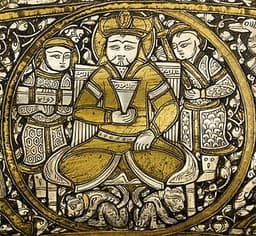
Baybars
Emperor · Medieval
63.8Total
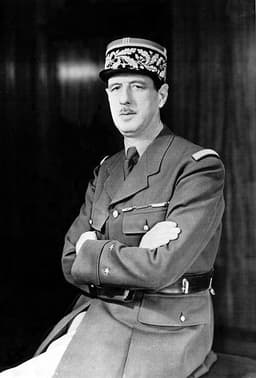
Charles de Gaulle
Politician · Modern
68.2Total
Basic Information
Born
1223
1890
Died
1277
1970
Era
Medieval
Modern
Nationality
Egypt
France
Occupation
Emperor
Politician
Civilization
Middle Eastern
Western
Score Comparison
Military (10%)
85.0
55.0
Political (20%)
70.0
75.0
Influence (20%)
55.0
65.0
Legacy (20%)
52.0
68.0
Leadership (15%)
72.0
78.0
Strategy (15%)
72.0
65.0
TOTAL
63.8
68.2
Baybars — Complete Timeline
1260 AD
Battle of Ain Jalut (1260)War◆ Major
Baybars served as a key commander under Qutuz at the Battle of Ain Jalut. He led the vanguard and played a crucial role in the Mamluk victory over the Mongols. This battle established his reputation as a military leader.
Mongol InvasionBattleMamluk Victory
Impact: globalconstructive
Accession as Sultan (1260)Political Action◆ Major
After assassinating Qutuz, Baybars proclaimed himself Sultan of Egypt. He was accepted by the Mamluk commanders and the Abbasid Caliph. His reign began a period of Mamluk dominance in the Middle East, lasting for decades.
SuccessionMamluk SultanateAssassination
Impact: regional
1265 AD
Campaigns against the Crusader States (1260s-1270s)War◆ Major
Baybars launched a series of campaigns against the remaining Crusader states in the Levant. He captured key fortresses including Arsuf (1265), Safed (1266), Jaffa (1268), and Antioch (1268). These victories reduced Crusader territory to a few coastal enclaves.
Crusader WarsConquestMamluk Expansion
Impact: regionaldestructive
1277 AD
Defeat of the Mongols at Elbistan (1277)War◆ Major
Baybars defeated a Mongol army at the Battle of Elbistan in Anatolia. He invaded the Seljuk Sultanate of Rum, which was under Mongol suzerainty. Although a tactical victory, Baybars could not hold Anatolia and returned to Syria.
Mongol WarsBattleAnatolia
Impact: regionalconstructive
Death of Baybars (1277)Other◆ Major
Baybars died in Damascus, possibly from poisoning or illness. His death was kept secret for a time to prevent unrest. He was succeeded by his son Al-Said Barakah. Baybars' reign is considered the peak of the early Mamluk Sultanate.
DeathSuccessionMamluk Sultanate
Impact: regionaltragic
Charles de Gaulle — Complete Timeline
1940 AD
Appeal of 18 June 1940Political Action
From London, de Gaulle broadcast a radio appeal urging French resistance against Nazi occupation. He called on French soldiers and citizens to continue the fight, founding the Free French Forces and becoming the symbol of French defiance.
World War IIResistanceLeadership
Impact: nationalconstructive
1958 AD
Founding of the Fifth RepublicPolitical Action
De Gaulle returned to power during the Algerian crisis and oversaw the drafting of a new constitution. The Fifth Republic established a strong executive presidency, replacing the unstable parliamentary system of the Fourth Republic.
ConstitutionGovernment ReformPolitical System
Impact: nationalconstructive
1962 AD
End of the Algerian WarPolitical Action◆ Major
De Gaulle negotiated the
DecolonizationPeace TreatyAlgeria
Impact: regionalconstructive
1968 AD
May 1968 CrisisPolitical Action◆ Major
Mass student protests and general strikes paralyzed France, challenging de Gaulle's government. De Gaulle briefly fled to Germany, then returned to dissolve the National Assembly and call elections, which his party won, but his authority was weakened.
ProtestPolitical CrisisSocial Unrest
Impact: nationaldestructive
1969 AD
Resignation as PresidentPolitical Action
De Gaulle resigned after losing a referendum on regional reform and Senate restructuring. The defeat marked the end of his political career, as he withdrew from public life and died the following year.
ResignationPolitical DefeatReferendum
Impact: nationaltragic
Expert Analysis
Charles de Gaulle vs Baybars
# The Cross and the Crescent: De Gaulle and Baybars
In June 1940, a tall, awkward French general stood before a BBC microphone in London and told his conquered nation that "the flame of French resistance must not go out." Seven centuries earlier, a Kipchak Turk sold into slavery in Cairo would rise to shatter the Mongol myth of invincibility at Ain Jalut. Charles de Gaulle and Baybars never met, never could have met, yet both emerged from catastrophe to forge new orders from the ashes of old ones. One built a republic; the other built an empire. One died in quiet retirement; the other died with a poisoned cup still warm. Their stories reveal how two men, equally convinced of their own destiny, navigated radically different worlds with the same raw material: will.
Origins
De Gaulle was born into a devoutly Catholic, nationalist family in Lille in 1890. His father taught philosophy and history, instilling in young Charles a sense of France as a sacred mission. The Franco-Prussian War of 1870 had humiliated his country, and de Gaulle grew up believing that France's greatness was not a memory but a duty. He entered Saint-Cyr military academy, wrote books on military theory, and was wounded three times in World War I—captured at Verdun, he spent 32 months as a prisoner of war, attempting escape five times.
Baybars was born around 1223 in the steppes north of the Black Sea, among the Kipchak Turks. The Mongol invasions swept across his homeland, and as a young boy he was captured, enslaved, and sold in the markets of Damascus and then Cairo. His name means "great panther" in Turkic, and he bore a physical mark—a white film over one eye—that made him instantly recognizable. In an age when slave-soldiers could become sultans, Baybars was purchased by the Ayyubid sultan and rose through the Mamluk ranks, his military brilliance noted by commanders who saw in him a weapon to wield.
The difference in their origins is stark: de Gaulle inherited a tradition of glory; Baybars survived a world that had erased his family, his people, and his freedom. One fought to restore a nation; the other fought to create a place for himself in a world that had given him nothing.
Rise to Power
De Gaulle's rise was slow, intellectual, and political. He wrote presciently about armored warfare in the 1930s, but his ideas were ignored by the French high command. When Germany invaded in 1940, he was a colonel commanding a tank division—competent but obscure. Then France fell. While Marshal Pétain surrendered, de Gaulle fled to London. On June 18, 1940, he made his appeal. He had no army, no territory, no legitimacy—only a conviction that France was not finished. Winston Churchill recognized something in him, and de Gaulle became the improbable leader of the Free French.
Baybars's rise was bloody and swift. At the Battle of Ain Jalut in 1260, he commanded the vanguard under Sultan Qutuz, luring the Mongols into a trap and crushing them in one of history's decisive battles. But Qutuz was a cautious ruler, and Baybars was ambitious. On the return march, Baybars assassinated Qutuz with his own hands during a hunting party. He then proclaimed himself sultan, and the Mamluk commanders—who knew his military genius—accepted him. He was 37 years old.
De Gaulle seized legitimacy through a radio broadcast; Baybars seized power through a dagger. Both understood that history belongs to those who act when others hesitate.
Leadership and Governance
De Gaulle's leadership was constitutional and symbolic. He founded the Fifth Republic in 1958, creating a strong presidency that could govern above party politics. He ended the Algerian War—against the wishes of the French army that had brought him to power—granting independence to Algeria in 1962. He weathered the May 1968 crisis, when students and workers paralyzed France, by dissolving parliament and calling new elections, winning by a landslide. But his style was aloof, almost monarchical. He once said, "A statesman must not be sensitive to applause or criticism."
Baybars ruled as a warrior-king. He consolidated Mamluk power by reorganizing the army, building a navy, and establishing a postal system that linked Cairo to Damascus in four days. He fought the Crusaders relentlessly, capturing the fortress of Safed, the city of Jaffa, and the great castle of Krak des Chevaliers. He fought the Mongols again at Elbistan in 1277, defeating them in Anatolia. His governance was personal, brutal, and effective. He personally led his armies, inspected fortifications, and administered justice.
De Gaulle's military score is 65.0, Baybars's 67.8—close, but Baybars was a general first. De Gaulle's political score is 82.0, Baybars's 75.7—reflecting de Gaulle's genius for constitutional design. De Gaulle built institutions; Baybars built fortresses.
Triumph and Tragedy
De Gaulle's greatest triumph was the Fifth Republic itself—a system that ended France's cycle of instability and gave it decades of coherent governance. His greatest tragedy was the May 1968 crisis. He fled briefly to Baden-Baden, to consult with the French army in Germany, a moment of panic that revealed the fragility behind the mask. He resigned in 1969 after losing a referendum on regional reform—a minor issue that became a referendum on his leadership.
Baybars's greatest triumph was the Battle of Ain Jalut, which saved Egypt and Islam from Mongol conquest. His greatest tragedy was his death in 1277, possibly poisoned, in Damascus. He died at 54, still in his prime, with campaigns unfinished. His death was kept secret for weeks to prevent unrest.
Both men experienced the bitterness of unfinished work. De Gaulle watched his legacy challenged by students; Baybars left an empire that would slowly decline.
Character and Destiny
De Gaulle was austere, proud, and remote. He believed in France as a spiritual entity, not merely a territory. He wrote, "France cannot be France without greatness." His personality was his politics—the aloof general who stood above factions, the father who could not be questioned. This gave him strength in crisis but isolation in peace.
Baybars was cunning, ruthless, and charismatic. He had survived slavery, betrayal, and war; he trusted no one completely. He was capable of great cruelty—he executed Crusader prisoners without hesitation—but also of strategic generosity, granting safe passage to defeated enemies who submitted. His personality was forged in survival; de Gaulle's was forged in duty.
Baybars died in the saddle; de Gaulle died at home, writing his memoirs. One had his death concealed; the other had his state funeral broadcast on television.
Legacy
De Gaulle's legacy is the Fifth Republic, still standing today, and a vision of French independence that shaped modern Europe. He is remembered as the man who said no to Hitler, no to the Americans, and no to the French when they forgot their own greatness. His influence score is 65.0, his legacy 75.0—high, but not transcendent.
Baybars's legacy is the Mamluk Sultanate, which ruled Egypt and Syria for 250 years, and the defeat of the Mongols at their height. He is remembered as the sultan who broke the invincible, who turned slaves into kings. His influence score is 72.3, his legacy 69.3—remarkably high for a medieval figure.
Conclusion
De Gaulle and Baybars were both men of war who became men of state. One built a republic on the ruins of defeat; the other built an empire on the ruins of conquest. One spoke to his nation through radio; the other spoke through the clash of swords. Yet both understood that leadership is not about popularity—it is about will, timing, and the courage to act when the world expects surrender.
Baybars would have recognized de Gaulle's stubbornness. De Gaulle would have recognized Baybars's ambition. And both would have agreed that history belongs not to the strong, but to those who refuse to accept what history has given them.
Rankings
🥇
Charles de GaulleLeader
Mil: 55.0Pol: 75.0Inf: 65.0
68.2
🥈
Baybars
Mil: 85.0Pol: 70.0Inf: 55.0
63.8
+4.4 behind
How This Comparison Works
Algorithm
Each figure is scored on 6 dimensions (0—100 scale) based on structured historical data: Military (10%), Political (20%), Influence (20%), Legacy (20%), Leadership (15%), Strategy (15%). The weighted total produces the final ranking.
Data Sources
Scores are computed from structured sub-indicators in the database. Scale factors adjust for era (Ancient ×0.85, Modern ×1.0) and civilization size (Eastern ×1.05, Other ×0.80) to account for differences in population and military scale.
Maximum 3 Figures
Comparisons are limited to 2—3 figures to ensure readability and statistical meaningfulness.
Error Margins
±5 points per dimension — Sub-scores are derived from historical records with inherent uncertainty. Two figures within 5 points on a dimension should be considered roughly equivalent in that area.
Total Score Accuracy
±3 points overall — The weighted combination of 6 dimensions produces a total score with approximately ±3 points of uncertainty. Differences of less than 3 points are not statistically significant— the figures are effectively tied.
Known Limitations
- Historical records are incomplete and uneven across civilizations
- Figures from oral-tradition societies may be underrepresented
- Occupation labels can misclassify multi-role figures
- Scores measure capability and impact, not moral character
- Quantitative scoring is a comparison tool, not absolute truth
Capability Radar
Military (10%) — Battles & Warfare
Battles
85
60
Win Rate
90
55
Expansion
80
20
Political (20%) — Governance & Reform
Reform
80
95
Diplomacy
78
90
Economy
72
70
Influence (20%) — Cultural & Global Reach
Cultural
65
70
Global
65
80
Legacy (20%) — Historical Impact
Historical
75
85
Longevity
60
75
Leadership (15%) — Power & Stability
Tenure
75
85
Stability
70
75
Strategy (15%) — Tactics & Innovation
Strategy
85
85
Tactics
88
70
Reform
82
80
Similar Comparisons
Comments & Discussion
The Iron Gauntlet6/16/2026
Both men understood willpower as destiny, but Baybars read the battlefield, not the book. De Gaulle had to theorize about armored columns while stuck in a German POW camp; Baybars personally beheaded the Mongol commander at Ain Jalut and turned his skull into a wine cup. One earned his empire through blood mathematics, the other through stubborn letters. I'm siding with the Kipchak Turk who literally drank victory.
沙漠法老6/16/2026
别拿那个爱写回忆录的长颈鹿将军跟马穆鲁克的屠龙者比。贝巴尔斯在阿音贾鲁特战役用诱敌战术粉碎了蒙古不可战胜的神话,而戴高乐靠的是BBC的麦克风和丘吉尔的施舍。一个打了30年仗变出个帝国,一个写了30年书只等来维希法国。气场差太多。
Lord of the Steppe6/16/2026
De Gaulle's entire prestige rests on saying "no" in 1940 while physically safe in London. Baybars said "no" with a sword in his hand and horse manure on his boots, fighting Mongols who had already erased entire civilizations. The French general played politics for a quarter-century after the war; Baybars died from a poisoned cup—probably arranged by his own emirs. That's how real power works.
历史评分员6/16/2026
必须要指出,此对比缺乏数据支撑。戴高乐执政十一年,将法国从二战废墟带到核大国地位,GDP年均增长5%;贝巴尔斯在位十七年,马穆鲁克苏丹国疆域从尼罗河扩大到幼发拉底河,但征服成本极高,三分之一税收用于军费。两个都是铁腕统治者,但戴高乐留下了第五共和国制度框架,贝巴尔斯留下的是他死后立即内乱的军阀体系。
Red Phone General6/16/2026
At least de Gaulle used phones and aircraft carriers. Baybars used slave soldiers and poisoned dates. Don't romanticize brutality. The Mongol myth was already cracking—Hulagu's army was just a fraction of his total forces, and the Mongols had overextended. The real genius was de Gaulle, who understood that in modern warfare—and modern diplomacy—a single stubborn voice can outlast ten thousand cavalry. France still exists. Baybars' empire collapsed within decades of his death. Case closed.