Loading...
Baybars vs Pachacuti
Pachacuti leads by 5.6 pts · 2 figures compared
…
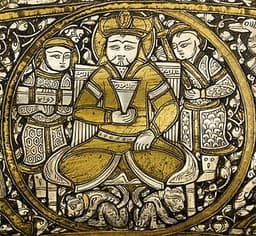
Baybars
Emperor · Medieval
63.8Total
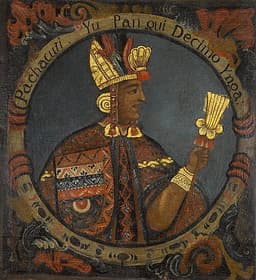
Pachacuti
Emperor · Medieval
69.4Total
Basic Information
Born
1223
1418
Died
1277
1472
Era
Medieval
Medieval
Nationality
Egypt
Inca Empire
Occupation
Emperor
Emperor
Civilization
Middle Eastern
Other
Score Comparison
Military (10%)
85.0
78.5
Political (20%)
70.0
58.1
Influence (20%)
55.0
65.0
Legacy (20%)
52.0
72.0
Leadership (15%)
72.0
78.0
Strategy (15%)
72.0
69.2
TOTAL
63.8
69.4
Baybars — Complete Timeline
1260 AD
Battle of Ain Jalut (1260)War◆ Major
Baybars served as a key commander under Qutuz at the Battle of Ain Jalut. He led the vanguard and played a crucial role in the Mamluk victory over the Mongols. This battle established his reputation as a military leader.
Mongol InvasionBattleMamluk Victory
Impact: globalconstructive
Accession as Sultan (1260)Political Action◆ Major
After assassinating Qutuz, Baybars proclaimed himself Sultan of Egypt. He was accepted by the Mamluk commanders and the Abbasid Caliph. His reign began a period of Mamluk dominance in the Middle East, lasting for decades.
SuccessionMamluk SultanateAssassination
Impact: regional
1265 AD
Campaigns against the Crusader States (1260s-1270s)War◆ Major
Baybars launched a series of campaigns against the remaining Crusader states in the Levant. He captured key fortresses including Arsuf (1265), Safed (1266), Jaffa (1268), and Antioch (1268). These victories reduced Crusader territory to a few coastal enclaves.
Crusader WarsConquestMamluk Expansion
Impact: regionaldestructive
1277 AD
Defeat of the Mongols at Elbistan (1277)War◆ Major
Baybars defeated a Mongol army at the Battle of Elbistan in Anatolia. He invaded the Seljuk Sultanate of Rum, which was under Mongol suzerainty. Although a tactical victory, Baybars could not hold Anatolia and returned to Syria.
Mongol WarsBattleAnatolia
Impact: regionalconstructive
Death of Baybars (1277)Other◆ Major
Baybars died in Damascus, possibly from poisoning or illness. His death was kept secret for a time to prevent unrest. He was succeeded by his son Al-Said Barakah. Baybars' reign is considered the peak of the early Mamluk Sultanate.
DeathSuccessionMamluk Sultanate
Impact: regionaltragic
Pachacuti — Complete Timeline
1438 AD
Conquest of the Chanka KingdomWar
Pachacuti led the Inca army to defeat the Chanka, a powerful rival, in a decisive battle near Cusco. This victory secured his position as Sapa Inca and initiated a period of rapid expansion, transforming the Inca from a small kingdom into a vast empire.
ConquestInca ExpansionChanka
Impact: regional
1440 AD
Reconstruction of CuscoCultural◆ Major
Pachacuti rebuilt Cusco as the imperial capital, designing it in the shape of a puma and constructing massive stone structures like Sacsayhuam
Urban PlanningArchitectureInca Empire
Impact: regionalconstructive
1450 AD
Initiation of Machu Picchu's ConstructionCultural◆ Major
Pachacuti ordered the construction of Machu Picchu, a royal estate and ceremonial site high in the Andes. The complex featured sophisticated dry-stone masonry and terraced agriculture, serving as a symbol of Inca engineering and a retreat for the emperor.
ArchitectureRoyal EstateInca Engineering
Impact: regionalconstructive
Expert Analysis
Pachacuti vs Baybars
### Two Builders of Empires: Pachacuti and Baybars
In the high, thin air of the Andes, a prince who was never meant to rule stood before a broken army. His father and the chosen heir had fled the battlefield, leaving Cusco to the mercy of the advancing Chanka. The year was 1438, and the young prince, Pachacuti Inca Yupanqui, made a decision that would reshape the world. Half a world away and two centuries earlier, in the dust and heat of Syria, a young slave from the steppes watched a Mongol army shatter his family and his future. Sold into bondage, he would rise to become the scourge of those same Mongols and the last great hope of the Islamic world. One built his empire from the top of the world; the other forged his from the crucible of slavery. Their stories, separated by distance and culture, are both tales of improbable ascent and the brutal, brilliant art of empire-building.
### Origins: The Prince and the Slave
Pachacuti was born into the sacred bloodline of the Inca, the ninth son of the Sapa Inca Viracocha. He was a prince of the sun, raised in the ritual and privilege of Cusco, but he was not the heir. His destiny was to serve, not to rule. This placement, however, gave him a unique perspective. He was trained in the arts of war and governance, but he was also an observer, watching his father’s court navigate the fragile alliances and constant threats that defined the Inca state. His world was one of mountains, maize, and the worship of Inti, the sun god. The Chanka threat was existential, a rival kingdom that had grown powerful enough to challenge the very existence of the Inca.
Baybars’s origins were the polar opposite. Born in the Crimean steppes to a Kipchak Turkic family, his world was one of horses, yurts, and the endless horizon. He was not a prince; he was a commodity. Captured by the Mongols and sold into slavery, he was purchased by the Ayyubid Sultan of Egypt and thrust into the brutal world of the Mamluk slave-soldiers. Where Pachacuti’s identity was rooted in divine kingship, Baybars’s was forged in the barracks. He was a *mamluk*—one who is owned—but in that ownership lay a path to power. The Mamluks were a military caste, slaves who were trained, converted to Islam, and then freed to become the most formidable warriors of their age. Baybars’s rise was not a matter of birthright but of pure, unadulterated merit, measured in skill with a sword and a bow.
### Rise to Power: The Turning Point
The Chanka attack on Cusco was the crucible that forged Pachacuti. While his father and brother fled, Pachacuti rallied the city’s defenders. He did not just fight; he changed the rules of engagement. He understood that victory required more than courage; it required a new kind of faith. He claimed that the very stones of Cusco had risen to fight alongside the Inca, a divine sign that turned the tide. The victory was total. The Chanka king was captured, and their army annihilated. This was not just a military triumph; it was a spiritual and political one. Pachacuti, the overlooked prince, had saved his people. His father, shamed by his flight, was effectively sidelined. Pachacuti did not seize the throne in a bloody coup; he simply assumed the authority that his victory had earned him. He became the Sapa Inca, the “Unique One,” and immediately began to remake the world.
Baybars’s rise was more violent and more cynical. He rose through the Mamluk ranks, proving himself a brilliant commander. His defining moment came at the Battle of Ain Jalut in 1260, where he served as the vanguard commander under Sultan Qutuz. It was Baybars who lured the seemingly invincible Mongol army into a trap in the narrow valley of Ain Jalut, using a feigned retreat to break their formation. The Mongols were defeated, a victory that saved the Islamic world from annihilation. But Baybars was not content to be a general. On the ride back to Cairo, he approached Qutuz, ostensibly to ask for a captured Mongol noblewoman as a reward. When Qutuz refused, Baybars struck. He killed his sultan with a single blow. He did not apologize. He simply claimed the throne, and the Mamluk commanders, knowing his skill and ambition, accepted him. Where Pachacuti’s rise was a story of divine destiny, Baybars’s was a story of cold, calculated ambition.
### Leadership & Governance: The Builder and the Hammer
As rulers, Pachacuti and Baybars were both geniuses, but their genius took radically different forms. Pachacuti was a visionary architect. He did not just conquer; he organized. He rebuilt Cusco in the shape of a puma, a sacred animal, with massive stone walls that fit together without mortar, a feat of engineering that still baffles observers. He initiated the construction of Machu Picchu, a breathtaking royal estate high in the Andes, a symbol of his power and his connection to the divine. His administrative reforms were revolutionary. He divided his empire into four *suyus* (quarters), each governed by a trusted noble, and established a system of roads and runners that allowed him to control a vast territory from a single city. He imposed the Inca religion, language, and culture on conquered peoples, but he also offered them a bargain: submit and prosper, resist and be destroyed. He was a builder of systems.
Baybars was a hammer. His rule was a relentless campaign of consolidation and defense. He understood that the Mamluk state was a military machine, and he ran it as such. He rebuilt the army, creating a professional force of Mamluks that was the most disciplined in the world. He then turned his attention to the enemies on all sides. He launched a series of devastating campaigns against the remaining Crusader states, capturing the great fortresses of Arsuf, Caesarea, and, most famously, the seemingly impregnable Krak des Chevaliers. He was a master of siege warfare, using engineers and trebuchets with devastating effect. But his greatest fear was always the Mongols. He fought them not just in open battle but through a sophisticated web of diplomacy, spies, and assassinations. He formed an alliance with the Mongol Golden Horde, a rival Mongol faction, to create a buffer against the Ilkhanate. He was a pragmatist, not an ideologue. He did not seek to convert the world to Islam; he sought to protect his state from annihilation.
### Triumph & Tragedy: The Peak and the Fall
Pachacuti’s greatest triumph was the transformation of a small kingdom into the largest empire in the pre-Columbian Americas. He conquered vast territories, from the highlands of Peru to the deserts of Chile, and he did so with a speed and efficiency that astounded his enemies. His tragedy is a quieter one. He lived to see his empire at its peak, but he died in 1472, knowing that the system he built was fragile. It depended entirely on his personal authority. His greatest fear was that his successors would not have his vision or his ruthlessness. He was right. The Inca Empire would fall to a handful of Spanish conquistadors just sixty years after his death, a collapse made possible by the very centralization he had perfected.
Baybars’s triumph was his survival. He held the Mamluk state together against impossible odds. He defeated the Mongols again at the Battle of Elbistan in 1277, pushing them out of Anatolia. He was the sultan who had broken the myth of Mongol invincibility. His tragedy was his death. He died in Damascus in 1277, at the height of his power, possibly from poisoning or a simple illness. His death was kept secret for weeks to prevent unrest. He left no clear successor, and the Mamluk state, while strong, would never again have a leader of his caliber. He died as he had lived: alone, surrounded by enemies, and utterly irreplaceable.
### Character & Destiny: The Visionary and the Survivor
Pachacuti was a man of grand vision. He believed he was chosen by the sun god to bring order to the world. This gave him a kind of serene confidence, a belief that his actions were divinely ordained. He was ruthless when necessary, but he preferred to incorporate and assimilate. His destiny was to build, to create a world that reflected his own image. Baybars was a survivor. He had been a slave, a soldier, and an assassin. He trusted no one and was trusted by few. He was paranoid, brilliant, and utterly pragmatic. He did not believe in destiny; he believed in the next battle, the next fortress, the next alliance. His destiny was to defend, to hold the line against chaos.
### Legacy: The Stone and the Shadow
Pachacuti’s legacy is carved in stone. Machu Picchu, Sacsayhuaman, the roads of the Inca—these are his monuments. He is remembered as the greatest of the Inca, the “Earthshaker” who remade the world. His legacy is one of order, beauty, and a tragic fragility. Baybars’s legacy is more shadowy. He has no great monuments. His legacy is the survival of the Mamluk state, which would endure for another 250 years. He is remembered in the Islamic world as a hero, the sultan who saved Islam from the Mongols and the Crusaders. But his methods—the assassination, the ruthless pragmatism—also cast a long shadow. He was a necessary evil, a man who did terrible things to prevent a greater catastrophe.
### Conclusion
Standing on the stone terraces of Machu Picchu, looking out at the endless Andes, one feels the weight of Pachacuti’s ambition. He built for eternity. Standing before the walls of Krak des Chevaliers, one feels the weight of Baybars’s relentless hammer. He fought for survival. One built a world; the other held one together. Both were men of their time, products of the mountains and the steppes, of divine kingship and brutal slavery. They remind us that empire is not built by the good or the virtuous, but by the brilliant, the ruthless, and the driven. Their stories, so different, end with the same truth: that history belongs to those who are willing to seize it, whether by the will of the gods or the edge of a sword.
Rankings
🥇
PachacutiLeader
Mil: 78.5Pol: 58.1Inf: 65.0
69.4
🥈
Baybars
Mil: 85.0Pol: 70.0Inf: 55.0
63.8
+5.6 behind
How This Comparison Works
Algorithm
Each figure is scored on 6 dimensions (0—100 scale) based on structured historical data: Military (10%), Political (20%), Influence (20%), Legacy (20%), Leadership (15%), Strategy (15%). The weighted total produces the final ranking.
Data Sources
Scores are computed from structured sub-indicators in the database. Scale factors adjust for era (Ancient ×0.85, Modern ×1.0) and civilization size (Eastern ×1.05, Other ×0.80) to account for differences in population and military scale.
Maximum 3 Figures
Comparisons are limited to 2—3 figures to ensure readability and statistical meaningfulness.
Error Margins
±5 points per dimension — Sub-scores are derived from historical records with inherent uncertainty. Two figures within 5 points on a dimension should be considered roughly equivalent in that area.
Total Score Accuracy
±3 points overall — The weighted combination of 6 dimensions produces a total score with approximately ±3 points of uncertainty. Differences of less than 3 points are not statistically significant— the figures are effectively tied.
Known Limitations
- Historical records are incomplete and uneven across civilizations
- Figures from oral-tradition societies may be underrepresented
- Occupation labels can misclassify multi-role figures
- Scores measure capability and impact, not moral character
- Quantitative scoring is a comparison tool, not absolute truth
Capability Radar
Military (10%) — Battles & Warfare
Battles
85
85
Win Rate
90
90
Expansion
80
90
Political (20%) — Governance & Reform
Reform
80
92
Diplomacy
78
75
Economy
72
80
Influence (20%) — Cultural & Global Reach
Cultural
65
85
Global
65
65
Legacy (20%) — Historical Impact
Historical
75
80
Longevity
60
70
Leadership (15%) — Power & Stability
Tenure
75
85
Stability
70
82
Strategy (15%) — Tactics & Innovation
Strategy
85
88
Tactics
88
80
Reform
82
85
Similar Comparisons
Comments & Discussion
PachacutiStan6/16/2026
Calling Pachacuti a mere "builder" is like calling Einstein a decent math student. The man transformed a minor Andean kingdom into Tawantinsuyu – "the four parts together." He didn't just build Machu Picchu; he engineered terraced agriculture on vertical cliffs and invented a decimal-based administrative system that rivaled Rome. Baybars was a brilliant tactical commander, sure, but Pachacuti literally remade civilization in stone and soil. That's empire-building on a cosmic scale.
纪律骑兵6/16/2026
看看历史数据:巴耶贝尔统治25年,马穆鲁克王朝版图扩张不到40%。帕查库蒂在位33年,印加面积暴涨数百倍,从库斯科山谷打到厄瓜多尔!那些"巴耶贝尔是奴隶逆袭"的故事确实动人,但军事成就上,从平民到把蒙古人挡在叙利亚边境,和从一个落败王子到统治安第斯山脉,哪个难度更大?别用情感叙事替代事实比较。
AinJalutSkeptic6/16/2026
Everyone romanticizes Baybars versus the Mongols, but let's get real: he never fought a Mongol army that wasn't already weakened by internal succession crises. At Ain Jalut (1260), Hulagu had withdrawn most of his forces to Mongolia for the khaganate election. Baybars ambushed Kitbuqa's outnumbered garrison, not the full Mongol war machine. Pachacuti faced the Chanka confederation at their peak strength with a ragtag force and improvised tactics. That's actual underdog warfare, not cherry-picked
墨城考古迷6/16/2026
经典误读:总说巴耶贝尔统一埃及叙利亚建立伊斯兰堡垒,可帕查库蒂的成就是根本性的文明革命!他在没有任何文字系统的情况下,用结绳记事管理帝国税收、人口,甚至诗歌!巴耶贝尔改进了大马士革城堡,帕查库蒂创造了马丘比丘、萨克塞华曼等工程奇迹。一个继承了马穆鲁克军事传统,另一个从零发明了帝国治理术。文明创造力上,这根本不是一个量级。
MongolEradicator6/16/2026
You revisionists need to stop downplaying Baybars. When he defeated the Mongols at Elbistan in 1277, he was facing an invasion force of 30,000 with only 10,000 Mamluks. He personally led the counterattack that killed the Mongol commander. Pachacuti's battles are poorly documented Inca oral traditions with no surviving enemy records to verify. Baybars operated within well-documented Islamic historiography, with clear casualty numbers and strategic maps. One is history; the other is legend dressed