Loading...
Bappa Rawal vs Zhao Kuangyin
Zhao Kuangyin leads by 23.7 pts · 2 figures compared
…
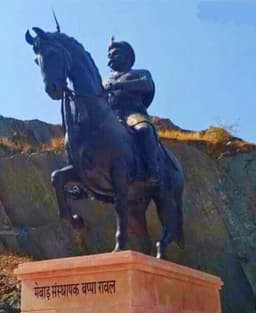
Bappa Rawal
Emperor · Medieval
47.8Total
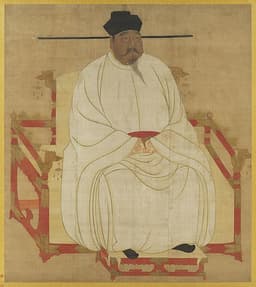
Zhao Kuangyin
Emperor · Medieval
71.5Total
Basic Information
Born
713
927
Died
780
976
Era
Medieval
Medieval
Nationality
India
China
Occupation
Emperor
Emperor
Civilization
Indian
Eastern
Score Comparison
Military (10%)
10.0
78.0
Political (20%)
35.1
84.0
Influence (20%)
58.0
68.0
Legacy (20%)
50.0
65.0
Leadership (15%)
67.0
74.0
Strategy (15%)
45.0
68.0
TOTAL
47.8
71.5
Bappa Rawal — Complete Timeline
734 AD
Conquest of ChittorWar◆ Major
Bappa Rawal captured the fort of Chittor from the Mori Rajputs, establishing it as the capital of the Mewar kingdom. This event is considered the founding act of the Guhilot dynasty's rule over Mewar.
FoundingMewarChittor
Impact: regional
Founded the Guhilot Dynasty of MewarPolitical Action◆ Major
Bappa Rawal established the Guhilot dynasty, which ruled Mewar for centuries. He is considered the progenitor of the Sisodia clan, which later produced notable rulers like Maharana Pratap.
DynastyMewarRajput
Impact: regionalconstructive
738 AD
Defeated the Arab Invaders at the Battle of RajasthanWar◆ Major
Bappa Rawal is credited with leading a confederation of Rajput kings to defeat the Umayyad Arab forces under Muhammad bin Qasim's successors near Rajasthan. This victory halted Arab expansion into northern India.
Arab InvasionDefenseRajput Confederation
Impact: regional
Zhao Kuangyin — Complete Timeline
960 AD
Founded Song dynastyPolitical Action
Zhao Kuangyin, a general of Later Zhou, was proclaimed emperor by his troops at Chenqiao. He established the Song dynasty, ending the Five Dynasties period and beginning a new era of Chinese history.
Song dynastyFoundingChenqiao
Impact: globalconstructive
961 AD
Removed military power from generalsPolitical Action◆ Major
Zhao Kuangyin invited senior generals to a banquet and persuaded them to retire peacefully. This 'removal of military power over wine' prevented military coups and centralized control.
Song dynastyMilitary reformCentralization
Impact: nationalconstructive
963 AD
Unified southern ChinaWar◆ Major
Zhao Kuangyin launched campaigns to conquer the southern kingdoms, including Jingnan, Later Shu, and Southern Tang. By his death, most of China was reunified under Song rule.
Song unificationConquestSouthern kingdoms
Impact: national
Expert Analysis
Zhao Kuangyin vs Bappa Rawal
# The Emperor Who Gave Away Power, and the King Who Built a Dynasty
On a spring evening in 961, the most powerful man in China invited his former comrades to a banquet. Zhao Kuangyin, the newly crowned Song emperor, poured wine for his generals, laughed at their stories, and then, as the candles burned low, spoke words that would echo through a thousand years of history. He told them he could not sleep at night, fearing that one day their own troops might drape the imperial yellow robe over their shoulders, just as his soldiers had done for him. By dawn, the generals had resigned their commands, trading swords for silk robes and provincial governorships. Half a world away and two centuries earlier, another warrior king had faced a different choice. Bappa Rawal, having seized the fortress of Chittor from its Mori rulers, did not disarm his followers. He armed them with a new identity—Rajput—and led them against the greatest empire of the age. Two founders, two fates. Why did one give away power while the other built a dynasty that would fight for a millennium?
Origins
Zhao Kuangyin was born in 927 into a world of fractured kingdoms. The great Tang dynasty had collapsed, and China had splintered into the Five Dynasties and Ten Kingdoms—a brutal era where generals murdered emperors and armies changed loyalties with the seasons. Zhao’s father was a military officer, and young Zhao grew up understanding that in this world, power flowed from the sword, but the sword could never be trusted. He was literate, thoughtful, and observant—a man who watched his superiors rise and fall with the regularity of a turning wheel.
Bappa Rawal, born in 713, emerged from a different crucible. India was not fractured but facing an existential threat from the south. The Umayyad Caliphate had already conquered Sindh and was pushing eastward into Rajputana. Bappa’s origins are shrouded in legend—some say he was a prince of the Guhilot clan who survived a massacre, others that he was a shepherd boy chosen by destiny. What is certain is that he grew up among warrior clans who measured honor by resistance, not submission. In China, the question was how to stop endless civil war. In India, the question was how to survive foreign conquest.
Rise to Power
Zhao Kuangyin’s path to the throne was almost accidental—or so it seemed. By 960, he was a trusted general of the Later Zhou dynasty, commanding the army that defended the northern frontier. When news arrived that the emperor had died and a child sat on the throne, Zhao’s troops halted their march, gathered at Chenqiao, and draped a yellow robe over their commander. He protested, they insisted, and history turned. This was the fourth such usurpation in fifty years—a pattern Zhao knew he must break.
Bappa Rawal’s rise was more deliberate. In 734, he led a coalition of Rajput clans against the Mori kingdom and captured the impregnable fort of Chittor. Unlike Zhao, who was handed power by his army, Bappa seized it with his own hands. He did not inherit a kingdom; he carved one from stone and blood. The fort of Chittor, perched on a 180-meter hill, became not just his capital but a symbol of Rajput defiance that would outlast every empire that tried to conquer it.
Leadership & Governance
Here the two men diverged completely. Zhao Kuangyin’s political genius lay in his understanding that military power, if unchecked, destroys itself. In 961, at the famous “Removal of Military Power” banquet, he did not execute his generals—he pensioned them. He gave them wealth, land, and titles, but took their armies. Then he reorganized the Song military so that no general could command the same troops for long, and placed civilian officials in charge of logistics. The result was peace, stability, and a flourishing of culture and commerce that made Song China the richest civilization on earth. But the price was military weakness—the Song would never reclaim the northern territories lost to barbarian kingdoms, and would eventually fall to the Mongols.
Bappa Rawal chose the opposite path. After founding the Guhilot dynasty in 734, he did not centralize power but dispersed it among Rajput clans, binding them through honor, marriage, and shared resistance. In 738, at the Battle of Rajasthan, he led a confederation of Rajput kings against the Umayyad Arab general Muhammad bin Qasim’s successors. The Rajputs won, halting Arab expansion into India forever. Bappa’s governance was feudal—he gave his warriors land in exchange for loyalty, creating a warrior aristocracy that would define Rajasthan for centuries. The price was constant internal feuding, but the reward was survival.
Triumph & Tragedy
Zhao Kuangyin’s greatest triumph was the unification of southern China between 963 and 976, conquering the kingdoms of Jingnan, Later Shu, and Southern Tang through a combination of military campaigns and diplomatic pressure. He was a skilled strategist who preferred to win without fighting, bribing enemy officials and offering generous terms to surrendered rulers. His tragedy came at the end: he died suddenly in 976 at age forty-nine, possibly murdered by his own brother, who succeeded him. The Song dynasty he founded would last three centuries, but it would never achieve the military greatness of the Han or Tang.
Bappa Rawal’s triumph was the defense of Chittor and the creation of a dynasty that would rule Mewar for over 1,200 years—one of the longest continuous dynasties in world history. His tragedy is that he became a legend, not a historical figure. We know almost nothing certain about his later life; some traditions say he abdicated and became a sage, others that he died in battle. The man himself has been absorbed into myth, his deeds exaggerated, his humanity erased.
Character & Destiny
Zhao Kuangyin was cautious, calculating, and humane. He once said, “I do not wish to kill even one person unnecessarily.” He understood that in Chinese history, the founder who kills his rivals breeds rebellion in the next generation. By disarming his generals peacefully, he created a stable foundation—but also a system that prioritized civil over military virtue, leaving the Song vulnerable to stronger enemies.
Bappa Rawal was fierce, charismatic, and uncompromising. He built his power not through negotiation but through battle, not through bureaucracy but through blood ties. In a world where Arab armies were sweeping across North Africa, Persia, and Central Asia, only uncompromising warriors could stop them. His character was forged in resistance, and that resistance became the core of Rajput identity.
Legacy
Zhao Kuangyin is remembered as the founder of the Song dynasty, a period of unparalleled cultural achievement—printing, gunpowder, paper money, landscape painting, and Neo-Confucian philosophy all flourished under the system he created. Yet historians also note that his decision to weaken the military led to the Song’s eventual conquest by the Mongols. He is respected, even admired, but also mourned for what might have been.
Bappa Rawal is remembered as the father of the Rajputs, the man who defended Hindu civilization at its darkest hour. Every Rajput clan traces its ancestry to him or his companions. The fort of Chittor, which he captured in 734, would be sacked three times over the centuries—by Sultan Alauddin Khalji in 1303, by Bahadur Shah of Gujarat in 1535, and by the Mughal emperor Akbar in 1568—and each time, the Rajputs chose mass suicide (jauhar) over surrender. That spirit of defiance, of honor before life, began with Bappa Rawal.
Conclusion
Two founders, two worlds. Zhao Kuangyin built a system that prioritized stability over strength, culture over conquest. Bappa Rawal built a system that prioritized resistance over order, honor over efficiency. One gave away power to preserve peace; the other hoarded it to preserve identity. Neither choice was wrong—they were responses to different threats. The Song fell to the Mongols, but its civilization enriched the world. The Rajputs never united India, but they never submitted to any foreign power. In the end, both men succeeded in what they set out to do: Zhao created a dynasty that lasted three hundred years; Bappa created a legacy that lasted a thousand. And perhaps that is the deepest lesson: the measure of a founder is not how long his empire stands, but how long his idea survives.
Rankings
🥇
Zhao KuangyinLeader
Mil: 78.0Pol: 84.0Inf: 68.0
71.5
🥈
Bappa Rawal
Mil: 10.0Pol: 35.1Inf: 58.0
47.8
+23.7 behind
How This Comparison Works
Algorithm
Each figure is scored on 6 dimensions (0—100 scale) based on structured historical data: Military (10%), Political (20%), Influence (20%), Legacy (20%), Leadership (15%), Strategy (15%). The weighted total produces the final ranking.
Data Sources
Scores are computed from structured sub-indicators in the database. Scale factors adjust for era (Ancient ×0.85, Modern ×1.0) and civilization size (Eastern ×1.05, Other ×0.80) to account for differences in population and military scale.
Maximum 3 Figures
Comparisons are limited to 2—3 figures to ensure readability and statistical meaningfulness.
Error Margins
±5 points per dimension — Sub-scores are derived from historical records with inherent uncertainty. Two figures within 5 points on a dimension should be considered roughly equivalent in that area.
Total Score Accuracy
±3 points overall — The weighted combination of 6 dimensions produces a total score with approximately ±3 points of uncertainty. Differences of less than 3 points are not statistically significant— the figures are effectively tied.
Known Limitations
- Historical records are incomplete and uneven across civilizations
- Figures from oral-tradition societies may be underrepresented
- Occupation labels can misclassify multi-role figures
- Scores measure capability and impact, not moral character
- Quantitative scoring is a comparison tool, not absolute truth
Capability Radar
Military (10%) — Battles & Warfare
Battles
40
75
Win Rate
45
85
Expansion
35
75
Political (20%) — Governance & Reform
Reform
30
90
Diplomacy
35
85
Economy
25
80
Influence (20%) — Cultural & Global Reach
Cultural
40
70
Global
20
60
Legacy (20%) — Historical Impact
Historical
45
80
Longevity
50
75
Leadership (15%) — Power & Stability
Tenure
50
65
Stability
40
85
Strategy (15%) — Tactics & Innovation
Strategy
30
80
Tactics
35
70
Reform
25
90
Similar Comparisons
Comments & Discussion
血战千年6/16/2026
Bappa Rawal没在宴会上收兵权,而是让每个拉杰普特武士把战刀传给儿子。八世纪他率二十四骑突袭阿拉伯骑兵时,赵匡胤的祖辈还在给节度使当差。中印两国都挨过草原民族的打,但拉杰普特人用千年血战证明了一个真理:真正王朝的脊梁,从来不是文官手里的辞章,而是武士掌心的刀茧。|
BANQUET_BETRAYER6/16/2026
Zhao Kuangyin's drinking party wasn't clever statecraft—it was institutional cowardice. He created the "weak emperor, strong literati" model that left Song China permanently vulnerable to barbarian invasions. The Khitans, Jurchens, and Mongols all cut through Song defenses like butter. Bappa Rawal built warriors; Zhao built bureaucrats. History remembers which approach lasted.|
NUANCE_NITPICKER6/16/2026
This comparison is fundamentally broken. You're measuring apples against elephants across 200 years of separate history. Zhao's "generals resigning" narrative is romanticized legend—historical records show several of those commanders remained powerful. Meanwhile, Bappa Rawal's historical existence is debated by serious scholars. You're contrasting a well-documented emperor against a semi-mythical clan founder. Let's compare verifiable facts instead of nationalist bedtime stories.|
墨镜书生6/16/2026
赵匡胤杯酒释兵权分明是被迫妥协。五代十国死了多少皇帝?朱友珪杀朱温,李存勖被伶人弄死,石敬瑭割燕云十六州——老赵看够了武人乱政才走文治路线。宋代GDP占全球22%不是靠幻想,是靠他把兵权从节度使手里收回中央。说宋弱?那蒙古打遍欧亚,光攻襄阳就打了六年,这叫战斗力不行?|
EMPIRE_GIVER6/16/2026
Here's what actually matters: Zhao Kuangyin's dynasty fell in 1279 after three centuries of existence. Bappa Rawal's lineage held Chittor until 1303, then reconquered it, holding it until 1568. That's nearly 800 years of the same clan fighting. Give me Bappa's warrior ethos over Zhao's bureaucratic stability any day. One built a fortress dynasty; the other built a paper empire that crumbled when steel arrived.